Dec 15, 2021 | Pest Control
The holiday season is a time to enjoy family, eat delicious food, and not worry about pests! Unfortunately, overwintering pests such as spiders, rodents, ants, ticks, and more are looking indoors for food, water, and shelter. During the holiday season, Christmas trees, wreaths, firewood, decorations, and storage boxes provide the ideal opportunity for these pests to hitchhike inside.
Check out our top 3 pest prevention tips for holiday pest control.
Check Your Decorations
Attics, basements, and garages provide perfect storage spaces for our holiday decorations. These areas in your home are dark and secluded, making them the perfect place for pests to invade. Stored decorations provide an undisturbed hiding place for pests such as mice, rats, spiders, and more. These creatures will often crawl into the storage boxes you put away last season, contaminating and destroying your decorations.
To ensure that you do not bring these pests into your main living space, inspect and unpack these items outside first. After the holiday season has ended, pack your decorations like foliage, potpourri, and Indian corn in air-tight containers to help prevent pests for next year.
Check Your Firewood
With colder weather here, many homeowners start utilizing their fireplace, bringing in more firewood from outside. However, it’s crucial to inspect firewood before bringing it inside the home. Pests like spiders, termites, and ants are often found on firewood. Consider placing the firewood outside 20 feet from your home and on a raised platform.
Check Your Christmas Tree & Wreaths
If your family celebrates Christmas, you might opt to buy a real Christmas tree and wreath. While both can showcase the authentic look of Christmas, they also tend to carry pests such as spiders, moths, mites, and even squirrels!
To prevent these unwanted pests from hitchhiking indoors, inspect both items outside and then shake them. Also, check these items for any droppings, gnaw marks, or other damage before bringing them inside.
If you suspect that you have a holiday pest problem, consider reaching out to your local pest control company. These professionals will be able to inspect your home, provide the best pest control plan, and recommend prevention techniques for your home.

Nov 5, 2021 | Pest Control
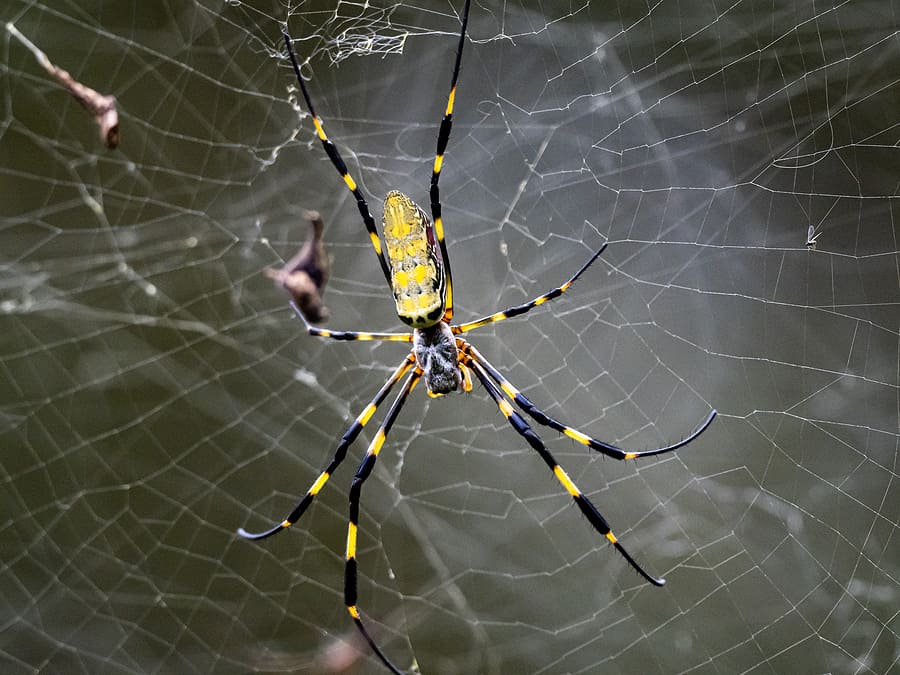
The Joro spider, also known as Trichonephila clavata, is a member of the recognizable orb weaver family. These particular spiders are characterized by their large size (up to 3 inches in length with their legs extended) and yellow and blue-black striped backs with red undersides. Joro spiders are known for constructing large, wagon-wheel shaped webs that are a golden color. These webs can be several feet in length.
Joro spiders are native to Asia, particularly Japan, China, Korea, and Taiwan. In 2014, the first instance of the Joro spider in North America was confirmed in North Georgia. Subsequent sightings have been confirmed as far away as Greenville, South Carolina. It is unclear how and when these spiders first arrived here in Georgia but researchers believe they are here to stay. In fact, researchers have confirmed their presence in at least 25 counties in the state.
Joro spiders are not considered harmful to humans or pets. They will bite when provoked but are not considered a threat. Joros are beneficial to have around as they are one of the only species known to eat adult brown marmorated stinkbugs. They also help keep mosquito and other nuisance pest populations in check. Joro spiders do have predators in our area; both birds and wasps will eat them.
The jury is still out on whether or not there will be any long-term ramifications on local ecosystems. One thing all the researchers agree on is that the Joro spider is likely here to stay.
You May Also Be Interested In:
Are Carpenter Ants Active During the Winter?
Why Do I Have Centipedes?
Why Identifying Spiders is Important for Prevention
5 Pests That Can Destroy Your Lawn
Which Season is Worst for Bed Bugs?
Oct 27, 2021 | Pest Control
Nothing says “Halloween” like spotting a few cobwebs around the house! While it’s always fun to see cobweb decorations during this time of year, it’s not as fun having to deal with them year-round. Since the temperatures have cooled off, many spiders are looking indoors to inhabit a warmer environment. It’s important to understand common types of spiders in order to provide the best treatment if they’ve infested your home.
Brown Recluse
The brown recluse spider is light to dark brown, with a signature brown violin shape on its backs. If threatened, these spiders will bite, which can be painful and leave an open sore. If bitten, some can experience fever, restlessness, and difficulty sleeping. Brown recluse spiders can be found in debris and woodpiles. If they’ve snuck inside your home, they can often be found under furniture, inside storage items, in baseboards, closets, and crawlspaces.
Wolf Spider
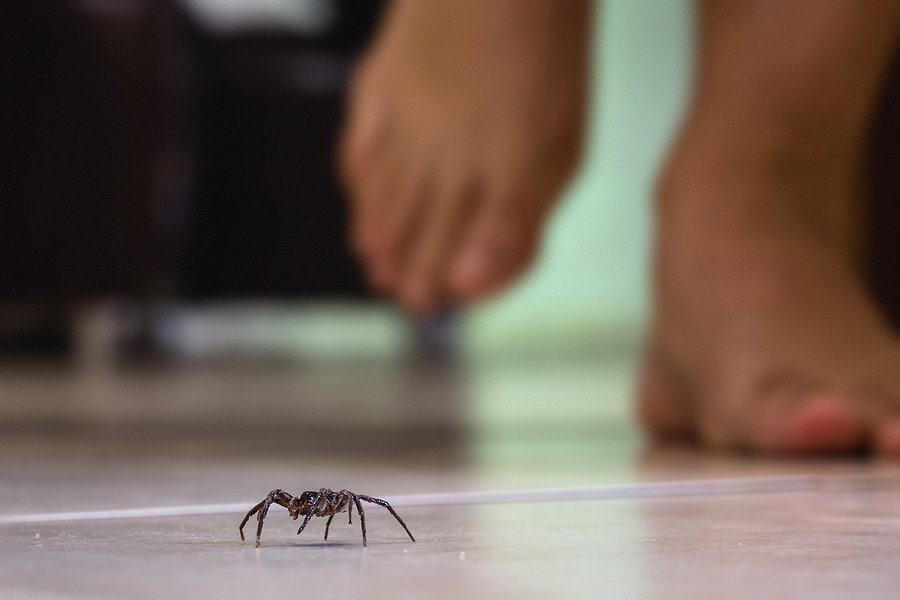
Wolf spiders are dark brown with paler stripes or markings and long, spiny legs. These spiders are large and hairy across their bodies. While these spiders will bite, it’s rare that they do and are not a significant threat to humans. Inside homes, wolf spiders tend to stay near or on the floor, especially along walls and under furniture where they chase their prey instead of capturing them in their webs. If outside, they like to inhabit firewood piles, leaves, yard debris, and stones.
Common House Spider
House spiders can vary in color but are usually yellow to brown with elongated abdomens. Although not a threat to humans, they are a nuisance to have in the home as they can produce and leave behind webs throughout the house. They can often be found in ceiling corners, under furniture, and inside closets, basements, garages, and crawlspaces. If outside, you will commonly find them spinning webs around windows, under eaves, and near light sources that attract food.
By recognizing each spider species and knowing where they most often inhabit, you can utilize the correct preventative measures to eliminate the chance of an infestation. Check out some of these easy do-it-yourself spider prevention tips:
- Keep garages, attics, and basements clutter-free.
- Avoid leaving clothes and shoes on the floor.
- Seal any cracks and crevices around the home.
- Call a professional pest control company. They will perform an inspection and provide you with the correct treatment and prevention plan for any spiders seen throughout your property.
Oct 20, 2021 | Commercial
We know your business, customers, and team are at the top of your mind; so when you spot a pest problem, you will likely ask two questions: How can you get rid of them, and where did they come from? Every business owner must be aware of what is attracting and drawing pests inside. Here we break down certain factors that could make your business vulnerable to pest invasions and some commercial pest control tips you can utilize.
Garbage & Trash
Pests need a food source to survive and trash is the perfect way for them to get it! Common pests like rodents and roaches will often seek these areas. It’s extremely important to empty the trash multiple times a day, along with keeping your business’s dumpster cleaned and maintained throughout the week. Place your trash receptacles and dumpster far away from your business building. Always make sure that the container lids are tightly sealed and always kept closed.
Irregular Cleaning
A clean business is not only appealing to customers but will also help to avoid a pest infestation. Throughout each week, regularly sweep and vacuum up food crumbs and debris from the dining areas, kitchens, break rooms, and entryways. Make sure to pay attention to areas behind furniture and appliances, as well.
Deliveries & Shipments
Packages, boxes, and containers will often host hitchhiking pests! Pests like roaches or spiders will latch onto these deliveries and easily make their way inside your business. If you can, dedicate a space inside, away from your customers, to inspect these deliveries. Some great ways to tell if there is a pest infestation, besides seeing the actual pest, is noticing any rips, tears, or holes, or seeing droppings. If you notice any of these signs of pests, take the packages outside immediately and make sure to discard the boxes away from your business.
Sep 22, 2021 | Pest Control
By Anna V., Editorial Lead — Pest Education · Last updated: May 2026
If you’ve walked into a large, intricate spider web stretched across your back porch or between two garden shrubs, you’ve almost certainly met an orb weaver spider. At Northwest, we get calls about these every August and September across Georgia, Alabama, Tennessee, and South Carolina. The conversation almost always starts the same way: I just walked face-first into the biggest web I’ve ever seen. What is this thing and is it venomous?
The honest answer to “are orb weaver spiders venomous?” is: technically yes, practically no. Almost all spiders have venom. It’s how they catch their prey. The real question is whether their venom is dangerous to humans, and for orb weaver spiders the answer is no. They’re among the most beneficial outdoor spiders in the Southeast, and most are completely harmless to people and pets.
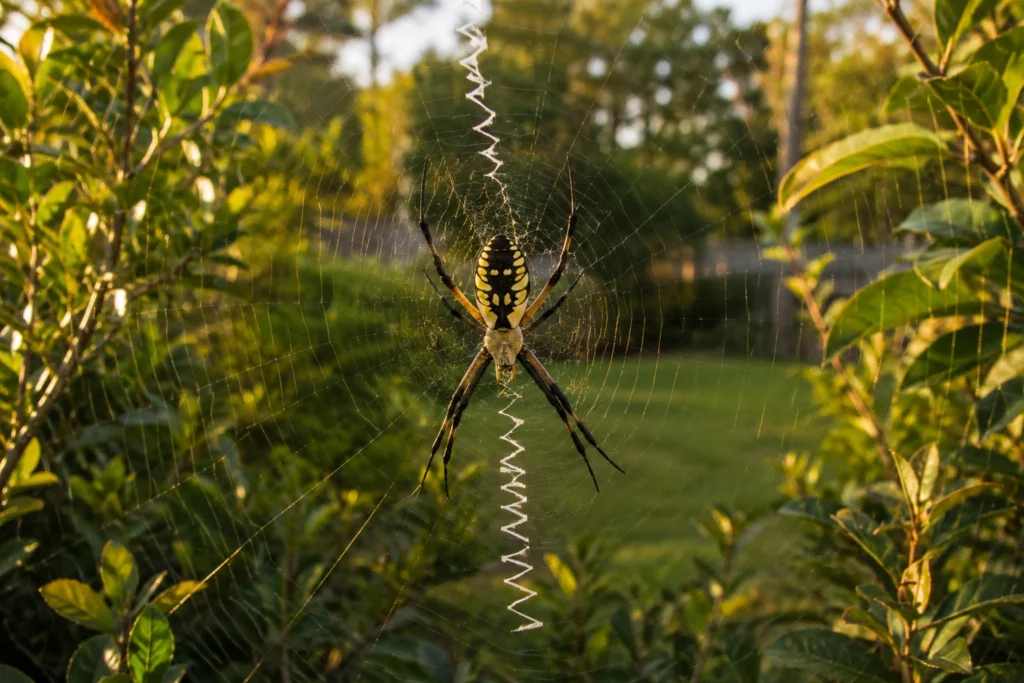
The yellow garden spider is the most commonly spotted orb weaver in Southeast yards from late summer through fall.
What Is an Orb Weaver Spider?
Orb weaver spiders belong to the family Araneidae. There are more than 3,000 species worldwide and dozens in the Southeast. They’re named for the iconic circular (“orb”) webs they build, the symmetrical wagon-wheel pattern most people picture when they hear the word “spider web.”
Three things make orb weavers stand out:
- Web architecture. The classic round web with radial spokes and concentric spirals is one of nature’s most efficient insect traps. Orb weavers often rebuild the entire web nightly, eating the old web to recycle the silk proteins.
- Outdoor lifestyle. Almost all orb weavers live outdoors in gardens, yards, wooded areas, and around outdoor structures. Indoor sightings are rare and usually accidental.
- Visible, striking appearance. Many species are large, brightly colored, and impossible to miss when they show up. This is often what generates the homeowner panic that leads to a Google search.
Orb Weaver Spider Identification
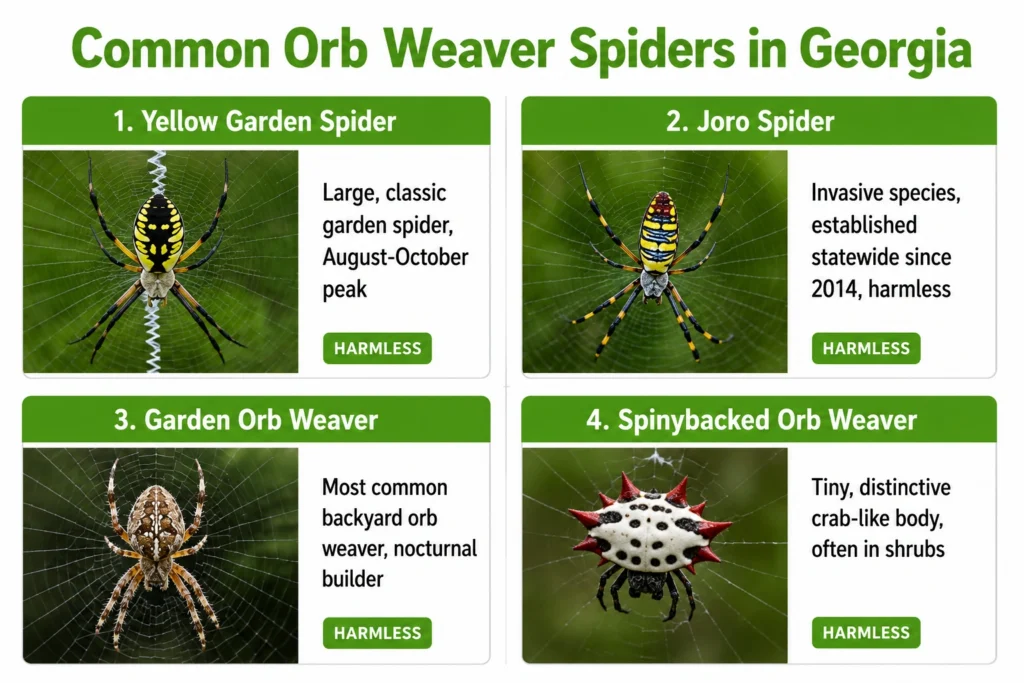
Four orb weaver species cover most sightings in Southeast yards. All four are harmless to humans.
Physical Characteristics
Orb weaver spiders vary widely in size and color, but most share these features:
- Rounded, often bulbous abdomens. Females in particular have noticeably round bodies.
- Distinctive patterns or markings. Colors range from bright yellow and black (yellow garden spider) to brown and orange (garden orb weaver) to gray with red accents (Joro spider).
- Long legs relative to body size.
- Significant size difference between males and females. Females are typically 2 to 3 times larger and are the ones you usually notice in webs. Males are smaller, less visible, and often hang at the edge of the female’s web.
Common Orb Weaver Species in Georgia
- Yellow garden spider (Argiope aurantia). The classic large black-and-yellow garden spider with the distinctive zigzag pattern (called a stabilimentum) woven into its web. Common from late August through October.
- Joro spider (Trichonephila clavata). An invasive species first confirmed in Georgia in 2014 and now established statewide. Females have striking yellow, gray-blue, and red markings with banded legs. Builds enormous multi-layered golden webs. Harmless despite their imposing appearance.
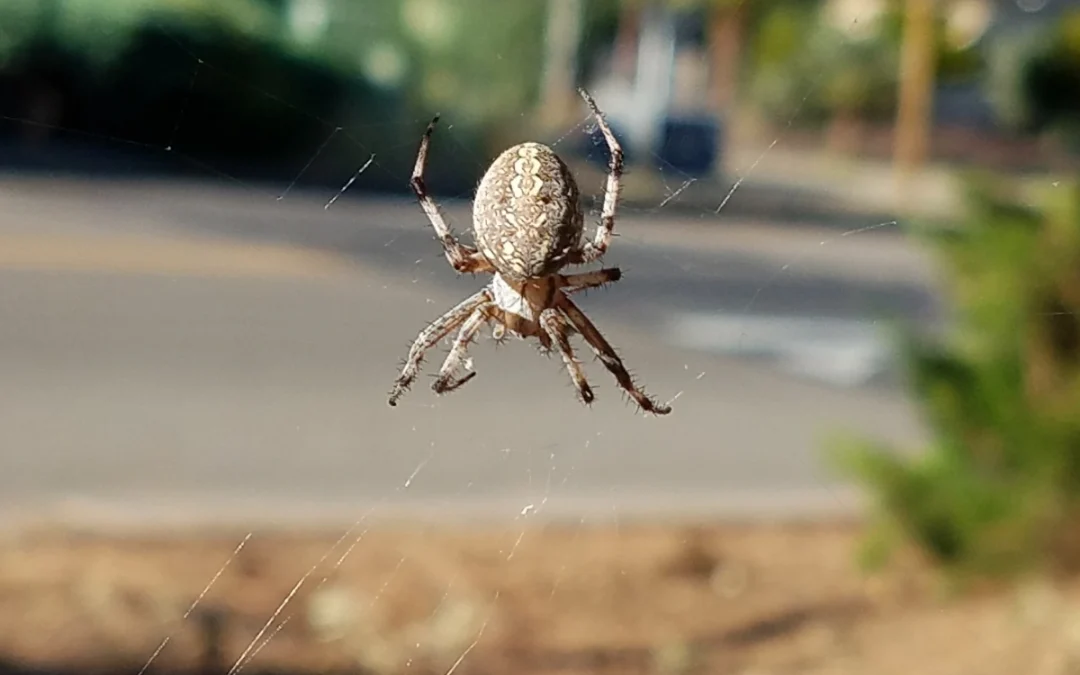
- Garden orb weaver (Araneus species). Several brown to gray species that build classic circular webs in shrubs and between fence posts. Usually nocturnal. They build webs at dusk and take them down at dawn.
- Spinybacked orb weaver (Gasteracantha cancriformis). Small (1/4 inch), distinctive white body with red spines giving a crab-like appearance. Common in shrubs and gardens. Easy to identify because nothing else looks like it.
For the broader picture of all common Southeast spider species (including the venomous ones to watch for), see our guide to common spiders in Georgia.
Web Structure
The easiest way to identify an orb weaver is by its web. Orb weaver webs are:
- Circular and symmetrical (the classic Halloween-decoration spider web shape)
- Built between two anchor points, often spanning several feet
- Often built and dismantled daily by nocturnal species
- Strong enough to catch large flying insects (some Joro webs trap small birds, though this is rare)
- Sometimes featuring a zigzag stabilimentum pattern (yellow garden spiders are known for this)
Are Orb Weaver Spiders Venomous?
Yes, technically. But it’s important to understand what “venomous” actually means here.
Almost every spider species on Earth is venomous in the technical sense. Spiders use venom to subdue their prey. What matters for human safety is whether that venom is potent enough to cause harm when delivered to a human via a bite, and whether the spider is even capable of biting through human skin.
For orb weaver spiders, the answers are: not potent, and rarely able to bite humans effectively. Their venom is well-suited to small insects (flies, mosquitoes, moths, beetles) but is not medically significant to humans. Even when an orb weaver does bite a person, the result is typically comparable to a mild bee sting.
Venomous vs Poisonous — Quick Clarification
This is a common point of confusion. The terms aren’t interchangeable:
- Venomous means the animal actively injects toxin (usually via a bite or sting). Spiders are venomous.
- Poisonous means the animal is toxic if you eat or touch it. Spiders are not poisonous.
So orb weaver spiders are venomous (they inject venom into prey) but they’re harmless to humans because the venom isn’t potent enough to cause serious effects.
Orb Weaver Spider Bites
Orb weaver bites are uncommon and rarely cause significant problems. The reasons:
- They’re non-aggressive. Orb weavers retreat when disturbed rather than approach. Their first defense is dropping out of the web and hiding.
- Their fangs are small. Most orb weaver species have chelicerae (mouthparts) that struggle to penetrate human skin.
- They bite only defensively. Bites occur almost exclusively when the spider is trapped against skin (caught under clothing, grabbed accidentally, pressed against a hand reaching into their web).
If you are bitten, expect:
- Mild localized pain similar to a bee sting
- Slight redness and swelling at the bite site
- Possible itching for a day or two
- Full resolution within 2 to 3 days without treatment
More serious reactions are extremely uncommon. As with any bite, seek medical attention if you experience unusual symptoms (severe pain, rapidly spreading redness, fever, difficulty breathing). For most orb weaver bites, washing the area with soap and water and applying a cold compress is sufficient.
Why Orb Weaver Spiders Are Common in Yards & Gardens
Orb weavers thrive where flying insects thrive. In Georgia and Alabama, that means almost every backyard from late spring through early fall. Three factors drive orb weaver populations:
- Flying insect abundance. Mosquitoes, flies, moths, beetles, and other flying insects are the main food source. Yards with lots of flowering plants, gardens, water features, or outdoor lighting tend to have more orb weavers.
- Anchor points for webs. Orb weavers need structures to stretch webs between: shrubs, fence posts, eaves, porch columns, tree branches. Suburban yards with diverse landscaping provide plenty.
- Seasonal life cycle. Most Southeast orb weaver species hatch in spring, grow through summer, and reach peak adult size from late August through October. That’s when their webs become most visible and homeowners notice them.
Late summer and early fall sightings are normal and not a cause for concern. Orb weaver populations die back naturally with the first hard frost.
Orb Weaver Spiders Around Your Home
Most orb weaver spiders stay outdoors. Indoor sightings are uncommon and usually accidental: a spider carried inside on a plant, blown in through an open door, or wandering through a porch in transition between web sites.
If you find an orb weaver indoors:
- Use the cup-and-cardboard method to capture it and release outside in a garden or near a tree.
- Or use a vacuum hose attachment to remove the spider. Quick and gentle.
- Don’t crush them indoors. Orb weavers are highly beneficial outdoor pest controllers, and there’s no reason to kill them.
If you have a web in an inconvenient outdoor location (across a frequently used doorway, on a porch you use daily), gently relocate the spider with a stick or remove the web with a long-handled duster. The spider will rebuild elsewhere within a day.
Safety & Prevention Tips for Orb Weaver Activity
Warm-tone outdoor lighting and trimmed perimeter shrubs reduce where orb weavers build webs.
Most orb weaver “problems” are really just web placement issues. The spider isn’t the problem. The location of its web is. A few changes minimize the inconvenience without harming the population.
- Reduce outdoor lighting attractants. White or bright LED porch lights attract flying insects, which attract orb weavers to build webs nearby. Switch to warm-toned (2700K-3000K) or yellow “bug light” bulbs. Fewer insects mean fewer spiders.
- Remove webs regularly. If a web is in an inconvenient spot (across a door, on a frequently used patio), remove it with a long-handled duster. The spider rebuilds elsewhere. Consistent removal in the same spot trains spiders to relocate.
- Trim back vegetation near the home. A 3-foot clearance between shrubs and exterior walls reduces anchor points for webs near doors and windows.
- Around children and pets. Teach kids to look before reaching into shrubs or web-prone areas. Most orb weaver encounters end with no incident, but a startled spider in a child’s hand can result in a bite. Standard outdoor caution applies.
- Walk paths in the morning. Orb weavers build webs at dusk and often anchor across paths. A quick walk-around in the morning with a stick clears overnight construction before you walk into it.
For broader natural prevention strategies that apply to orb weavers and other Southeast spiders, see our natural spider repellent guide.
When to Call Professional Spider or Pest Control
Orb weavers rarely warrant professional intervention because they’re outdoor spiders that don’t pose health risks. Call Northwest if:
- Orb weavers (or other spiders) are repeatedly setting up indoors in living spaces.
- You’re finding webs in multiple rooms or notable numbers of spiders inside.
- You’ve spotted a venomous species (widow spiders) alongside orb weavers and want a full treatment.
- Outdoor spider populations are large enough to interfere with normal use of porches, patios, or doorways.
- Underlying insect issues are driving spider populations. Addressing the source pest typically reduces spider activity.
Clemson Extension’s guide to large orb-weaver spiders in the Southeast covers the four most commonly seen yellow-and-black orb weavers (yellow garden spider, banded garden spider, golden silk orbweaver, and Joro) and consistently recommends keeping these outdoor spiders in place because of their ecological value. Most professional spider work focuses on entry points and underlying insect populations rather than killing the spiders themselves.
(Spider activity beyond what you want to handle? Request a free Northwest inspection and we’ll identify what’s around and address any underlying pest issues.)
Frequently Asked Questions About Orb Weaver Spiders
What does an orb weaver spider look like?
Most orb weavers have rounded abdomens with noticeable patterns or markings. Colors vary widely: yellow and black (yellow garden spider), brown to orange (garden orb weaver), gray with red accents (Joro spider), or white with red spines (spinybacked orb weaver). Females are typically 2 to 3 times larger than males. The most reliable identifier is the web: a large symmetrical circular pattern stretched between two anchor points.
Do orb weaver spiders build webs at night?
Many do. Several common Georgia orb weaver species are nocturnal builders. They construct webs at dusk and take them down at dawn, eating the old web to recycle the silk proteins. Yellow garden spiders and Joros build during the day and maintain their webs continuously.
What time of year do orb weaver spiders appear?
Orb weavers in Georgia and Alabama are most visible from late August through October. Spiders hatch in spring and grow gradually through summer, reaching maximum adult size in late summer. That’s when their webs become most noticeable. Populations die back naturally with the first hard frost.
Are orb weaver spiders helpful?
Significantly. Orb weavers are some of the most effective natural pest controllers in Southeast yards. A single yellow garden spider can catch hundreds of mosquitoes, gnats, flies, and moths over a season. Most pest professionals (including ours) recommend leaving outdoor orb weavers in place because of their value.
Are orb weaver spider bites dangerous?
No. Orb weaver bites are uncommon (they’re non-aggressive and their fangs struggle to penetrate human skin), and when they do occur, the bite typically causes mild localized pain similar to a bee sting. There are no documented cases of orb weaver bites causing serious medical issues. Wash the area with soap and water and apply a cold compress if needed.
Most spider control focuses on the underlying insect populations, not the spiders themselves.
Leave the Orb Weavers, Call About the Rest
Orb weaver spiders are some of the best outdoor pest controllers your yard has. If you can leave them alone or relocate the occasional inconvenient web, you’re getting free mosquito and gnat control for the price of one slightly creepy backyard tenant. For everything else (widow species, indoor spider populations, recurring activity in living spaces), Northwest’s team can help.
About the Author
Anna V., Editorial Lead — Pest Education leads pest education content for Northwest Exterminating, working with senior technicians and service center managers across our Georgia, Alabama, Tennessee, and South Carolina service areas to translate field expertise into homeowner-friendly guides. The focus: accurate, regionally-specific answers to the pest questions Southeast homeowners are actually searching for.