Feb 11, 2020 | Termite Control
Termites cost homeowners billions of dollars each year in damages, treatments, and repairs. While traditional termite treatments are extremely effective at eliminating and controlling termite populations, environmentally sensitive homeowners often go in search of more green pest control options. One popular trend on the market today is orange oil treatments. Orange oil is an extract from orange rinds and is commonly used in cleaning solutions and food additives. The active ingredient in orange oil treatment is D-limonene which kills termites on contact by breaking down their exoskeleton and destroying their eggs. Orange oil treatments are the most common no-tent, no move out, organic termite control solutions.
Let’s look at some of the pros and cons of orange oil termite treatments:
Pros
- Low toxicity and more environmentally friendly than other termite control options
- Effective against drywood termites, carpenter ants, and wood-boring beetles
- No need to move out at night during treatment
- No need to remove plants or board pets during treatment
- No need to bag up food or medicinal supplies during treatment
- No potential damage from treatment to roof tiles
Cons
- Not effective against subterranean termites
- Although low toxicity, should not be ingested. Prolonged exposure to oil or fumes can cause skin and eye irritation, nausea and vomiting, lung irritation, and other symptoms
- Product is flammable and combustible once wicked into wood
- Only kills termites on contact and will not kill any undetected infestations
- Treatment requires drilling holes into your walls and other wood components of your home
- Multiple treatments are required as the entire colony is usually not exterminated during a single treatment
- Treatment of larger infestations can be more expensive than fumigation methods
- Treatment can only be applied to existing infestations; there is no residual protection against future infestations
Orange oil treatments are only effective against drywood termites because these pests live and colonize the wood they are infesting. They are not effective against subterranean termites as these pests live in the soil and only come up to feed on wood. Orange oil treatments will begin with a termite inspection to determine the type of termite and the extent of the infestation. Once the areas of termite damage and activity are identified, the technician will drill a hole into the wood and treat the infested areas. Orange oil is then injected into these drilled holes where it spreads throughout the wood beams via capillary action, passing through porous cells in all directions. This kills any termites and eggs on contact. This does not, however, kill any termites that don’t come in contact with the oil treatment. After treatment, the holes are then patched and painted.
In summary, orange oil does, in fact, kill termites but it is limited in its effectiveness. It is considered a secondary spot treatment as it is only effective when it is applied to areas with active infestations. Any termites that remain undetected and untreated will continue to eat, continuing the damage to your home. Because of this, multiple treatments are usually required. These treatments don’t eliminate the entire termite colony, leaving your home vulnerable. Whole structure treatment (fumigation) is a guaranteed method of completely exterminating termites from a structure. During fumigation, the whole house is treated at once. Fumigant gas is used to penetrate the walls, floor, lumber, and other surfaces where termites reside. If you suspect you have a termite issue, contact a professional pest control company who can help identify the type of termite you have, the scope of the infestation, and the best treatment options for your home.
You May Also Be Interested In:
How Much Does It Cost To Remove Animals From Your Attic?
Is Mosquito Control Needed in Winter?
Cold Weather Sends Roaches Indoors: 5 Tips to Prevent Them This Winter
Is Green Pest Control Worth The Investment?
Winterize Your Home With TAP Insulation

Jun 10, 2019 | Bed Bug, Pest Control, Termite Control
Just as the weather changes with the seasons, pest activity shifts to usher in new groups of active pests. Let’s take a look at what pests are active in your area and some tips to keep them away.
Subterranean Termites
The humidity and moisture that come with early summer is what helps to increase subterranean termite activity. “Swarm season” is in full effect, and this can present a problem for your home.
- Avoid water accumulation around your home, specifically around the foundation.
- Invest in a moisture-reducing program to help reduce humidity in your home’s crawl space.
Bed Bug
Summer is the biggest travel time for many. College students are coming back home, and family vacations are planned. This increases the chances of having an incident with bed bugs, and a bed bug infestation is no easy battle.
- When returning from vacation, leave suitcases in the garage or driveway. Remove clothing and take immediately to your laundry room to be washed in warm water.
- Consider packing a large garbage bag to place your suitcase in while on vacation.
- Do not unpack your clothing and place them in the hotel drawers as these can be hiding places for bed bugs.
American Cockroaches
As the summer weather starts to rev up, American cockroach activity will skyrocket. While they live outdoors, if they find themselves low on food or if the weather experiences a drastic change (extreme heat or excessive rain), they will try move indoors.
- Put dirty dishes directly into the dishwasher or wash them immediately after using them instead of leaving them in the sink overnight.
- Make sure to eliminate any sources of standing water around your home.
Pest infestation can be costly and a major hassle. Contact a professional pest control company like Northwest for a free pest control estimate to protect your home from pests year-round.
Apr 20, 2018 | Termite Control
If you’ve been outside lately you’ve probably seen signs of spring – blooming flowers, pollen that aggravates our allergies, and lots of new insects buzzing around. Another thing that spring brings is swarms – of termites! Termites are present year round but their swarming season is during spring and early summer.
Termites cause billions of dollars in damage to homeowners each year. Here in the Southeast, subterranean termites are the most common types and are particularly destructive. These insatiable eaters can damage not only wooden structures, but have even been known to cause damage to brick and concrete homes as well. Termites can invade your home through cracks and holes as small as 1/32 of an inch!
Swarms are most common in spring and summer because they are triggered by warm, humid weather. Swarming marks the start of a new termite colony. Winged termites leave their nests when they become overcrowded and their isn’t enough food to sustain them. They then take flight and actually reproduce in mid-air. The females will then shed their wings and fall back to the ground. They then go in search of a new location to start their colonies.
Swarmers don’t usually cause any damage but once they establish their new colonies their offspring can cause significant damage – usually within 2 years. If you see flying termites it can signal one of two problems:
- There could be an existing termite problem nearby.
- Your home could potentially be at risk of a termite infestation when the swarm lands looking for a new place to colonize.
If you see winged termites inside your home this is a good indication that you already have an established termite colony inside or that there is existing damage already.
What can you do to prevent termites from coming into your home? Check out these tips to keep the termites out!
- Have regular inspections done by a termite control company.
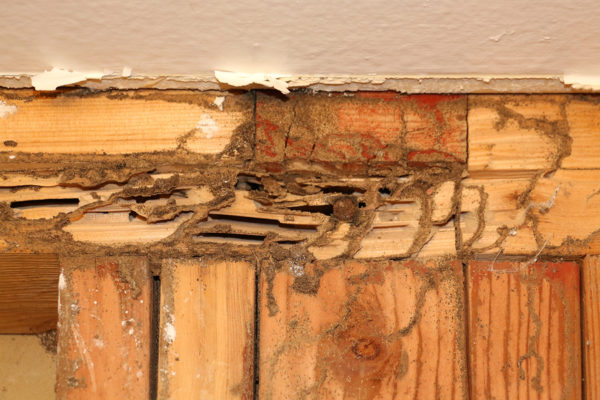
- Do regular inspections of the outside of your home and the subfloor of your home checking for wood damage and the presence of mud tubes. (Mud tubes are pencil-sized tunnels located around termite nests, wood structures, and concrete or stone foundations.)
- Repair any damaged roof tiles, soffits, and fascia on your home.
- Keep mulch away from your foundation as this retains water and the moisture can attract termites.
- Keep your basements, attics, and crawlspaces well ventilated and dry. Consider enclosing your crawlspace completely.
- Make sure gutters are clear of debris and downspouts are working to make sure water is diverted away from your home. Consider installing gutter guards to help prevent clogs.
As always, if you suspect you have termites or find signs of damage, contact a termite control company who can come in and do a thorough inspection and set you up with a comprehensive treatment plan.

Mar 18, 2016 | Termite Control
The first official day of spring is Sunday, March 20th (the earliest arrival of spring of our lifetime so far in the Northern Hemisphere, according the the Old Farmer’s Almanac). This is also the first official day of termite season!
Termites cause billions of dollars in structural damage each year in the U.S. Don’t let your home be part of the statistic! Here are some things you can do to prevent termite damage:
- Keep any items made of wood away from your home: firewood, cross ties, construction projects – all are potential food sources for termites
- Another food source for termites: mulch; keep it away from your home’s perimeter
- Termites love moisture, so eliminate sources of moisture by keeping gutters clean
It’s also important to know what to look for. Identifying a termite infestation early is key in preventing damage to your home. Termites swarm in the spring and although swarming termites don’t cause damage, it’s a sign of a destructive termite colony nearby. Swarming termites are often mistaken for flying ants; they have two pairs of long narrow wings, equal in size and, unlike other termites in the colony, are dark or black in color. Warm or wet weather brings termite (subterranean) swarmers out of their nest, typically during daytime hours, to start new colonies. They’re attracted to light so you’ll most likely see swarming termites around windows, doors, and light fixtures, or the wings they sometimes leave behind.
If you notice termite swarmers in your home, it’s a good indication of an established termite colony nearby, that could be causing significant structural damage. If you have an active termite warranty, call your exterminator and request a termite inspection. If termite activity is found, you should be provided with termite treatment options and, depending on your warranty’s coverage, damage repair solutions.
If you don’t currently have termite protection, call a professional termite control company immediately. They will provide a thorough inspection of your home (usually free) and give you the best treatment options to eliminate the active termites and prevent a future termite infestation. Be sure your pest control provider offers multiple warranties with damage repair options. Some even offer lifetime damage repair warranties with termite baiting systems, like Sentricon Always Active, an eco-friendly alternative to termite control.