Mar 18, 2016 | Termite Control
The first official day of spring is Sunday, March 20th (the earliest arrival of spring of our lifetime so far in the Northern Hemisphere, according the the Old Farmer’s Almanac). This is also the first official day of termite season!
Termites cause billions of dollars in structural damage each year in the U.S. Don’t let your home be part of the statistic! Here are some things you can do to prevent termite damage:
- Keep any items made of wood away from your home: firewood, cross ties, construction projects – all are potential food sources for termites
- Another food source for termites: mulch; keep it away from your home’s perimeter
- Termites love moisture, so eliminate sources of moisture by keeping gutters clean
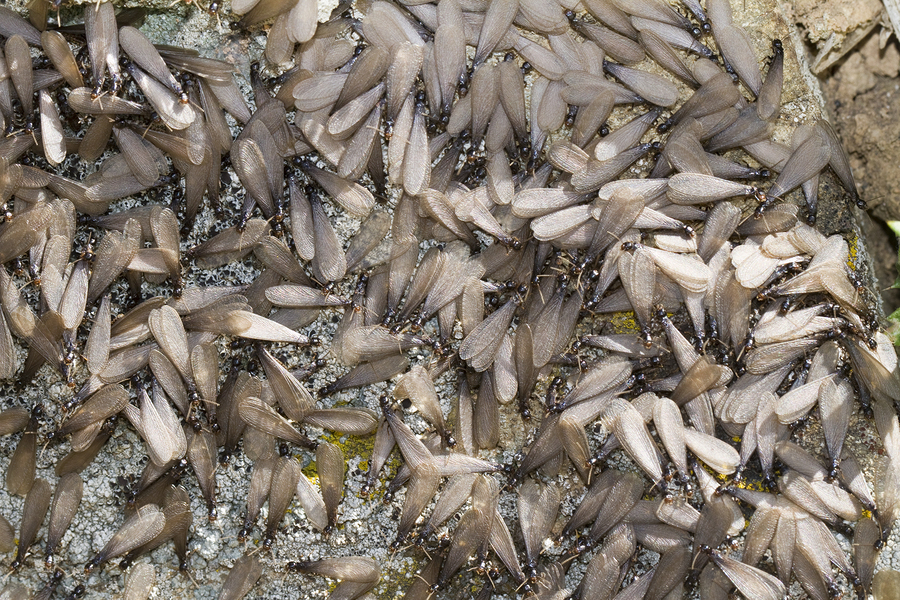
It’s also important to know what to look for. Identifying a termite infestation early is key in preventing damage to your home. Termites swarm in the spring and although swarming termites don’t cause damage, it’s a sign of a destructive termite colony nearby. Swarming termites are often mistaken for flying ants; they have two pairs of long narrow wings, equal in size and, unlike other termites in the colony, are dark or black in color. Warm or wet weather brings termite (subterranean) swarmers out of their nest, typically during daytime hours, to start new colonies. They’re attracted to light so you’ll most likely see swarming termites around windows, doors, and light fixtures, or the wings they sometimes leave behind.
If you notice termite swarmers in your home, it’s a good indication of an established termite colony nearby, that could be causing significant structural damage. If you have an active termite warranty, call your exterminator and request a termite inspection. If termite activity is found, you should be provided with termite treatment options and, depending on your warranty’s coverage, damage repair solutions.
If you don’t currently have termite protection, call a professional termite control company immediately. They will provide a thorough inspection of your home (usually free) and give you the best treatment options to eliminate the active termites and prevent a future termite infestation. Be sure your pest control provider offers multiple warranties with damage repair options. Some even offer lifetime damage repair warranties with termite baiting systems, like Sentricon Always Active, an eco-friendly alternative to termite control.
Feb 27, 2015 | Termite Control
You probably aren’t too concerned with termites just yet, with the recent icy weather here in Georgia and the Southeast. BUT…prevention is key to preventing termite damage and now is the time to get prepared.
In the South, termites start swarming in early Spring. So if you don’t already have a termite control plan, it’s time to think about getting one. While swarming termites do not cause structural damage, it’s a sign that a termite colony is hard at work nearby. This could mean severe structural damage to your home that will result in hundred and thousands of dollars in repair costs. So what’s the solution?
Termite Prevention
There are several methods of termite control and deciding which termite treatment is right for your home can be overwhelming. After all, we’re talking about protection for one of your largest investments! And since termite damage typically isn’t covered by homeowners insurance, it’s important to not only have your home treated, but to have a solid termite warranty.
Termite Treatment Options
If you have a really good understanding of how termites work, you could attempt DIY termite control. There are several options for this from traditional liquid barrier treatments to termite baiting systems. This can be a difficult task if you have any slabs attached to your home or a basement. A liquid barrier must be complete with no breaks in order to keep termites out. Want a pro? Keep reading.
Liquid Barrier Termite Treatment
Some pest control companies will recommend a liquid treatment if you have active termites or damage. This provides instant and long-term termite protection. Make sure your termite company includes a good warranty with your treatment, ideally one that covers termite re-treatments and any damage caused post-treatment.
Borate Wood Treatment
This type of termite treatment is ideal when your home is in the construction phase. The wood frame is treated with a product called borates, elements from the earth, that will give you permanent termite protection and also help ward off common household pests.
Termite Baiting Systems
Baiting Systems are proven effective at eliminating entire termite colonies underground around your home, less invasive than liquid treatments, ideal for new and existing construction, and usually come with a lifetime warranty. It’s also the environmentally-responsible way to protect your home from termites, by eliminating the use of hundreds of gallons of chemicals. With Sentricon Always Active, our preferred choice for baiting systems, monitoring devices are placed in the ground strategically around your the perimeter of your home. The devices have a bait tube inside that termites are attracted to. Termites will find the stations, eat the bait and share with their colony, resulting in colony elimination.
Other things you can do to prevent termites:
1. Keep mulch away from your home’s perimeter. This is a food source for termites.
2. Keep any items made of wood away from your home. Firewood, cross ties, that construction project you’ve been working on…all are potential food sources for termites.
3. Keep your gutters cleaned. Termites love moisture so keeping the ground around your home dry is key.
Signs of a potential termite infestation:
If you see a swarm of “flying ants”, it’s probably termites. Find out more on how to tell termites from ants here.
Termite swarmers will usually leave behind small transparent wings. If you see anything like this around your home, call an exterminator.
For more specific information on termite control in your area:
Atlanta Termite Control
Savannah Termite Control
Nashville Termite Control
May 5, 2014 | Uncategorized
Could your gardening ideas effect your termite treatment?
Spring time is an ideal time to get out in the yard, work in your garden, dig in the dirt…all those enjoyable things we like to do in the warm weather. These are great ways to improve the aesthetics of your property and also enjoy the sunshine. Hold the shovel! Wait one second before you start digging in the dirt!
Digging around the foundation of your home could disturb your termite barrier system. Minor disturbances are nothing to worry about but a major disruption can put the effectiveness of the treatment in jeopardy…causing concern for your home.
What to consider before digging around your foundation?
Mulch is a great way to spruce up your yard. Mulch provides protection, warmth, and moisture to plants but can also provide those same things to termites. Not to mention that mulch is wood! TERMITES LOVE WOOD! Other pests, such as, roaches and earwigs also find comfort in mulch.
This doesn’t mean you shouldn’t use mulch around your home.
Don’t be discouraged. You can still use mulch around your home. Just make sure when using mulch that it is kept 1-2 feet away from the structure. Any wood that is in contact with soil and your foundation is considered a major risk for termites.
If you’re concerned about disturbing your termite treatment or suspect you may have termites, give us a call!
Apr 4, 2014 | Uncategorized
Northwest Exterminating encourages public awareness of termites during the spring season
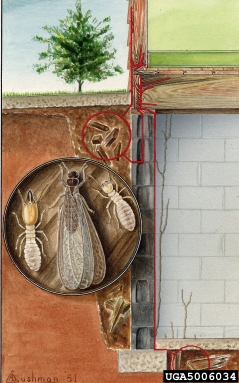
Source – UGA entomology
As temperatures continue to increase across the country and the ground becomes warmer, winged termites will emerge in search of a suitable spot to create a new colony, often in residential settings. We want to take this opportunity to educate homeowners about the threat of termites and the possible signs of an infestation this spring.
Termites feed 24 hours a day, seven days a week on the cellulose found in wood and paper products. They are known as “silent destroyers” due to their ability to compromise the structure of a home without being noticed until it’s too late.
Termites are very destructive and the damage inflicted can be quite costly if left untreated. Each year, termites cause more than $5 billion in property damage, so it’s important for homeowners to be on the lookout for signs of these wood-destroying pests in and around their property.
Here are a few clues that termites may be present in a home:
- Mud tubes (used by termites to reach a food source) on the exterior of the home
- Soft wood in the home that sounds hollow when tapped
- Darkening or blistering of wood structures
- Cracked or bubbling paint
- Small piles of feces that resembles sawdust near a termite nest
- Discarded wings near doors or on windowsills, indicating swarmers have entered the home
- If homeowners notice any of these signs, they should contact a pest professional who can best determine the extent of the problem and recommend a proper treatment plan
For more information on termites, please visit https://www.callnorthwest.com/termite-control/.
Mar 27, 2014 | Uncategorized
With Spring upon us, the temperature will start to get warmer, finally! This is great news for us, but it also means that insects are beginning to come out of hibernation. Two insects of great concern, particularly in the spring, are the ant and the termite.
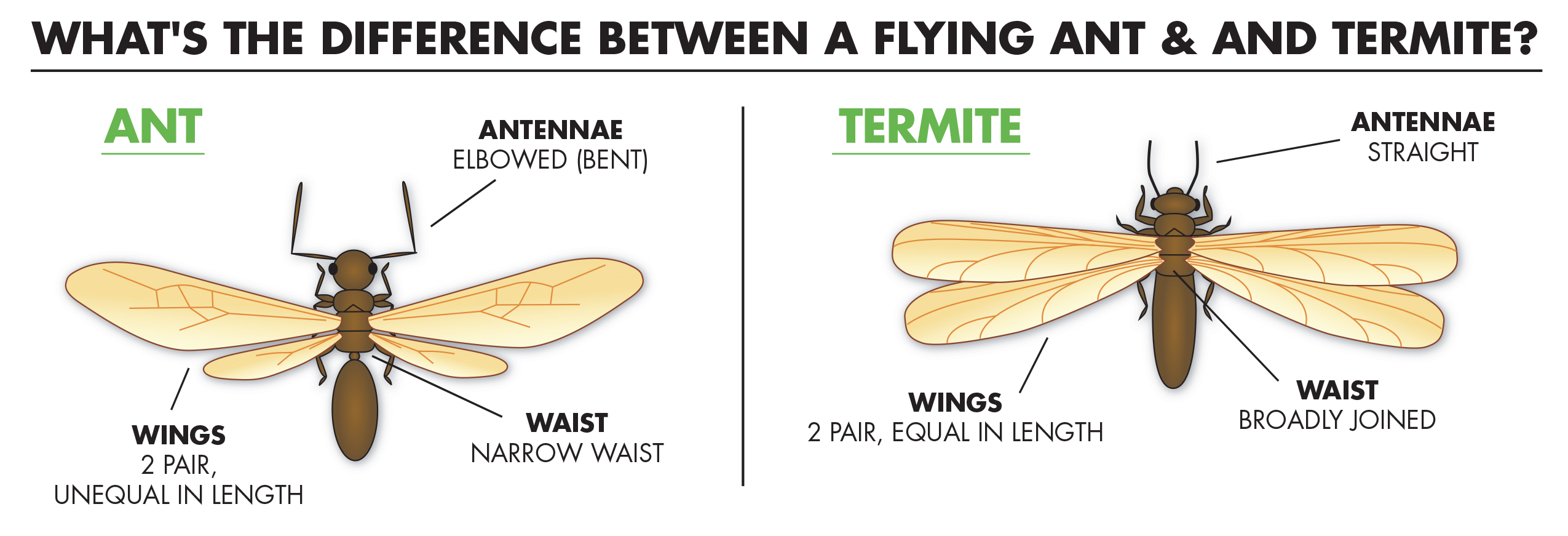
Both of these insects, flying ants and termites, will begin to swarm soon, so it is important to know the differences between them so you can help out your Pest Management Professional. Should you catch one, there are three noticeable differences between a flying ant and a termite.
- Ants have bent antennae. They look like they have an elbow. Termites have straight antennae.
- Ants have a narrow waist. Have you seen the old pictures of women in corsets? That is what the waist of an ant swarmer will look like. The termite looks uniform from top to bottom.
- Ants have wings that are two different lengths – the best analogy is a butterfly wing. The top wing is longer than the bottom one, similar to how a butterfly wing looks. Termites have wings that are the same length. (I caught one the other day, and it looked like one giant wing stacked together, not four individual parts.)
If you see swarmers and are worried, call your local Northwest Exterminating Service Center. They will be happy to help you with all of your pest control needs, and can target problem insects as needed.
Katherine King
[email protected]