Mar 19, 2024 | Florida Mosquito Control
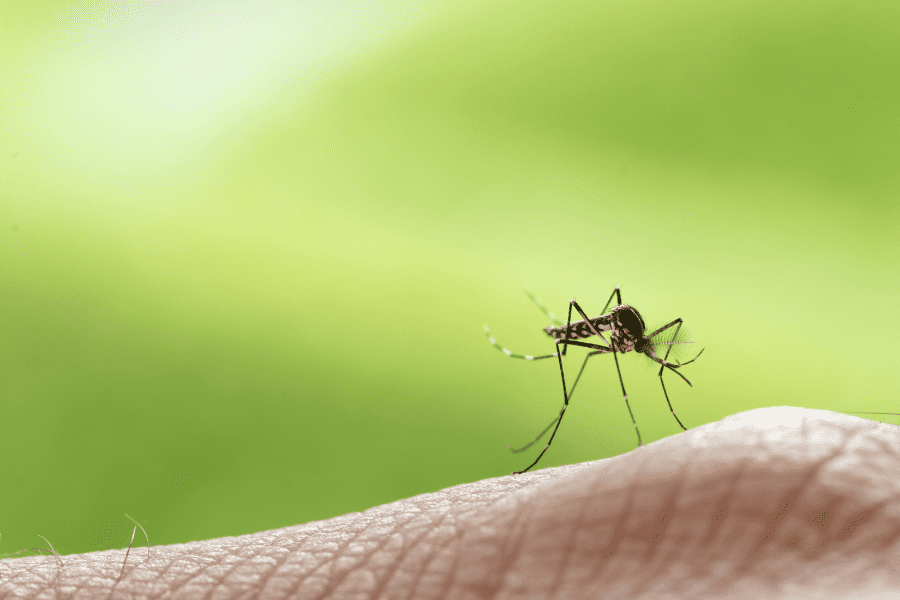
Florida’s tropical weather creates a thriving mosquito environment, often dealing with these nuisance pests year-round. Once mosquitoes invade your yard, they can ruin all your outdoor fun and even transmit diseases, including the West Nile and Zika viruses. One of the best ways you can avoid mosquitoes is creating a less-attractive environment. We breakdown our top 3 mosquito prevention tips you can use throughout your property so you can enjoy your yard again!
3 Common Mosquito Control Tips for Florida Residents
Remove Standing Water
To survive and breed more larva mosquitoes, these pests need the smallest amount of standing water. It’s crucial to remove all standing water from your property, especially after a thunderstorm. Consider the following tips to reduce moisture on your property:
- Remove items that can hold water, including buckets, empty flowerpots, and pet bowls.
- If you have a bird bath, regularly dump old water, clean out debris, and replace the old water with new.
- Clean out clogged gutters of debris and leaves so they doesn’t create a mosquito breeding ground.
Keep a Tidy Yard
Your yard line is the first defense in avoiding mosquitoes so it’s crucial to maintain it on a regular basis; consider these tips on keeping a tidy yard:
- Continue to mow your grass and trim shrubbery as mosquitoes tend to hide in these areas.
- Trim any overgrown trees back to avoid mosquitoes from populating your yard.
- If you store wood on your property, consider placing it in plastic containers with lids and at least 20 feet away from the house.
Call the Pros
Do-it-yourself mosquito prevention will always help efforts in avoiding a mosquito infestation but sometimes it’s best to call a professional mosquito control company for help. These experts will be able to provide you with a mosquito control plan, which typically include:
- Mosquito breeding site identification
- Treatment to eliminate both adult and larva mosquitoes
- Recommendations on preventing mosquitoes in the future
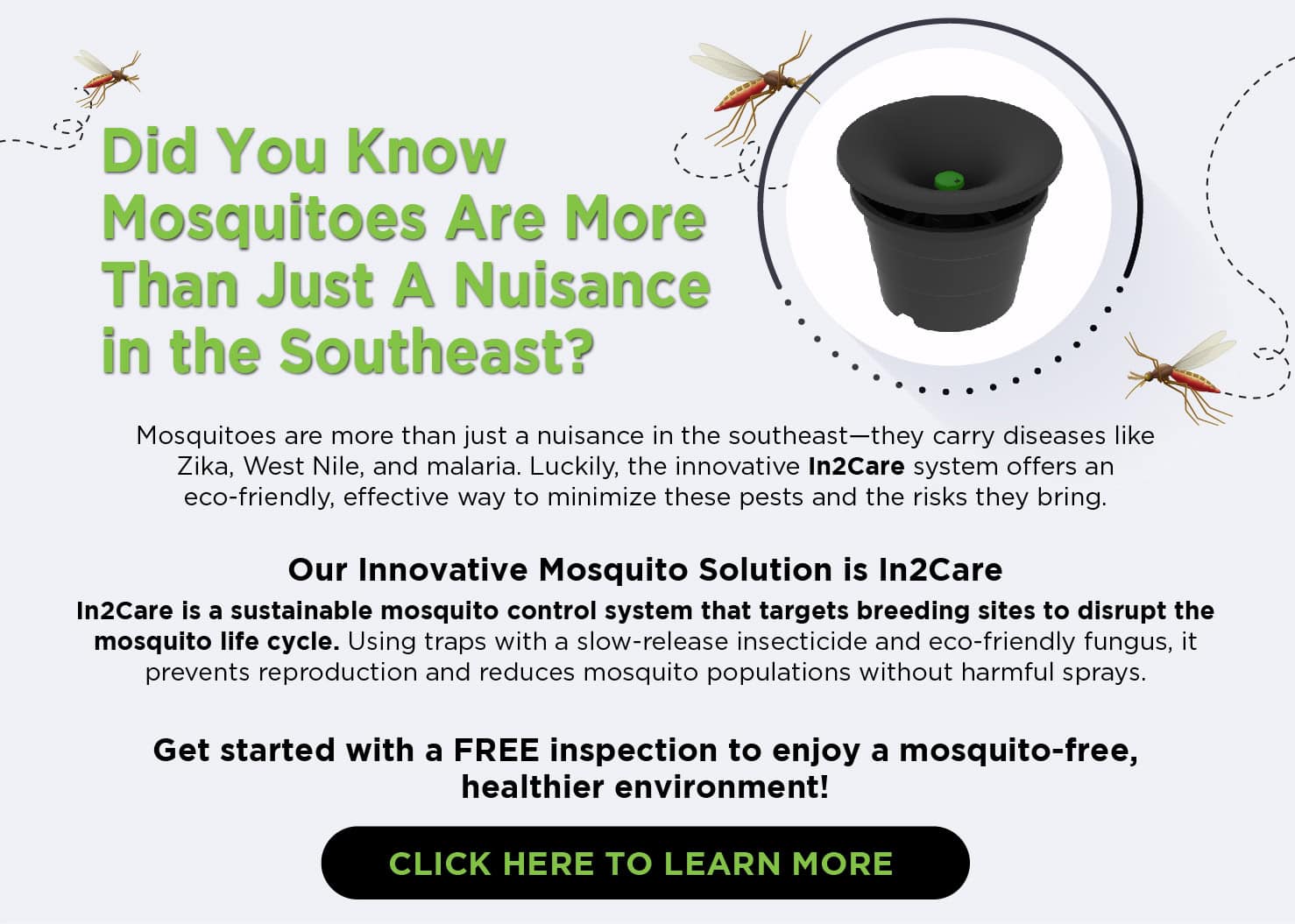
- Additional mosquito control solutions, including the In2Care System
If you have a problem with mosquitoes or would like to start mosquito prevention now, call your Florida pest control company today!

Feb 29, 2024 | Florida Mosquito Control
It’s safe to say that all Florida homeowners dread the arrival of mosquito season! It’s inevitable to run into these insects but that doesn’t mean they have to take over your yard. We breakdown common DIY mosquito control tips you can utilize in your yard!
DIY Mosquito Prevention Tips for Florida Homeowners
Eliminate Standing Water
To survive and breed, mosquitoes only need a small amount of water and will look to your yard for it. One of the best ways to repel mosquitoes from your property is to reduce standing water throughout it. Remove any items that could hold water for more than a week and become a mosquito breeding ground, including empty flowerpots, buckets, tires, toys, and pet bowls. For items that tend to stay outside, like birdbaths and gutters, make sure you are regularly cleaning them, clearing out old water and debris.
Consider a Fan or Two
Your back porch or patio can quickly be taken over by mosquitoes and ruin your outdoor fun. Mosquitoes are weak fliers and are easily manipulated by wind. Consider utilizing fans to help deter them from getting close to you in certain outdoor areas. Fans can also work to disperse carbon dioxide and other mosquito attractant odors our warm-blooded bodies let off.
Plant Natural Repellents
Certain plants and oils can deter mosquitoes naturally from your Florida home. You can mix essential oils such as lemon eucalyptus, peppermint, or tea tree with water and vinegar to repel mosquitoes. Likewise, there are several plants you can plant in your yard to deter mosquitoes, including citronella, lavender, marigold, rosemary, thyme, and basil.
Keep a Tidy Yard
Adult mosquitoes tend to rest in shaded, cool areas so it’s important to create an environment without these factors to keep them away. Continue maintaining your yard by keeping your grass mowed frequently and keeping shrubbery trimmed. If your yard has wood or lawn debris, it’s best to clean up as soon as possible or relocate it at least 20 feet away from the property.
Call Your Florida Pest Provider
While the above DIY tips can provide mosquito-relief sometimes it’s best to call a professional for an ongoing solution to mosquito activity. A pest control provider near you will provide you with a thorough inspection and recommend the best mosquito control options for your home based on your mosquito situation. These mosquito professionals will also provide you with further tips and tricks on avoiding mosquito infestations in the future.
Oct 20, 2023 | Florida Mosquito Control
In Florida, it can seem like mosquito activity will never end. With our tropical, humid weather, mosquitoes thrive and invade our yards looking for standing water to breed. Besides being a nuisance, these pests can also pose health hazards to both humans and animals, transmitting diseases like the West Nile virus and the Zika virus. So, when does mosquito season end in South Florida?
Mosquito Season in Florida
The official mosquito season typically runs from around March through September or October. Though, since Florida is in a tropical area, mosquito season tends to be year-round, often starting as early as February and ending as late as November. While it’s not ideal to deal with mosquitoes year-round, there are certain things you can do around your home to prevent these pests from taking over your yard. Check out our do-it-yourself mosquito control steps you can take to help minimize mosquitoes around your property:
- Eliminate Standing Water: Inspect your property and look for items that can hold water and remove them, including buckets, flowerpots, bird feeders, old tires, wheelbarrows, and more.
- Clean Gutters: Clogged gutters will create a perfect breeding ground for mosquitoes, who only need a small amount of water to do so. Make sure your gutters are free of debris and leaves, especially after a rainstorm.
- Fill in Hollow Areas: Low lying areas like ditches can collect water, make sure you fill them in with dirt if you spot them. Likewise, make sure to check for logs and stumps holding water and remove them as they can provide a place for mosquitoes to habitat during the cold weather.
- Seal Gaps: Inspect your foundation for any openings and holes, repairing them as soon as you can with caulk or wool steel depending on the size. Likewise, inspect your door and window screens for openings throughout your home and replace them if needed.
- Tidy Your Yard: Mosquitoes like tall grass, shrubbery, and damp woodpiles, making it important to keep your grass mowed and cut your shrubs back regularly. Likewise, store your wood piles at least 20 feet from your home and elevate it off the ground.
- Plant Mosquito-Repelling Plants: Citronella, lavender, marigolds, rosemary, thyme, and basil are all plants and flowers that can help repel mosquitoes because of the oils they contain, consider planting these in your yard.
- Consider a Pro: Fighting mosquitoes can feel like a never-ending battle when you live in South Florida; consider calling a professional pest control company who can provide a mosquito elimination service and control options to prevent them in the future. These mosquito professionals will inspect your yard, provide source reduction, recommend elimination techniques, and target adult and larvae mosquitoes.
Jul 6, 2023 | Pest Control
Insect repellent is not only used to prevent bites from insects; it also plays a vital role in public health. Proper repellent protects large populations of people from the diseases spread by mosquitoes and other biting insects. With that in mind, the next question is, what is the best repellent to use? There are several options available worldwide but two of the most common are those containing DEET and picaridin. Let’s break down the pros and cons of each.
DEET
DEET has been used since its development in the 1940s. It was originally developed to protect US soldiers from mosquito-borne diseases while they were serving overseas. It is considered the most popular repellent product on the market and, in fact, is endorsed by the World Health Organization. Because it has been available for such a long period of time, there is a large volume of data on its use, safety, and efficacy.
DEET is a synthetic compound that is effective at repelling mosquitoes and ticks for anywhere from 1 to 6 hours, depending on how high of a concentration is applied. It also has a low rate of adverse effects.
Adverse effects are usually only reported when a high concentration of product is applied. For this reason, it is recommended to use a lower concentration with more frequent applications. The most common adverse reaction is a rash and skin irritation. Some people report an aversion to the smell. Others dislike the greasy residue DEET leaves on the skin.
DEET is known to dissolve some plastics and can cause damage to sunglasses if not cleaned off immediately. It can also damage some synthetic materials like spandex, rayon, and vinyl, which commonly make up clothing worn during the time of year when mosquitoes are active.
Picaridin
Picaridin was developed in the 1980s and was made available in Australia and Europe on 1998 and the US in 2005. The delay in availability was due to the need for ongoing testing regarding safety and efficacy. It is now the best selling repellent in both Europe and Australia. Picaridin is reportedly as effective as DEET.
Picaridin is a synthetic chemical produced to mimic the naturally occurring piperidine. It is also known as icaridin. The EPA has deemed picaridin safe for use on human skin. Proponents of picaridin prefer it over DEET because it is not as greasy, is odorless, and doesn’t damage plastics or synthetic clothing. Some US companies are already producing products containing picaridin, such as Cutter Advanced, Sawyer Premium, and Repel Smart Spray.
Picaridin doesn’t appear to have any negative effects on the environment. It is mildly toxic to some fish in large doses but is nontoxic to birds and land mammals. It may bind to soil but it is broken down by bacteria in the soil before it can leach into groundwater.
DEET vs Picaridin
Both DEET and picaridin are considered safe for human use. Both are proven to be effective at repelling mosquitoes and other biting insects for about the same length of time. The CDC does not recommend the use of either product in infants under 2 months of age. They do recommend the use of either for children older than 2 months of age and for adults. the EPA also considers both products safe for use during pregnancy.
It is important to note that picaridin is shown to be AS effective as DEET but not MORE effective than DEET. When deciding between the two, the decision is based less on efficacy and safety and more on personal preference.
As always, if mosquitoes or other biting insects are causing problems for you in or around your home, contact your local pest control company for a free evaluation.
Jun 29, 2023 | Pest Control
While most people associate summer with warmer weather and more time spent outdoors, it also marks peak season for many Georgia pests. Here are 5 of the most common summer pests in Georgia and how to prevent them.
Mosquitoes
Mosquito season peaks in summer (peak months are June to September) with activity at hits highest. Mosquitoes are most active at dawn and dusk. These pests transmit serious diseases to both humans and pets. They also breed in standing water found around your home. You can get rid of mosquitoes this summer by:
- Getting rid of any standing water around your home.
- Wearing mosquito repellent when spending time outdoors.
- Avoiding any outdoor activities at dawn and dusk.
Ticks
Ticks are active from late spring to early fall. These summer pests are known to transmit serious disease to humans and pets. They are commonly found wooded areas and areas with tall grass. Avoid ticks this summer by:
- Wearing long sleeves and pants.
- Checking for ticks after any time spent outdoors.
- Routinely checking your pets for ticks.
- Using vet approved tick preventatives on your pets.
Spiders
Spiders are common in summer as they are often driven from their hiding places by the warmer temperatures (e.g. your attic). While spiders are beneficial to have around as they eat other common pests found in your home, they can be a nuisance. Keep spiders at bay this summer by:
- Sealing around pipes and under doors.
- Using a dehumidifier to keep moisture out.
- Decluttering your home.
- Sweeping cobwebs down as soon as they appear.
Ants
Ants emerge in the summer in search of food (particularly sweets and grease) that they take back to their colonies. This is why they are often found in kitchens. You can prevent ants by:
- Getting rid of debris around foundations.
- Keeping your kitchen clean and crumb free, especially counters and appliances.
- Storing food in sealed containers.
- Trimming branches back from the exterior walls and roof of your home.
Stinging Pests
Stinging pests, such as wasps, hornets, bees, and yellow jackets, are prominent in the summer months. These pests will often forage for food during the warmer weather. Avoid stinging pests by:
- Covering food and drinks when outdoors.
- Avoiding sweet or flowery smelling perfumes.
- Repairing holes in decking, siding, and screens to eliminate nesting spots.
- Maintaining routine lawn care.
Don’t let summer pests ruin your time outdoors. Contact your local pest control company today for a free evaluation.