
Where Are All of These Roaches Coming From?
Quick answer: Roaches usually get into a home through drains, gaps around plumbing, worn door sweeps, and openings around utility lines. They can also arrive in boxes, grocery bags, furniture, or appliances. A sighting is only a snapshot of the activity. Roaches often hide near food, water, and shelter, particularly in kitchens and bathrooms, though locations vary by species. Spraying visible roaches may not solve the problem. Finding and treating the harborage, the protected place where they live and breed, helps address the source.
Roach sightings can feel sudden, but the source is usually an entry route or a nearby harborage. The species helps determine where to look first.
Where are roaches actually coming from?
Roaches need food, water, and shelter. They may enter through drains or gaps around plumbing and utilities, come through doors or windows, or hitchhike indoors in bags, boxes, furniture, and appliances. The likely route depends on the species.
“When I inspect a home, I start near the sighting and look for food, moisture, and protected hiding places. Kitchens and bathrooms are useful places to check, but the likely harborage depends on the species.”
Zac Freeman, Branch Manager, Cullman, Alabama
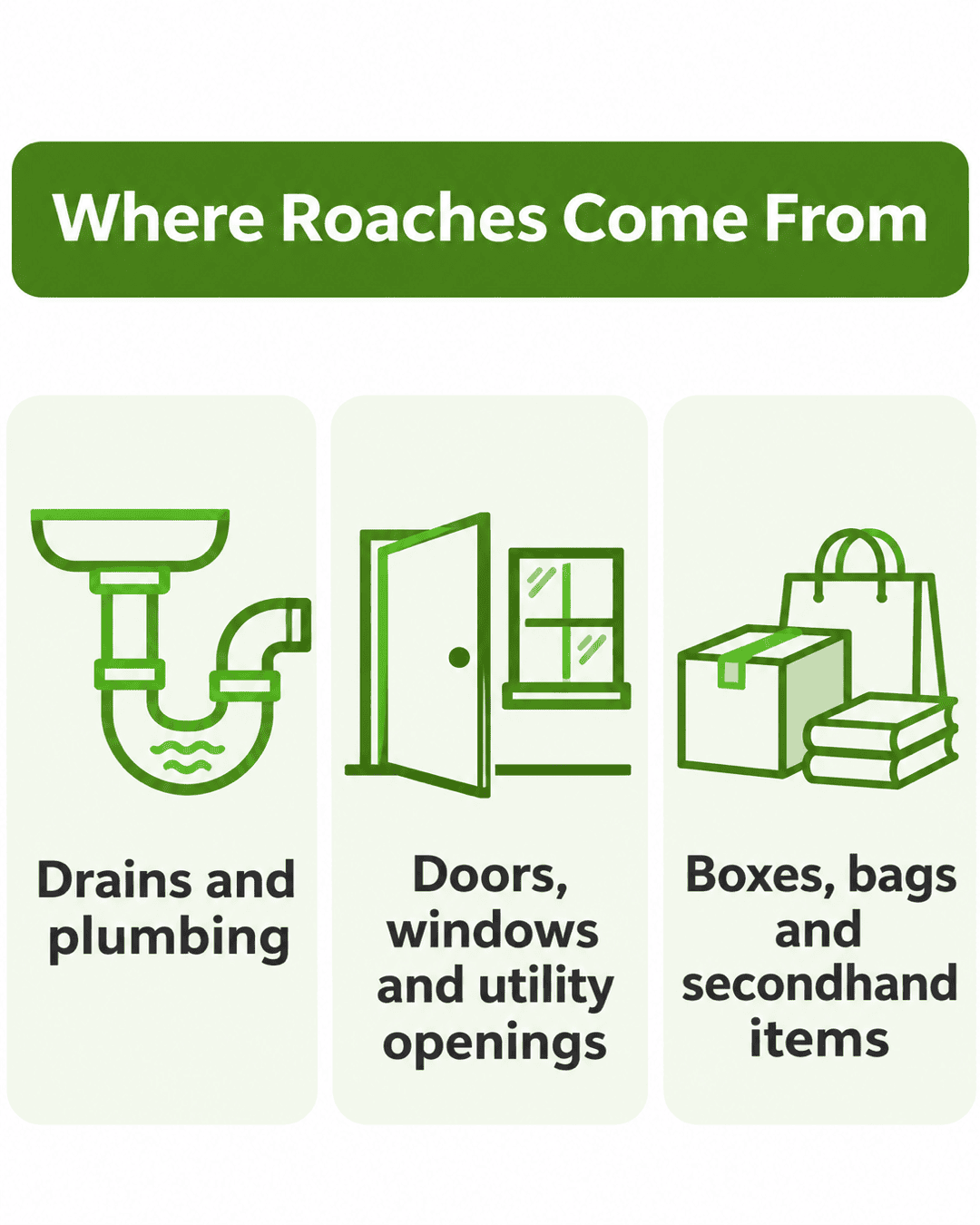
Drains and plumbing
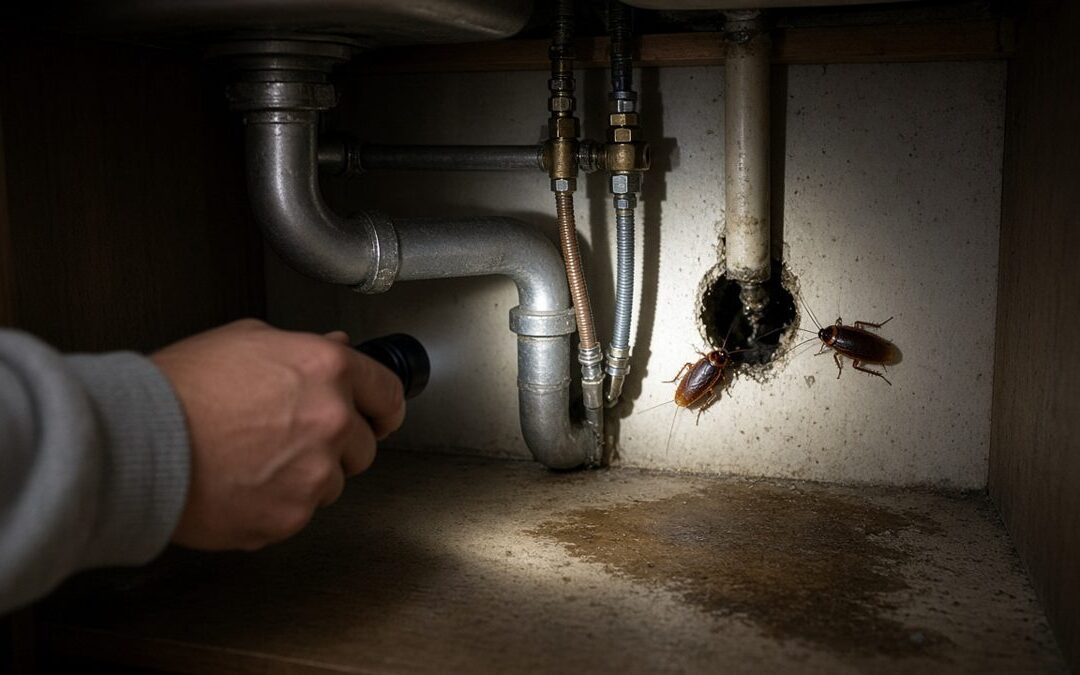
Large cockroaches, including American cockroaches, can live in sewers and may enter through floor drains. This is more likely when an infrequently used drain’s water trap dries out, removing the water barrier between the drain and the room.
Plumbing also creates hidden routes. Gaps where pipes pass through walls, floors, and cabinet backs can let roaches move between rooms and, in apartments or townhomes, between units.
In practice: Run water in seldom-used drains periodically to keep the trap filled, and seal gaps around pipes where they pass through walls, floors, and cabinets.
Doors, windows, and utility openings
Outdoor roaches may enter through small gaps. Common entry points include:
- Worn or missing door sweeps, especially on garage and back doors
- Gaps around window frames and torn screens
- Openings where cable, electrical, gas, and HVAC lines enter the home
- Dryer vents and exhaust fans without tight covers
- Weep holes and cracks in the foundation
These entry points are especially relevant for outdoor species such as American and smokybrown cockroaches, which may wander indoors from exterior or structural harborage.
Brought in on boxes, bags, and secondhand items
German cockroaches are commonly introduced indoors in infested grocery bags, cartons, boxes, furniture, or appliances. Inspect secondhand items and deliveries before bringing them into living areas.
“Cockroaches can be brought indoors in boxes, bags, furniture, and other items. Cardboard can also provide sheltered hiding places, so it is smart to inspect deliveries and avoid storing boxes for long periods.”
Zac Freeman, Branch Manager, Cullman, Alabama
The key takeaway: Storing second hand items in the garage or another safe area inside of a trash bag before bringing them inside is also a good idea. Especially with appliances and electronics.
Does seeing one roach mean an infestation?
Not always. The significance depends on the species, location, and pattern of sightings.
A single large roach may be an outdoor species that wandered inside through a gap or drain. A small, light brown roach in the kitchen may be a German cockroach. This species typically establishes indoors and hides near food and water, so additional roaches may be nearby.
Pay attention to the time of day, too. Roaches are generally more active at night. Seeing them in daylight and in larger amounts can be a warning sign of a substantial population or disturbance, but it is not enough by itself to determine the size of an infestation.
For more detail, read our guide on whether one cockroach means an infestation.
Where do roaches hide during the day?
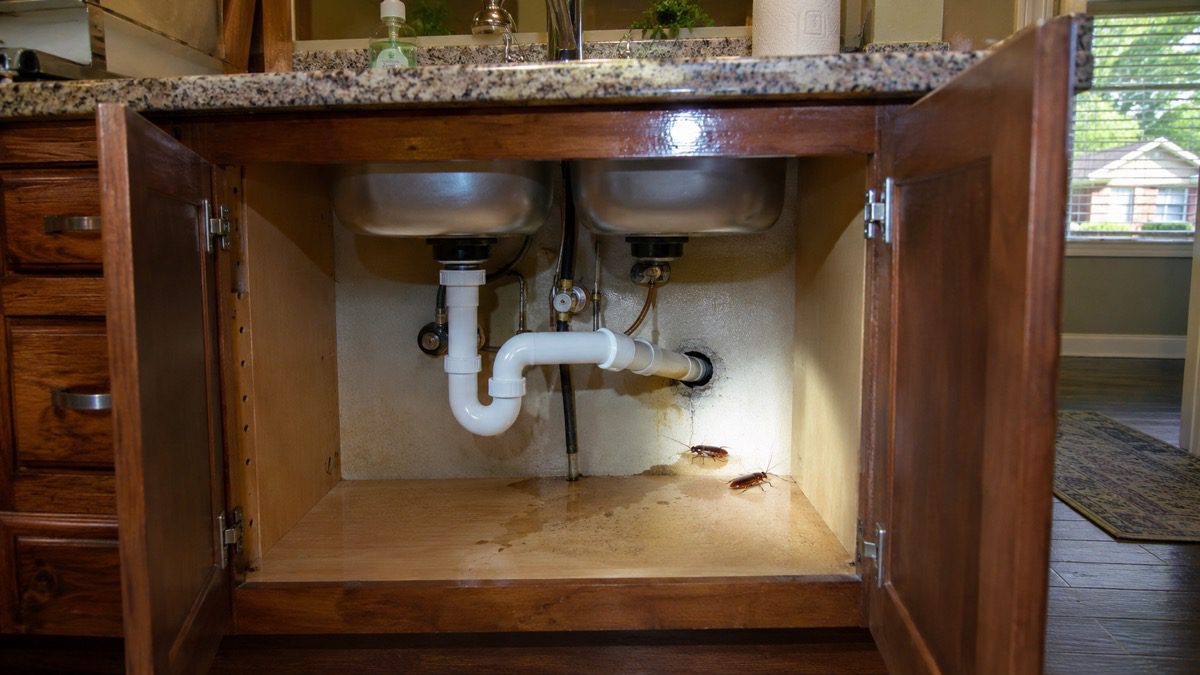
Roaches hide in tight, dark, protected spaces, often near food, water, and shelter. Their preferred locations vary by species.
Common hiding spots include:
- Under and behind refrigerators, stoves, and dishwashers
- Inside cabinet hinges, corners, and gaps behind drawers
- Under kitchen and bathroom sinks, around pipes
- Inside wall voids behind outlets and switch plates
- In stacks of cardboard, paper bags, and clutter
- Inside warm electronics and small appliances
- In garages, crawlspaces, and attics for outdoor species
Which roach you have changes where to look
Different species prefer different places, so identification helps narrow the search.
- German cockroaches stay close to kitchens and bathrooms, where moisture and food are easy to reach. Learn more about identifying German cockroaches.
- Brown-banded cockroaches prefer drier, warmer, higher spots, such as upper cabinets, behind picture frames, and inside electronics. Our guide to brown-banded cockroaches covers how to spot them.
- American and smokybrown cockroaches often live outdoors in damp, protected areas and may wander inside through drains and gaps.
What attracts roaches, even in a clean house?
A roach problem is not proof that a home is dirty. Clean kitchens can have roaches, too.
“Seeing cockroaches does not automatically mean a home is dirty. They need food, water, and shelter, and small amounts of residue or moisture can support them. The useful next step is to identify the species and find what is allowing it to survive.”
Zac Freeman, Branch Manager, Cullman, Alabama
Even in a tidy home, roaches may find:
- Water: Slow leaks under sinks, condensation on pipes, damp sponges, and pet water bowls
- Hidden food: Grease behind appliances, crumbs in the toaster, pet food, and pantry items in thin packaging
- Shelter: Cardboard, paper bags, and clutter in cabinets or closets
- Warmth: Motors in refrigerators, dishwashers, and electronics
- Access from neighboring units: In shared buildings, roaches can move through gaps around plumbing and other structural openings
For more on this topic, read our guide to what attracts cockroaches to a clean house.
How to trace a roach problem back to its source
Finding what attracts roaches is only part of the job. Identifying where they hide and how they entered helps target the source. Use these steps to investigate activity.
“I start with the room and time of each sighting, then inspect nearby hiding places for droppings, shed skins, or egg cases. Sticky monitors can help show where activity is concentrated. I also check likely entry routes, such as gaps around plumbing and doors, and ask about boxes or used items brought inside.”
Zac Freeman, Branch Manager, Cullman, Alabama
You can use this process to investigate activity at home:
- Record each sighting. Note the room, time, and number of roaches. A pattern can help narrow down the area to inspect.
- Inspect after dark with a flashlight. Roaches are generally more active at night. Check edges, corners, and nearby appliances.
- Look for signs. Check for droppings, egg cases, shed skins, and a musty odor. Signs vary by species and may be difficult to identify, so photograph them or save a specimen for identification if safe.
- Check nearby food and water sources. Start under the sink, then inspect around the dishwasher, refrigerator, and stove. Move appliances only if you can do so safely.
- Set sticky monitors. Place traps along walls, under sinks, and behind appliances. Check them regularly. The traps with the most captures can help identify activity hotspots, though they do not show the full population.
- Check possible entry routes. Inspect pipe openings, door sweeps, unused drains, and vents. Consider recent deliveries, used furniture, or boxes from storage.
Common mistake: Applying a spray before identifying the species or inspecting nearby areas. It may not address the harborage or entry route, and could make the activity pattern harder to interpret.
If roaches keep coming back, a trained technician can inspect your home, identify the species, and recommend a plan focused on the source. Find your local Northwest pest control team for next steps.
Why spraying the ones you see does not work
A quick spray may kill exposed roaches, but it often does not address the source of a continuing problem.
Here is why:
- Spray may miss hiding places. A product applied to visible roaches may not reach those behind appliances, inside cabinets, or in structural voids.
- Some sprays can scatter roaches. Repellent products may shift activity to other hiding places. Effects vary by product, and a surface spray may not reach a protected harborage.
- Egg cases may survive treatment. Some products do not affect eggs, so activity can return as they hatch. Treatment should account for the species and its life cycle.
- Some populations have insecticide resistance. German cockroaches can be resistant to certain active ingredients, so product choice and placement matter.
- The cause stays in place. Spraying does not fix a leak, seal a pipe gap, or replace a worn door sweep.
Lasting control starts with identifying the species and its harborage, then addressing food, water, shelter, and entry points. If pesticides are used, follow the product label and keep them away from children, pets, food, and food-contact surfaces.
When to call a professional
Consider professional help if:
- You see roaches during the day
- You find roaches in more than one room
- You notice egg cases, heavy droppings, or a strong musty odor
- Roaches return after you have tried store-bought products
- You live in an apartment, condo, or townhome with shared walls
- Someone in your home has allergies or asthma, since cockroach allergens can trigger symptoms
For additional information on cockroach behavior and common hiding places, see the University of Georgia Cooperative Extension guide to household and structural insect control.
Prefer to talk? Call Northwest Exterminating at (888) 466-7849.
Frequently asked questions
Where do roaches in a house come from?
Roaches can enter through drains, gaps around plumbing, worn door sweeps, and openings around utility lines. German cockroaches may arrive in bags, cartons, boxes, furniture, or appliances. After entering, they often hide near food, water, and shelter, though locations vary by species.
Does seeing one roach mean there is an infestation?
Not always. A single large roach may be an outdoor visitor. A small German cockroach in the kitchen may indicate others are hiding nearby. Daytime sightings can be a warning sign, but they do not establish the size of an infestation on their own.
Can roaches come up through drains?
Yes. Large cockroach species, including American cockroaches, may enter through floor drains connected to sewer lines, especially when an unused drain’s water trap dries out. Running water through unused drains helps keep the trap filled. Check drain covers and plumbing if sightings continue.
Why do roaches appear in a clean house?
Roaches need water, shelter, and food, not visible mess. Clean homes can still have small leaks, food residue behind appliances, cardboard storage, and warm hiding places. In shared buildings, roaches may also move through openings between units.
Where do roaches hide during the day?
Roaches hide in tight, dark spaces. Common spots include behind refrigerators and stoves, under sinks, inside cabinet hinges, and in wall voids. Outdoor species may shelter in garages, crawlspaces, or exterior harborage before entering.
How do I find where roaches are getting in?
Inspect after dark with a flashlight, look for droppings and egg cases, and place sticky monitors along walls and under sinks. Then check pipe openings, door sweeps, unused drains, and vents. Recent deliveries or used furniture may also be a source.
About the contributor
Author: Jake Chandler, ACE, Area Technical Leader, Northwest Service Centers in Alabama | Technical Reviewer: Cory Goeltzenleuchter, B.C.E., P.H.E., Director of Technical Services, Northwest Exterminating
Jake Chandler wrote this article. Cory Goeltzenleuchter served as its technical reviewer.
Jake Chandler, ACE, is an Area Technical Leader for the Northwest Service Centers in Alabama. As an Associate Certified Entomologist, he supports teammates through technical training and science-based pest management guidance.
Cory Goeltzenleuchter, B.C.E., P.H.E., is the Director of Technical Services for Northwest Exterminating. As a Board Certified Entomologist and Public Health Entomologist, Cory is one of the organization’s leading technical experts in pest management. He oversees technical training, service standards, and industry best practices while helping ensure customers receive extraordinary service through science-based solutions, ongoing education, and innovative approaches across the Northwest Family of Brands.
Subject Matter Expert: Zac Freeman, Branch Manager, Cullman, Alabama
Zac Freeman is Branch Manager in Cullman, Alabama, for Northwest Exterminating.
