May 27, 2020 | DIY, DIY Wildlife Prevention, Wildlife
With the warmer weather ever so present, it’s the perfect time to take up or get back into gardening if it’s been a while. Though, gardens can benefit your entire family, they can also be a major attraction to pests and wildlife. Birds such as crows, pigeons, sparrows, robins, and starlings are a few that are drawn to food sources found around your home. Fortunately, there are some easy DIY prevention tips to help prevent birds from destroying your fruits and vegetables!
If you need a quick and easy way to keep birds away, you can place everyday objects found in your home around or in your garden. Objects such as, CDs, aluminum cans, tin foil, small mirrors, or even metallic wrapping paper can discourage birds from entering unwanted areas. Light reflections discourage birds from returning to these areas. Aluminum foil is one of the easiest and cheapest ways to keep birds away. Birds typically don’t like the feeling of foil under their beaks. Place strips of aluminum foil from trees or high points around your garden.
A fun and decorative approach to keeping birds away is to invest in some garden balls. Garden balls are a natural bird repellent that are round and colorful. They can be placed in or around your garden or hung in trees, fence posts, and stakes. Garden balls are multipurpose, as they are great for decorating your garden but will also confuse birds away from the area.
Another method is to place bird spikes around your home and garden. Bird spikes are long, needle-like rods used to keep birds away from certain areas. Birds find these spikes very uncomfortable and will avoid landing on them. You can also create these spikes by using plastic cans and place them in the dirt or attach them to the wire of windowsills, overhangs, or fences.
If you try these DIY methods but still have issues with birds, you should contact your local pest control company who specializes in wildlife control. They will be able to evaluate and determine the best measures to prevent birds from returning.

May 12, 2020 | Pest Control, Wildlife
Homeowners can all agree that the idea of having rats inside your home can be very alarming! These rodents can easily sneak into your basement, walls, and even in kitchen cabinets. At first, rats may not reveal themselves to you. However, there are a few clues to look for when you start to suspect you might have rats roaming inside your house.
One sign that you possibly have rats is seeing gnawing marks. Rats are known to sneak behind walls and gnaw on wires. This can be especially dangerous as it can increase the risk of a fire in the home. Make sure to check out any exposed wood inside or around your house for gnawing marks.
Another common sign of rats is seeing their nests. Rats usually prefer to nest underground or in attics and you’ll typically find them in dark secluded areas hidden from any possible disturbances. They commonly build their nests using paper products like cotton, fabrics, wall insulation, or any soft material found in the environment. Rats are also known to leave tracks or rub marks throughout your home while following a trail from their nest to food sources. They will usually leave dark grease or dirt marks along walls and floorboards.
A major sign you’ve got a rat infestation is seeing their droppings. Rat droppings usually measure around 1/8-1/4” long and are generally left behind randomly, but are often found in places where food is stored, such as cabinets or pantries. You can also find droppings inside cardboard boxes, along baseboards, and even on top of wall beams. Seeing rat droppings could indicate that its time get rodent control help from a professional pest control company. Professionals are able to inspect the home and begin the best method of treatment.
May 6, 2020 | Pest Control, Wildlife
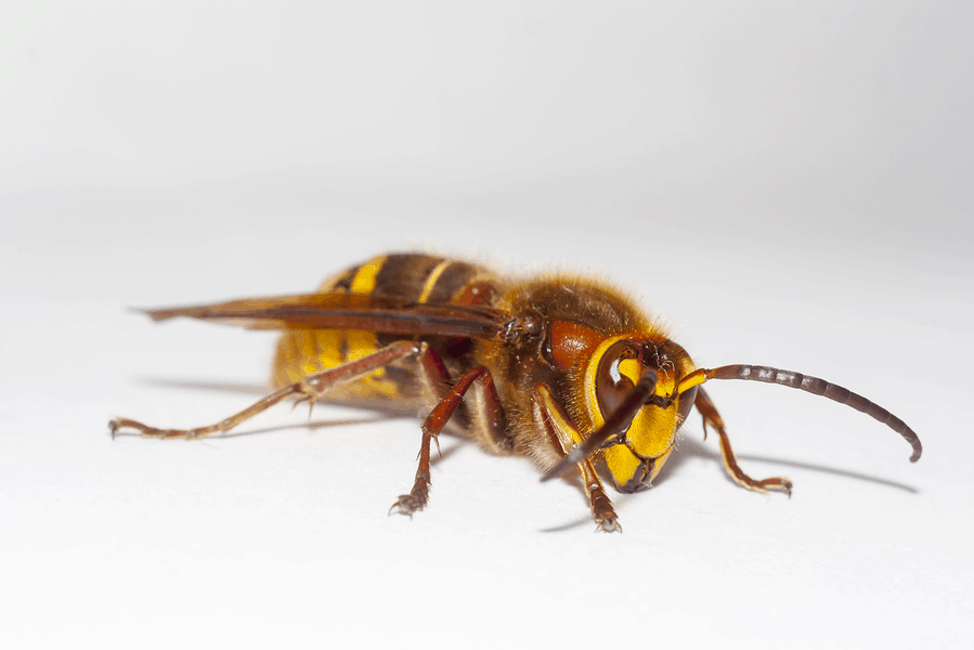
Asian Giant Hornets (Vespa mandarinia), also known as “Murder Hornets” have now been found in the United States for the first time ever. Although scientists are unsure when or how these pests first arrived, there have been verified sightings as far back as December in Washington state. These hornets were also discovered back in August 2019 in Canada in both British Columbia and Vancouver Island.
Asian Giant Hornets are larger than typical species of hornets with an average length of 1.5 to 2 inches. They have large yellow to orange heads with prominent eyes. They also have yellow/orange and black stripes extending down their abdomen.
“Murder hornets” are known to be aggressive. While they don’t typically go after humans, they will attack if they are disturbed or threatened. Their stingers are longer and more dangerous than those of bees and are even capable of penetrating typical beekeeper suits. They will attack aggressively in groups and their collective stings can administer enough toxic venom to be equivalent to the bite from a venomous snake. Multiple stings to a person can be fatal. In fact, these hornets are known to kill up to 50 people per year in Japan.
The life cycle of the Asian Giant Hornet begins in April prompting concern from scientists and researchers that a wave of these predators is imminent. Queens will soon be emerging from hibernation in search of new locations for underground nests. Once these are established, workers will be sent out in search of food for the newfound colony. This usually happens in late summer and early fall.
These “murder hornets” are a significant predator to honeybees, one of the most important pollinators in the United States. In fact, Asian Giant Hornets are capable of wiping out an entire honeybee hive in a matter of a few hours. The worker hornets will decapitate the bees and bring their thoraces back to the colony to feed their young. This is problematic for the US as honeybee and other pollinator populations are already on the decline. Pollinators increase the United States’ annual crop values by $15 billion.
Because of this threat to the honeybee population, scientists are actively searching for Asian Giant Hornets and their nests to keep their population from becoming established and completely eradicating the bee population here. The fact that these hornets’ nests are often found underground coupled with the ideal and vast climate and landscape of Washington state, tracking down these nests is quite difficult. Scientists have mapped out search grids and are moving painstakingly across the state in search of these pests. They are placing traps with geotagging and implementing geothermal imaging of the forest floors. They also have plans to try other methods in the future such as tracking the signature hum the hornets make when they are in flight and tagging and tracking any hornets that are caught in the traps.
While the “murder hornets” don’t pose an immediate threat to the Southeast states right now, it’s important to be aware of the destruction they can cause. For any questions regarding bees or other pests, contact a Northwest team member at (888) 466-7849 or request a free estimate now.
Sources:
https://www.cbsnews.com/news/murder-hornets-united-states-honeybee-populatiopn/
https://www.nytimes.com/2020/05/02/us/asian-giant-hornet-washington.html
https://www.bbc.com/news/52533585
May 5, 2020 | Wildlife
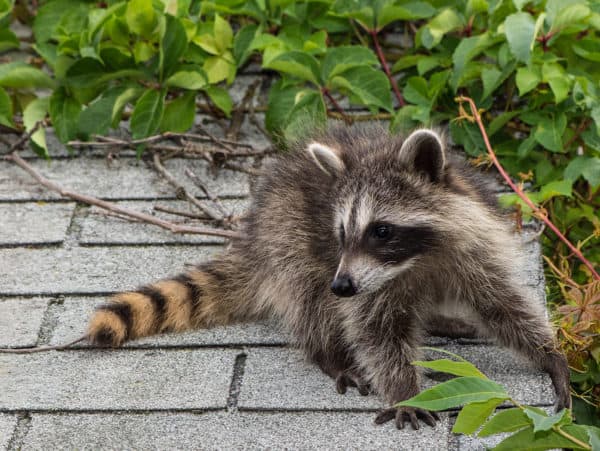
With warmer weather here, many animals are beginning to emerge from hibernation and are ready to roam. Unfortunately for many homeowners, that means you may need to start protecting your home from wildlife entering. Pests such as squirrels, mice, raccoons, and more are in search of food and water, two things that can be easily found in your home.
There are a few signs that you can look for if you suspect that you have wildlife inside your home. The first is hearing noises. Some animals tend to sneak in-between walls or find their way up into attics. You can hear them running in your attic or hear scratching noises inside your walls. If you hear these noises and happen to see small openings in walls, it is most likely that these animals are inside your house.
Another sign to look for is seeing droppings from animals. Places to look for these droppings include basements, along baseboards, or even in pantries. Animal droppings can be considered very dangerous as their feces can contaminate the air in your home. The contaminated air contains spores that develop from the fungus grown in animals’ fecal matter, causing illness if breathed in.
Keeping wildlife out of your home can be challenging but with these wildlife prevention tips you can lessen your chance of seeing these animals inside your home.
- Clean out your gutters
- Bring all pet food inside the house and keep them in sealed containers
- Trim back all trees from the roofline of your house
- Keep outdoor trash in tightly sealed containers
- Caulk and seal up entrances around your home
- Remove bird feeders as they can attract squirrels and other animals to your home
Depending on the pest, it’s always best to have a customized plan for removal. Make sure to call your local pest control company who can inspect and create a plan to remove and prevent these animals.
Apr 17, 2020 | Alabama Blogs, DIY, DIY Wildlife Prevention, Georgia Blogs, Wildlife
By Anna V., Editorial Lead — Pest Education · Last updated: May 2026
If birds have taken over your roofline, started nesting in your dryer vent, or covered your back deck in droppings, you’re probably searching for a bird deterrent that actually works. At Northwest, we get bird control calls year-round across our Georgia and Alabama service area, but they spike sharply from late March through July when nesting season hits its peak. The honest version most homeowners don’t hear: most DIY bird deterrents work briefly, then stop working as birds adapt. The few that work long-term are usually the unglamorous ones (sealed vents, physical barriers, removed food sources), not the gimmicky owl decoys and ultrasonic gadgets sold on Amazon.
Here are the five DIY bird deterrents with the strongest track record in Southeast homes, what to expect from each, and the gimmicks worth skipping entirely.
Visual deterrents work for a while, then stop. Rotation is the difference between weeks and months of effectiveness.
Why Bird Deterrents Matter
Bird activity around a Southeast home isn’t just an annoyance. Persistent bird problems lead to:
- Droppings. Bird droppings are acidic and stain paint, siding, decking, and concrete. Cleanup is constant, and accumulated droppings can damage surfaces permanently.
- Nesting in vents and gutters. Dryer vents, bathroom vents, gable vents, and gutter corners are favorite nesting spots. Nests block airflow, create fire risk (especially in dryer vents), and trap moisture.
- Noise. Pigeons, sparrows, and starlings start their day before dawn. Nesting season runs March through August in Georgia and Alabama.
- Structural damage. Roof damage from nesting materials, clogged gutters that overflow and rot fascia boards, and acid damage to paint from droppings.
- Health and sanitation concerns. Bird droppings can carry pathogens including histoplasmosis and salmonella. Most healthy adults aren’t at significant risk, but people with respiratory issues should avoid disturbing dried droppings without proper protection.
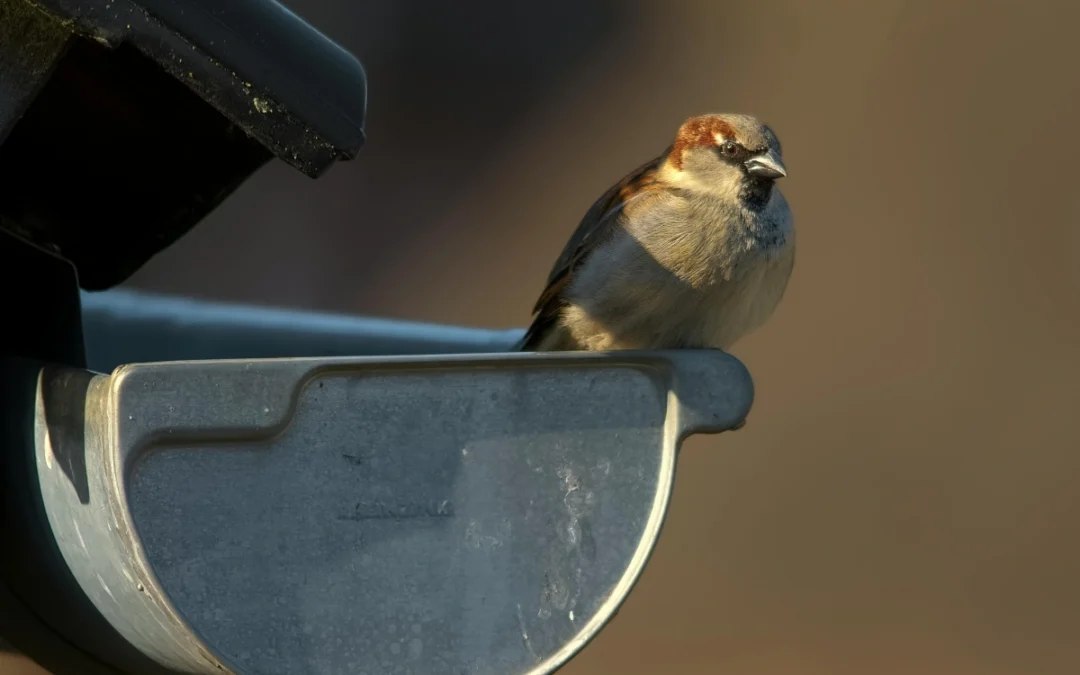
The species causing most of the bird-control calls we run are house sparrows, European starlings, and rock pigeons. All three are non-native and not protected under federal migratory bird law, which matters when you start considering removal options (more on that below).
Do DIY Bird Deterrents Really Work?
Yes and no. Most DIY bird deterrents produce short-term results, then lose effectiveness as birds figure out they’re not actually threats. The deterrents that hold up long-term are the ones that don’t depend on birds being fooled: physical barriers and habitat changes.
Two important caveats before you start any DIY bird control:
Federal law protects most native bird species. The Migratory Bird Treaty Act of 1918 protects more than 1,000 native species, and it’s illegal to disturb their active nests, eggs, or young without specific permits. The three most common nuisance species in the Southeast (house sparrows, European starlings, rock pigeons) are non-native and not protected, but several species you may encounter (swallows, woodpeckers, robins, mockingbirds, blue jays) are protected. If you’re not sure what species you’re dealing with, pause and identify before doing anything.
Active nests with eggs or young require special handling. Even for non-protected species, the humane and recommended approach is to wait until the nest is empty before removing it. Active nest removal during breeding season is one of the situations where calling a professional is often the right move.
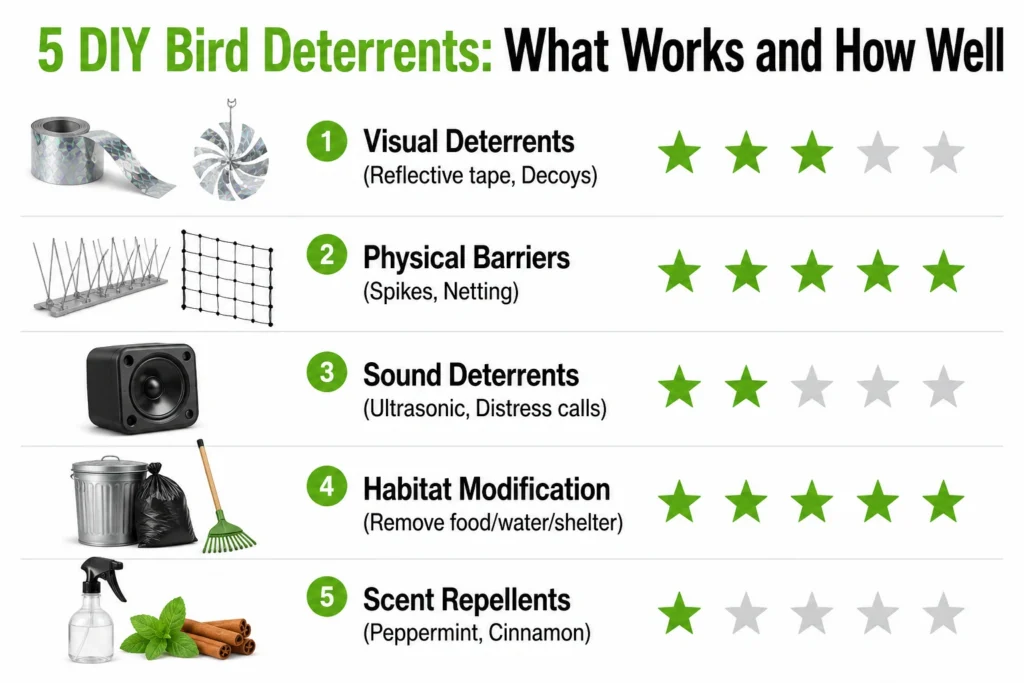
5 Effective DIY Bird Deterrents
Physical barriers and habitat changes do most of the heavy lifting. The other three are short-term tools.
1. Visual Deterrents (Reflective + Predator Decoys)
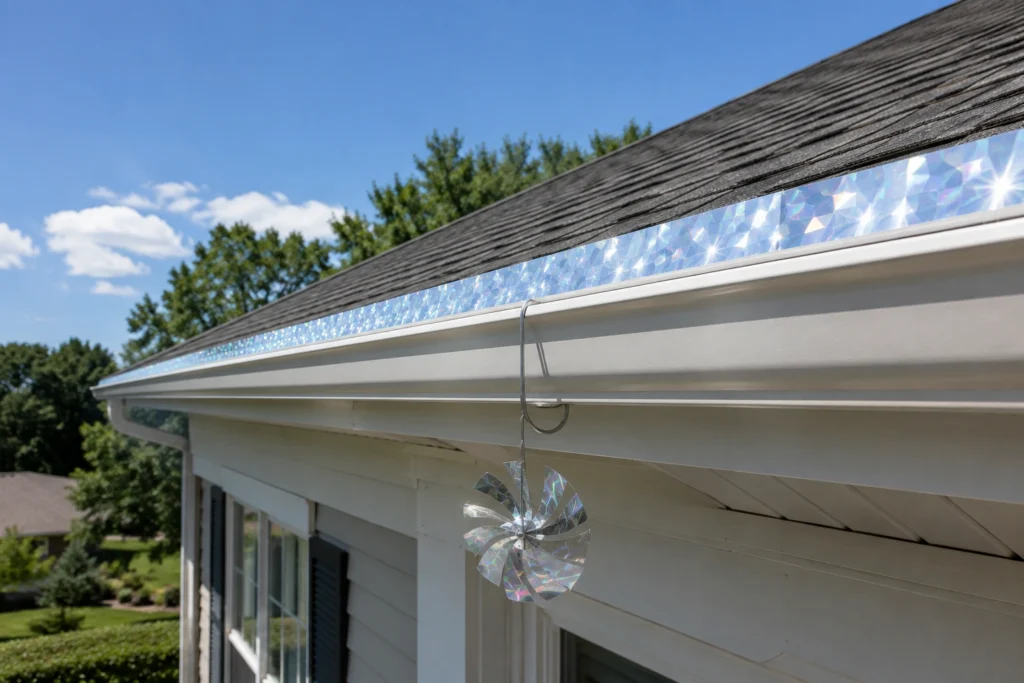
Reflective bird tape, hanging spinners, and predator decoys (plastic owls, hawks) all work on the same principle: scare birds with movement, light flashes, or the appearance of a predator. They work briefly, especially for new arrivals. The catch is habituation. Within two to four weeks, birds figure out the owl doesn’t move and the tape doesn’t actually threaten them.
Best practice: rotate visual deterrents weekly. Move the owl decoy to a new spot, replace reflective tape, swap the spinner for a different design. The rotation is what extends effectiveness from “a few weeks” to “all season.” Static visual deterrents left in one place stop working fast.
2. Physical Barriers (Spikes + Netting)
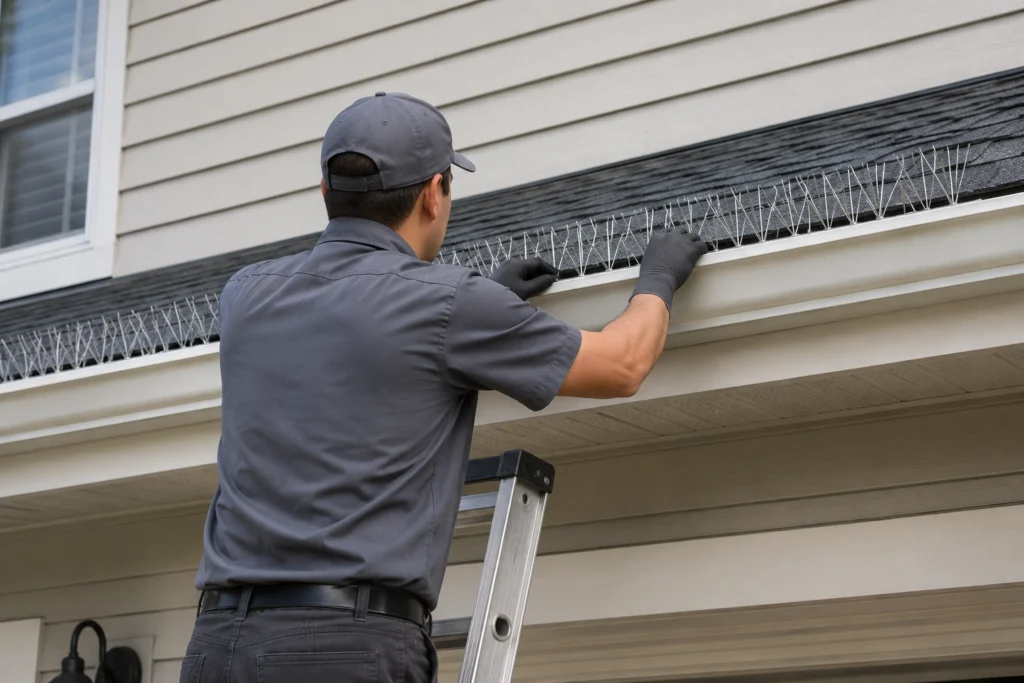
The single most effective long-term bird deterrent is making the landing spot physically unusable. Bird spikes installed along ledges, gutter edges, and rooflines prevent landing entirely. Bird netting stretched across eaves, soffit openings, or under solar panels blocks nesting access without harming birds.
Where physical barriers shine in Southeast homes:
- Gutter edges (favorite pigeon and starling landing spots)
- Eave overhangs (common sparrow nesting locations)
- Solar panel undersides (a big issue in newer Georgia construction)
- HVAC equipment housings and mini-split heads
- Window AC unit tops
- Gable vents and attic vents (with proper mesh, not just bird netting)
Bird spikes and netting installed correctly can last 10+ years and require near-zero maintenance. The catch: installation matters. Poor installation creates gaps birds exploit, and once a bird gets through, the whole barrier loses credibility.
3. Sound Deterrents (Ultrasonic + Distress Calls)
Ultrasonic devices and recorded distress calls (audible to birds, played on speakers) can disrupt new arrivals and slow nesting attempts. The research on ultrasonic devices specifically is mixed. Most independent testing shows limited effectiveness for birds, despite aggressive marketing claims. Audible distress calls work better but have an obvious downside in residential settings: they’re loud, and your neighbors will notice.
Sound deterrents are most useful in open commercial settings (parking lots, warehouse rooflines, agricultural buildings). They’re rarely the right choice for a single-family home in a Georgia or Alabama neighborhood.
4. Habitat Modification (the Most Overlooked Method)
The most underrated bird deterrent strategy isn’t a product. It’s removing the things drawing birds to your property in the first place. Birds keep showing up because the conditions are good. Change the conditions and most of them move on.
- Eliminate food sources. Bird feeders that overflow, pet food bowls left outside, accessible trash, fallen fruit under pecan or fig trees, breadcrumbs after outdoor meals. Any of these will pull birds in and keep them returning.
- Cut off water access. Standing water in birdbaths, clogged gutters that pool water, irrigation puddles, and uncovered pools all draw birds. Mosquitoes too, which then draws other pests.
- Trim trees and shrubs back from the house. A three-foot clear zone around the foundation and roofline reduces nesting opportunities and travel routes onto the house.
- Clean gutters regularly. A clogged gutter with debris is a five-star nesting site for sparrows and starlings.
- Seal entry points. Gaps in soffits, broken or missing vent covers, open chimneys without caps. The same exclusion work that keeps rodents out keeps birds out too.
Habitat modification is the only DIY method that addresses why birds came in the first place rather than just shooing them away. It’s also the only one that compounds: each year you maintain it, the cumulative effect grows.
5. Scent Repellents (Honest Effectiveness)
Peppermint oil, cinnamon, methyl anthranilate (the active compound in commercial bird repellents like grape extract sprays), and other scent-based products show modest, short-term effects in field testing. The catch: outdoor scents fade within days, wash out with rain, and require constant reapplication. They’re not a standalone solution.
Where scent repellents can earn their place: as a supplement to physical barriers in spots where you can’t install spikes or netting. Otherwise, treat them as the lowest-tier option.
The yards we treat for repeat bird problems almost always have an exposed food source, a water source, or open nesting cavities.
What Doesn’t Work (Bird Deterrent Myths to Skip)
A few “classic” bird deterrent ideas circulate widely but don’t hold up.
- Fake owls left in one place. Birds figure them out in days. Without rotation, they’re inert.
- Random DIY sprays. Vinegar, dish soap, garlic water, cayenne pepper, and similar mixes don’t have research support for bird control. They wash out fast and damage plants in the meantime.
- Wind chimes alone. Birds adapt to consistent sounds within a week. Wind chimes are pleasant. They’re not deterrents.
- Single-method approaches. Any one DIY deterrent works briefly. Combining two or three (e.g., physical barriers + habitat modification + rotating visual deterrents) is where homeowners see lasting results.
Humane Bird Exclusion: The Long-Term Approach
The most effective bird control isn’t a product. It’s exclusion, which means making your property physically unable to host birds in the spots they want to nest. Exclusion combines:
- Sealing every gap in vents, soffits, and rooflines with appropriate mesh or hardware cloth
- Installing bird spikes on landing surfaces
- Adding bird netting under solar panels and over open eaves
- Capping chimneys with bird-proof caps
- Modifying the surrounding habitat to remove food, water, and shelter
Exclusion done right typically lasts 10 years or more with minimal maintenance. It’s also the only approach that fully complies with the Migratory Bird Treaty Act, because it prevents nesting before it starts rather than removing active nests later.
When to Call a Professional for Bird Control
DIY bird deterrents handle small, early-stage bird problems well. Call Northwest for bird control if:
- Birds keep returning to the same spot despite your DIY efforts.
- Nests are in hard-to-reach or hazardous areas (high roofs, gable vents, solar panels).
- You’re dealing with large flocks (more than 10 birds at a time) or commercial properties.
- You suspect protected species are involved.
- An active nest needs removal mid-season.
- You want long-term exclusion done correctly the first time.
(Birds keep returning after you’ve tried DIY? Request a free Northwest bird control inspection and we’ll identify the species, find the entry points, and lay out a long-term exclusion plan.)
Bird Control in the Southeast
Birds in Georgia, Alabama, Tennessee, and South Carolina behave a little differently than in cooler parts of the country. Three regional factors increase bird pressure on Southeast homes:
- Longer nesting season. Warm spring weather arrives early and lingers into fall. House sparrows can produce three to four broods per year here, compared to two in colder regions.
- Year-round resident populations. Rock pigeons and house sparrows don’t migrate. They’re a problem every month of the year, not just in summer.
- Construction patterns. Open soffits, gable vents, and unscreened crawl space vents are common in older Atlanta, Birmingham, Savannah, and Macon homes. Each is a bird entry point.
The good news: the same exclusion approach that solves bird problems also solves rodent problems and helps with snake prevention. For more on how those pest categories connect, see our snake repellent guide on the rodent-snake-bird sealing connection. For the broader question of getting rid of birds already established on your home, see our companion guide on how to get rid of birds around your home.
Frequently Asked Questions About Bird Deterrents
What bird deterrent works best?
Physical barriers (bird spikes and netting) are the most effective long-term solution because they don’t depend on birds being fooled. Combined with habitat modification (removing food, water, and shelter), they handle most residential bird problems for years with minimal maintenance.
Are bird deterrents harmful to birds?
Most modern bird deterrents are designed to be humane and non-lethal. Bird spikes, netting, sound, scent, and visual deterrents discourage birds without injuring them. Avoid sticky gels or glue traps marketed for birds. They can trap and injure or kill birds and are illegal to use against protected species.
Do birds come back after deterrents are installed?
They can, especially if deterrents aren’t maintained or rotated. Static deterrents (a single fake owl, reflective tape that never moves) lose effectiveness within weeks. Combining multiple methods and rotating visual deterrents weekly extends results dramatically.
Are birds protected by law?
Yes, most native bird species are protected under the federal Migratory Bird Treaty Act, which makes it illegal to disturb their nests, eggs, or young without specific permits. The three most common nuisance species in the Southeast (house sparrows, European starlings, rock pigeons) are non-native and not protected. If you’re unsure what species you’re dealing with, identify the bird before removing nests.
How long does it take to get rid of birds with DIY deterrents?
If you start at the early-arrival stage (a few birds scouting, no active nests), DIY deterrents can resolve the issue in one to two weeks. If birds have already established nests, expect a longer timeline (often a full nesting season) before you can fully exclude them. Active nests of protected species cannot be removed mid-season; you’ll need to wait for the young to fledge before sealing the area.
Professional exclusion lasts years. DIY deterrents that get rotated and maintained can match it for smaller problems.
Ready to Stop the Bird Problem at the Source?
If you’ve tried a DIY bird deterrent or two and the birds keep coming back, the problem isn’t the deterrent. It’s the conditions around your home that keep drawing birds in. Northwest’s wildlife team handles the full bird-control workflow: species identification, exclusion installation, habitat assessment, and follow-up to make sure birds don’t find a new spot to set up shop.
About the Author
Anna V., Editorial Lead — Pest Education leads pest education content for Northwest Exterminating, working with senior technicians and service center managers across our Georgia, Alabama, Tennessee, and South Carolina service areas to translate field expertise into homeowner-friendly guides. The focus: accurate, regionally-specific answers to the pest questions Southeast homeowners are actually searching for.
Apr 9, 2020 | DIY, DIY Wildlife Prevention, Pest Control, Wildlife
As the corona virus continues to spread, people around the world are drastically changing their daily routines. Tourism has come to a grinding halt. Restaurants are closed and people are staying home. What many don’t realize is this change in our daily lives is also affecting the ecosystem within cities. As there is less urban traffic, there is less food for pests and rodents – like rats. According to experts, if rats lose these established food sources (e.g. trash in cans in the park or dumpsters outside restaurants) then they will start fighting over any food that remains, even going so far as to kill each other in order to survive.
Because rats are having to get creative in finding new food sources, there is now a trending surge of rats invading homes and essential businesses in search of their next meal. Rats will follow the smell of food into homes, being as bold as necessary to find food in their effort to survive. Rats in homes pose serious risks – they will chew through wires and cables putting you at risk for fires and they carry diseases of their own which can easily be transmitted to you and your family. While there is no evidence that rats themselves can become infected with corona virus, there is some risk for spreading it to humans. Rats are known to crawl through sewer pipes containing human feces which has been shown to contain the virus. They then make their way into your home and contaminate any surfaces they touch with the virus-laden feces, potentially allowing humans who come in contact with these contaminated surfaces to contract the virus. The CDC reports that although this scenario is possible, the risk of transmission by feces is actually quite low.
To protect your family and/or essential business, the following rat prevention tips can help to prevent a rat infestation, limit the spread of disease, and keep your environment a safe-haven, during shelter-in-place orders and in the future:
- Use outdoor trashcans with tight-fitting lids.
- Seal any cracks under doors and other openings to the outside.
- Apply weatherstripping to doors and windows.
- Seal around utility pipes with steel wool and either caulk or concrete.
- Repair any roof damage such as broken tiles or gaps under eaves.
- Keep limbs and branches trimmed back to they are not touching your home or business.
- Declutter any areas where rats may hide including garages, attics, gardens, storage sheds, warehouses, etc.
- Keep food stored in metal or glass containers with tight fitting lids.
- Clean up spills and crumbs immediately.
- Sweep, mop, and vacuum often.
- Don’t leave pet food and water out overnight.
- Clean up spilled pet food and bird seed and store in containers with tight fitting lids.
- Keep toilet lids closed as rats have been known to swim up damaged pipes and into toilets.
- Use tightly fitted metal grates or screens to cover drains, especially in basements.
If you notice a rodent problem in your home or essential business, contact a professional pest control company. Rats can cause serious health risks to your family or employees, as well as the risk for fire and other structural damage to your home and property. A licensed wildlife exclusion company will inspect your home to identify your animal problem, determine where they are getting in, remove them, and prevent the animals from getting into your home in the future. They can also inform you of any existing damage or contamination and provide you with a recommendation for repairs or clean-up.
You May Also Be Interested In:
Keeping Pantry Pests Away
5 Things That Could Be Attracting Termites to Your Home
Summer Without Bed Bug Worry
Summer Wildlife Removal: Common Home Invaders
What is the Difference Between Traditional and Green Pest Control?
Mar 20, 2020 | Alabama Blogs, Georgia Blogs, Pest Control, Wildlife
By Anna V., Editorial Lead — Pest Education · Last updated: May 2026
When a homeowner in Georgia or Alabama calls Northwest about a rodent problem, our first question is almost always: mouse or rat? The two get lumped together in everyday conversation, but they behave differently, leave behind very different evidence, and require different treatment approaches. Misidentifying which species you have is one of the most common reasons DIY rodent control fails. A trap baited and placed for a mouse will sit untouched while a rat sniffs it and moves on. A rat-sized opening sealed against mice still lets the much smaller mice walk right in.
Here’s how to tell a mouse from a rat at a glance, what each one’s droppings, gnaw marks, and behavior look like in a Southeast home, and when the difference between them changes how you treat the problem.
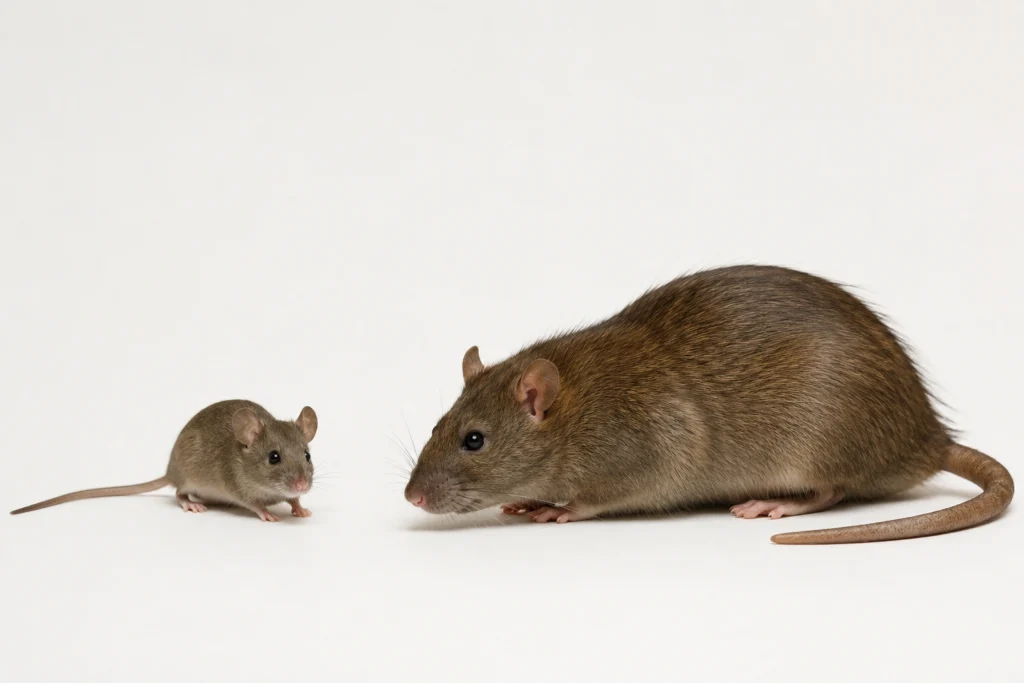
Size is the fastest clue. A mouse fits in a tablespoon. A rat doesn’t.
What’s the Difference Between a Mouse and a Rat?
The physical differences between a mouse and a rat are obvious once you’ve seen them side by side. The challenge is that most homeowners only see one of them, briefly, in low light, before it disappears behind the refrigerator. Here’s what to look for if you only get a glimpse.
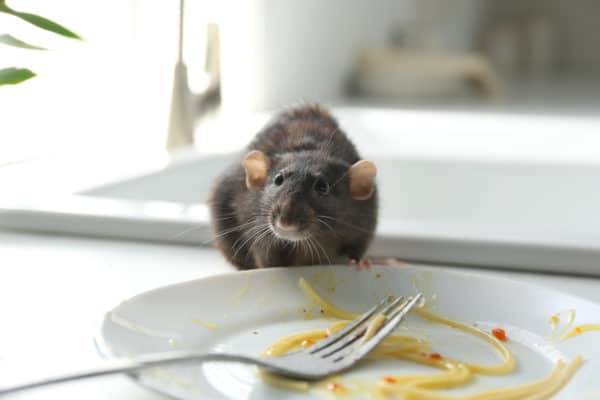
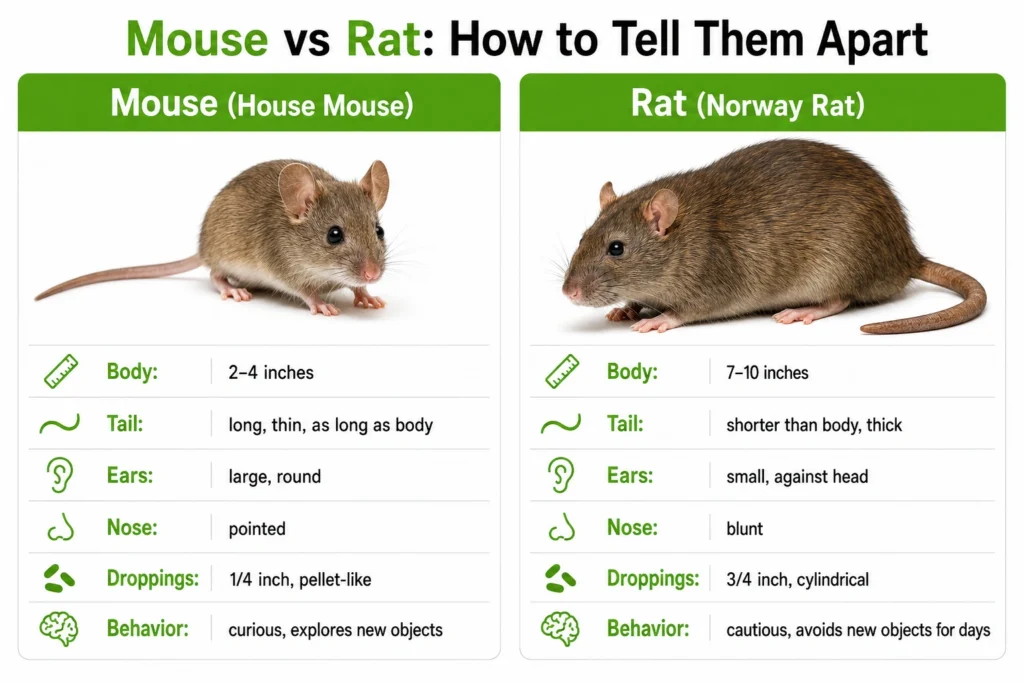
Mice (house mouse, deer mouse) are small. Adult body length is typically 2 to 4 inches, not counting the tail, which is about as long as the body. They have slender bodies, pointed noses, and large round ears that look oversized for their head. Their fur is usually light brown or gray. They’re curious by nature and tend to explore new objects in their territory within hours.
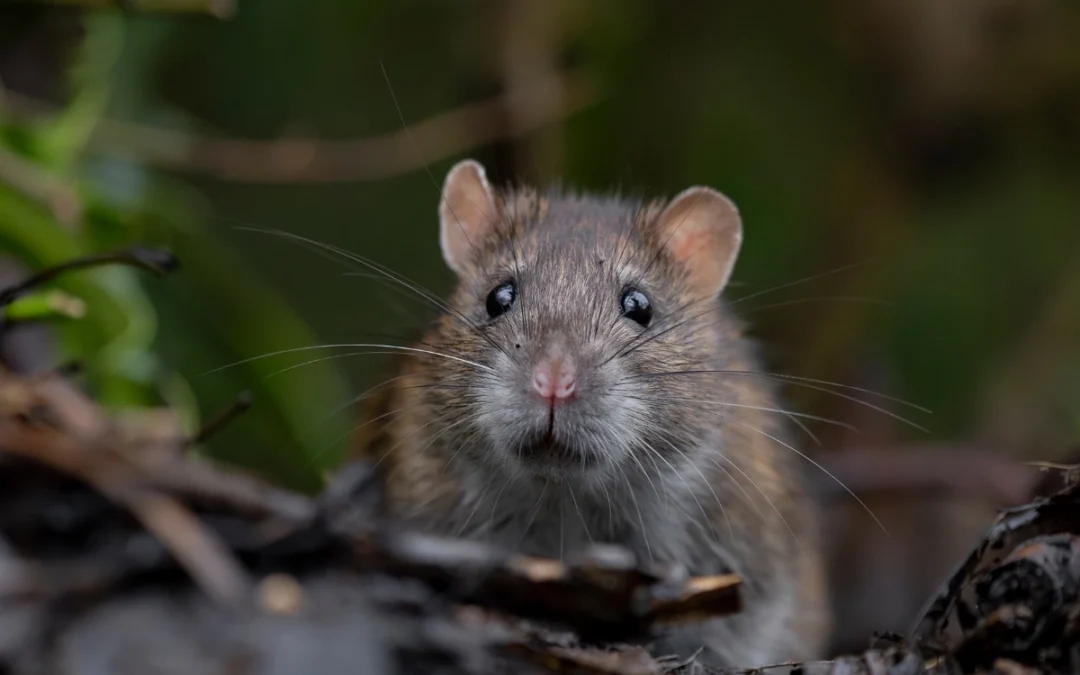
Rats (Norway rat, roof rat) are substantially larger. Adult body length runs 7 to 10 inches, with a tail that’s shorter than the body. They have thicker, heavier bodies, blunt noses, and proportionally smaller ears tucked against the head. Norway rats (the most common in Georgia and Alabama) are brown or gray with shaggier fur. Roof rats are darker, sleeker, and more agile climbers. Both are cautious by nature and will avoid new objects in their territory for days before approaching — a behavior pest pros call “neophobia.”
That neophobia is the single biggest reason rat traps fail when homeowners set them. Mice walk into traps within hours. Rats will avoid them for a week.
Mouse vs Rat Identification Guide
Size, tail, and droppings are the three identifiers most homeowners can use without seeing the rodent itself.
Quick Comparison Table
| Feature |
Mouse |
Rat |
| Body length |
2 to 4 inches |
7 to 10 inches |
| Tail |
Long and thin, about as long as body |
Shorter than body, thick and scaly |
| Ears |
Large and rounded, look oversized |
Small, held closer to the head |
| Nose |
Pointed, narrow |
Blunt, broader |
| Droppings |
1/8 to 1/4 inch, pellet-like |
1/2 to 3/4 inch, cylindrical |
| Behavior |
Curious, investigates new objects |
Cautious, avoids new objects for days |
| Where they nest |
Indoors, in walls, cabinets, attics |
Outdoors in burrows; indoors in basements, crawl spaces |
| Reproduction |
5 to 10 litters per year, faster cycle |
2 to 5 litters per year, larger litters |
Common Species in the Southeast
In Georgia, Alabama, Tennessee, and South Carolina, the rodents you’re most likely to encounter inside a home are:
- House mouse (Mus musculus) — the most common indoor rodent across the entire Southeast.
- Deer mouse (Peromyscus maniculatus) — more common in rural and wooded areas. Notable because it’s a primary carrier of hantavirus.
- Norway rat (Rattus norvegicus) — also called the brown rat or sewer rat. Common in older urban neighborhoods of Atlanta, Birmingham, Savannah, and Macon.
- Roof rat (Rattus rattus) — also called the black rat. More common along the coast and in warmer parts of the service area. Strong climber, often found in attics.
Signs You Have a Mouse or a Rat
If you haven’t actually seen the rodent yet, the signs they leave behind will tell you which species you’re dealing with. Here’s what to look for and how to read it.
Droppings (the most reliable indicator)
Mouse droppings are tiny, dark, and shaped like grains of rice with pointed ends. They’re typically 1/8 to 1/4 inch long. A single mouse can leave 50 to 75 droppings a day, so you’ll find them scattered widely — along baseboards, inside cabinets, in pantry corners, on the back of countertops.
Rat droppings are much larger, 1/2 to 3/4 inch long, dark, and shaped like a thick capsule with blunt or pointed ends (depending on species). You’ll find them in concentrated piles near nesting sites or along regular travel paths — usually in basements, crawl spaces, near food storage, or along walls.
Size alone is the easiest tell. If the droppings are smaller than a grain of rice, you have mice. If they’re larger than a coffee bean, you have rats.
Gnaw Marks
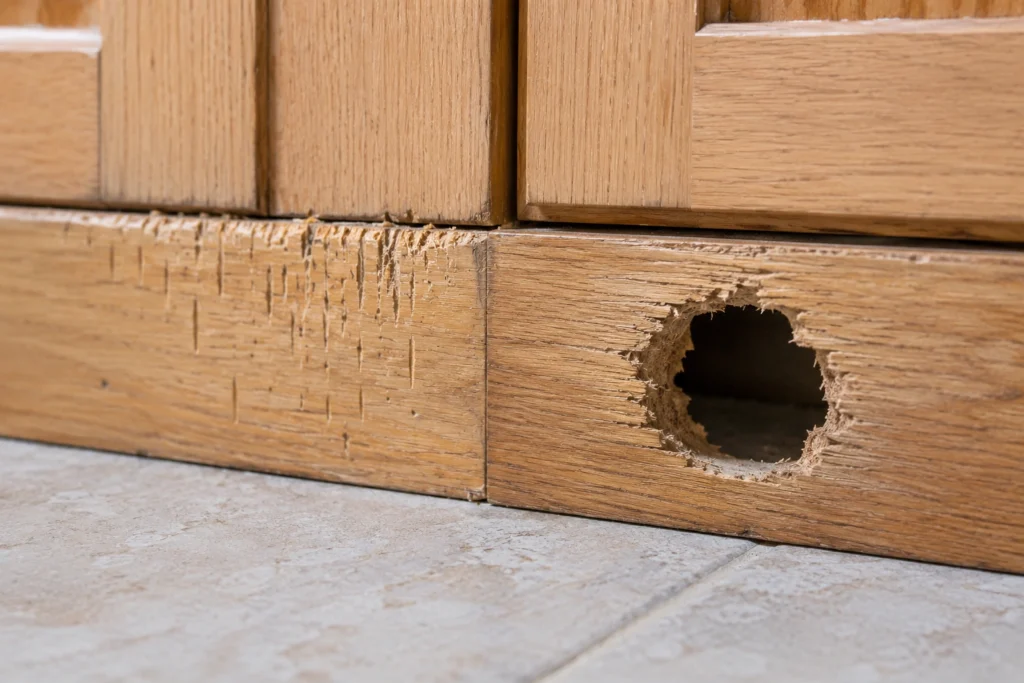
Mice leave small, scratchy bite marks on food packaging, the corners of cardboard boxes, and the edges of wooden trim. The marks are usually clean and close together, made by their tiny incisors.
Rats chew through harder materials and leave much larger, rougher marks. Rats can chew through soft wood, insulation, drywall, lead pipes, aluminum siding, and most plastic. Damaged electrical wiring, holes the size of a quarter or larger in baseboards or insulation, and torn-open food storage containers all suggest rats rather than mice.
Mouse damage looks like fine scratches. Rat damage looks like something chewed a hole.
Nesting Material
Mice build small, well-organized nests using shredded paper, fabric, insulation, and dryer lint. Nests are typically hidden in wall voids, behind appliances, inside cabinets, in attic insulation, or in stored boxes. Each nest is the size of a softball or smaller.
Rats build larger, messier nests using similar materials but on a different scale. Norway rat nests are often outdoors in burrows under decks, sheds, or vegetation. Roof rat nests are usually in attics or upper wall voids. Both species’ indoor nests are noticeably larger than a mouse’s, ranging from softball-sized to football-sized.
Sounds and Smells
Mice make light scurrying and scratching sounds, often heard at night in walls or above ceilings. Rats make heavier, slower, more obvious sounds, sometimes including thumps as they jump between surfaces. Both species produce a musky urine smell when populations grow, with rats producing a much stronger odor due to their larger body size and concentrated activity.
Damage Caused by Mice vs Rats
The damage pattern in your home is a strong species indicator and an important factor in how urgent treatment is.
Mice cause modest structural damage in most situations. They chew through food packaging, gnaw on baseboards and wooden trim, and damage stored items. The biggest mouse risk is food contamination and the secondary pest problem of indoor flea or mite populations that can travel with them.
Rats cause significant structural damage when populations establish. They chew through electrical wiring (creating real fire risk), tear through insulation, gnaw on plumbing, and damage HVAC ductwork. The repair costs for rat damage routinely run into thousands of dollars. Rats also pose more serious disease transmission risk than mice.
Health Risks: Mouse vs Rat
Both species carry diseases, but rats present a broader and more severe health risk profile. The CDC’s rodent disease guidance documents both species as vectors for pathogens.
Diseases associated with mice include hantavirus (especially from deer mice), salmonella contamination of food surfaces, and allergens that trigger asthma in sensitive individuals.
Diseases associated with rats include leptospirosis (transmitted through contact with rat urine), rat-bite fever, salmonella, and historically the bubonic plague (still present at low levels in some U.S. populations). Rats also carry fleas that can transmit additional pathogens.
The practical takeaway: any rodent presence indoors warrants attention, but a confirmed rat sighting is more urgent than a mouse sighting from a health-risk standpoint.
Behavior & Habitat Differences in Southeast Homes
Where each species nests in a Georgia or Alabama home tells you a lot about how they got in and how to address them.
Mice nest indoors year-round. They prefer wall voids, attic insulation, behind appliances, inside stored boxes, and in cluttered storage spaces. A mouse only needs a hole the diameter of a dime to get inside, which means tiny gaps around utility line penetrations, foundation cracks, and worn weatherstripping are all entry points.
Rats typically nest outdoors and travel indoors for food. Norway rats burrow in yards, under decks and sheds, and along foundations. Roof rats nest in attics, palm trees (in coastal areas), and shed rafters. A rat needs a hole the diameter of a quarter to get inside. Larger entry points, garage door gaps, and unsealed crawl space access doors are the typical routes.
Seasonal pattern in the Southeast: rodent indoor activity peaks from late October through March, as outdoor food sources dwindle and rodents seek warmth and shelter. Mice are active year-round indoors; rats become more visible in cooler months.
Mouse vs Rat Control & Prevention
Once you know which species you’re dealing with, the treatment approach changes meaningfully.
DIY Prevention (works for both)
- Seal all entry points larger than 1/4 inch with steel wool and caulk (mice can’t gnaw through steel wool).
- Store food in airtight containers (glass or hard plastic, not bags).
- Take out trash daily, especially in warm months.
- Eliminate clutter in basements, attics, and garages.
- Fix any water leaks; rodents need water too.
- Trim vegetation back from the foundation and roofline.
Treatment That Actually Works
For mice, snap traps baited with peanut butter and placed perpendicular to walls catch most populations within a few days. Mice walk into them readily because of their curiosity.
For rats, the approach is slower and more deliberate. Set traps but don’t bait them for the first 5 to 7 days. Let rats get used to the new object in their environment first, then bait. Place traps along walls where droppings show heavy activity. This works around their neophobia.
For both species, bait stations with rodenticide can be effective but introduce risks: dead rodents in wall voids cause severe odor problems, secondary poisoning of pets and wildlife is a real concern, and rats often die in inaccessible spots. We generally recommend trapping over baiting for residential rodent control.
When to Call a Professional
Call Northwest for professional rodent control if:
- You’ve identified rats specifically (not just mice). Rats benefit from professional trapping experience.
- Sightings have continued for more than two weeks despite DIY traps.
- You’ve found droppings in multiple rooms or on multiple floors, suggesting an established population.
- You’re seeing rodents during the day, which often indicates a large hidden population.
- You want a full entry-point seal-up, not just trapping.
(Not sure if you have mice or rats? Request a free Northwest inspection and we’ll identify the species, locate entry points, and lay out the right treatment plan.)
One Last Thing: Rodents Drive Other Pest Problems
A mouse or rat problem rarely stays a mouse or rat problem for long. Rodents bring fleas and mites indoors, draw snakes that hunt them (a major reason snake sightings spike when rodent populations are high; see our snake repellent guide for more), and create the kind of warm, food-rich environments other pests follow. Rodent control is often the first step in solving secondary pest problems too.
For more on what happens when you have both species at once, see our companion guide on whether rats and mice can infest your home at the same time.
Frequently Asked Questions About Mouse vs Rat Identification
How can I tell if I have a mouse or a rat?
The fastest tell is droppings size. Mouse droppings are tiny (1/8 to 1/4 inch) and rice-shaped. Rat droppings are much larger (1/2 to 3/4 inch) and capsule-shaped. Gnaw marks are also a strong indicator: small scratchy marks suggest mice, while larger chewed holes suggest rats.
Are rats more dangerous than mice?
Generally yes. Rats cause more structural damage (chewed wiring, plumbing, insulation), carry a broader range of diseases, and produce stronger health-risk concerns through their droppings, urine, and the fleas they often carry. Both species warrant treatment, but rat problems should be addressed faster.
Do mice or rats spread disease?
Both spread disease, but rats are vectors for more pathogens. Mice can transmit hantavirus (especially deer mice), salmonella, and allergens that trigger asthma. Rats can transmit leptospirosis, rat-bite fever, salmonella, and several pathogens carried by the fleas that often travel with them.
What time of year are rodents most active in the Southeast?
Indoor rodent activity in Georgia, Alabama, Tennessee, and South Carolina peaks from late October through March as outdoor food sources dwindle and rodents seek warmth indoors. Mice are active year-round indoors. Rats become noticeably more visible in cooler months.
Can mice and rats live in the same house at the same time?
Yes, but they typically don’t share the same nesting space. Rats generally exclude mice from areas where rat populations are dense. In homes large enough or with enough resources, you can find both species in different parts of the structure. For a deeper look at co-infestation, see our companion guide on rats and mice infesting the same home.
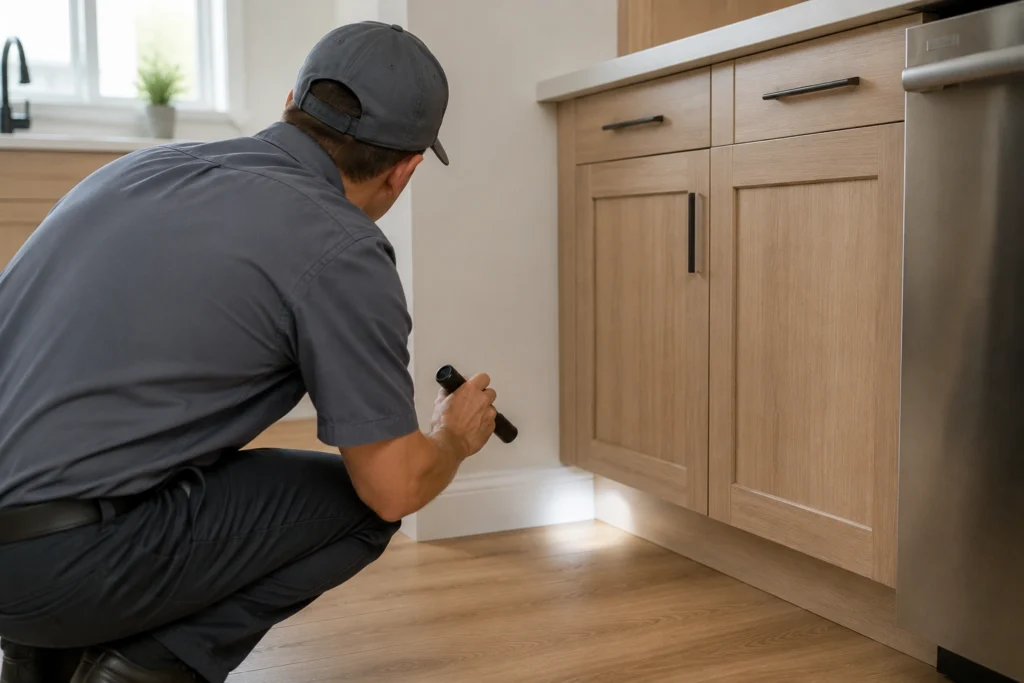
Identifying the species is the first step. Sealing the entry points is what keeps them out long term.
Schedule a Rodent Inspection
If you’ve found droppings, heard scratching in the walls, or actually seen something dart across the floor, the smart move is to identify the species and seal the entry points before the population grows. Northwest’s team has been clearing rodent problems out of Georgia, Alabama, Tennessee, and South Carolina homes for decades, and most of what we do for rodent calls is finding the entry points homeowners missed and treating the species that’s actually present.
About the Author
Anna V., Editorial Lead — Pest Education leads pest education content for Northwest Exterminating, working with senior technicians and service center managers across our Georgia, Alabama, Tennessee, and South Carolina service areas to translate field expertise into homeowner-friendly guides. The focus: accurate, regionally-specific answers to the pest questions Southeast homeowners are actually searching for.
Mar 13, 2020 | DIY, DIY Wildlife Prevention, Wildlife
If you live in an area where snakes are common, chances are you may stumble across one at some point. Snakes, like any other pest, are usually in search of three things: food, water, and shelter. Oftentimes the area around our homes provides all of these things that attract snakes.
The likelihood of a snake on your property depends on several factors, including location (north vs south), landscape (urban vs rural), a nearby water source (pond, lake, river), how well your lawn is landscaped and maintained, and how readily a food supply is available.
When dealing with snakes, it is important to identify the type of snake you are dealing with: venomous snakes should be left to a professional to eliminate while non-venomous snakes can often be deterred with natural snake repellent techniques. Here are 4 ways to keep snakes out of your yard:
1. Scare Them Off
One of the easiest ways to scare off a snake from your yard is to use your garden hose. Spray the snake with a steady stream from the hose until he slithers off. Consider installing a perch pole for hawks, owls, and other natural snake predators to alight on. Be sure to place it in an open area so the birds have a good view of your yard and the surrounding area.
2. Repel Them Away
There are some natural products and at-home techniques you can use for snake prevention. Ammonia is a common snake repellent. Snakes hate the smell of ammonia and won’t come near it. Soak rags in ammonia and place them in unsealed plastic bags. Leave the bags where you usually see snakes to keep them away.
You can also use vinegar to keep snakes and other pests out of your swimming pool. Pour white vinegar around the perimeter of the pool. Snakes can absorb the vinegar through their skin, so they will avoid slithering over it once it’s poured on the ground. Snakes also try to avoid humans at all costs. Save hair from your hairbrush and scatter it around the perimeter of your property to help keep snakes away.
3. Don’t Invite Them In
Snakes will come into your yard in search of food, water, and shelter. Eliminating these three basic necessities will make them much less likely to pay you a visit. Mow your grass often and keep it cut short. Shorter grass means more exposure to predators like hawks and coyotes and also makes them much easier for you to spot.
Avoid overwatering your lawn, as this can attract snake food sources like frogs, worms, and slugs. Keep trees, shrubs, and branches trimmed away from the sides of your house, the roof, and the ground. Try to keep a 24 to 36-inch space cleared under trees and shrubs, as this reduces the chance of snakes using them for cover and makes them easier to spot. Move bird feeders away from the house or get rid of them altogether.
Birds often leave seeds scattered underneath which attracts rodents that, in turn, attract snakes. Keep bird seed and pet food stored in metal cans with tight-fitting lids.
Make sure your woodpile is kept away from the home and elevated if possible. When designing your landscaping, try not to use mulch or large rocks, as these create breeding grounds and overwintering habitats for snakes. Instead, try to use smaller, tight-fitting rocks like gravel or river rock. Also, try to avoid using water features and Koi ponds as the water can also attract snakes.
4. Lock Them Out
Snakes can be very persistent pests, and keeping them out can be difficult. Carefully inspect the outside of your home and seal any cracks or crevices you find on the house, sidewalk, and foundations. Consider installing fencing around your yard, garden, or pool.
Fencing should be buried a few inches into the ground and constructed using 1/4″ rigid mesh or solid sheeting. Fencing should also include a bend at the top to prevent snakes from climbing up and over. There are some companies that even make wildlife-specific fencing.
The best way to prevent snakes is to take steps to keep them out in the first place. Dealing with snakes can be dangerous, depending on the type of snake you have. If you have a snake problem, contact animal control or a professional wildlife control company that can help safely trap, relocate, or remove the nuisance snake from your home.
You May Also Be Interested In:
What You Should Know About Termites This Spring
Where Are These Stinkbugs Coming From?
Where Do Roaches Come From?
Summer Wildlife Removal: Common Home Invaders
Mice, Rats, And Other Problem Rodents
Feb 5, 2020 | Wildlife
Nuisance wildlife is defined as any type of wild animal that invades a human habitat. This can include squirrels, skunks, opossum, raccoons, moles, voles, groundhogs, birds, bats, snakes, rodents, and more. Anytime a pest gets into your home the potential for damage and contamination is significant. That’s why it’s important to deal with the issue as soon as possible.
There are different ways to handle nuisance pests when they find a way into your home. Extermination involves killing the nuisance pest through the use of traps, toxins, and poisons. While this is generally cheaper and more efficient, the chemicals used can be dangerous for humans, pets, and other non-nuisance wildlife. Wildlife control involves the selective removal of problem populations of certain species of wildlife and usually employs the use of live traps or professional trappers to catch and relocate the nuisance pests to a safer habitat away from humans. This method usually takes longer than extermination and is more expensive. Wildlife exclusion is usually performed as a part of either of these wildlife services and involves preventative measures such as sealing up entry points and habitat modification (which ensures unwanted pests can’t access your property or structures).
Animal control services can be provided by your local government and is usually free although it is often selective in what types of animals they will service. Services provided and cost varies by area and municipality.
A professional wildlife control company will often combine wildlife control, exclusion and/or extermination methods depending on the type of pest you have. Whenever possible, humane control methods such as live removal and relocation are the preferred method of treatment.
Wildlife services typically range from $150 to $500 with the average visit costing between $250 and $250, although it can cost upwards of $1000 depending on what type of pest is involved and how much damage has already been caused. Most wildlife control companies will charge a flat fee or a minimum service fee (usually between $150 and $250), although some will also charge an additional hourly fee per hour after the first hour of service (anywhere from $25/hour to $250/hour depending on the service). This is determined by the type of pest problem, where it is located in the house, and what services are required (removal, exclusion, cleanup, etc). Raccoons and squirrels are usually the most expensive pests to service with an average of $200 to $1500 for a visit depending on the size of the infestation and the amount of damage inflicted. DIY traps can cost anywhere from $50 to $350.
In addition to fees for wildlife control services, damages caused by these nuisance pests is an often overlooked cost that should factor in to the overall budget. The longer you wait to get rid of the pest, the more damage that can occur. Nuisance pests can damage walls, chew through electrical wiring putting you at risk for fires, destroy insulation, and contaminate your home and HVAC system. Repairs for these issues including insulation replacement, wiring repair, drywall repair, duct repair, crawlspace cleaning and repair, and siding repair can be quite expensive and the cost can escalate quickly.
If you have a wildlife issue, contact a professional wildlife control company. A professional technician can inspect your home to determine what type of animal you are dealing with, the extent of the problem and damage, and appropriate ways to treat it. They can also provide you with wildlife exclusion techniques to help prevent repeat issues in the future. Professionals also guarantee their methods and are trained in the proper handling of wildlife, as well as the newest methods and techniques.
You May Also Be Interested In:
Is Mosquito Control Needed In Winter?
Where Did These Ants Come From?
8 Tips For Winter
What Attracts Cockroaches To A Clean House?
What to Expect When Signing Up for Termite Protection