Jan 22, 2021 | Wildlife
When cold weather hits, winter wildlife go in search of three things: food for their bellies, water to quench their thirst, and warm shelter to keep them safe. When the going gets tough, these winter pests have to get creative in order to survive – often by making their way into your attic, chimney, basement, or crawlspace. While it’s beneficial for them, it can cause serious damage to both your home and your health to have them sharing space with you.
How do you know if you have a stowaway for the winter? Common signs of wildlife include:
- Scratching sounds coming from your walls or attic
- Chirping or squeaking sounds coming from the walls, vents, or attic
- Garbage cans and bags that have been broken into
- Chewing or gnawing marks in the basement or attic, or through wires or cardboard
- A foul smell that lingers even after cleaning (which could be urine or feces)
Now that you know what to look for, what kinds of animals can cause these signs? Some of the most common winter wildlife include:
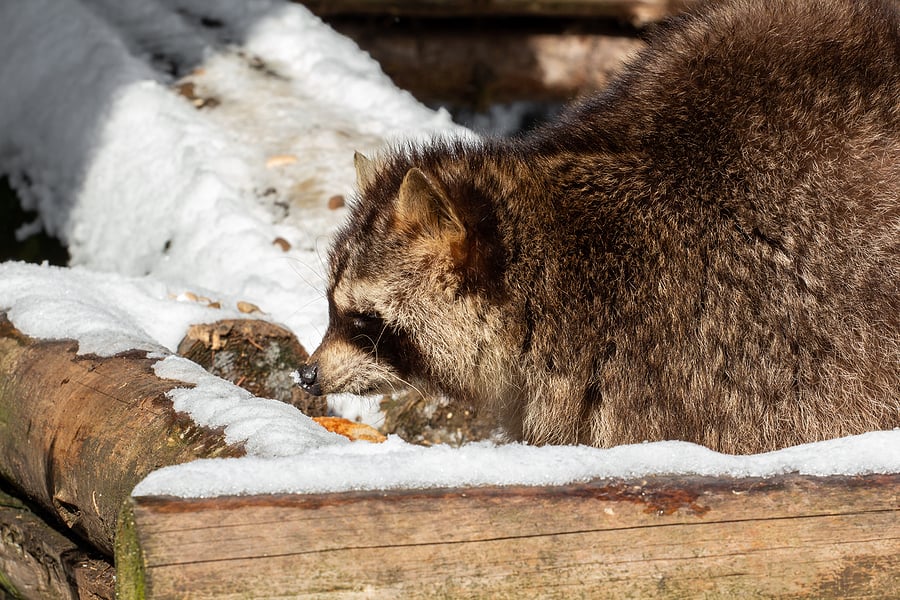
- Raccoons: These nocturnal omnivores use their hands to dig for food, especially in your garbage cans. Raccoons are the largest carriers of rabies in Georgia (along with skunks, bats, foxes, and coyotes). Raccoons can damage property, spread rabies, and spread ringworm. They are most likely to nest in chimneys and attics.
- Rats and mice: These rodents like to live in crawlspaces and between the side beams in your walls. They will venture out to make trips to your kitchen in search of food. Rats and mice carry and spread salmonella, along with fleas, ticks, and lice. Their droppings also contain pathogens that can be dangerous to humans. They are avid chewers and will often chew through electrical wiring, causing property damage and increasing the risk of fires.
- Squirrels: These are the most common rodents in Georgia with populations in the millions. These pests like to take up residence in attics and basements and will bring in tons of acorns to store for the winter. Squirrels, like their rodent cousins, also carry diseases and pathogens, both on themselves and in their droppings. They can also chew through wires.
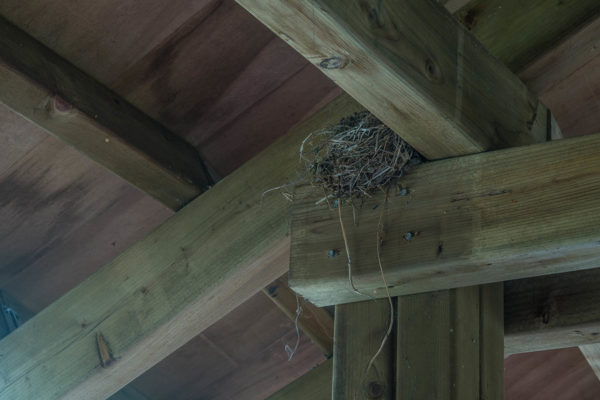
- Birds: Although less common than other winter wildlife, birds can be just as dangerous. Birds like to infest chimneys and attics to nest and lay their eggs. Their droppings can cause quite a mess and also harbor diseases and parasites. They can also cause severe damage to roof lines and chimneys. Many birds are protected so bird control and bird nest removal are usually best left to the professionals.
- Bats: Bats like to roost in attics where they can hide during the day and venture out at night. They carry disease like rabies and can spread them to humans through their bite. Bats are a protected species in Georgia and killing them is prohibited.
Prevention is key to avoiding a winter wildlife invasion. Critter control starts at home with these winter wildlife prevention tips:
1. Inspect Chimneys
Chimneys provide a great hideout and also a gateway for wildlife to get into your home. Make sure the top of your chimney has a grated screen that is in good repair with no holes. Check above the flue panel for any leaves, debris, droppings, or animals before sealing it up. Make sure your chimney is secure.
2. Inspect Foundations
Small holes, cracks, open pipes, etc. in your foundation provide easy routes for wildlife to get into your home. A careful inspection of your foundations should be performed every season throughout the year. Seal any openings as you find them.
3. Inspect Roof and Siding
Any tiny cracks or openings in your roof or siding means easy access to your attic. Check the entire exterior of the roof, starting with the intersections and siding. Make sure to also check the flushing seams on the roof. Siding that connects to the roof should not be warped or pulled away. Be sure to check around exhaust openings and for loose vent screens, as well.
4. Inspect the Attic
Many wildlife critters love to hide out in the attic. Use a flashlight or headlamp and thoroughly inspect this space, checking for openings or chewed up or damaged areas of wood. Seal any holes you find but always make sure the animals are not still present before you do.
5. Secure Trash Containers
Your trashcans offer a buffet of food sources for pests. Use cans with tightly securing lids, avoid overfilling them, and wash the bins regularly to get rid of food waste.
6. Maintain Landscaping
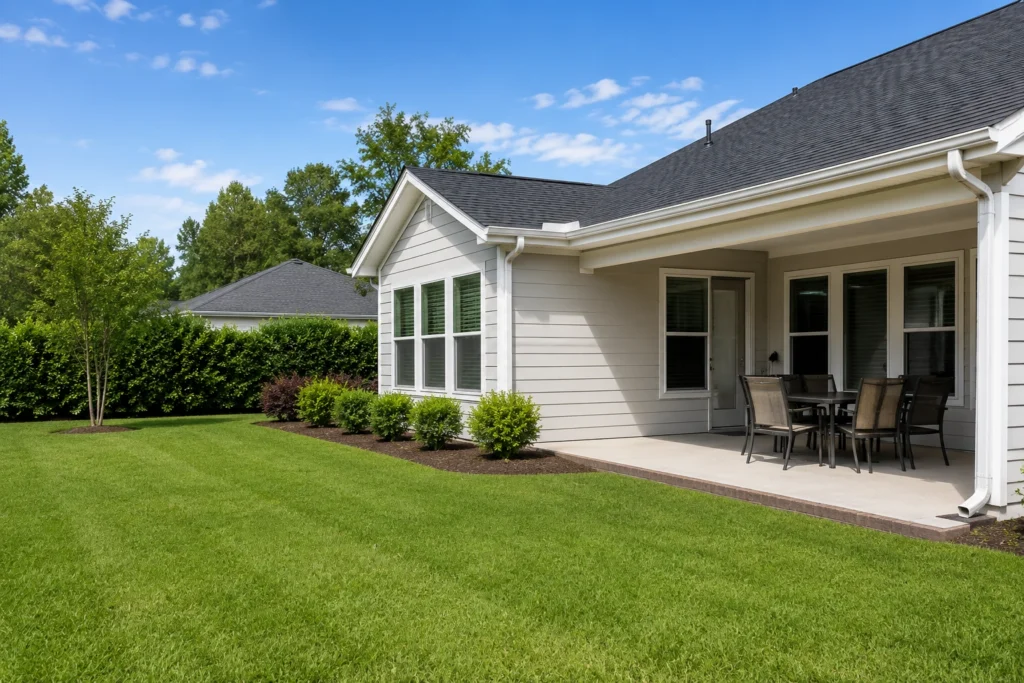
Branches and limbs offer squirrels, raccoons, and other creatures a bridge directly into your home. Keep trees and shrubs trimmed away from the house. Prune shrubs to keep them at least 12″ from the sides of your home. Trim any branches that overhang or touch your roof, as well.
7. Clean Up Food
Leaving food sources outside your home will just attract wildlife in. Try to avoid leaving pet food outside and tossing scraps or pouring leftover grease in the yard. Pick up any fallen fruit. Protect your gardens with fences that are designed to keep animals out. Clean up any spilled birdseed from feeders and bring them in overnight.
Wildlife control is an ongoing process that needs special attention and consideration, especially in the cold winter months. If you have a problem with winter wildlife, contact your local pest control company for an inspection and appropriate treatment or wildlife exclusion plan.
You May Also Be Interested In:
4 Pests That Are Closer Than You Think!
How to Get Rid of Pigeons
Are Termites Active Right Now?
A Guide to Home Pest Control
Where Do Snakes Go In Cold Weather?

Jan 15, 2021 | Wildlife
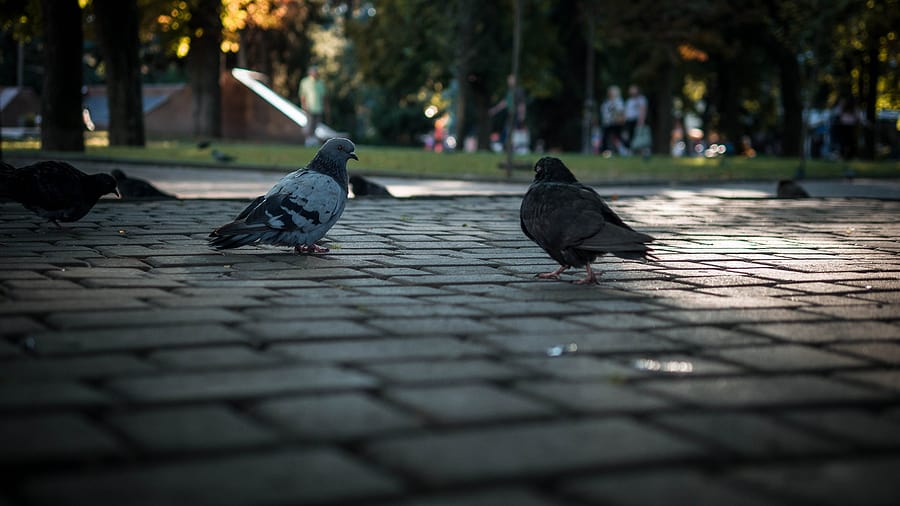
While some people consider pigeons a minor nuisance, they can actually be harmful to humans. Pigeons are the most common nuisance bird and are also responsible for the worst public health concerns caused by birds. Pigeons are capable of spreading more than 60 pathogens to humans, mostly through their droppings. Besides the obvious means of transmission by handling pigeon feces, what many don’t realize is pigeon droppings that are left on cars, windowsills, and even the street can dry into a powder that can be blown into the air and inhaled. The most common diseases spread by pigeons are E. coli, histoplasmosis, and salmonellosis.
Pigeons are also capable of damaging and destroying your property. Nests can interfere with the functioning of air conditioning units and electrical elements. Pigeon droppings can also accumulate, causing surfaces to become slippery. Their feces can also deface and deteriorate buildings and other structures.
Pigeons prefer to nest in small, flat areas that are off the ground (e.g. ledges, air conditioning units, pipes, and window sills). They eat a varied diet, consuming anything from grains and livestock feed to discarded food scraps and manure. They must have water daily to survive.
Pigeons adapt easily to their environments, including those that are manmade. They will travel up to 5 miles between their nesting and roosting sites, making it very difficult to get an established flock to move. Their homing capabilities allow them to easily find their way back to their original nesting sites.
Get rid of nuisance pigeons with these bird prevention tips:
- Discourage people from feeding these birds in public areas.
- Clean up any spilled grain or feed daily.
- Make food and water sources as inaccessible as possible.
- Block building openings such as lofts, vents, eaves, window sills, and steeples) with wood, metal, glass, masonry, wire mesh, plastic or nylon.
- Change ledge angles to 45 degrees or more as this discourages roosting.
- Place netting over ornamental architecture.
- Screen the underside of rafters with netting or wire mesh screening.
- Install a permanent mechanical bird repellent like bird spikes to help eliminate roosting.
If you suspect you have a problem with pigeons or any other nuisance pests, contact a professional pest control company for a free evaluation.
You May Also Be Interested In:
Are Termites Active Right Now?
A Guide to Home Pest Control
A New Year’s Resolution: Keeping Pest-Free!
Wildlife Control: How to Keep Animals Out of Your Home
10 Common Spiders in Georgia
Jun 19, 2020 | Wildlife
While some birds are beneficial to us through their production of down feathers, control of pests, control of weeds, and providing us with the opportunity for birdwatching, they can be detrimental to our homes and our health. Besides being a general nuisance, some birds can cause damage to buildings and monuments, contaminate food sources, and transmit diseases that can be serious to humans.
Three of the most common nuisance birds that can cause these issues to humans are pigeons, sparrows, and starlings. Here is a look at each of these nuisance birds, as well as some tips to prevent and exclude them.
Pigeons
Pigeons are the most common nuisance bird and are also responsible for the worst public health concerns caused by birds.
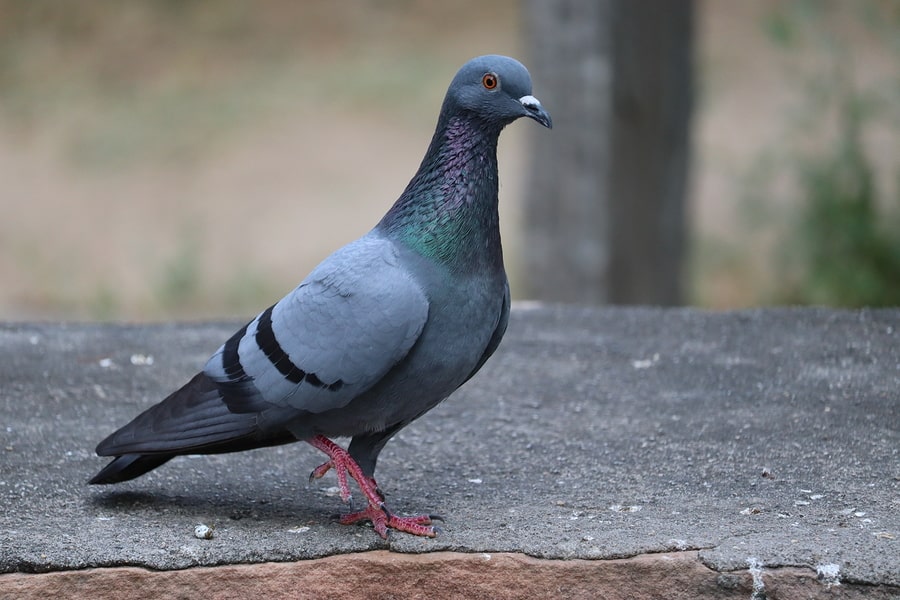
Adult pigeons are about a foot in length and weigh about 13 ounces. They are blue-grey in color with iridescent feathers on their heads and necks. Pigeons have short necks, small heads, and short legs.
Pigeons prefer to nest in small, flat areas that are off the ground (e.g. ledges, air conditioning units, pipes, and window sills). They eat a varied diet, consuming anything from grains and livestock feed to discarded food scraps and manure. They must have water daily to survive.
Pigeons can cause serious problems wherever they are. Large flocks of pigeons can be a nuisance in public places. Their feces can not only deface and deteriorate buildings and other structures but can also cause slipping hazards on stairs, sidewalks, and fire escapes. Their droppings and debris from their nests can clog downspouts and machinery. Pigeons carry numerous diseases including histoplasmosis.
Pigeons adapt easily to their environments, including those that are manmade. They will travel up to 5 miles between their nesting and roosting sites, making it very difficult to get an established flock to move. Their homing capabilities allow them to easily find their way back to their original nesting sites.
Sparrows
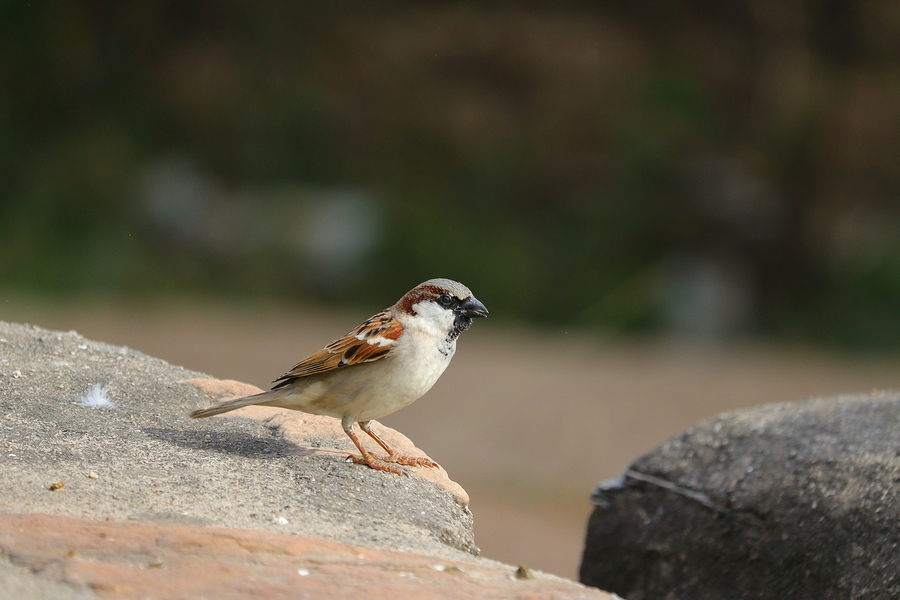
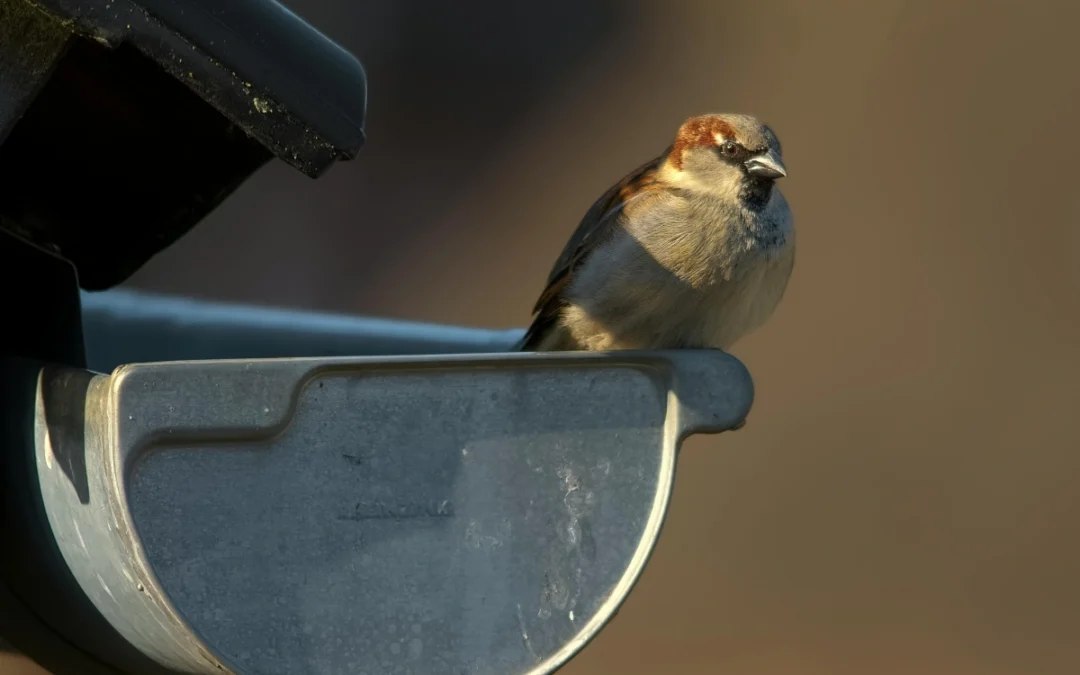
House sparrows are not actually true sparrows; they actually belong to a family called weaver finches. They are stocky, small birds about 5 to 6 inches in length and weighing about 1 ounce. They have conical bills with brown grey feathers. Males have a black throat and white crown while females have a white throat and a dull eye stripe.
Sparrows build extremely messy nests out of anything they can find (string, twigs, paper, grass). They prefer to make their nests in covered, elevated areas like warehouses, airport hangars, and stadiums.
Sparrows primarily eat grain but have also been known to eat fruit, seeds, insects, and food scraps. They have become extremely dependent on humans for both food and shelter. They nest, roost, and feed in large groups within 1 to 2 miles of each other.
Sparrows can be difficult to control because of their ability to rapidly reproduce. They are extremely aggressive and will often drive out other desirable bird species from the area. When they nest in electrical areas they can cause electrical shorts and fires. When they congregate in poultry and hog farms they cause potential contamination threats. Sparrows have been associated with over 25 diseases and ectoparasites.
Starlings
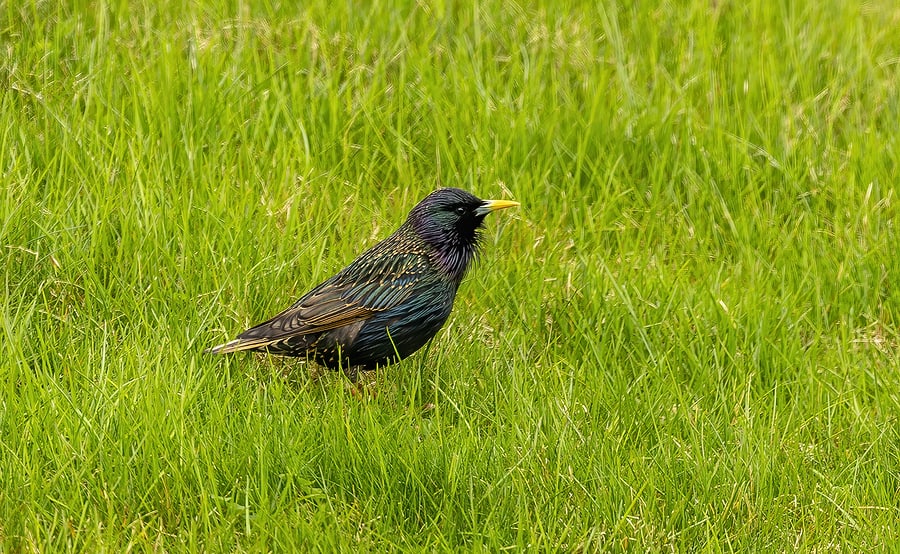
Starlings are an introduced species that cause problems in both urban and rural areas. Adult starlings are about 8 inches in length and weigh about 2-1/2 to 3-1/2 ounces. They have short tails and long bills. In the winter, starlings have dark bills and iridescent coats speckled with white dots. In the summer, starlings have yellow bills with duller coats that are mostly purple and green in color and are less speckled.
Starlings travel in flocks that can number into the thousands. They nest and feed in a variety of areas. When they nest in urban areas they tend to frequent trees, exhaust vents, marquees, ledges, lighted signs, hollow lampposts, billboards, soffits, and dryer and stove vents. In rural areas they tend to nest in farm building ledges and tree cavities.
Starlings feed on a variety of things depending on what season it is and what food sources are available. They are known to eat seeds, fruit, food scraps, insects, fruit, and vegetables.
Starlings can be problematic because of their intense vocalization, especially when their flocks grow to such large numbers. Their fecal accumulation can also be problematic because of the sheer volume. Starlings are very aggressive and can drive out other bird species. Their feces can deface and deteriorate buildings and other structures; can cause slipping hazards; can contaminate livestock feed; and can kill trees. They leave nesting materials behind that can clog machinery, cause drainage problems, and clutter structures. These blocked vents can also lead to moisture buildup, odor issues, and potential fire risks. They are known to carry serious diseases like histoplasmosis.
Each of these nuisance birds can be hard to control or eliminate once their flock is established. Prevention and elimination is key to helping control these bird populations. Here are some bird prevention and exclusion tips you can use to help control these problematic pests.
- Discourage people from feeding these birds in public areas.
- Clean up any spilled grain or feed daily.
- Make food and water sources as inaccessible as possible.
- Block building openings such as lofts, vents, eaves, window sills, and steeples) with wood, metal, glass, masonry, wire mesh, plastic or nylon.
- Change ledge angles to 45 degrees or more as this discourages roosting.
- Place netting over ornamental architecture.
- Screen the underside of rafters with netting or wire mesh screening.
- Install a permanent mechanical bird repellent like bird spikes to help eliminate roosting.
If you have a nuisance bird problem, contact a professional pest control company who can provide you with a customized inspection and treatment plan for your situation.
You May Also Be Interested In:
Why Are These Ants Flying?!
The When, Where, and Why of Termite Swarms
Venomous Summer Snakes
Which Season is Worst for Bed Bugs?
How To Help Your Lawn During Late Summer
Apr 17, 2020 | Alabama Blogs, DIY, DIY Wildlife Prevention, Georgia Blogs, Wildlife
By Anna V., Editorial Lead — Pest Education · Last updated: May 2026
If birds have taken over your roofline, started nesting in your dryer vent, or covered your back deck in droppings, you’re probably searching for a bird deterrent that actually works. At Northwest, we get bird control calls year-round across our Georgia and Alabama service area, but they spike sharply from late March through July when nesting season hits its peak. The honest version most homeowners don’t hear: most DIY bird deterrents work briefly, then stop working as birds adapt. The few that work long-term are usually the unglamorous ones (sealed vents, physical barriers, removed food sources), not the gimmicky owl decoys and ultrasonic gadgets sold on Amazon.
Here are the five DIY bird deterrents with the strongest track record in Southeast homes, what to expect from each, and the gimmicks worth skipping entirely.
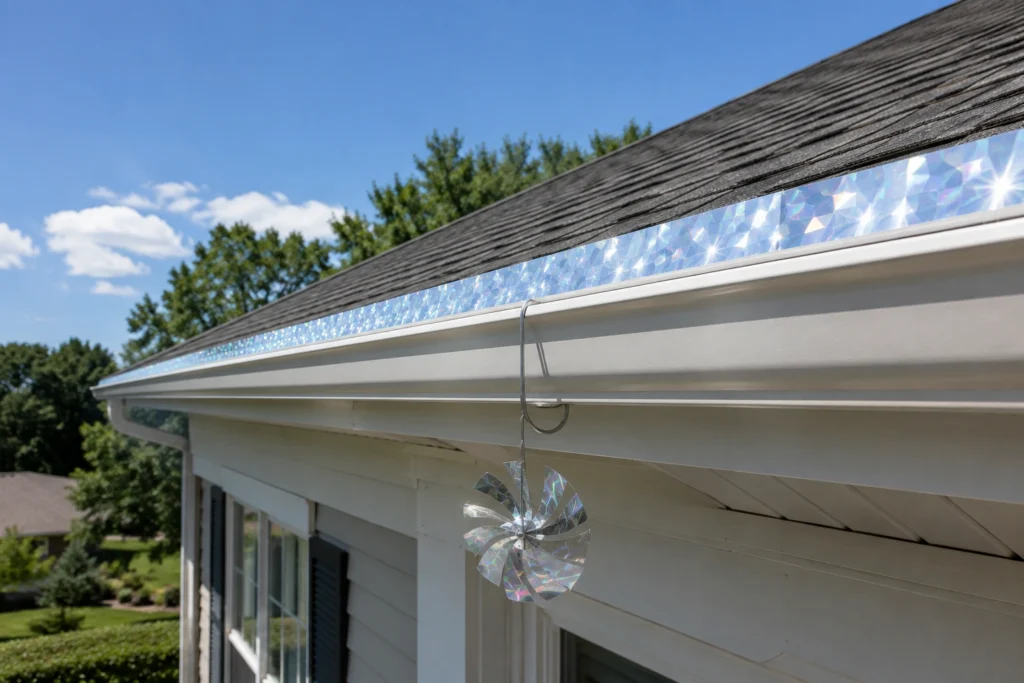
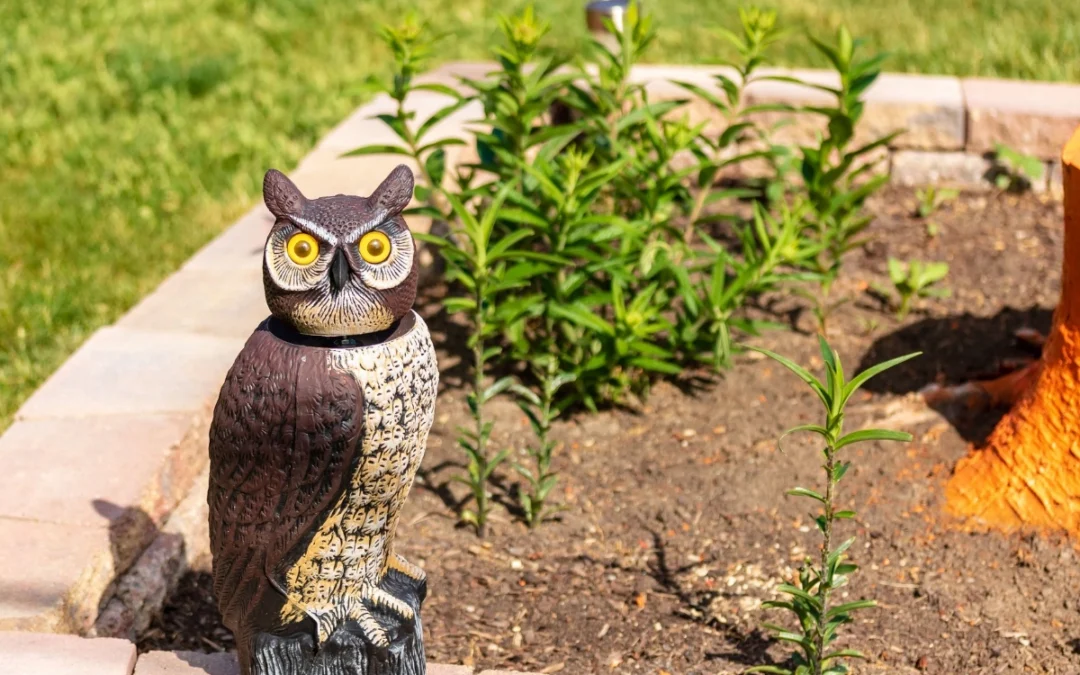
Visual deterrents work for a while, then stop. Rotation is the difference between weeks and months of effectiveness.
Why Bird Deterrents Matter
Bird activity around a Southeast home isn’t just an annoyance. Persistent bird problems lead to:
- Droppings. Bird droppings are acidic and stain paint, siding, decking, and concrete. Cleanup is constant, and accumulated droppings can damage surfaces permanently.
- Nesting in vents and gutters. Dryer vents, bathroom vents, gable vents, and gutter corners are favorite nesting spots. Nests block airflow, create fire risk (especially in dryer vents), and trap moisture.
- Noise. Pigeons, sparrows, and starlings start their day before dawn. Nesting season runs March through August in Georgia and Alabama.
- Structural damage. Roof damage from nesting materials, clogged gutters that overflow and rot fascia boards, and acid damage to paint from droppings.
- Health and sanitation concerns. Bird droppings can carry pathogens including histoplasmosis and salmonella. Most healthy adults aren’t at significant risk, but people with respiratory issues should avoid disturbing dried droppings without proper protection.
The species causing most of the bird-control calls we run are house sparrows, European starlings, and rock pigeons. All three are non-native and not protected under federal migratory bird law, which matters when you start considering removal options (more on that below).
Do DIY Bird Deterrents Really Work?
Yes and no. Most DIY bird deterrents produce short-term results, then lose effectiveness as birds figure out they’re not actually threats. The deterrents that hold up long-term are the ones that don’t depend on birds being fooled: physical barriers and habitat changes.
Two important caveats before you start any DIY bird control:
Federal law protects most native bird species. The Migratory Bird Treaty Act of 1918 protects more than 1,000 native species, and it’s illegal to disturb their active nests, eggs, or young without specific permits. The three most common nuisance species in the Southeast (house sparrows, European starlings, rock pigeons) are non-native and not protected, but several species you may encounter (swallows, woodpeckers, robins, mockingbirds, blue jays) are protected. If you’re not sure what species you’re dealing with, pause and identify before doing anything.
Active nests with eggs or young require special handling. Even for non-protected species, the humane and recommended approach is to wait until the nest is empty before removing it. Active nest removal during breeding season is one of the situations where calling a professional is often the right move.
5 Effective DIY Bird Deterrents
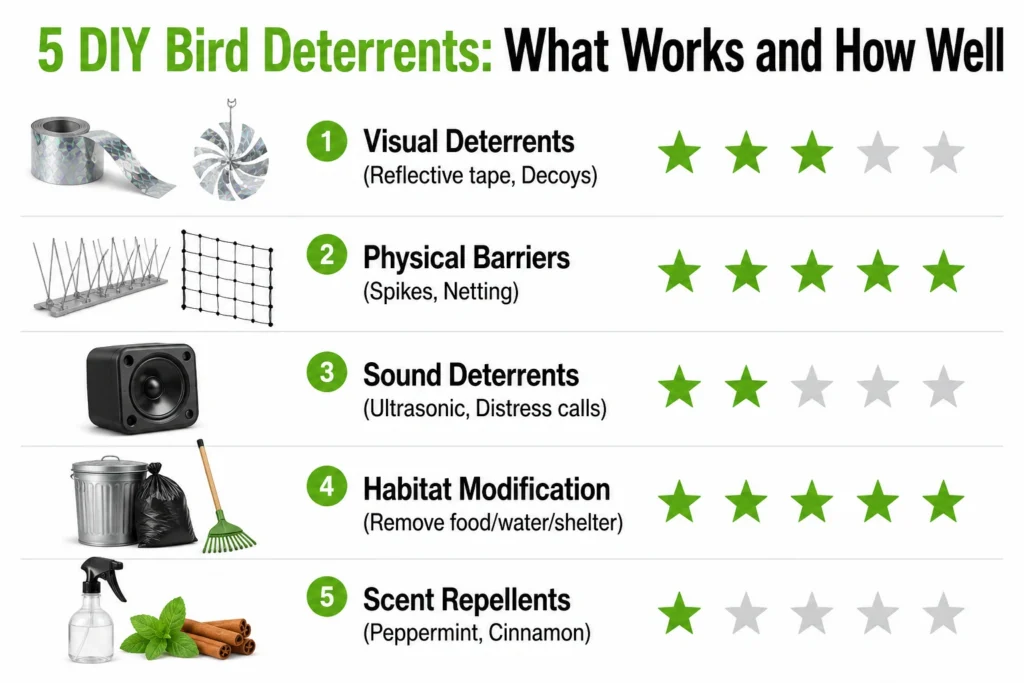
Physical barriers and habitat changes do most of the heavy lifting. The other three are short-term tools.
1. Visual Deterrents (Reflective + Predator Decoys)
Reflective bird tape, hanging spinners, and predator decoys (plastic owls, hawks) all work on the same principle: scare birds with movement, light flashes, or the appearance of a predator. They work briefly, especially for new arrivals. The catch is habituation. Within two to four weeks, birds figure out the owl doesn’t move and the tape doesn’t actually threaten them.
Best practice: rotate visual deterrents weekly. Move the owl decoy to a new spot, replace reflective tape, swap the spinner for a different design. The rotation is what extends effectiveness from “a few weeks” to “all season.” Static visual deterrents left in one place stop working fast.
2. Physical Barriers (Spikes + Netting)
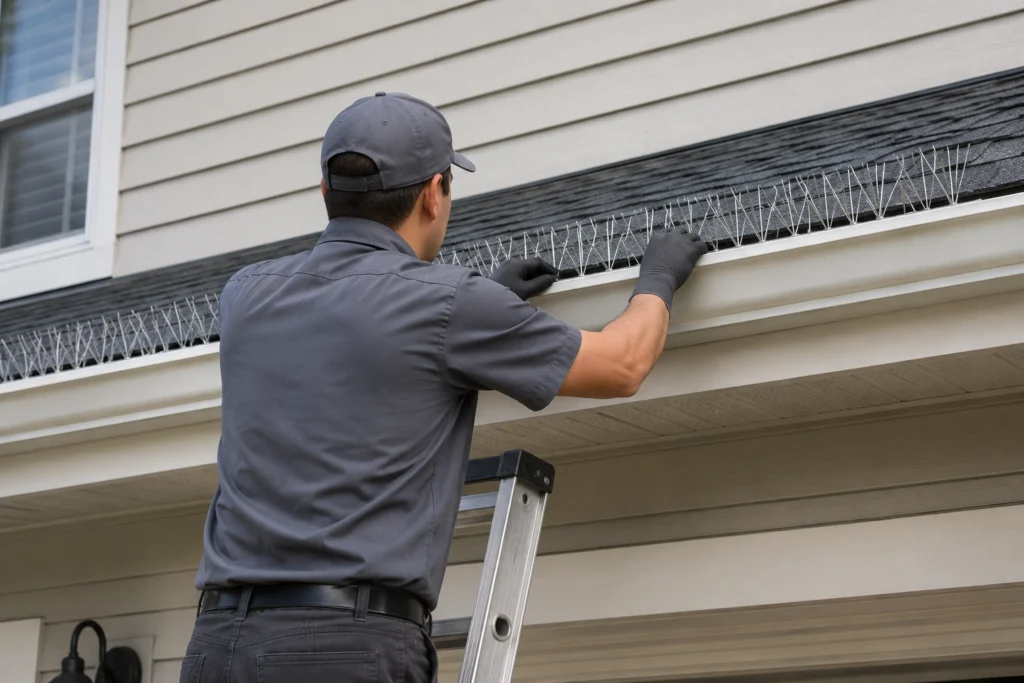
The single most effective long-term bird deterrent is making the landing spot physically unusable. Bird spikes installed along ledges, gutter edges, and rooflines prevent landing entirely. Bird netting stretched across eaves, soffit openings, or under solar panels blocks nesting access without harming birds.
Where physical barriers shine in Southeast homes:
- Gutter edges (favorite pigeon and starling landing spots)
- Eave overhangs (common sparrow nesting locations)
- Solar panel undersides (a big issue in newer Georgia construction)
- HVAC equipment housings and mini-split heads
- Window AC unit tops
- Gable vents and attic vents (with proper mesh, not just bird netting)
Bird spikes and netting installed correctly can last 10+ years and require near-zero maintenance. The catch: installation matters. Poor installation creates gaps birds exploit, and once a bird gets through, the whole barrier loses credibility.
3. Sound Deterrents (Ultrasonic + Distress Calls)
Ultrasonic devices and recorded distress calls (audible to birds, played on speakers) can disrupt new arrivals and slow nesting attempts. The research on ultrasonic devices specifically is mixed. Most independent testing shows limited effectiveness for birds, despite aggressive marketing claims. Audible distress calls work better but have an obvious downside in residential settings: they’re loud, and your neighbors will notice.
Sound deterrents are most useful in open commercial settings (parking lots, warehouse rooflines, agricultural buildings). They’re rarely the right choice for a single-family home in a Georgia or Alabama neighborhood.
4. Habitat Modification (the Most Overlooked Method)
The most underrated bird deterrent strategy isn’t a product. It’s removing the things drawing birds to your property in the first place. Birds keep showing up because the conditions are good. Change the conditions and most of them move on.
- Eliminate food sources. Bird feeders that overflow, pet food bowls left outside, accessible trash, fallen fruit under pecan or fig trees, breadcrumbs after outdoor meals. Any of these will pull birds in and keep them returning.
- Cut off water access. Standing water in birdbaths, clogged gutters that pool water, irrigation puddles, and uncovered pools all draw birds. Mosquitoes too, which then draws other pests.
- Trim trees and shrubs back from the house. A three-foot clear zone around the foundation and roofline reduces nesting opportunities and travel routes onto the house.
- Clean gutters regularly. A clogged gutter with debris is a five-star nesting site for sparrows and starlings.
- Seal entry points. Gaps in soffits, broken or missing vent covers, open chimneys without caps. The same exclusion work that keeps rodents out keeps birds out too.
Habitat modification is the only DIY method that addresses why birds came in the first place rather than just shooing them away. It’s also the only one that compounds: each year you maintain it, the cumulative effect grows.
5. Scent Repellents (Honest Effectiveness)
Peppermint oil, cinnamon, methyl anthranilate (the active compound in commercial bird repellents like grape extract sprays), and other scent-based products show modest, short-term effects in field testing. The catch: outdoor scents fade within days, wash out with rain, and require constant reapplication. They’re not a standalone solution.
Where scent repellents can earn their place: as a supplement to physical barriers in spots where you can’t install spikes or netting. Otherwise, treat them as the lowest-tier option.
The yards we treat for repeat bird problems almost always have an exposed food source, a water source, or open nesting cavities.
What Doesn’t Work (Bird Deterrent Myths to Skip)
A few “classic” bird deterrent ideas circulate widely but don’t hold up.
- Fake owls left in one place. Birds figure them out in days. Without rotation, they’re inert.
- Random DIY sprays. Vinegar, dish soap, garlic water, cayenne pepper, and similar mixes don’t have research support for bird control. They wash out fast and damage plants in the meantime.
- Wind chimes alone. Birds adapt to consistent sounds within a week. Wind chimes are pleasant. They’re not deterrents.
- Single-method approaches. Any one DIY deterrent works briefly. Combining two or three (e.g., physical barriers + habitat modification + rotating visual deterrents) is where homeowners see lasting results.
Humane Bird Exclusion: The Long-Term Approach
The most effective bird control isn’t a product. It’s exclusion, which means making your property physically unable to host birds in the spots they want to nest. Exclusion combines:
- Sealing every gap in vents, soffits, and rooflines with appropriate mesh or hardware cloth
- Installing bird spikes on landing surfaces
- Adding bird netting under solar panels and over open eaves
- Capping chimneys with bird-proof caps
- Modifying the surrounding habitat to remove food, water, and shelter
Exclusion done right typically lasts 10 years or more with minimal maintenance. It’s also the only approach that fully complies with the Migratory Bird Treaty Act, because it prevents nesting before it starts rather than removing active nests later.
When to Call a Professional for Bird Control
DIY bird deterrents handle small, early-stage bird problems well. Call Northwest for bird control if:
- Birds keep returning to the same spot despite your DIY efforts.
- Nests are in hard-to-reach or hazardous areas (high roofs, gable vents, solar panels).
- You’re dealing with large flocks (more than 10 birds at a time) or commercial properties.
- You suspect protected species are involved.
- An active nest needs removal mid-season.
- You want long-term exclusion done correctly the first time.
(Birds keep returning after you’ve tried DIY? Request a free Northwest bird control inspection and we’ll identify the species, find the entry points, and lay out a long-term exclusion plan.)
Bird Control in the Southeast
Birds in Georgia, Alabama, Tennessee, and South Carolina behave a little differently than in cooler parts of the country. Three regional factors increase bird pressure on Southeast homes:
- Longer nesting season. Warm spring weather arrives early and lingers into fall. House sparrows can produce three to four broods per year here, compared to two in colder regions.
- Year-round resident populations. Rock pigeons and house sparrows don’t migrate. They’re a problem every month of the year, not just in summer.
- Construction patterns. Open soffits, gable vents, and unscreened crawl space vents are common in older Atlanta, Birmingham, Savannah, and Macon homes. Each is a bird entry point.
The good news: the same exclusion approach that solves bird problems also solves rodent problems and helps with snake prevention. For more on how those pest categories connect, see our snake repellent guide on the rodent-snake-bird sealing connection. For the broader question of getting rid of birds already established on your home, see our companion guide on how to get rid of birds around your home.
Frequently Asked Questions About Bird Deterrents
What bird deterrent works best?
Physical barriers (bird spikes and netting) are the most effective long-term solution because they don’t depend on birds being fooled. Combined with habitat modification (removing food, water, and shelter), they handle most residential bird problems for years with minimal maintenance.
Are bird deterrents harmful to birds?
Most modern bird deterrents are designed to be humane and non-lethal. Bird spikes, netting, sound, scent, and visual deterrents discourage birds without injuring them. Avoid sticky gels or glue traps marketed for birds. They can trap and injure or kill birds and are illegal to use against protected species.
Do birds come back after deterrents are installed?
They can, especially if deterrents aren’t maintained or rotated. Static deterrents (a single fake owl, reflective tape that never moves) lose effectiveness within weeks. Combining multiple methods and rotating visual deterrents weekly extends results dramatically.
Are birds protected by law?
Yes, most native bird species are protected under the federal Migratory Bird Treaty Act, which makes it illegal to disturb their nests, eggs, or young without specific permits. The three most common nuisance species in the Southeast (house sparrows, European starlings, rock pigeons) are non-native and not protected. If you’re unsure what species you’re dealing with, identify the bird before removing nests.
How long does it take to get rid of birds with DIY deterrents?
If you start at the early-arrival stage (a few birds scouting, no active nests), DIY deterrents can resolve the issue in one to two weeks. If birds have already established nests, expect a longer timeline (often a full nesting season) before you can fully exclude them. Active nests of protected species cannot be removed mid-season; you’ll need to wait for the young to fledge before sealing the area.
Professional exclusion lasts years. DIY deterrents that get rotated and maintained can match it for smaller problems.
Ready to Stop the Bird Problem at the Source?
If you’ve tried a DIY bird deterrent or two and the birds keep coming back, the problem isn’t the deterrent. It’s the conditions around your home that keep drawing birds in. Northwest’s wildlife team handles the full bird-control workflow: species identification, exclusion installation, habitat assessment, and follow-up to make sure birds don’t find a new spot to set up shop.
About the Author
Anna V., Editorial Lead — Pest Education leads pest education content for Northwest Exterminating, working with senior technicians and service center managers across our Georgia, Alabama, Tennessee, and South Carolina service areas to translate field expertise into homeowner-friendly guides. The focus: accurate, regionally-specific answers to the pest questions Southeast homeowners are actually searching for.
Jan 10, 2020 | DIY, DIY Wildlife Prevention, Wildlife
By Anna V., Editorial Lead — Pest Education · Last updated: May 2026
Birds are great when they’re in trees. They’re a problem when they’re nesting in your dryer vent, leaving droppings down your siding, or waking you up at 5 AM with constant chirping above your bedroom ceiling. If you’re searching for how to get rid of birds safely and effectively, you’re in the right place. At Northwest, we run bird control calls year-round across our Georgia, Alabama, Tennessee, and South Carolina service area, and the question we hear most often is some version of: I tried [home remedy]. Why are they still here?
Video Transcript
Some birds are beautiful to watch, but when they start nesting on your home, the damage and mess can add up fast.
Droppings can carry disease. Nests can clog vents and chimneys, and addicts can quickly become unwanted bird hangouts.
Here are three smart ways to keep birds from moving in. First, remove what attracts them. Birds come for easy food and water. Keep grass trimmed to reduce insects. Store pet food in sealed containers and eliminate standing water whenever possible. Second, make surfaces uncomfortable. Shiny objects like foil strips or pie plates reflect light and scare birds away.
Double-sided tape or baking soda on ledges and railings can stop perching almost immediately. Third, maintain your yard and know the rules. Trim trees and shrubs, but never remove an active nest. Laws protect many birds. When you’re ready to call a professional for a peaceful home, feel free to reach out to our team at Northwest Exterminating.
Here’s a realistic look at what works, what doesn’t, and what’s legally required when birds set up shop on your house. Plus what to do when DIY isn’t enough.
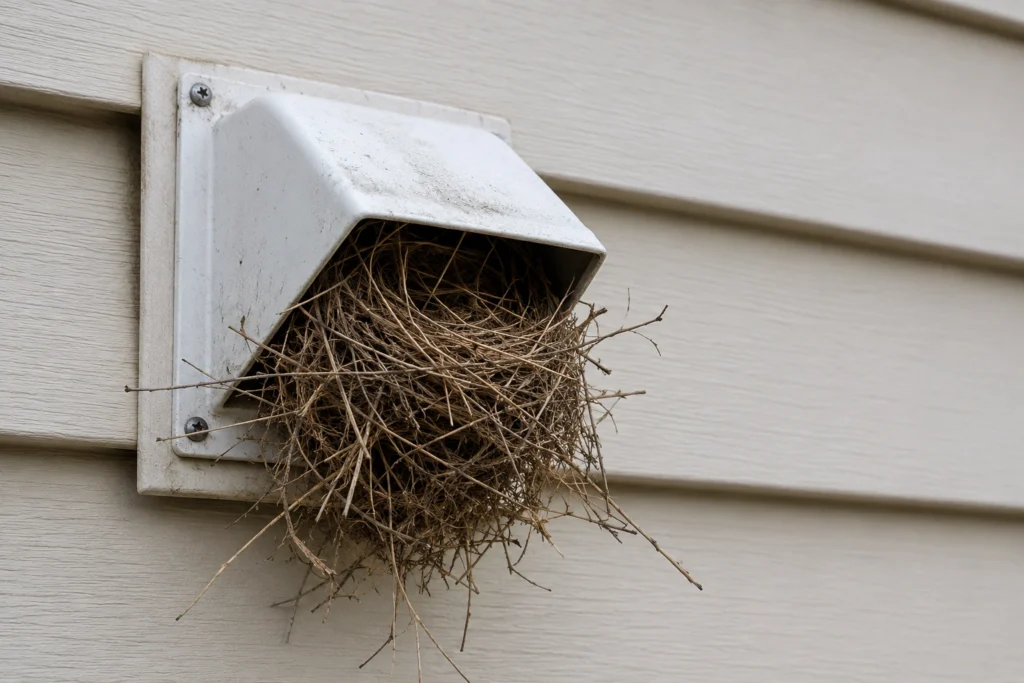
A bird nest in a dryer vent is more than a nuisance. It blocks airflow, traps lint, and creates a real fire hazard.
Why Birds Become a Problem on Homes
Birds don’t pick houses at random. They show up because the conditions are good for them, and they stay because nothing changes. Three things draw birds to a Southeast home and keep them coming back:
Shelter and nesting spots. Rooflines, gutters, eaves, attic vents, gable vents, dryer vents, soffits, and any small protected cavity make ideal nesting sites. Pigeons, sparrows, and starlings are all cavity-nesters, which is why they end up inside vents rather than building open nests in trees.
Food sources. Pet food on a porch, fallen fruit under a tree, accessible trash, breadcrumbs after outdoor meals, insects on a sunlit wall, and (less obviously) bird feeders that overflow are all reasons birds keep returning.
Warmth and safety from predators. Attics, soffits, and vents offer protection from hawks, owls, snakes, and other natural threats. From a bird’s perspective, your house is a five-star nesting hotel.
The common results homeowners deal with:
- Loud chirping and early morning noise during nesting season (March through August)
- Droppings on patios, siding, walkways, and driveways
- Clogged gutters and blocked vents
- Damage to roofing, insulation, and exterior surfaces
- Dryer vent fires (a real and dangerous risk when bird nests block airflow)
Common Birds That Cause Problems Around Southeast Homes
Across Georgia, Alabama, Tennessee, and South Carolina, the bird species we encounter most often on residential bird control calls are:
- Rock pigeons. Common on roofs, ledges, and around commercial buildings. Heavy droppings, persistent return behavior. Non-native, not protected.
- House sparrows. Small but persistent. Frequently nest in vents, eaves, and small structural openings. Aggressive about defending nest sites. Non-native, not protected.
- European starlings. Often in large flocks. Heavy nesting in cavities and vents, noisy, leave significant droppings. Non-native, not protected.
- Barn and cliff swallows. Build mud nests on the underside of eaves, porches, and overhangs. Protected by federal law — active nest disturbance requires special handling.
- Woodpeckers. Damage cedar siding and trim with drumming and excavation. Most species are federally protected.
- Robins, mockingbirds, blue jays. Less commonly nest on homes but occasionally do in shrubs against the siding. All federally protected.
Knowing the species matters because the three most common nuisance birds (pigeons, sparrows, starlings) can be handled with standard control approaches, while protected native species require a different approach.
Do Home Remedies Really Get Rid of Birds?
Short answer: sometimes, briefly. Most home remedies provide short-term relief before birds adapt and return. Birds are smart and pattern-recognize quickly. Within a few weeks of installing any single deterrent, most birds figure out it’s not actually a threat.
If you’re dealing with a recurring issue (birds nesting on your house, a bird problem on your roof, droppings that won’t quit), DIY methods alone usually won’t solve the problem long-term. The reason is structural: birds keep returning because the underlying conditions (food, water, shelter, easy access) haven’t changed.
5 Common Home Remedies to Keep Birds Away — Honest Effectiveness
DIY methods buy you weeks. Professional exclusion buys you a decade.
Here’s a realistic look at the five home remedies most homeowners try first, with pros, cons, and effectiveness ratings.
1. Reflective Objects (Foil Strips, Old CDs, Mirrors)
How it works: Light reflection startles birds. Pros: Low cost, easy to set up. Cons: Birds habituate within two to four weeks if not rotated. Effectiveness: Low to moderate for short-term arrivals. Improves significantly if you rotate the reflective objects weekly.
2. Strong Scents (Peppermint, Vinegar, Cayenne Spray)
How it works: Strong-smelling compounds are meant to repel birds. Pros: Cheap, “natural.” Cons: Limited research support, fades within days outdoors, washes out in rain, can damage plants and paint. Effectiveness: Low. Treat as a supplement at best, not a primary method.
3. Fake Predators (Plastic Owls, Hawks, Snake Decoys)
How it works: Mimics natural threats. Pros: Can work briefly, especially right after installation. Cons: Birds recognize they’re not real if they don’t move. A plastic owl in the same spot for two weeks becomes a perch. Effectiveness: Low if static, moderate if moved every 3 to 5 days.
4. Wind Deterrents (Spinners, Streamers, Pinwheels)
How it works: Movement and unpredictability create discomfort. Pros: More effective than static visual deterrents because there’s actual motion. Cons: Still loses effectiveness over time as birds get used to predictable patterns. Effectiveness: Moderate. Better than static options, especially when combined with rotation.
5. Sound Deterrents (Ultrasonic Devices, Distress Calls)
How it works: Noise discomfort or simulated alarm calls. Pros: Can disrupt initial nesting attempts. Cons: Ultrasonic effectiveness is questionable in independent testing. Audible distress calls work better but disturb your neighbors. Effectiveness: Low to moderate. Better suited for commercial buildings than residential settings.
Bottom line on home remedies: they can buy you a few weeks. They rarely stop nesting attempts long-term, and they almost never address why birds came to your house in the first place.
Why DIY Bird Deterrents Often Don’t Last
Three reasons DIY bird control fails over the long term:
- Birds adapt fast. Within a week or two of any new deterrent, birds figure out it’s not actually a threat. Habituation is the biggest enemy of all DIY methods.
- Nesting instincts override discomfort. During breeding season (March through August in the Southeast), birds will tolerate significant nuisance to defend a good nesting site. Annoying them isn’t enough.
- Entry points stay open. Most DIY methods don’t seal the access points birds use. As long as the dryer vent is open, the gable vent is unscreened, or the soffit gap exists, birds keep returning.
For deeper analysis of which DIY bird deterrent methods work and how to maximize their effectiveness, see our companion guide on 5 DIY bird deterrents that actually work.
When Bird Problems Become a Bigger Issue
What starts as a few birds on the roof can escalate into serious problems if ignored.
Health Concerns
Bird droppings can carry pathogens including histoplasmosis (a respiratory illness from fungal spores in dried droppings), salmonella, and E. coli. Most healthy adults aren’t at significant risk, but people with respiratory conditions or compromised immune systems should avoid disturbing dried droppings without proper protection.
Property Damage
Bird droppings are acidic and damage paint, siding, decking, and concrete over time. Nests clog gutters, block vents, and damage roofing materials. Cumulative damage from a long-term bird problem can run into thousands of dollars in repairs.
Fire Hazards
Dry nesting materials in dryer vents are one of the more dangerous bird-related issues. Lint that can’t escape through a blocked vent builds up against hot dryer ducts, and a small spark inside the dryer can ignite the material. Dryer vent fires cause an estimated 2,900 home fires annually in the U.S. (per the National Fire Protection Association). A bird nest in the vent significantly raises that risk.
Legal Concerns
The federal Migratory Bird Treaty Act of 1918 protects more than 1,000 native bird species. It’s illegal to disturb their active nests, eggs, or young without specific permits. The penalty for violations can exceed $15,000 per offense. For the three most common Southeast nuisance species (pigeons, sparrows, starlings), this isn’t a concern. For native species (swallows, woodpeckers, robins, mockingbirds), removing an active nest without proper authorization is a federal offense.
This is one of the reasons we recommend professional bird control whenever protected species are involved. We work within the legal framework and time removals to be both effective and compliant.
The Most Effective Way to Get Rid of Birds: Humane Exclusion
The gold standard for bird control is exclusion: making your property physically unable to host birds in the spots they want to use. Exclusion includes:
- Bird spikes installed along ledges, gutter edges, rooflines, and HVAC equipment housings to prevent landing.
- Bird netting stretched across eaves, soffit openings, and under solar panels to block nesting access.
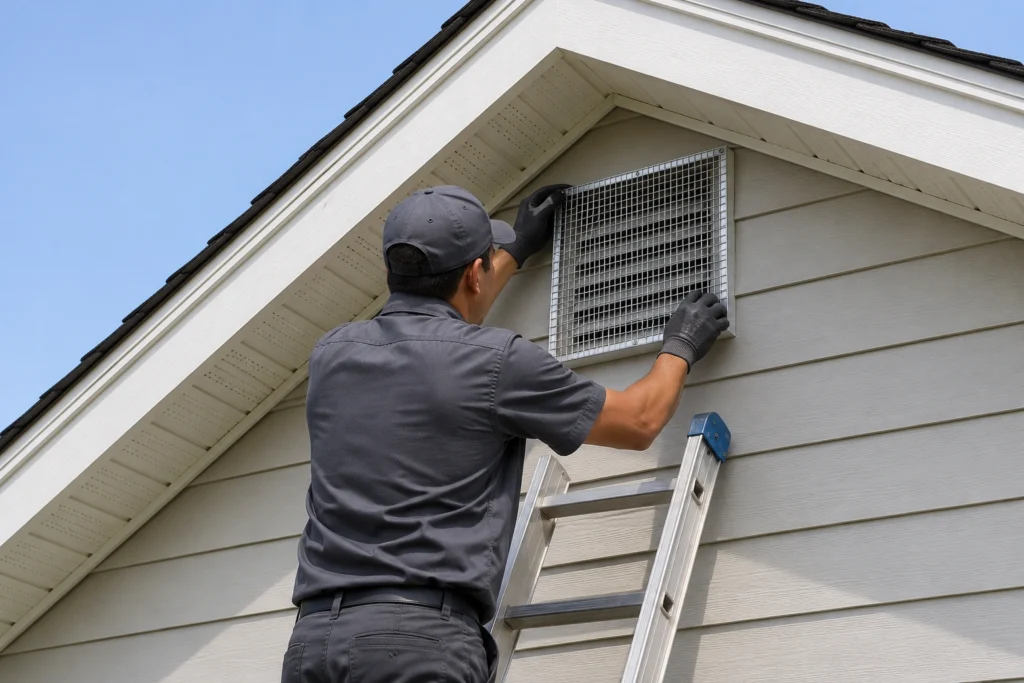
- Vent and roofline covers on dryer vents, bathroom vents, gable vents, and attic vents. Bird-proof vent covers allow normal airflow while blocking bird entry.
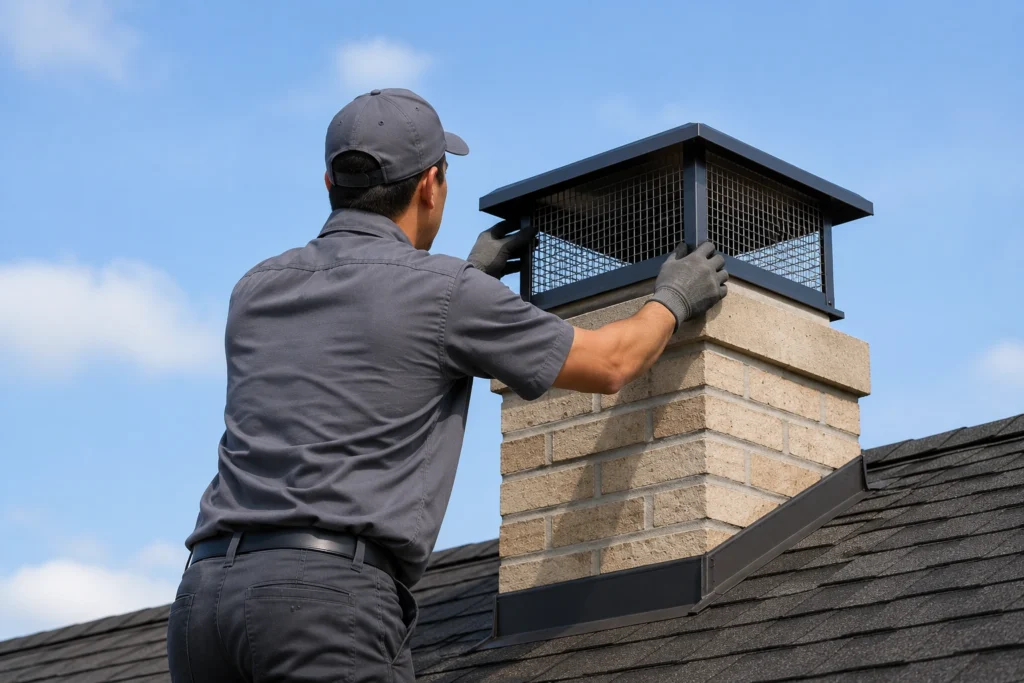
- Chimney caps with appropriate mesh to keep birds out of chimneys (also keeps out raccoons, squirrels, bats, and snakes).
- Habitat modification around the property to remove food, water, and shelter that draws birds in the first place.
- Humane nest removal when legally permitted, timed to avoid breeding season disruption.
Exclusion done right typically lasts 10+ years with minimal maintenance. It’s also the only approach that addresses the root cause rather than the symptom.
Bird-proof vent covers and roofline exclusion fix the access points DIY deterrents can’t reach.
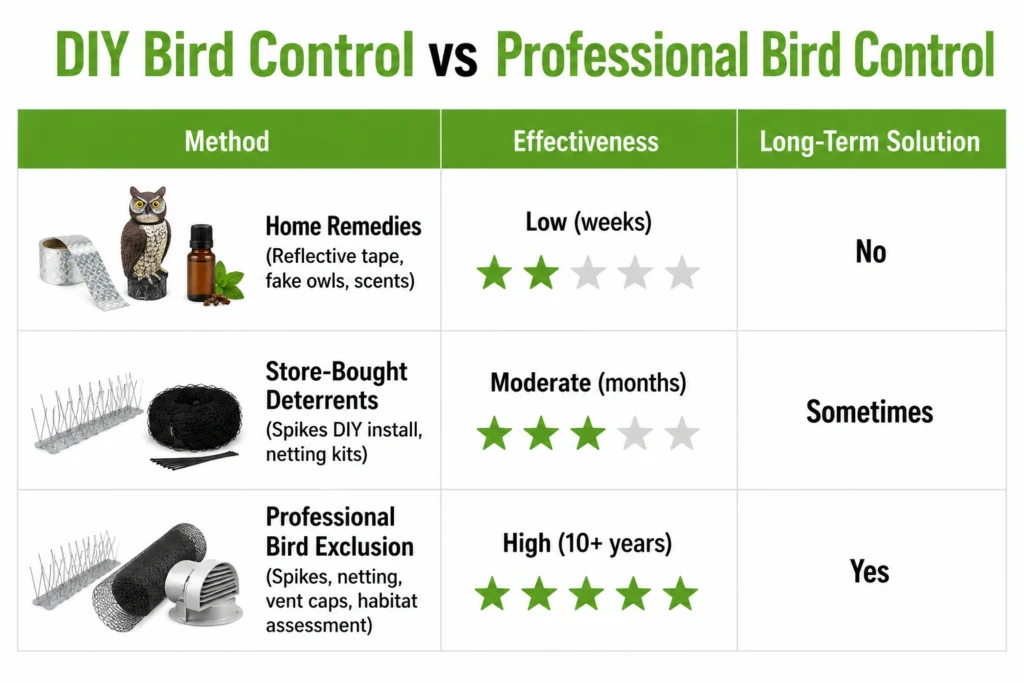
DIY vs Professional Bird Control
The honest comparison:
DIY home remedies work well for early-stage problems — a few birds scouting, no active nests, recent arrivals. Cost is low. Effectiveness lasts weeks to a few months. Effort is ongoing (rotating deterrents, replacing materials, monitoring).
Store-bought deterrents (DIY-installed spikes, netting kits, ultrasonic devices) work better than home remedies and last longer. Cost is moderate. Installation matters significantly — poor installation creates gaps birds exploit.
Professional bird control handles established problems, protected species, large flocks, and hard-to-reach locations. Cost is higher upfront. Effectiveness lasts 10+ years with minimal follow-up. Legal compliance is built in. Northwest’s bird control service handles species identification, exclusion design and installation, habitat assessment, nest removal (when legal), and follow-up monitoring.
Bird Problems in Georgia, Alabama, Tennessee, and South Carolina
Bird pressure in the Southeast is different from cooler climates. Three regional factors increase the bird-control workload:
- Year-round resident populations. Rock pigeons and house sparrows don’t migrate. They’re a problem all 12 months, not just spring and summer.
- Long nesting season. Warm spring weather arrives early and lingers into October. House sparrows can produce three to four broods per year here vs. two in northern states.
- Open construction styles. Many older homes in Atlanta, Birmingham, Savannah, Macon, and Augusta have open soffits, gable vents, and unscreened crawl space vents. Each is a bird entry point.
The good news: the same exclusion approach that stops bird problems also helps with rodents (rats and mice often share entry points with birds), and indirectly with snakes (which follow rodents). For more on the rodent-snake-bird connection, see our snake repellent guide.
Frequently Asked Questions About Getting Rid of Birds
Are birds protected by law?
Yes. The federal Migratory Bird Treaty Act protects more than 1,000 native bird species, making it illegal to disturb their active nests, eggs, or young without specific permits. The three most common Southeast nuisance species (house sparrows, European starlings, rock pigeons) are non-native and not protected. Most native species (swallows, woodpeckers, robins, mockingbirds, blue jays) are protected.
Can I remove a bird nest myself?
It depends on the species and whether the nest is active. For non-protected species (pigeons, sparrows, starlings), you can remove inactive nests yourself, though we recommend wearing gloves and a mask to avoid contact with droppings. For protected species, active nests cannot be removed without proper authorization. The safest approach is to wait until young have fledged before removing the nest, then seal the area to prevent return nesting.
What bird deterrents work best for nesting on the house?
Physical exclusion is the only reliable long-term solution. Bird spikes on landing surfaces, bird-proof vent covers on dryer vents, gable vents, and bathroom vents, netting under solar panels and across open eaves. Visual deterrents and scent repellents can supplement but don’t replace exclusion.
How long does professional bird control take?
For most residential bird problems, professional exclusion can be designed and installed within one to two visits, with follow-up monitoring to confirm birds don’t find a new spot. The exclusion itself typically lasts 10 years or more with minimal maintenance. For larger or more complex situations (commercial properties, large flocks, protected species), the timeline can extend over a full nesting season.
Why are birds nesting in my dryer vent?
Dryer vents are protected from predators, well-insulated, and offer a small enclosed nesting space that’s ideal for house sparrows and starlings. The fix is a bird-proof dryer vent cover that allows lint and exhaust to escape but blocks birds from entering. We see dryer-vent bird nests in about 30% of the Georgia and Alabama bird-control calls we run. It’s one of the most common bird issues in the region.
Professional bird control closes the access points DIY can’t reach. That’s the difference between months and years.
Ready to Get Rid of Birds for Good?
If you’ve tried home remedies and the birds keep coming back, the problem isn’t the remedy. It’s the access points and underlying conditions that keep drawing birds to your property. Northwest’s wildlife team handles the full bird-control workflow: species identification, exclusion design and installation, habitat assessment, and legal compliance when protected species are involved.
About the Author
Anna Vaccaro, Editorial Lead — Pest Education leads pest education content for Northwest Exterminating, working with senior technicians and service center managers across our Georgia, Alabama, Tennessee, and South Carolina service areas to translate field expertise into homeowner-friendly guides. The focus: accurate, regionally-specific answers to the pest questions Southeast homeowners are actually searching for.