Mar 23, 2018 | Pest Control, Wildlife
Pollination is when pollen grains are transferred from one flower to another. Pollination allows plants to produce seeds which is how they reproduce. Pollinators are animals and insects that are responsible for helping with the pollination of over 80% of the world’s flowering plants. Animal pollinators are vital in the reproduction of flowering plants and the production of most fruits and vegetables. They accomplish this by getting their food from flowers (think nectar and pollen) and collecting pollen on their bodies in the process. They then move on to another plant and leave the hitchhiking pollen behind, providing the new plants with the pollen they need to reproduce.
Some of the most common animal pollinators that come to mind are bees and butterflies. But did you know there are several other animals you might not have known who are expert pollinators? Here are a few animal pollinators along with the types of plants they pollinate:
ANTS:
Ants love nectar. Because they don’t fly they have to crawl into flowers to get to this nectar. Once inside the flower, pollen sticks to their bodies, allowing them to transfer it to other flowers when they move on. Tropical plants have nectar outside their flowers to attract ants to them. They then use these ants as “protectors” from other insects.
Ants pollinate flowers that:
- Are low growing
- Are small and inconspicuous
- Have flowers close to their stems
BATS:
Bats are known as one of the “night shift” pollinators. They are most common in tropical and desert climates. They are prevalent in the southwest US, Africa, Southeast Asia, and the Pacific Islands as pollinators. In fact, mangoes, bananas, and guavas depend on bats for pollination. In the US and Central America, the agave plant (which is used to make tequila) and the Saguaro cactus are also dependent on bats for pollination.
Bats pollinate flowers that:
- Open at night
- Are large in size
- Are pale or white in color
- Are very fragrant
- Have copious nectar
BEES:
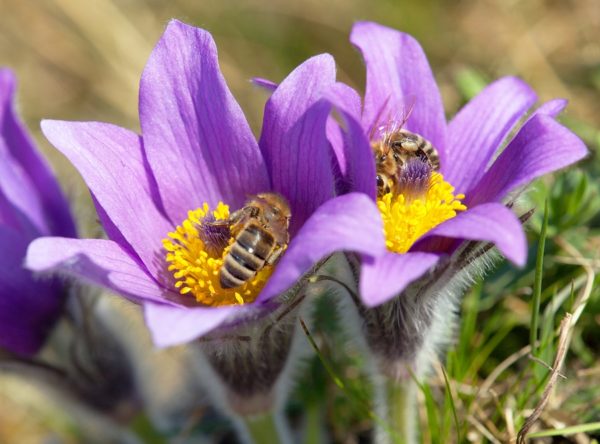
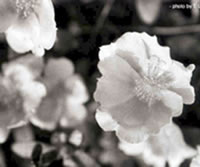
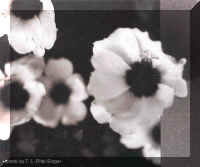
Bees are known as the “champion” pollinators and are also the most common. There are over 4000 species of bees in the United States alone. Bees purposefully visit flowers to collect pollen and nectar which they use to feed themselves and their young. Many flowers that bees pollinate have an area of low UV reflection near their centers. Humans can’t see UV reflection so we don’t notice them. Bees, however, use them as a target to guide them to the center of the flower.
Human Perspective Bee Perspective
Photos courtesy of Apalachicola National Forest.
Bees pollinate flowers that:
- Are full of nectar
- Are brightly colored (usually blue or yellow) (bees can’t see red)
- Have a sweet or minty flavor
- Are open in daytime
- Provide landing platforms
- Have tubular flowers with nectar at the base
BEETLES:
Beetles were among the first insects to visit flowers. They are important pollinators for ancient species like magnolias. They are known as “mess and soil” pollinators because they eat through flower petals to get to the nectar and then defecate inside the flowers. Fossil records show that beetles were abundant as far back as 200 million years ago.
Beetles pollinate flowers that:
- Are bowl shaped with their sexual organs exposed
- Are white to green in color
- Have a strong fruity fragrance
- Are open during the day
- Have a moderate amount of nectar
- Have large, solitary flowers
BIRDS:
Birds are important pollinators of wildflowers. Hummingbirds are the most important bird pollinators in the United States. In the eastern United States there is only one species that acts as a pollinator and that is the ruby throated hummingbird. Hummingbirds have good eyesight and are extremely attracted to red flowers. They use their long bills to collect nectar and the pollen then dusts their heads and faces.
Hummingbirds pollinate flowers that:
- Are tubular with recurved petals
- Have tubes, funnels, and cups
- Are brightly colored red, yellow, and orange
- Are odorless
- Are open during the day
- Have prolific amounts of nectar
- Have a modest amount of pollen
BUTTERFLIES:
Butterflies are very active during the day. Their body structure doesn’t allow them to pick up as much pollen as bees and other insects but they can see red where bees can’t. Butterflies produce scents that attract other butterflies of the opposite sex. This scent they produce smells like the flowers that they are attracted to.
Butterflies pollinate flowers that:
- Have flowers with clusters and landing platforms
- Are brightly colored (red, orange, yellow)
- Are open during the day
- Have ample nectar
TWO-WINGED INSECTS:
Two winged pollinators include flies, gnats, and mosquitoes. These insects aren’t as fuzzy as bees so they don’t pick up as much pollen. They are still, however, important pollinators, especially for some species of orchids.
Two-winged insects pollinate flowers that:
- Are pale and dull to dark brown or purple in color
- Are sometimes flecked with translucent patches
- Have a putrid odor
- Produce pollen
- Have funnel-like pollen
MOTHS:
Moths are the other member of the pollination “night shift” along with bats. Some moths are also active as pollinators during the day. The yucca plant is one important plant that is dependent on moths for survival.
Moths pollinate flowers that:
- Have clusters and landing platforms
- Are white or dull in color
- Are open in late afternoon or at night
- Have ample nectar
- Have nectar that is deeply hidden
WASPS:
Wasps look like bees but have much less hair. This makes them less efficient as pollinators because pollen is less likely to stick to their bodies. Wasps need pollen and nectar for energy. Fig wasps are responsible for pollinating almost 1000 species of figs.
Wasps pollinate flowers that:
- Are full of nectar
- Are brightly colored (usually blue or yellow) (bees can’t see red)
- Have a sweet or minty flavor
- Are open in daytime
- Provide landing platforms
- Have tubular flowers with nectar at the base
OTHER POLLINATORS:
There are several other uncommon pollinators. Lizards, geckos, and skinks can be pollinators. They climb inside flowers to drink the nectar and the pollen then sticks to their scales. Lemurs and possums can also pollinate. They use their snouts and tongues to get nectar from plants and then have their faces and snouts dusted with pollen.
We consider most of the animals and insects that are pollinators as nuisances and pests. As much as we don’t want them in our homes, they do play a very critical role in the survival of plants and food. It is important that while we should take steps to prevent them from invading our homes, we should be very careful with how we handle them should they make themselves at home in our area. If you suspect you have a problem with any of these pollinators, contact a professional pest control company who can give you a thorough evaluation and provide you with a treatment plan that both benefits you and protects these important species.
Feb 12, 2018 | DIY, DIY Pest Control, Pest Control
We’ve all been there before… you’re sitting in your house and you hear an incessant buzzing. All of a sudden something flies past your face! If you’re like most of us, your first thought it aghh! A bug in my house! Once you get over the initial shock of being dive bombed by this home invader, your next thoughts might be: What kind of bug is this? Is there more than one? How did it get in my house? How do I get rid of it? While we can’t answer all of your questions, we can help with a few. We’ve listed some of the most common flying pests below, as well as some tips to prevent them from getting into your home.
BEES:
While there are several different species of bees in North America, we are going to look at bumblebees, honeybees, and carpenter bees.
APPEARANCE:
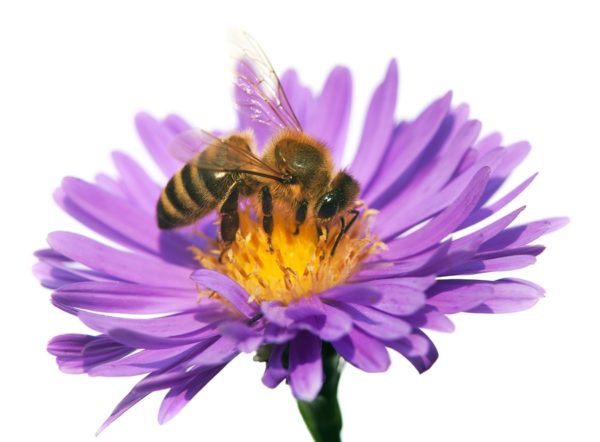
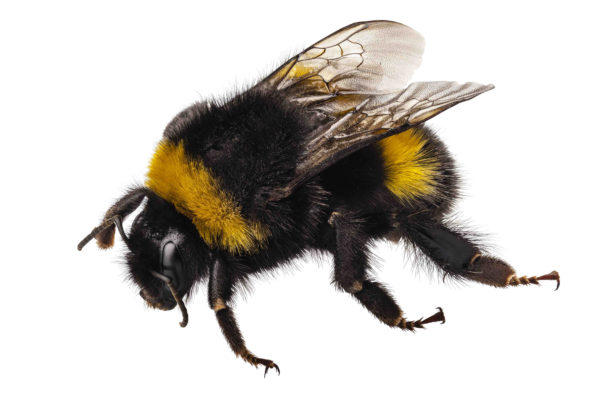
Bumblebees are large, clumsy looking insects with oval shaped bodies. They are extremely fuzzy. They are yellow and black striped in color. They typically grow between 1/4″ and 1″ in length.
Honeybees are predominantly golden yellow with brown bands, but they can also be orange-brown in color. They have a very hairy appearance. They can grow to be about 1/2″ in length. They also have flat hindmost legs which are used to carry pollen.
Carpenter bees have a fuzzy body that is very robust in shape. Their bodies are yellow except for their abdomen which is shiny black. Males also have a white patch on their faces. Carpenter bees grow from 1/2″ to 1″ in length.
HABITAT:
Bumblebees typically make their nests underground so their nests may not be visible. They will often make their nests in old mouse burrows or in dense clumps of grass. They have also been known to make their nests under woodpiles or behind the siding of homes. Bumblebees are found throughout the United States.
Honeybees typically make their nests in beehives, trees, hollow logs, and piles of logs. It is very common for them to get inside your home and nest in attics, wall voids, chimneys, and crawlspaces. Honeybees are found throughout the United States.
Carpenter bees create their nests in pieces of wood – preferably soft wood that has not been painted or sealed. They will often make their nests in decks, porches, roof eaves, wooden shingles, wooden playgrounds, in wooden outdoor furniture, and in sheds. The entry holes for carpenter bees are perfectly round.
DIET:
All three species of bees feed on nectar and pollen from flowering plants. Contrary to popular belief, carpenter bees don’t actually eat the wood they burrow in to make their nests.
BEHAVIOR:
Female bumblebees have stingers but males do not. Bumblebees are not significantly aggressive but they will sting if they feel threatened. Their sting can be dangerous to humans with an allergy.
Honeybees are the only bee colonies that can survive for many years. They are very social insects. Female honeybees have stingers but males don’t. The female stinger is barbed which means it is only able to sting once. Honeybees aren’t known for being aggressive but they will sting if they are directly attacked.
Carpenter bees are very solitary insects and don’t create very large nest. Female carpenter bees have stingers but males don’t. Their sting is strong enough to cause a reaction in humans. Female carpenter bees are docile and rarely sting unless they are directly attacked. Male carpenter bees are very aggressive but don’t have stingers to do harm with.
PREVENTION:
All bees are protected as pollinators so treatment is only provided when they are deemed to be a nuisance or a threat. Removal is always the first treatment option because of this protected status.
- Avoid planting flowering plants and vegetation near the exterior of your home.
- Keep woodpiles and compost piles a safe distance from your home.
- Remove any fallen trees and other piles of debris from your property.
- Make sure your outdoor trashcans have tight lids.
- Paint or stain any wooden structures including porches on your property.
- If you find a nest or suspect you have a bee problem, contact a professional pest control company.
YELLOW JACKETS
APPEARANCE:
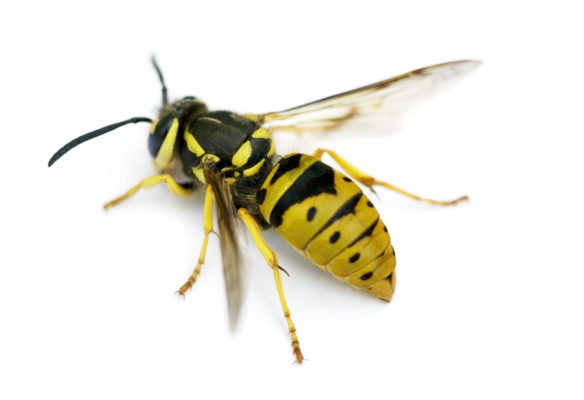
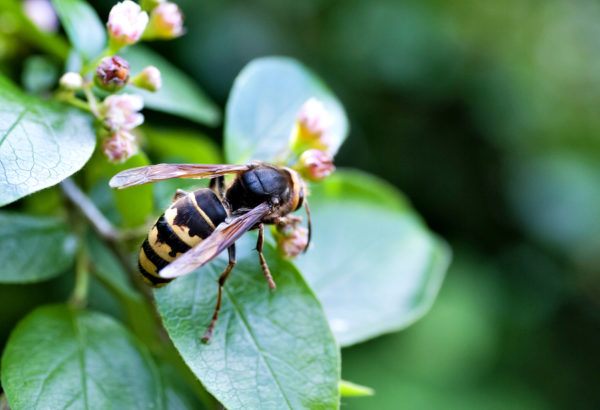
Yellow jackets have a sleek appearance. They are not fuzzy. They are black and yellow striped in color. They can grow to be 3/8″ to 5/8″ long.
HABITAT:
Yellow jackets build their nests either high up or in the ground. Their elevated nests can be found in the walls of buildings or in attics and chimneys. Their ground nests are usually in areas that lack vegetation or in spaces next to the entrance of buildings.
DIET:
Yellow jackets feed on other insects. They also eat any sweets and proteins that they come across. You can often find yellow jackets at outdoor events because they like to feed on sugary food scraps and drinks that are left out.
BEHAVIOR:
Yellow jackets have a smooth stinger which allows them to sting multiple times. They are usually docile unless their nests are approached. Then they become very aggressive and will sting repeatedly. Their sting can be life threatening if you are allergic. Yellow jackets are beneficial both as pollinators and because they help control the population of nuisance insects.
PREVENTION:
- Trim back shrubbery and trees from the exterior of your home.
- Make sure outdoor trash cans have tight fitting lids.
- Seal cracks in foundations.
- Caulk any gaps around windows and doors.
- Cap chimneys.
- Make sure vent covers are secure.
- If you are outdoors, make sure food is kept covered and dispose of cans, cups, and bottles quickly.
- If you suspect you have a yellow jacket problem, contact a professional pest control company.
PAPER WASPS:
APPEARANCE:
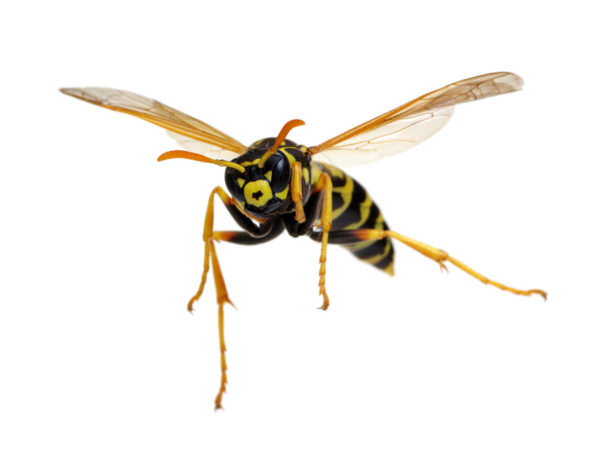
Paper wasps have a sleek appearance with a pinched waste and long, thin legs. They have gray wings and their bodies are black or brown with yellow or orange markings. Paper wasps can grow to be 5/8″ to 3/4″ in length.
HABITAT:
Paper wasps are found throughout the United States. They will build their nests of the ground on any horizontal surface they can find. Their nests are commonly found hanging from trees, shrubs, porches, decks, roofs, outdoor grills, and door frames. Their nests resemble an umbrella attached by a stem. Their name comes from the paper-like nests that they build.
DIET:
Paper wasps are predatory insects and feed on a wide variety of insects and spiders. They also eat nectar and pollen.
BEHAVIOR:
Paper wasps have smooth stingers that allow them to sting multiple times. They are not typically aggressive but will sting to defend their nests. Paper wasps have facial recognition capabilities like humans and chimpanzees do. They can actually recognize the faces of their colony members.
PREVENTION:
- Nests have to be knocked down in order to prevent rebuilding and overwintering.
- Adult wasps must also be killed to prevent the nest from being rebuild. This should be done in the early morning or late at night.
- Trim back shrubs and trees from the exterior of your home.
- Make sure outdoor trashcans have tight fitting lids.
- Cap chimneys.
- Fix any loose roof shingles.
- Repair any holes in your roof line.
- Make sure windows and doors have screens that are in good repair.
- Caulk any gaps around windows and doors.
- If you have a wasp nest or suspect you have a wasp problem, contact a professional pest control company.
BALD FACED HORNETS:
APPEARANCE:
Hornets are much bigger than wasps. They are almost completely black except for an off white pattern on their face. They are long and thin with wasp-like bodies. They can grow from 3/4″ to 1-3/8″ in length.
HABITAT:
Hornets are found throughout the United States. Hornet colonies only survive for 1 year. They build aerial nests that can be found in trees, on utility poles, on the side of homes, and under eaves. Hornet nests can be more than 14″ around and more than 24″ long.
DIET:
Hornets are pollinators. Adults have a liquid diet that mostly consists of nectar and plant juices. They are also predatory and will prey on insects that they bring back to their nests to feed their larvae.
BEHAVIOR:
Hornets have a more painful sting than wasps do. A single hornet sting can be fatal if the victim is allergic. When hornets sting or feel threatened, they give off a pheromone that signals the rest of the colony to attack as well.
PREVENTION:
- It is difficult to prevent hornets from building nests. If the nest is up high, it is best to just leave it alone.
- Trim back shrubs and trees from the exterior of your home.
- Make sure outdoor trashcans have tight fitting lids.
- Cap chimneys.
- Fix any loose roof shingles.
- Repair any holes in your roof line.
- Make sure windows and doors have screens that are in good repair.
- Caulk any gaps around windows and doors.
- If you have a hornet nest or suspect you have a hornet problem, contact a professional pest control company.
LADYBUGS
APPEARANCE:
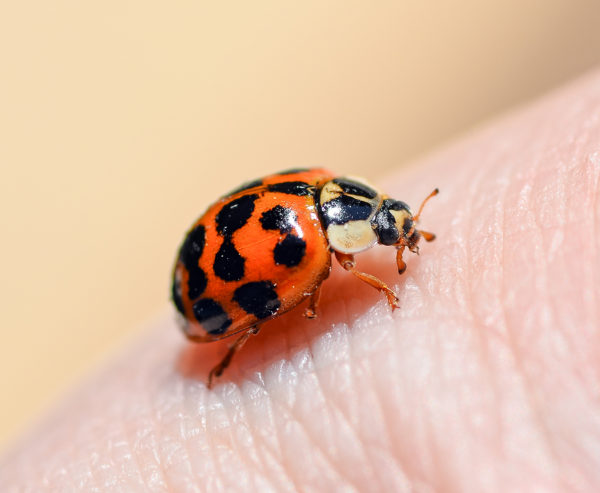
Ladybugs have a distinctive appearance. They are bright red, orange, or yellow with black spots. Their bodies are oval and dome shaped.
HABITAT:
Ladybugs are found worldwide. There are over 5000 species total and 450 species in North America. Ladybugs live outside in gardens and landscaped areas. They aren’t able to tolerate cold weather so in the fall they will invade homes in search of a place to overwinter. They will typically gather on windowsills or you will see them crawling along walls. They tend to end up in attics, under flooring, and in wall voids.
DIET:
Despite their appearance, ladybugs are predatory insects. They feed on a variety of other insects, helping to keep nuisance populations down.
BEHAVIOR:
Ladybugs secrete a substance wen they are threatened that makes them taste bad to their predators. They can also play dead if they feel threatened.
PREVENTION:
- Install chimney caps.
- Caulk any gaps around doors and windows.
- Makes sure doors and windows have screens that are in good repair.
- Install door sweeps on any doors that go outside.
- Seal any cracks in your foundation.
- Secure all vent covers.
- Fill in any spaces around utility entrances.
- Try to limit garden areas near the exterior of your home.
- Trim back shrubs and trees from the sides of your home.
- You can use an insect light trap to catch any ladybugs that make their way into your home.
- If you have a ladybug problem, contact a professional pest control company.
MOSQUITOES:
APPEARANCE:
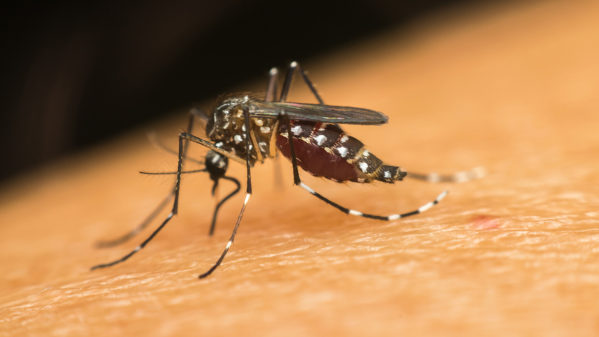
Mosquitoes have narrow bodies with long thin legs and transparent wings. They have gray bodies with white stripes on their abdomen. They also have long beaks that allow them to penetrate the skin. Mosquitoes can grow to be 1/4″ to 3/8″ long.
HABITAT:
Mosquitoes can be found in almost every landscape environment on earth with the exception of deserts and the arctic. Mosquitoes are most often found near stagnant water as this is where they lay their eggs. They are often found on the edges of streams, lakes, and ponds; near wading pools; old tires; bird baths; tarps; piles of trash; clogged gutters; and wheelbarrows.
DIET:
Mosquitoes feed on nectar and plant juices. Female mosquitoes bite to feed on blood.
BEHAVIOR:
The species of mosquito determines when they are most active. Some species are more active in the daytime while others become active at dark. Mosquitoes are capable of transmitting several diseases and pathogens to both humans and animals. Mosquitoes can transmit West Nile virus, Zika virus, Chikungunya fever, malaria, and canine heartworm among others.
PREVENTION:
- Eliminate any standing water on or near your property.
- Check gutters and downspouts to make sure they are not clogged.
- Consider installing Leafproof gutter guards on your home to prevent clogs and stagnant water.
- Store buckets, wading pools, wheelbarrows, and empty pet food bowls upside down so they can’t collect water.
- Shake off any water that collects on tarps.
- Dispose of your trash on a regular basis and store it in cans with tight-fitting lids.
- Keep your grass cut short.
- Keep doors and windows shut as much as possible.
- Make sure doors and windows have screens that are in good repair.
- Caulk gaps around windows and doors.
- If you suspect you have a mosquito problem, contact a professional pest control company.
HOUSEFLIES:
APPEARANCE:
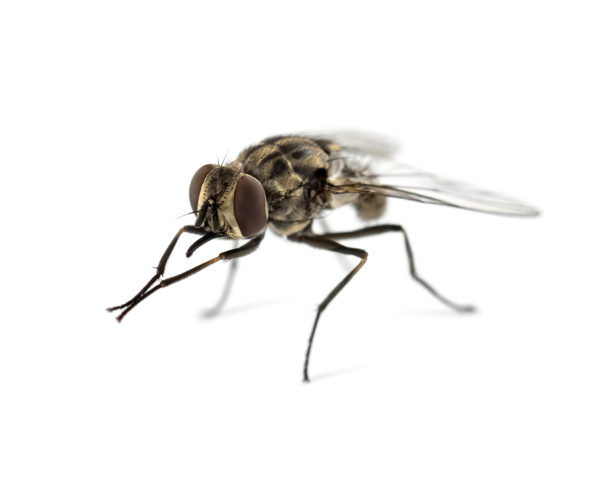
Houseflies have a very distinctive appearance. They have dull gray bodies with vertical lines on the top, a single gold stripe, and a silver stripe on their face. They can grow to be 1/8″ to 1/4″ in size.
HABITAT:
Flies can be found in most homes. They enter through tears in screens, gaps around windows and doors, doors and windows that have been left open, and cracks in the foundation. They are attracted to homes by garbage, animal feces, compost piles, and leaky pipes. They will often rest on your floors, walls, and ceilings.
DIET:
Houseflies are scavengers that eat a variety of different foods. They will feed on food found in pantries and kitchens, pet food, carcasses, garbage, or excrement. Houseflies are only able to eat liquids but they are able to turn many solid foods into liquid form so that they can eat it.
BEHAVIOR:
Houseflies can spread diseases when they land on your food or your food prep areas. They are the most common fly found in homes and only live from 15 to 25 days.
PREVENTION:
- Clean up pet waste daily.
- Use garbage cans with tight fitting lids.
- Keep garbage and compost piles away from your home.
- Use screens on windows and doors and make sure they are in good repair.
- Seal any cracks in your foundation.
- Caulk gaps around windows and doors.
- Keep food in sealed containers or in the fridge, including pet food.
- Wash dirty dishes regularly.
- Take out the trash regularly.
- Clean up spills and crumbs immediately.
- If you have a problem with flies, contact a professional pest control company.
FRUIT FLIES:
APPEARANCE:
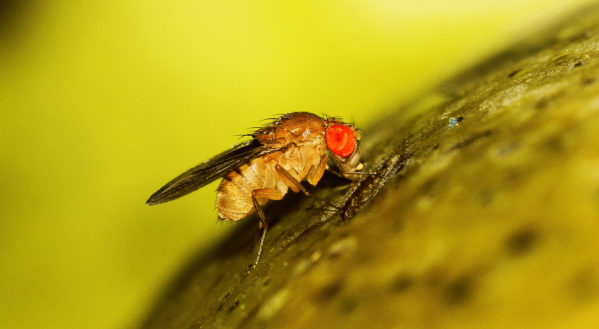
Fruit flies are extremely small in size, only getting about 1/8″ in length. They are usually brown, tan or black with distinctive red eyes. They are too small, however, for you to determine their color with the naked eye.
HABITAT:
Fruit flies are found throughout the United States. They are usually seen in the kitchen, especially around fruits and vegetables. They live outside in spring and summer. They enter homes as hitchhikers on fruits and vegetables that we buy from stores that are already infested. They can also enter through small spaces in widows, doors, and walls. They are attracted by large gardens, compost piles, and fruit trees.
DIET:
Fruit flies feed on very ripe fruits and vegetables like bananas, strawberries, melons, cucumbers, potatoes, and more. They also feed on fermented liquids like vinegar, cider, and beer.
BEHAVIOR:
Fruit flies are a nuisance. They enter your home in large numbers and are very difficult to eliminate. They can carry dangerous that can be transmitted to humans.
PREVENTION:
- Inspect your fruits and vegetables before you buy them and before you bring them into your home.
- Store produce in the refrigerator instead of on the counter.
- Get rid of overripe fruits and vegetables quickly.
- Pick up any fallen fruit and vegetables from your garden.
- Make sure your compost bins have lids on them.
- Empty your trash frequently.
- Store trash in outdoor cans with tightly fitting lids.
- Wash your dishes daily.
- Clean up crumbs and spills immediately.
- If you suspect you have a fruit fly problem, contact a professional pest control company.
Feb 20, 2017 | Going Green, Mosquito, Pest Control
Improving the health of your home offers major benefits to your family. Reduce waste, minimize exposure to chemicals & toxins, breathe healthier, lower your risk for sickness, and improve the overall health of your environment with these 10 healthy home tips.
1. Choose Safer Plastics
Most plastics contain chemicals that are added for functionality. Some of these chemicals have been proven to be toxic. It has also been proven that some of these chemicals can leach into food and liquids that are contained in the plastic. While it is unlikely that one can completely avoid plastic altogether, it is important to limit its use with items that are likely to come in contact with the mouth. Most plastics are marked with numbers which indicate the type of plastic used to make the item. Plastics marked with #3 (or “PVC”) contain a toxic chemical that was recently banned in 2009. Plastics marked with #7 (or “PC”) are usually clear and rigid (e.g. food containers and water bottles). These containers have BPA which can leach into food and water that is in the containers. It is best to avoid plastics with these numbers if at all possible. Glass and ceramic containers are a much healthier option than plastic. However, if glass or ceramic are not available, plastics marked with a #1, 2, 4, or 5 do not contain BPA and are much safer choices than the other plastics mentioned above. Don’t heat plastic containers in the microwave as this releases the chemicals in the plastic. If you can, wash them by hand; if you do put them in the dishwasher, put them on the top shelf as the water is cooler there.
2. Watch What You Eat
Most canned foods are lined with the same chemical, BPA, that was mentioned in tip #1. Try using fresh or frozen foods instead of canned when possible. When buying fresh foods, especially vegetables, try to buy organic as these foods are grown with less pesticides. Check to make sure your salt is iodized; it helps to maintain thyroid function. Check the mercury content of fish; some fish are considered mercury-rich. It is best to avoid these fish as much as possible, especially if you are pregnant. Use a filter when drinking tap water to remove contaminants and use a stainless steel, reusable water bottle.
3. Check Your Cookware
Avoid non-stick cookware and kitchen utensils if at all possible. If you must use them, try not to overheat them as this converts the toxic particles into gas form and allows them to release into your food. Try to use stainless steel or cast iron cookware and wooden or stainless steel utensils instead.
4. Go Green
Many cleaning products contain chemicals that have been proven to lead to asthma, cancer, and other health issues. Check the ingredients on your cleaning products and opt for “green” products instead as these contain less chemicals than traditional cleaners. Most of these cleaners are marked with a label indicating they are “green certified.” If you must use traditional cleaners, check the label for diluting instructions and use the least amount as necessary to do the job. Consider using natural alternatives to cleaners, like vinegar diluted with water and baking soda, which is a great alternative to window cleaner. Mix baking soda and water to form a paste which can be used to clean ovens and toilets. Dilute vinegar in a bucket of water to mop floors. Green is the way to go when it comes to pesticides, as well. The saliva, feces, and shedding body parts of cockroaches have been proven to trigger both allergies and asthma. A green pest control program gets rid of pests while maintaining the lowest environmental impact possible, and it’s pet and family-friendly! Mosquitoes transmit a multitude of diseases like Zika, West Nile, malaria, dengue and more. Reduce mosquito bites and lower your risk with mosquito bite prevention and a green mosquito control program – guaranteed to reduce the number of mosquitoes and mosquito breeding sites around your home without harsh chemicals.
5. Clean The Air
Allergies and asthma can also be triggered by pet dander, dust, and other irritants commonly found in your home. Think of your home as an organism and your heating & cooling systems as the breathing mechanisms. The system supplies conditioned air but at the same time it pulls that same air back into the return. This means that the air is being constantly recycled and is picking up particulates from pets, cleaning products and what you cooked for dinner. It’s no wonder it’s polluted. The first step to getting rid of the dust in your home is to dust and vacuum often. Vacuum cleaners with HEPA filters are now available that trap and collect more dust and irritants than a regular vacuum cleaner. Follow this up with wet mopping your floors often, as well. Consider investing in an air purifier for your home that’s installed directly onto your current heating and cooling system, making the air inside your home cleaner, fresher and healthier for the whole family.
6. Modify Your Home
Check the age of your home. If it was built prior to 1978 there is a good chance the paint contains lead. Repainting with low VOC paints can reduce your exposure to toxic lead. Does your furniture contain foam? Many foam stuffed items such as mattresses are treated with toxic flame retardants. Check the items carefully to make sure the foam is not exposed and repair or replace if they are. Check your light bulbs. Compact fluorescent light bulbs contain toxic mercury which can be harmful to you and your family. Handle them with care, especially when disposing of them. Wooden furniture such as picnic tables and swing sets, as well as wooden decking on the exterior of your home can contain arsenic if built before 2005. Replace with items built after 2005 or seal them to reduce your exposure. Check your crawl spaces in your home. One of the best ways to increase energy efficiency, prevent mold growth, and control pests is to enclose your crawl space. This could save you up to 18% on utility bills! In addition to the crawl space, you should also check the insulation in your attic to see if it’s adequate. If not, consider adding a green insulation product like TAP Insulation which can reduce the amount of energy needed to heat and cool your home, conserving energy while significantly reducing energy bills.
7. Take Personal Care
Since we don’t always know what makes up the fragrances of our personal products, consider buying fragrance-free. Does your toothpaste contain fluoride? Fluoride is toxic to children under the age of 2. Use fluoride-free toothpaste for your kids. Check your shower curtain; if it’s vinyl, throw it out. And regardless of the material it’s made of, shower curtains should be left outside for several days before installing in your home. Avoid using products that aren’t absolutely necessary such as hair spray, detanglers, dryer sheets, and fabric softener. Save money while reducing your family’s exposure to toxic chemicals!
8. Maintenance Is Key
Many pests can enter your home in ways that you would never think of. Seal any openings that could be potential pest entry points – utility openings where wires or pipes come into the foundation and areas around gas meters, dryer vents, and outdoor faucets. You can use caulk, expandable foam, copper mesh, or cement to seal these openings. Examine doors and windows. Be sure to seal any gaps and cracks around windows and doors that would allow pests to enter the home. You can use weather stripping or caulk to seal these problem areas. You can also fit the bottoms of your doors, including your garage doors, with rubber seals. Weather stripping can also be used to seal the bottoms of sliding glass doors. Be sure to examine your screens on doors and windows, as well. Repair any rips/tears that can be fixed and replace the screens that can’t be fixed. If you have a chimney, make sure you install a chimney cap to keep out birds, bats, and other wildlife. You can also install wire mesh over attic vents to keep out bats, squirrels, and rodents. If you have a woodpile outside, make sure to keep it at least 20 feet from the exterior of your home and elevate the woodpile if possible. Cut back overgrown landscaping 1-2 feet so they are not touching the exterior of your home. You should be able to walk the entire perimeter of your house without touching any landscaping. Lighting also attracts pests, especially around windows and doors; using sodium vapor lighting can help.
9. Wash Your Hands
Hand washing is easy to do and it’s one of the most effective ways to prevent the spread of many types of infection and illness. Help stop the spread of germs by washing your hands often, especially during key times, such as before, during, and after preparing food; before eating food; before and after caring for someone who is sick; before and after treating a cut or wound; after using the bathroom; after changing diapers; after blowing your nose, coughing or sneezing; after touching an animal, animal food, or animal waste; and after touching garbage. If soap and water are not available, use an alcohol-based hand sanitizer that contains at least 60% alcohol.
10. Be Safety Conscious
Keep a distance between flammable objects (papers, curtains, plastics, etc.) and fire sources (oven, stove top, portable heater, etc.). Keep electrical appliances wrapped and away from water. Install smoke detectors, check them regularly, and replace the batteries at least once a year. Avoid overloading outlets and extension cords. Keep fire extinguishers handy and know how to use them.