How to Keep Mice Out: Rodent-Proofing Your Home Before Winter
Quick answer: Mice control before winter means sealing every gap wider than a pencil, removing food and nesting cover within a few feet of your foundation, and doing the work before the first cold nights push them indoors. Seal the structure first, address the yard second, and bring in a professional if activity is already inside.
This guide covers where mice actually enter, which materials hold up, how to walk your own property before winter, and when a professional exclusion program makes more sense than a DIY fix.
Why Mice Control Starts in September and October
When nights start to cool across the Southeast, mice begin trading outdoor food sources for whatever they can find inside a pantry or wall void. That shift usually begins in September and builds through October, right as seeds, insects, and fruit become harder to find outside.
Sealing your home before the first frost keeps the problem out entirely, instead of forcing you to trap and remove an active population after the fact.
How Mice Actually Get In
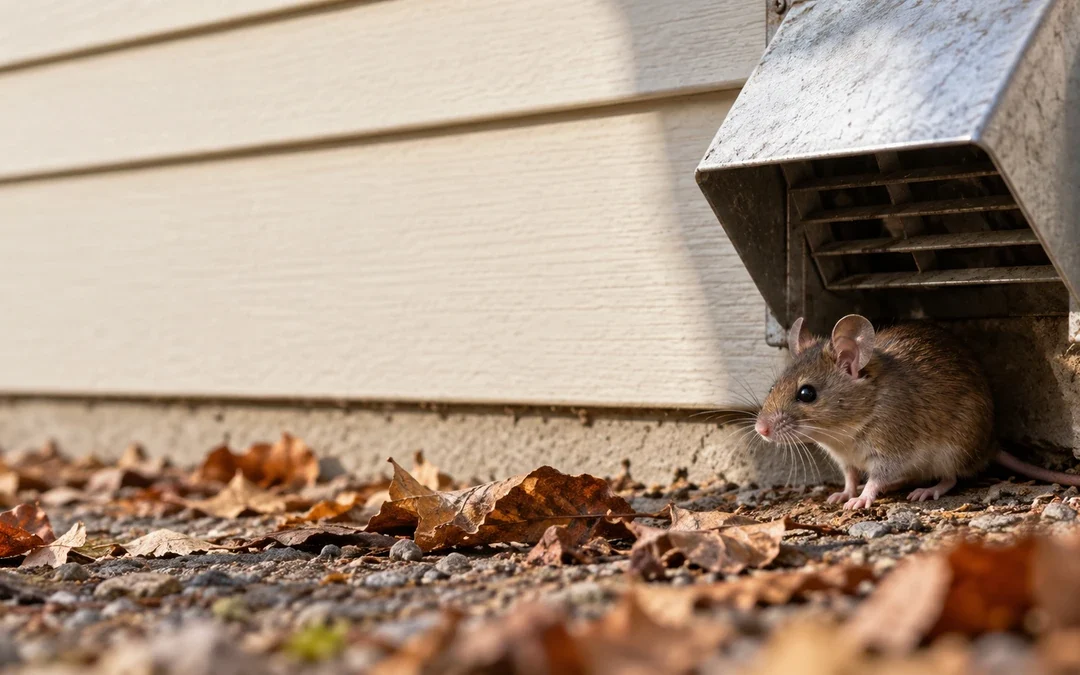
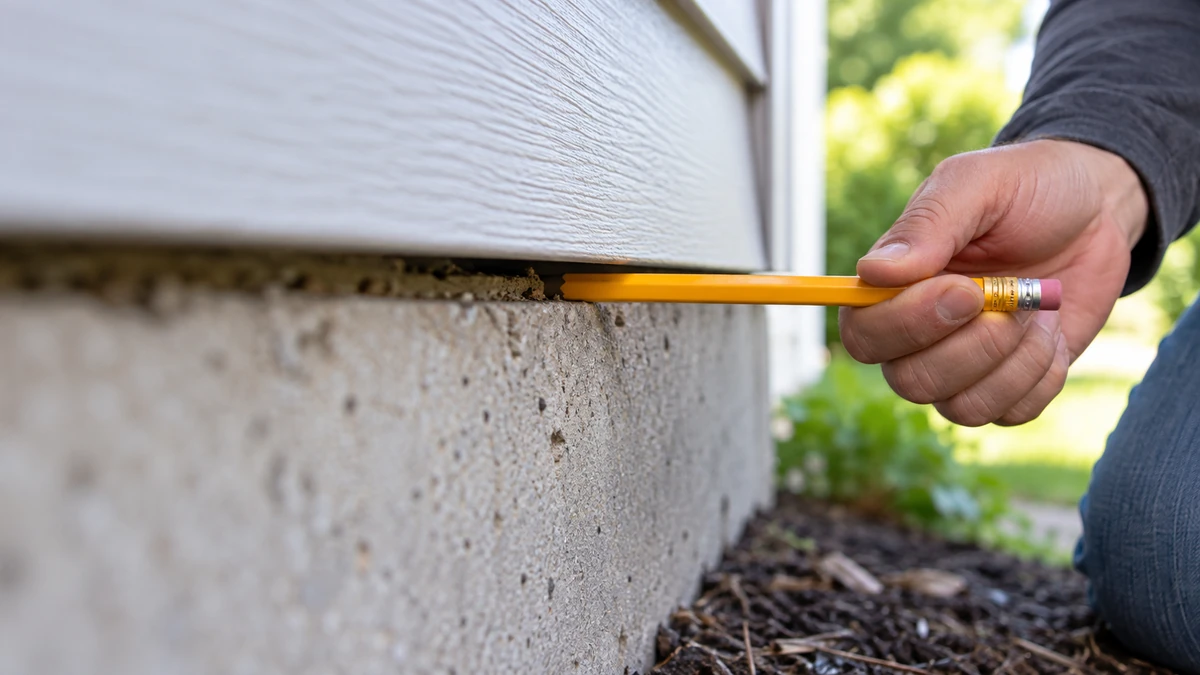
A young mouse can squeeze through a gap roughly the width of a pencil, about a quarter inch. If a pencil slides into an opening, a mouse can follow. Because mice also climb brick, siding, and downspouts with ease, ground level is not your only exposure. The real entry points span the full structure.
Here are the gaps we find most often in Southeastern homes:
- Crawl space vents and access doors. Damaged screens, warped doors, and missing covers are among the most common ways mice reach the underside of a home.
- Brick veneer weep holes. These small drainage gaps between courses of brick are a frequent entry point, especially when left unscreened.
- Dryer vents and AC line sets. The openings where these lines pass through an exterior wall are often larger than necessary and left unsealed.
- Garage door corners and side seals. Worn bottom corners and gaps in the side seals give mice a direct path into the garage and from there into the house.
- Soffit and fascia gaps. Separation or rot along the roofline lets mice enter from above after climbing a wall or nearby limb.
- Utility and plumbing penetrations. Gaps around pipes under sinks and behind appliances become easy interior routes once a mouse has entered the wall.
- Gable and ridge vents. High vents are vulnerable when screening ages, deteriorates, or gets pushed out by weather.
Because mice can enter from the foundation up to the roofline, a thorough inspection needs to cover the entire exterior, not just the bottom few feet.
Rodent-Proofing Materials: What Works and What Mice Chew Through
Before you seal anything, it helps to know which materials actually hold. Mice chew through more products than most homeowners expect, which is why so many DIY repairs fail within a season.
| Material | Holds Up | Fails | Best Use |
|---|---|---|---|
| Copper mesh | Yes, resists chewing and rust | If packed too loosely | Stuffing gaps around pipes and vents |
| Hardware cloth (1/4 inch) | Yes, durable and gnaw-resistant | If gauge is too thin | Covering vents, weep holes, and larger openings |
| Sheet metal | Yes, mice cannot chew through it | If edges lift over time | Garage corners, chewed door frames |
| Mortar or concrete patch | Yes, permanent when cured | If applied over a gap that is too wide | Foundation cracks, masonry gaps |
| Expanding foam alone | No | Mice chew through it easily | Only as a filler behind mesh or metal, never alone |
| Steel wool alone | No | Rusts and falls apart over time | Temporary use only, always backed by a lasting material |
| Plastic vent covers | No | Cracks and gets chewed | Not recommended as a mouse barrier |
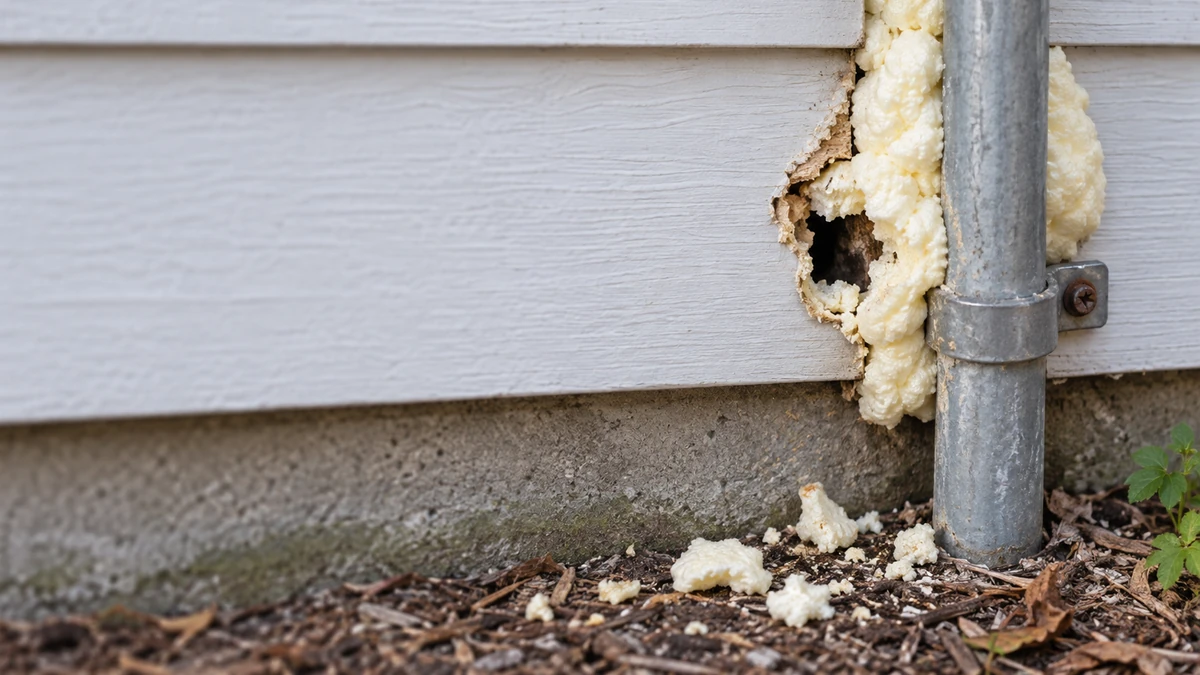
The pattern is consistent. Expanding foam and steel wool fail as standalone barriers. They may slow a mouse briefly, but neither stops one for long. Copper mesh, hardware cloth, and sheet metal are what actually hold up.
“The first place I check is where utility lines enter the home, because that gap is the culprit more often than not. And the most common fix homeowners try is a wad of steel wool, which we almost always end up pulling out and redoing properly,”
says Curt Lockhart, QA Technical Field Trainer & Inspector, Northwest Family of Brands.
The Fall Rodent-Proofing Walkthrough
Most of this inspection can be done in an afternoon. Work from outside in, so you close the doors before checking whether anything is already inside.
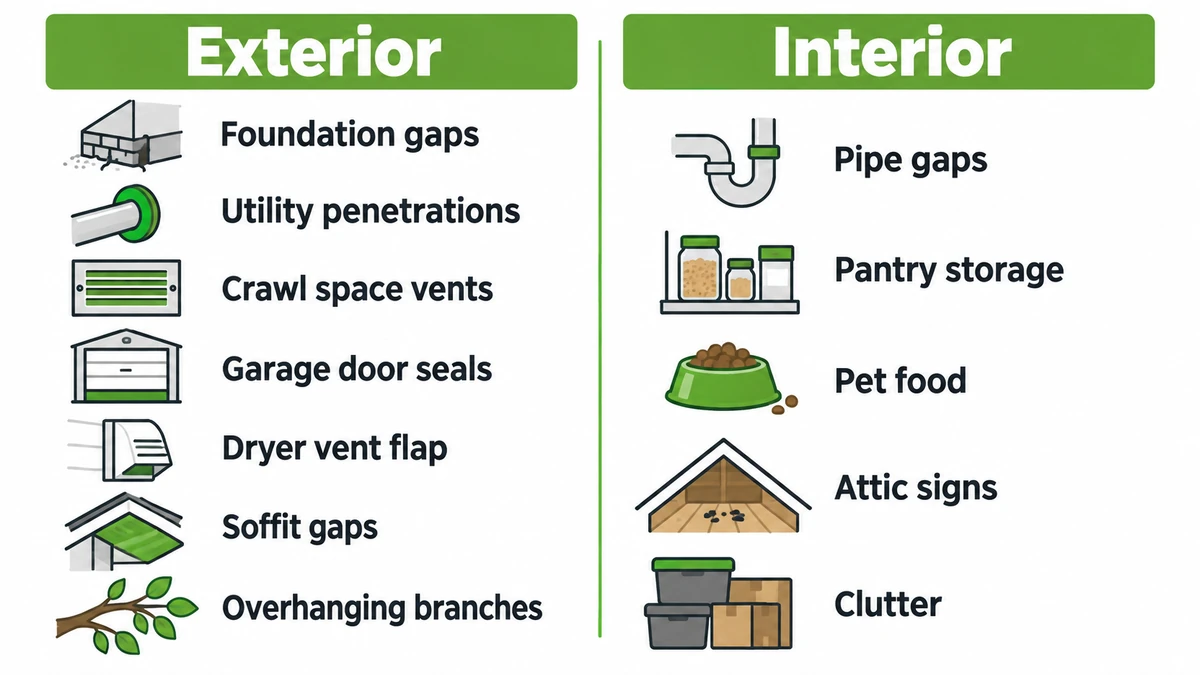
- Walk the full exterior. Start at one corner and circle the home. Check low for weep holes, foundation cracks, and gaps at dryer vents and AC line sets. Check garage door corners and side seals. Note every opening a pencil could fit through.
- Check the roofline. This step usually requires a ladder. Inspect soffit and fascia seams, gable vents, and ridge vents for gaps or deteriorated screening. If the ladder work feels unsafe, this is the right point to call a professional.
- Inspect the attic. Look for droppings, chewed insulation, and daylight showing through gaps in the roofline. Any daylight is an opening a mouse can use.
- Move to the crawl space. Check vents, the access door, and anywhere pipes or wiring pass through the framing. Crawl space work is often better completed by a professional, both for safety and to catch gaps that are easy to miss.
- Seal interior penetrations last. Under sinks and behind appliances, fill gaps around plumbing and utility lines with copper mesh backed by a lasting patch material.
Match each gap to the right material from the table above. A gap packed with foam alone will not hold through the winter. The same gap stuffed with copper mesh will.
Yard and Landscape Changes That Reduce Pressure
Sealing the structure is the core of effective mice control, but the yard around it sets the conditions. A few changes close to the home make it noticeably less inviting:
- Pull pine straw and mulch back several inches from the foundation to eliminate ground-level cover.
- Store firewood off the ground and at least a few feet away from exterior walls.
- Trim overhanging limbs away from the roofline to remove the climbing path mice use most.
- Manage bird feeders and the seed they drop, and store pet food in sealed containers.
- Keep trash cans tightly lidded and positioned away from the house.
These steps reduce the pressure at your walls. Gaps you have already sealed face far less traffic when the yard around them is not providing food and shelter.
Rodent-Proofing Across the Northwest Service Area
Southeastern housing stock varies enough that the weak points differ by market. Here is what Northwest’s teams see consistently as the cooler months approach.

- Atlanta. Many intown homes sit on older, open crawl spaces and pier foundations. Mice reach the underside through worn vents and loose access doors, making crawl space sealing a frequent first priority.
- Marietta. Subdivision homes backing to wooded rear lots face steady pressure from nearby tree cover. Unsealed soffit returns are a common roofline entry point. The right starting move is sealing crawl space vents and soffit returns while trimming any limbs that give mice a bridge from the rear lot to the roof.
- Chattanooga. Homes built into hillside and ridge terrain often have grade changes that create entry points at unexpected heights along the structure. Sealing before winter here means checking wherever the home meets a slope, along with vents, garage seals, and utility penetrations near grade.
- Savannah. Coastal humidity keeps crawl space vents in heavy use, and the mature tree canopy often makes contact with rooflines. That combination gives mice both a low route and a high one. Trimming limbs and sealing crawl space vents usually need to happen together.
- Birmingham. A mix of slab and crawl space homes, many with aging garage seals, makes the garage one of the most common entry points in the area. Refreshing worn bottom seals and door corners closes a door that is easy to overlook.
Wherever you are in Georgia, Tennessee, or Alabama, the approach holds: inspect the full structure, seal with materials that last, and time the work before cold weather shifts mouse behavior.
When Sealing Is Not Enough: Mice Control Once They Are Inside
Sometimes mice are already inside before the inspection happens. Watch for these signs that a population has moved in:
- Droppings in more than one room
- Sounds in the walls or ceiling after dark
- Chewed wiring or insulation
- Grease trails along baseboards where mice travel regularly
If these signs are present, sealing alone can make the problem worse by trapping live mice inside wall voids, which leads to odor, further damage, and mice gnawing new openings to escape. At that point, a professional exclusion and trapping program is the right move. The right sequence is always removal first, sealing second.
Northwest’s rodent control and exclusion service is built around that combined approach. That same program covers removal when mice are already inside. If the sounds are coming from higher in the structure, our guide to roof rats and how to identify and get rid of them covers attic-level entry in more detail.
For additional research-based guidance on rodents and the health risks they carry, the University of Georgia Cooperative Extension is a reliable resource for homeowners across the Southeast.
Frequently Asked Questions
What is the smallest gap a mouse can get through?
About the width of a pencil, or roughly a quarter inch. Gaps that size appear at weep holes, dryer vents, AC line sets, garage door corners, and openings around utility penetrations. If a pencil fits through, a mouse can follow.
How do I keep mice out of my house permanently?
Seal every pencil-width gap with chew-proof materials, keep food and nesting cover away from the foundation, and repeat a full inspection each fall before the cold arrives. Consistent seasonal sealing is the most reliable long-term approach.
Does steel wool or peppermint oil really keep mice away?
No, not on their own. Peppermint oil may briefly irritate a mouse but does not stop one from entering. Steel wool rusts and falls apart over time and fails as a standalone barrier. Copper mesh and hardware cloth are what actually hold up against gnawing.
When should I rodent-proof my home in Georgia or Tennessee?
The best window is September and October, before the first cold nights push mice indoors. Sealing ahead of the season keeps them out entirely rather than forcing removal after the fact.
Can I seal a crawl space myself?
Basic vent covers and access door repairs are manageable for most homeowners, but crawl spaces are tight and easy to seal incompletely. A professional inspection typically catches penetrations and grade-level gaps that are difficult to reach and identify on your own.
How much does professional rodent exclusion cost?
Cost depends on the size of the home, the number of entry points, and whether an existing population needs to be removed first. Every project starts with a free inspection so you get an accurate quote before any work begins.
Do Not Wait Until You Hear Them in the Wall
Sealing beats trapping every time, but only when it happens before mice move in. If you want to keep mice out this winter, the weeks before the first frost are the window that matters. Schedule a free rodent-proofing inspection with your local Northwest team. We serve homeowners across Georgia, Tennessee, and Alabama, and we can help you close the doors before the cold pushes mice inside. Book online or call your nearest branch.
Reviewed for Accuracy
Cory Goeltzenleuchter, B.C.E., P.H.E., is the Director of Technical Services for Northwest Exterminating. As a Board Certified Entomologist and Public Health Entomologist, he is one of the organization’s leading technical experts in pest management. He oversees technical training, service standards, and industry best practices while helping ensure customers receive extraordinary service through science-based solutions, ongoing education, and innovative approaches across the Northwest Family of Brands.