
Carpet Beetles
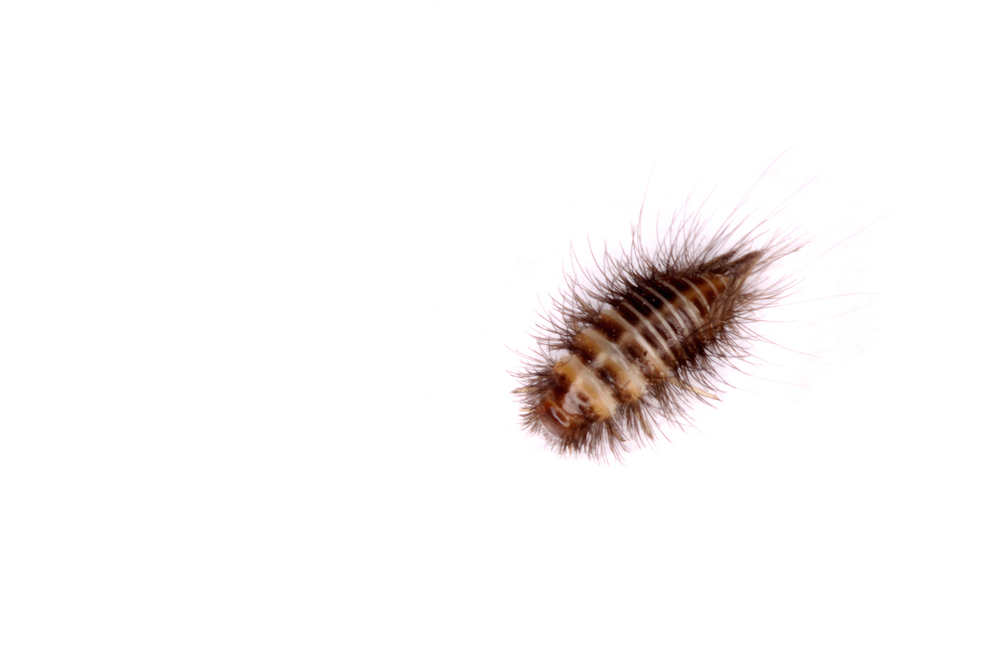
Carpet beetles will commonly infest bird and rodent nests after the occupants have left.
Identification
- Carpet beetles are usually first noticed as a small, fuzzy, larvae (2-3 mm) in the fall and winter months
Environment
-
Carpet beetle larvae feeds on any natural fibers: fur, feathers, wool, and silk
-
Adults are usually seen in the spring months during the heaviest days of pollen production
-
Adults feed on pollen and enter homes in search of suitable food sources for their offspring
Threats
-
Most common objects attacked are by carpet beetles are rugs and winter clothing
-
Homeowners may notice small holes in their clothing when the articles are pulled out of storage
-
Rugs comprised of natural fibers will have furrows or frayed edges where the larvae of eaten through the material
Treatment
-
Treat carpet beetles’ preferred feeding sites: closets, rugs, under beds and furniture
-
Remove food sources such as winter clothing
-
Launder or dry clean clothing to remove any eggs or larvae
LOCATIONS
We have service centers throughout Georgia, Tennessee, Alabama, Florida, North Carolina, and South Carolina.
HOURS
Service Centers: M-F 7:30AM - 5:00PM
Customer Care: M-F 6:30AM - 5:30PM