
Roof Rat
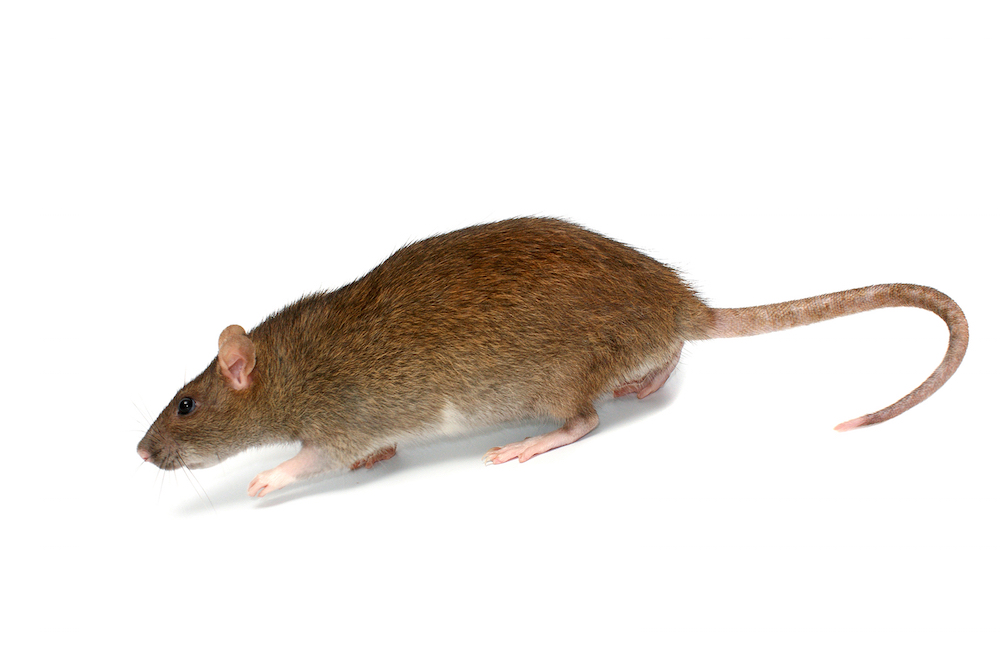
Roof rats arrived in North America with the Jamestown colonists in 1607. It’s also known as the black rat or ship rat.
Identification
-
Roof rats are usually dark colored
-
Weigh less than 1 pound
-
Large ears
-
Tail is longer than the head and body
-
Spindle shaped droppings
Environment
-
90% of their time is spent above ground, hence their name
-
Roof rats form nests in trees and high points, run on power lines or the tops of fences, or live in attics
-
Nocturnal, which is why you may hear them scurrying in your attic in the middle of the night
-
Tend to stick to familiar territory; they are not explorers, they find an area that suits their shelter and food needs and usually don’t venture more than a few hundred feet from there
Threats
-
Roof rats rarely live for more than a year in the wild
-
During that year, a single adult female can produce more than 40 baby rats
-
Rarely die naturally but when they do it’s often in a safe place, like your attic, which will create an unpleasant odor
-
Most will be killed by predators
-
Commonly small because they breed in such high numbers, which makes so many of them young
Treatment
-
When trapping roof rats, it is not uncommon to get a few large ones and a number of small ones, indicating a possible family of roof rats
-
Traps may need to be prebaited in order to capture shy individuals
LOCATIONS
We have service centers throughout Georgia, Tennessee, Alabama, Florida, North Carolina, and South Carolina.
HOURS
Service Centers: M-F 7:30AM - 5:00PM
Customer Care: M-F 6:30AM - 5:30PM