Oct 28, 2022 | Pest Control
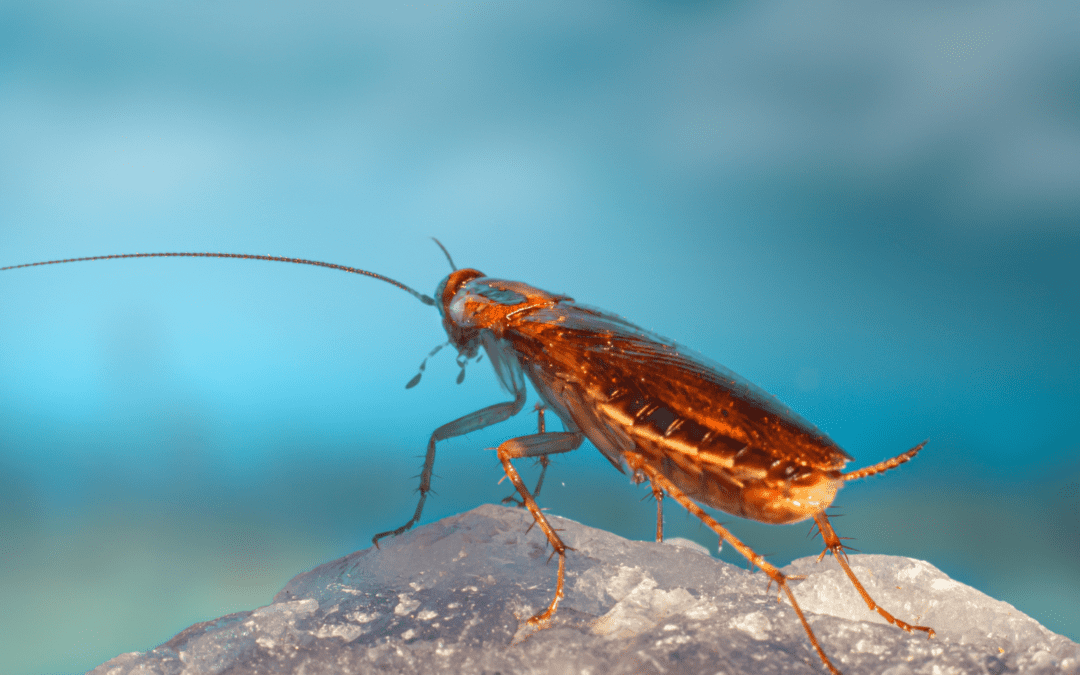
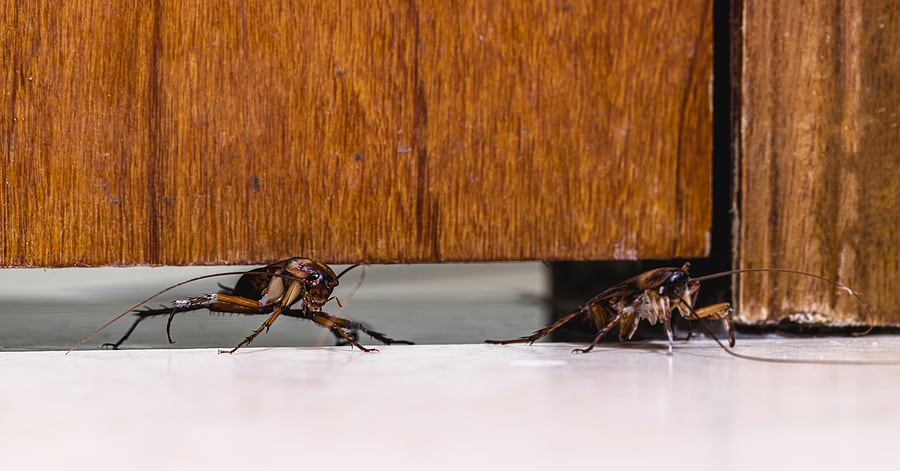
Roaches are one of the most common household pests. These pests are resilient, adapting to just about any environment. When you spot one cockroach, there are usually several more hidden out of sight. Cockroaches carry diseases, contaminate surfaces they come into contact with, and can trigger allergies and asthma. They are extremely difficult to get rid of once an infestation is established, both due to their resiliency and their ability to reproduce quickly and often. So what do you do if you see roaches in your home?
The first step is to identify what type of roach you are dealing with. Some of the most common cockroaches found in homes in the United States are American roaches, German roaches, and Oriental roaches. The type of roach you have and the size of the infestation are both determining factors in the course of treatment.
The second step is to contact the professionals. Because roaches are so difficult to get rid of, the services of a professional pest control company are beneficial. A technician will come out and give your home a thorough inspection to help determine the type and size of the infestation to set up a custom treatment plan that targets only the intended pests. They will also set you up with ongoing pest control in the future.
The final step is ongoing prevention to keep the roaches from coming back. Cockroaches come into your home in search of food and water. They usually thrive in warm, moist environments. Help keep them out by:
- Repairing leaky faucets
- Sealing pipes
- Wiping down countertops and appliances
- Storing food in containers
- Emptying garbage
- Sweeping, mopping, and vacuuming regularly
- Carefully inspecting boxes, bags, appliances, and furniture before bringing it indoors
You May Also Be Interested In:
Add Some Shine to Your Crawl Space
Benefits to Winter Pest Control
Rodent Control Methods For Your Home
5 Winter Tips for Southern Homes
Which Season is Worst for Bed Bugs?

Oct 20, 2022 | Pest Control
You might be thinking that since the weather is cooling down, pests won’t be as active. While that’s the case to some, most pests will be making their way indoors to seek warm shelter. Some homeowners even claim to see more pests in their home once the weather cools down. Here are some of the most common questions about winter pest control.
Which Pests Are Most Active?
Surprisingly, there are some pests that survive throughout the colder months. The main ways they stay alive are through hibernation, migration, and overwintering. Overwintering pests are our main issue in the winter. These are the pests that will migrate indoors instead of to a different part of the region.
Some of the most common pests still seen in the winter are cockroaches, rodents, and termites. Most of the time their activity might slow, but they are still nearby and ready to get back into full gear once the weather warms up.
How Often Should Pest Control Be Done?
The goal of pest control is to keep pests away and prevent infestations. Therefore, quarterly pest control is important. If you miss your regular pest control in the winter, it can create an easy opportunity for pests to get inside.
Winter is the best time for a barrier to be put in place. Some pests including spiders, cockroaches, and rodents can be a bigger issue this time of year, so getting ahead of schedule is key.
If you are ready to set up your winter pest control, give your local pest control company a call and they can help you set up a customized plan to prevent these pests.
Oct 20, 2022 | Pest Control
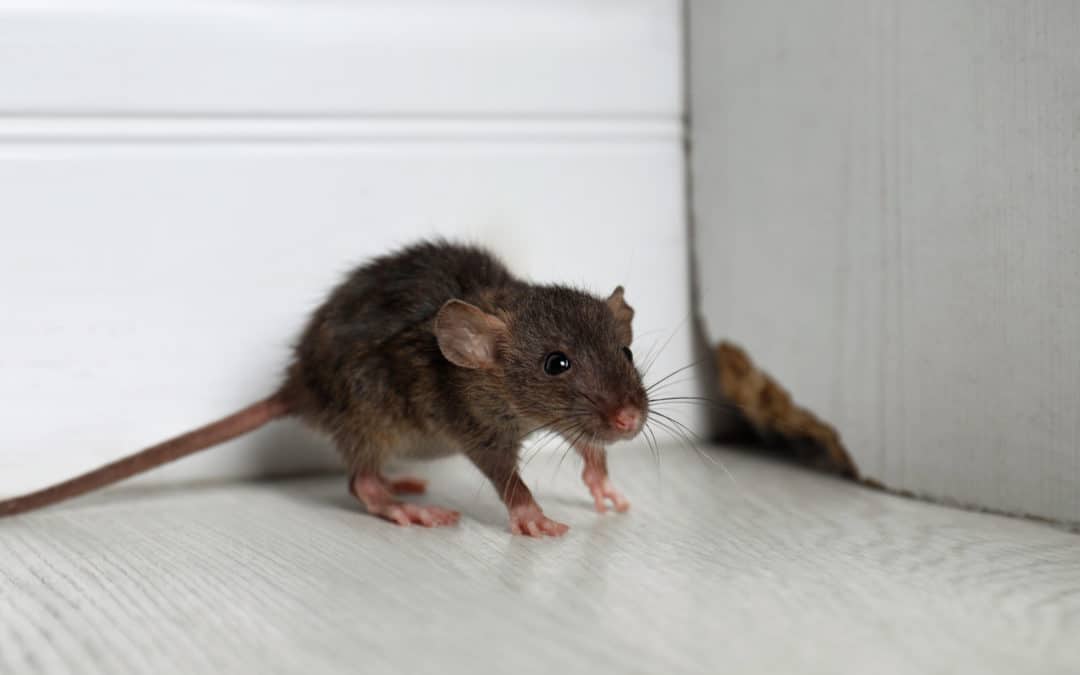
Rodents such as mice and rats are one of the most common household pests. While they are definitely nuisance pests, they can also cause property damage to your home, as well as transmit serious diseases to you and your family.
The first step in rodent control is to determine that you have an infestation. Common signs of rodents include droppings near food sources; shredded paper, fabric, and other nesting materials; chewed food packages; holes chewed through walls and floors; and stale smells from hidden areas of your home.
Rodents are attracted to unsealed food containers, pet food and water that’s left out, open bowls of fruit and vegetables, leaky faucets and pipes, open trash cans, and compost containers among other things. They enter your home in search of these things. They get in through holes from the exterior of the home, holes around sink and appliance pipes, cracked foundations, unscreened vents, and holes around windows and doors.
The first step in rodent control for your home is prevention. If you can keep these pests from infesting your home in the first place, you won’t have to get rid of them later. Common rodent control methods you can utilize in your house include:
- Sealing entry points with metal mesh.
- Removing those food and water sources they are attracted to.
- Keeping your house clean.
- Avoiding the use of ivy or other vines in landscaping (rodents use these to climb onto your home).
- Keeping compost piles away from the home.
- Keeping grass mowed short.
- Keeping a buffer of at least 2 feet between landscaping and buildings.
- Avoiding the use of birdfeeders.
- Keeping outdoor grills clean.
- Keeping firewood elevated and stored away from the home.
- Using trashcans with lids.
- Sealing food in containers.
- Rinsing food and drink containers before throwing them away.
- Keeping trashcans clean.
- Avoiding leaving pet food and water out overnight.
- Keeping stovetops and countertops clean.
- Keeping your home free of clutter from paper, fabric, and other materials used for nesting.
- Repairing leaky pipes.
- Keeping attics and crawlspaces dry.
- Promoting natural predators (owls, hawks, snakes) around your home.
If you have a problem with rodents or other pests, contact your local pest control company for an evaluation.
You May Also Be Interested In:
DIY Pest-Proofing for Fall Wildlife
Are Granddaddy Long Legs Spiders?
Types of Rodents Found in the South
Wildlife on the Move!
Common Cold-Weather Critters & How to Control Them
Oct 13, 2022 | Pest Control
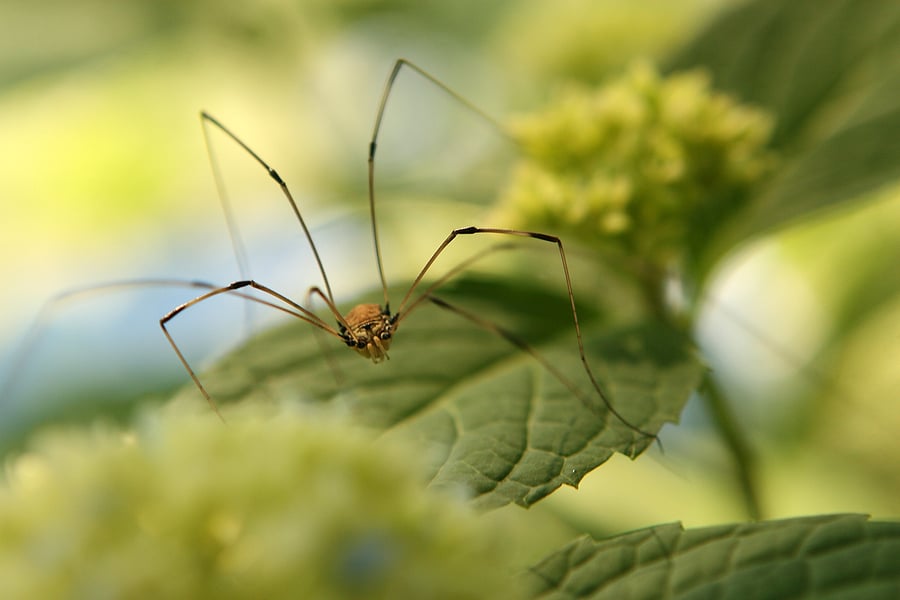
When you hear the word arachnid the first thing that usually comes to mind is spiders. While spiders do make up a large portion of arachnids, they aren’t the only members. Ticks, mites, scorpions, and harvestmen (also known as grandaddy long legs or daddy long legs) are also members of the arachnid family. Arachnids are defined as animals with 4 pairs of legs, chelicerae (which are fang-like mouthparts), and pedipalps (appendages also found near the mouth). So while they are all members of the same family, granddaddy long legs are not, in fact, spiders.
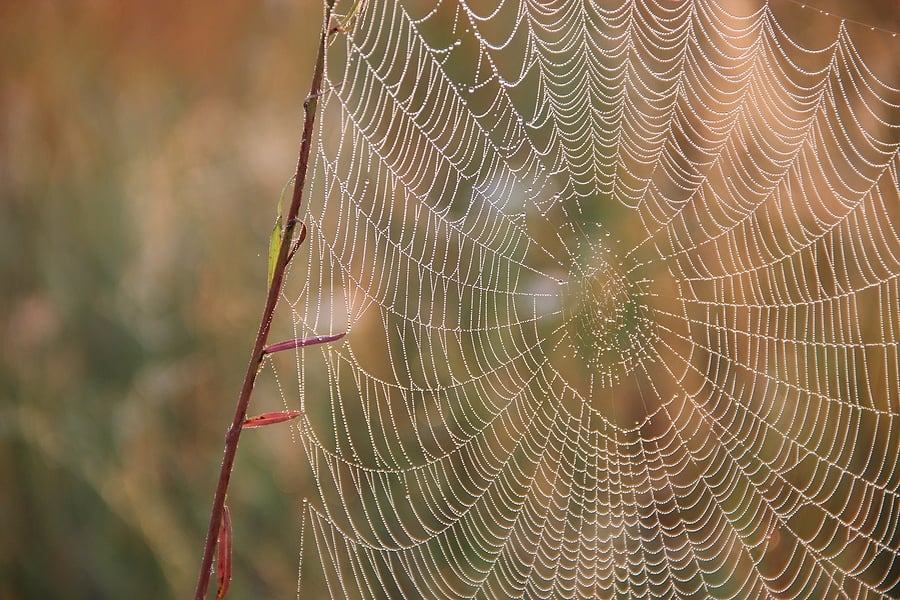
There are several key differences between granddaddy long legs and spiders. Spiders have 2 body segments (a cephalothorax and abdomen) differentiated by a narrow “waist.” Granddaddy long legs have an oval shaped body with no separation. Spiders typically have 8 eyes while granddaddy long legs have 2. Spiders produce silk and spin webs; granddaddy long legs aren’t capable of this. Spiders are also predators, using their venom to disable their prey. Granddaddy long legs are scavengers and don’t need venom to neutralize food sources.
Although they can be a little creepy looking, these pests are quite beneficial to have around. Because of their varied diet which consists of small insects, worms, snails, droppings, and fungi, granddaddy long legs help keep other pest populations under control. They are harmless to humans.
If you have a problem with granddaddy long legs or other pests, contact your local pest control company for a free evaluation.
You May Also Be Interested In:
Types of Rodents Found in the South
4 Ways To Keep The Lovebugs Away
4 Fall Pest Proofing Tips
How to Save Money on Your Energy Bills
Preparing for Fall Wildlife
Oct 6, 2022 | Pest Control, Wildlife
We never expect our homes to fall victim to rodent invaders, but it can happen to anyone! Getting rid of these critters can be difficult, but with the help of a wildlife control company, it can be made possible. Before reaching out to someone for assistance, be sure you’re identifying these rodents correctly. Here are some of the most common rodents found in the South.
Deer Mouse
Often referred to as field mice, these rodents are typically found in the woodlands and desert areas. They rarely invade residential properties but will sometimes seek shelter in our homes for winter since they don’t hibernate. When indoors, deer mice are typically found in basements or attics. The biggest threat about them is that they can transmit the dangerous hantavirus, so it’s vital to get them taken care of as soon as possible.
House Mouse
Just like the deer mouse, these mice also carry diseases and shouldn’t be kept in your home for long once discovered. The house mouse prefers to move along baseboards and countertops and can be seen eating anything they can find. They will contaminate your food and can transmit diseases like salmonella and even the bubonic plague. They are also known to cause structural damage such as creating tunnels in walls and chewing exposed wires.
Norway Rats
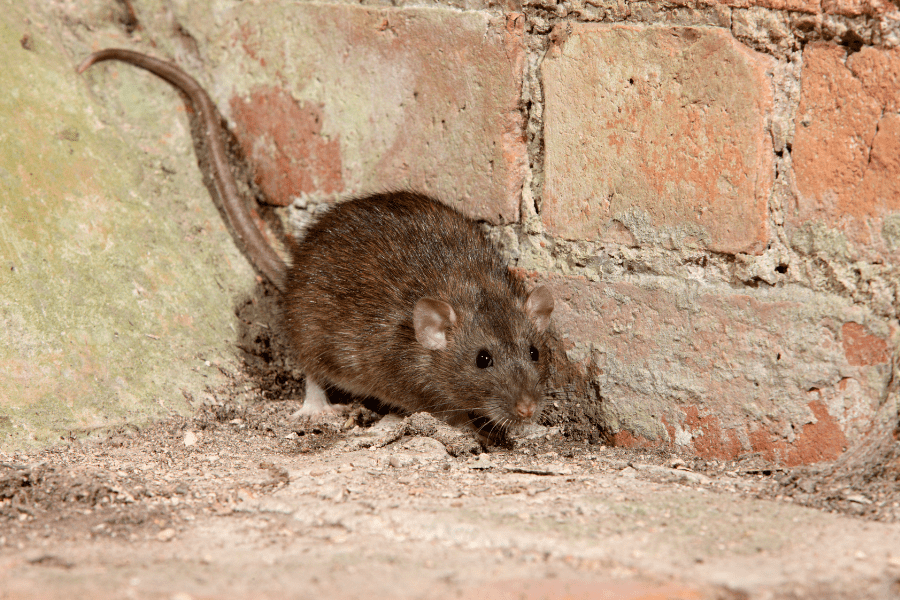
These stocky, heavy-bodied rats are larger and more aggressive than the roof rat. They rely heavily on human activity for survival and will eat anything like cereal grains, meats, fish, nuts, and some fruits. Norway rats are more active at night and can cause considerable damage to homes, gardens, and structures. The main concern is the diseases they are known to spread, which include jaundice, rat bite fever, and salmonella.
Roof Rats
Known as a serious pest problem, they are also dependent on humans for survival and will usually infest homes. They have padded feet that make it easier for them to climb, so they are usually found in attics, eaves, and roof lines. Roof rats are known for spreading multiple diseases, including salmonella, leptospirosis, and rat bite fever. They contaminate food when they are foraging, impacting not just humans, but also pets and livestock.
If you think you have a rodent problem, it’s important to get it taken care of as soon as possible. Reach out to your local wildlife control company so they can create a customized plan to rid your home of rodents.
Oct 5, 2022 | Pest Control
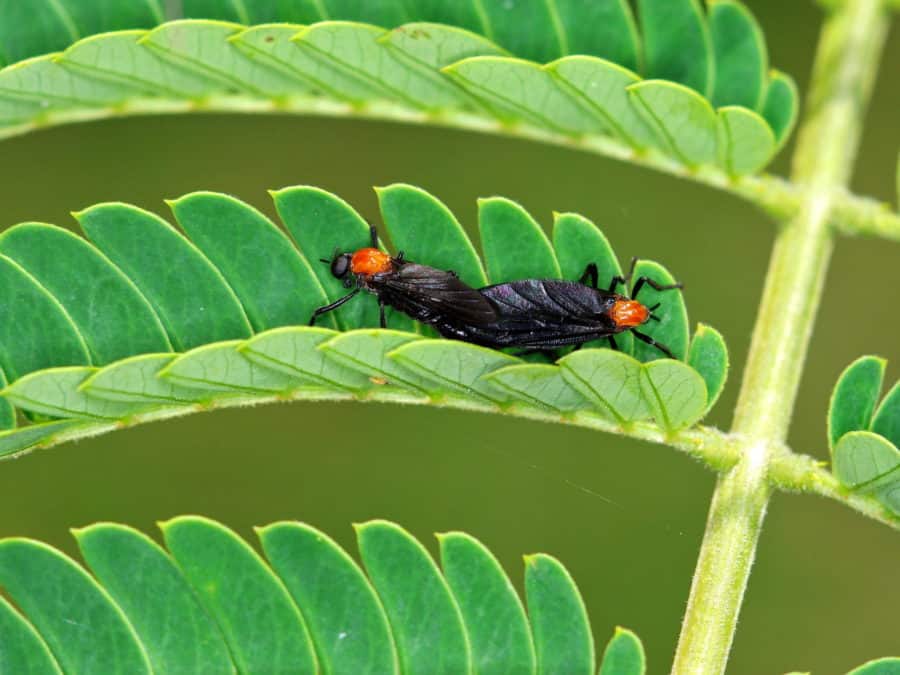
Lovebugs, also known as honeymoon flies and two headed bugs, are a non-native pest that came over from Central America about 80 years ago. Lovebugs are most commonly found in the United States in the Gulf Coast states, Georgia, and South Carolina.
Mating season occurs twice per year, once in May and again in September. During lovebug season, males attach themselves to females and stay connected to each other during the entire mating process, sometimes taking up to 12 hours. The female will then lay anywhere from 150 to 300 eggs. Within 4 days of laying these eggs, the female dies.
Lovebugs are usually active between 10:00 am and 6:00 pm. They are attracted to heat and exhaust and are often found near highways. While they don’t bite or sting, they can leave an acidic residue on your car which can damage paint and clog radiators.
Although they don’t cause significant damage to humans, they can be quite a nuisance. Here are 4 ways you can keep lovebugs away.
- Avoid light colors. Lovebugs are attracted to light colors. Avoid wearing dark colored clothing when possible. Don’t sit near light colored walls, as well.
- Blow them away. Lovebugs are not good fliers. They can easily be kept a bay by using fans, especially outdoors.
- Avoid peak hours. Lovebugs are typically active between 10 am and 6 pm. Limit outdoor activities during these hours when possible. They are also attracted to heat and exhaust fumes. Try to time driving activities, mowing, and other yardwork around these peak hours if you can.
- Protect your car. Lovebug season peaks twice per year, in May and September. Just prior to these times, apply a thorough coat of wax to provide a barrier between the bugs and your paint job. Wash off any bugs as soon as possible after arriving at your destination.
If you have a problem with lovebugs or any other pests, contact your local pest control company for an evaluation.
Sep 29, 2022 | Pest Control
The cooler weather of fall drives many pests indoors in search of warmth from the cold, shelter from the weather, and food when supplies are scarce. These overwintering pests will spend the cold season indoors, often in your home, until the weather warms back up in the spring. Some common fall pests are spiders, rodents, roaches, and stinkbugs. Don’t let these pests take over your home this fall. Keep them out with these 4 fall pest proofing tips.
1. Seal Them Out
The first step in pest-proofing your home is to seal them out. Pests can be very creative when it comes to finding ways into your home. Screen attic vents, chimney openings, mail slots, and pet doors. Seal any cracks or crevices on the exterior of your home with caulk or steel wool. Seal around any utility pipes that enter your home. Replace or repair weatherstripping on doors and windows. Repair any loose mortar around windows and foundations. Install door sweeps on your doors. Repair and replace any window screens.
2. Dry It Out
Most pests need water to survive. Many prefer a moist environment to thrive in. Eliminating sources of water will help keep pests out of your home. Keep crawlspaces, attics, and basements dry and ventilated. Consider crawlspace enclosure. Use a dehumidifier in garages and basements. Make sure you have a proper drainage system installed outside your home. Install gutters and keep them clear of debris. Consider installing gutter guards to help eliminate clogs. Make sure drainpipes are diverting water away from foundations. Repair any leaks as soon as possible. Get rid of any standing water on your property.
3. Clean It Up
Pests will also be drawn to any areas of your home where they can find food. Eliminating these food sources will go a long way towards pest-proofing your home. Keep kitchen counters and appliances clean. Store food in airtight containers. Empty your trash regularly and use trashcans with lids. Clean up after each meal, making sure to not leave dirty dishes in the sink overnight. Seep, mop, and vacuum regularly. Don’t leave pet food or water out overnight.
4. Don’t Forget Outside
Some pests will lurk outside your home and use every opportunity they can to hitchhike their way inside. Store firewood at least 20 feet away from your home and inspect it carefully before bringing it indoors. Keep shrubbery trimmed and grass mowed. Don’t let any limbs or branches touch the exterior of your home. Inspect any storage boxes, decorations, etc. before bringing them inside.
If you have a problem with pests during any season of the year, contact your local pest control company for a thorough evaluation.
You May Also Be Interested In:
3 Types of Cockroaches & How to Prevent Them
Why Am I Seeing Oriental Cockroaches?
Fall Termite Control – Is it Necessary?
Wildlife to Look Out for This Fall
The Importance of Mosquito Treatments
Sep 27, 2022 | Pest Control
It’s never ideal to encounter cockroaches in your home. If you do, it’s best to know what types of cockroaches you’re dealing with to help determine the best way to eliminate them. Failing to remove these pests can lead to unpleasant outcomes, like allergies, that can potentially increase your chances of getting asthma.
We have broken down the three most common cockroaches found in the south and how to keep them away; let’s check it out!
American Cockroach
This large out-of-the-house infesting roach can get up to 1.5 inches in length. These roaches develop wings towards the end of their life cycle, with males having some longer than their bodies. You can usually identify them by the yellow band located behind their head.
The American cockroach can typically be found where food is abundant. They also prefer drains that aren’t used as often. In the wild, they prefer dark or damp wood piles.
German Cockroach
One of the most common species found worldwide, the German cockroach is generally light to dark brown and has two stripes near the back of its head. This species does have wings. They prefer dark, moist places. Since they don’t do well in the cold, they thrive in the southern climate.
Brown-Banded Cockroach
This species first entered the U.S. in 1903 and is now found nationwide. The brown-banded cockroach got its name from the two light brown bands that appear across its wings. They prefer warmer, drier, and higher locations in a room and can be found mostly in cabinets and behind picture frames. This species will typically hide its egg cases in or underneath furniture.
Prevention Tips
- Focus on the Kitchen: Clean up any spills or crumbs immediately and take out the trash regularly.
- Declutter: Remove old newspapers, utilize plastic containers over cardboard, and make sure clothing isn’t piled on the floor.
- Limit Moisture: Roaches need water to survive. Be sure to fix dripping faucets and leaky pipes. If you have a basement, employ a dehumidifier to take care of any moisture. Also, consider getting your crawlspace enclosed to ensure no moisture is found.
While prevention can help keep cockroaches away, sometimes it’s best to get a professional involved. A local pest control company will be able to inspect your home and provide you with the best treatment and prevention plan going forward.
Sep 22, 2022 | Pest Control
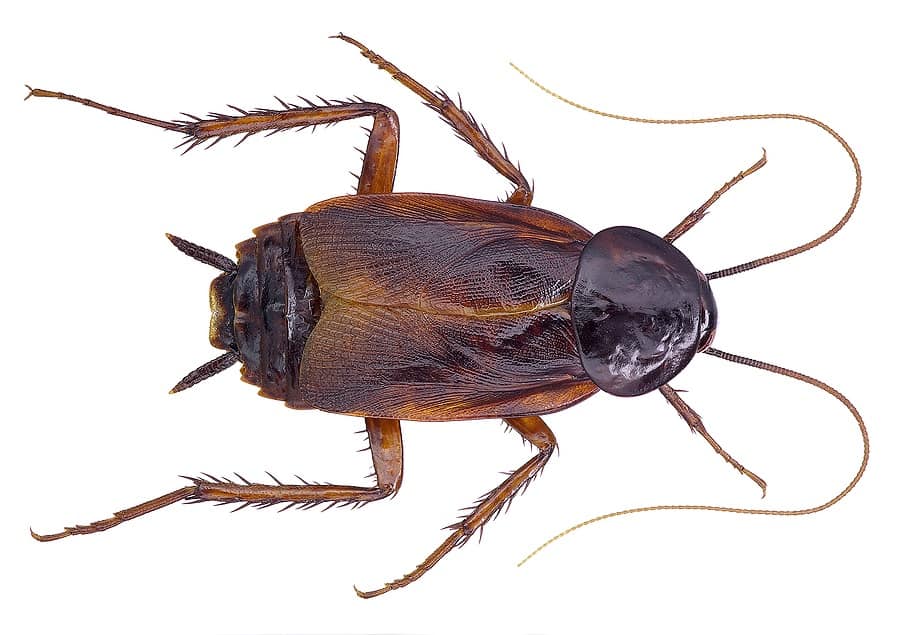
Oriental cockroaches are one of the larger species of roaches. Despite their name, they are thought to have originated in Africa. They are also known as waterbugs (because of their habitats) and black beetle cockroaches (because of their appearance). Like any other roach species, these cockroaches can spread diseases to humans, contaminate surfaces in your home, and trigger allergies and asthma.
Although they are active year-round, oriental roaches are more prevalent in the warmer months. They are often found crawling around toilets, pipes, and sinks. In fact, once indoors they are known to live in rarely used sink drains, garbage disposals, under cabinets with plumbing, and in bathroom voids. Outdoors they are found in flower beds, under mulch, in woodpiles, or anywhere there is moisture. They get into your home under doors, gaps in siding, through pipes, sewers, and drains.
Oriental cockroaches are smooth and shiny black in appearance. They grow to about 1″ in length. Males are smaller than females and have wings. Females are much larger with no wings. Although the males have wings, they are unable to fly.
Once you’ve identified the oriental cockroach, the next question is why are they in your house? Oriental cockroaches are attracted to moisture; in fact, they depend on it for survival. If you’re seeing oriental cockroaches, odds are you have excessive moisture somewhere in your home. This could be a leaky pipe or faucet, leaky roof, moisture-laden crawlspace, clogged gutters, standing water in your yard, overpopulated flowerbeds that hold moisture, etc.
To get rid of these pests, check out these oriental cockroach prevention tips:
- Vacuum often and sweep up crumbs.
- Keep kitchens and bathrooms clean.
- Use a dehumidifier, especially in crawlspaces, to help control moisture.
- Seal entry points with a silicone-based caulk.
- Consider crawlspace enclosure.
- Eliminate standing water on your property.
- Divert water away from foundations with downspouts and splash blocks.
- Keep gutters clean or consider installing gutter guards.
- Repair any leaks immediately.
If you have a problem with oriental cockroaches or other pests, contact your local pest control company for a thorough evaluation.