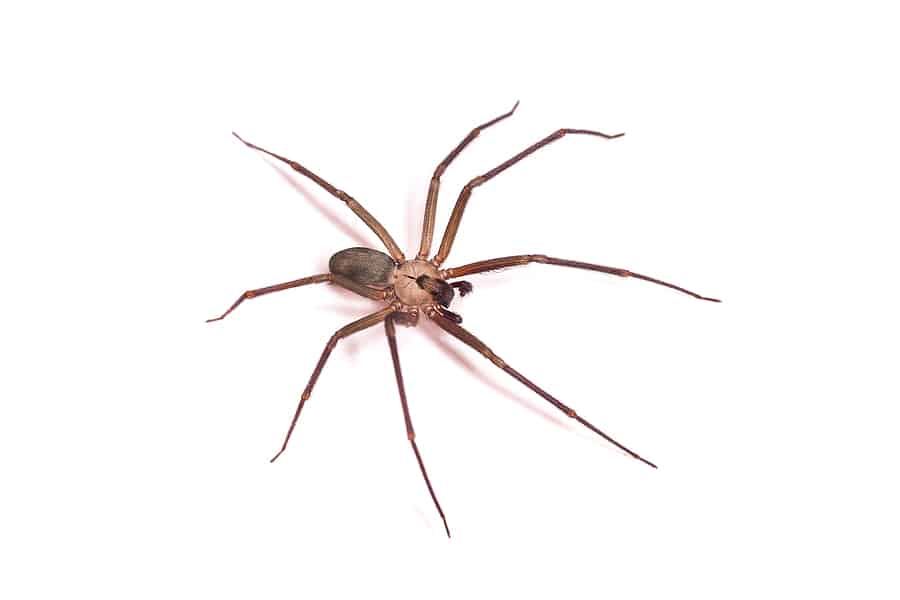
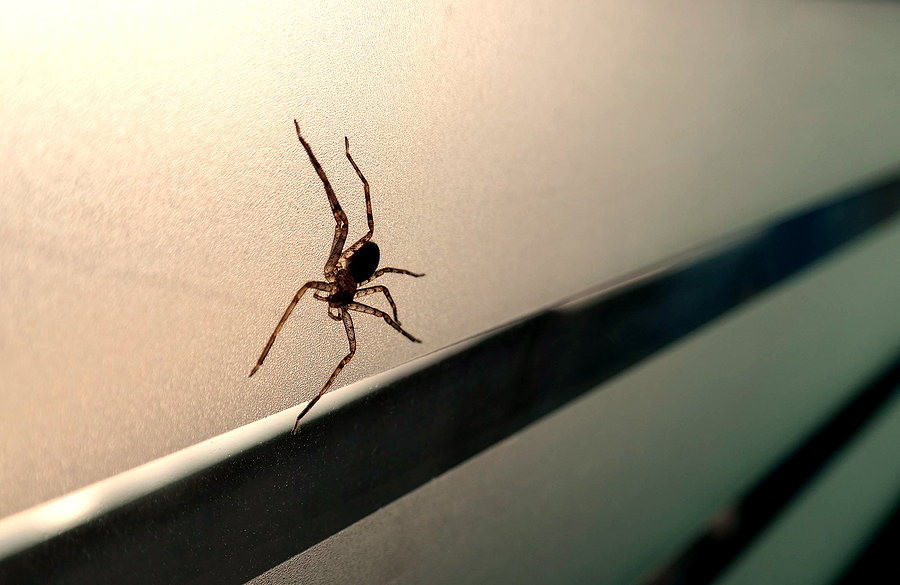
In Tennessee, we have our fair share of spiders we should be wary about. One of those spiders is the feared brown recluse. Luckily for us, most local arachnids don’t want to live in our homes, and they are easily preventable.
These spiders are ¼ to ½ inches in length and are light to dark brown in color. They have a violin-shaped mark behind their heads. They also only have six eyes compared to the usual eight. Like other spiders, they are beneficial in catching other invasive species in your home and keeping their populations down. If they weren’t harmful to humans, then it would all be fantastic.
A single bite from a brown recluse spider can bring on intense pain, swelling, fever, chills, body aches, and an ulcer at the site of the wound. Sometimes their bites can be used as a scare tactic, considered a “dry bite,” and don’t include venom. Don’t ever assume the bite didn’t contain venom and get medical attention right away.
Five Ways to Prevent Spiders in Your Tennessee Home
Replace old weatherstripping
Seal gaps, holes, and cracks around the exterior of your home
Invest in door sweeps for unprotected exterior doors
If you begin seeing an increase in unwanted arachnids, give your local pest control company a call for a free inspection and a pest prevention plan that works!
During the winter season, we don’t typically see a lot of pests around, but that doesn’t mean they aren’t present! Certain wildlife pests tend to look towards our Laurens home to escape the cold, causing damage and posing a health risk in the process. For homeowners, it’s important to understand the types of winter pests that could invade and the winter pest control methods needed to keep them out. Check out our top 3 winter pests to look out for in Laurens, South Carolina.
Cockroaches
During the winter, cockroaches enter our homes to search for heat and humidity. Common roaches found in homes are American roaches, oriental roaches, and brown-banded roaches. These pests can pose a serious health risk to humans, as they’re known to transmit diseases and trigger allergies and asthma. Roaches will utilize any open gap or hole to find their way inside homes. These pests will also hitchhike on grocery bags, boxes, and used appliances. You will often find them in areas where food and water are available, such as our kitchens and bathrooms.
Termites
Termites are year-round pests and will destroy the structural integrity of homes. The damage termites can cause will often cost billions in repairs. Termites, such as subterranean termites, will eat the wood from the inside out, usually staying hidden until the damage is done. These termite types need soil to live, creating mud tubes to search for a food source. Firewood and mulch are two major attractants to termites and will provide a way inside your home. If they’ve infested, you can often find them in the home’s baseboards, crawlspaces, and wooden beams.
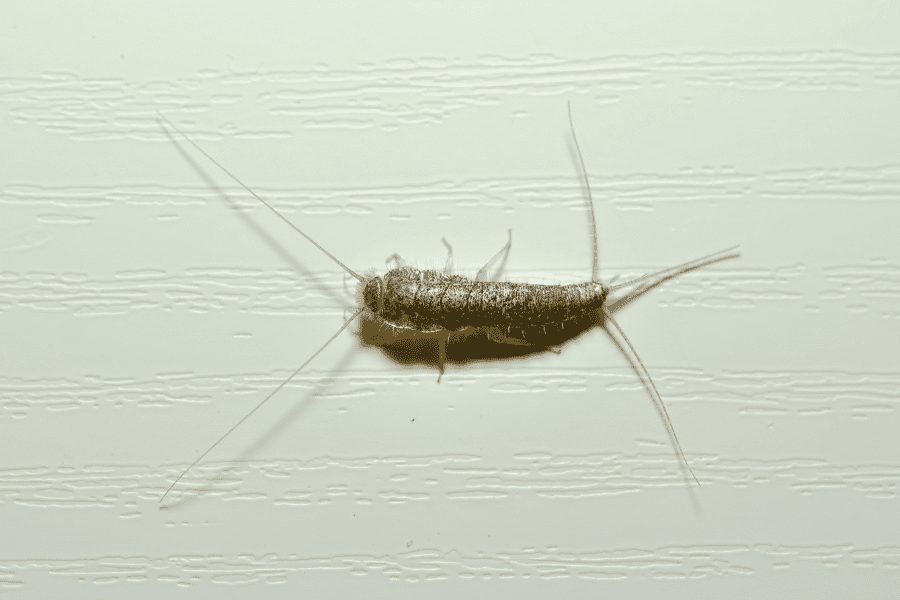
Silverfish
Silverfish prefer to live in damp, colder places. These pests are quite common in the winter months and are often found in basements or bathrooms. If they’ve gained access to your living space, it’s usually because they’ve hitched a ride when you’ve taken items out of storage in your garage or attic. While these pests are harmless to humans, if they infest in large numbers, they can become a nuisance. Silverfish will feed on your books, glue, wallpaper, and boxes.
Preventing Winter Pests
There are several methods and preventative measures you can implement to keep these pests from invading your home! Consider these winter pest control tips when you want to keep these pests away:
Seal any holes, cracks, or gaps around your home
Avoid leaving your pet food and water out overnight
Clean up leftover food crumbs and spills
Fix any leaky faucets or pipes found as soon as possible
Avoid leaving your dirty dishes in the sink overnight
Take your garbage out on a regular basis and utilize a trashcan with a tightly secure lid
Remove old newspapers, mail, and cardboard that is laying around your home
Inspect boxes, groceries, and used furniture before entering your home
If you utilize mulch, place it at least 20 feet away from your foundation
Consider reaching out to your pest control company to get a customized plan to prevent pests year-round
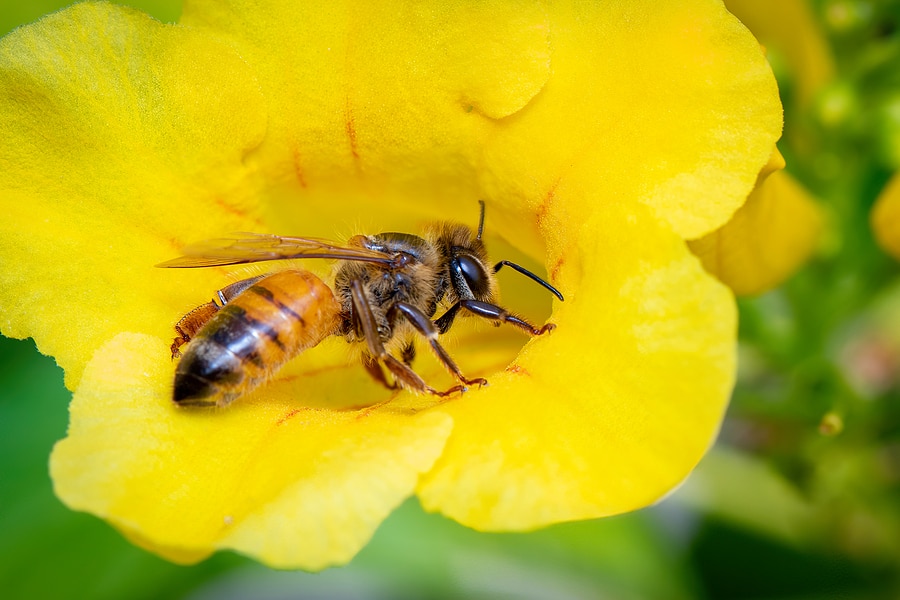
Honeybees have a significant role within our environment, the food we eat, the flowers we plant, and so much more. They are extremely hardworking and support so much of the sustenance of life. There are many reasons why honeybees and their honey are so important to humans; find out why below!
They Pollinate Our Food
To look for pollen, honeybees will travel long distances. Through these trips, fertilization takes place between food crops. They do this by using the hairs on their bodies to carry large grains of pollen between plants, helping crops produce better. In the US alone, honeybees are known to pollinate more than 100 crops! Because of their pollination, we can enjoy foods like cucumbers, cherries, apples, limes, and lemons. These insects also pollinate our wild plants, helping provide food to a wide variety of insects, birds, and animals, and overall, playing a major component in our biodiversity.
The Importance of Their Honey
Honeybees carry nectar extracted from plants and taken back to their hive. They create honey by mixing this nectar with their saliva in a cell within their hive. Honey is known to provide immense benefits to humans and our health. It’s been found that honey can prevent cancer, heart disease, and diabetes, heal wounds, and fight bacteria! There are also several products made from honey that can support us overall. The most common products we often see come from honey, including bee pollen for health benefits and bee wax for skin care products, candles, and even furniture polish!
Caring for Honeybees
The importance of honeybees is significant to our environment and overall well-being. At Northwest, we are proud to offer our honeybee relocation and protection services to continue keeping honeybees active and alive! Our Certified Honeybee Keepers are trained to safely remove, relocate, and care for the honeybees that have found their home in yours! If you’re interested in Northwest’s Honeybee Relocation & Protection Service, call our team today for a free inspection!
By Anna V., Editorial Lead — Pest Education · Last updated: May 2026
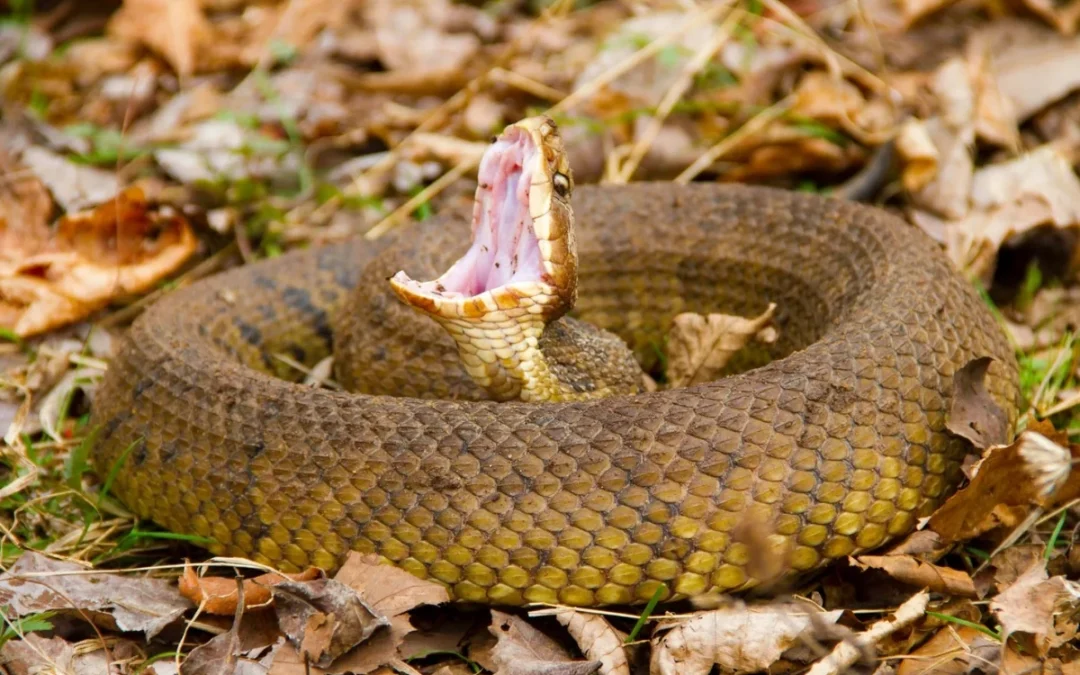
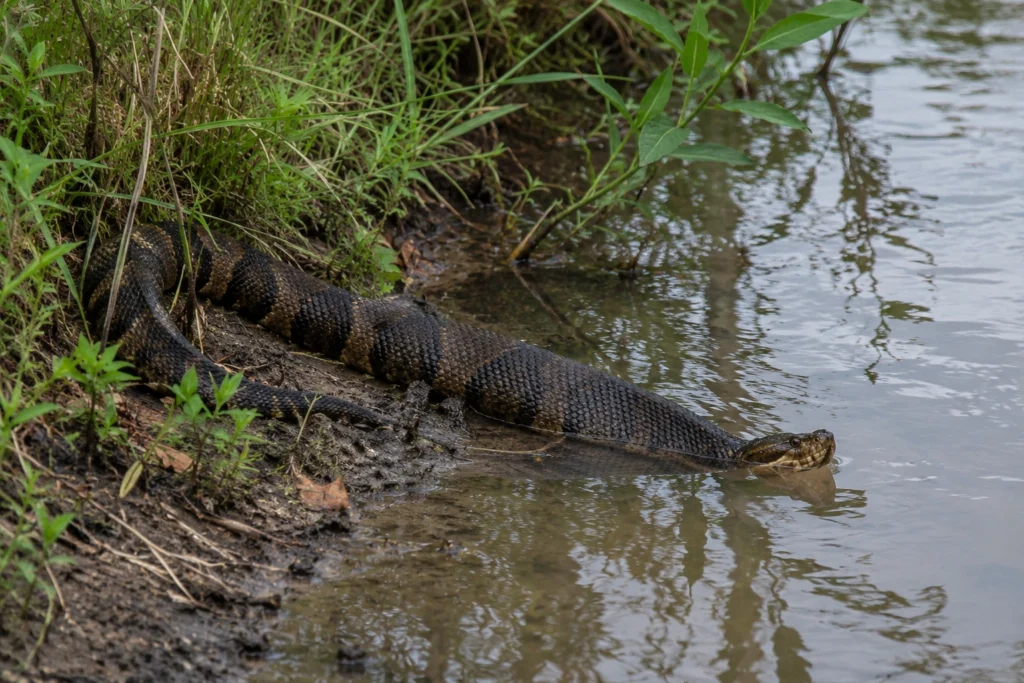
If you’ve spotted a dark, thick-bodied snake near a pond, swamp, river, or even a backyard drainage ditch in Georgia, Alabama, Tennessee, or South Carolina, you might be looking at a water moccasin (also called a cottonmouth). At Northwest, we get a sharp uptick in snake calls every spring and summer, and water moccasin sightings are the ones that generate the most concern. The honest reality: water moccasins are venomous and warrant respect, but they’re also widely misidentified, and most water snakes Southeast homeowners actually see are harmless nonvenomous species mistaken for cottonmouths.
Here’s what to know to identify a water moccasin correctly, understand the real (versus mythical) risk, stay safe around water in our region, and know what to do if you or a family member is ever bitten.
Water moccasins are pit vipers native to the Southeast and are found near most permanent water bodies in Georgia and Alabama.
What Is a Water Moccasin?
Water moccasins (Agkistrodon piscivorus) are venomous pit vipers native to the Southeastern U.S. Their range covers most of Georgia and Alabama, extending from southeastern Virginia south to Florida and west to East Texas. They’re semi-aquatic, meaning they’re equally at home in water and on land, and they thrive in warm humid climates.
Two subspecies are present in our service area:
Northern cottonmouth (Agkistrodon piscivorus piscivorus): The dominant subspecies across Georgia, Alabama, Tennessee, and South Carolina. Darker coloring with less distinct banding as adults.
Florida cottonmouth (Agkistrodon conanti, recently elevated to its own species): Found in extreme south Georgia and Alabama. Often slightly larger with more distinct facial markings.
Typical habitats include swamps, rivers, lakes, ponds, marshes, drainage ditches, slow-moving creeks, and the overgrown edges of any persistent water body. They’re occasionally found in suburban yards near ponds, retention areas, or wet drainage features.
Water Moccasin Identification
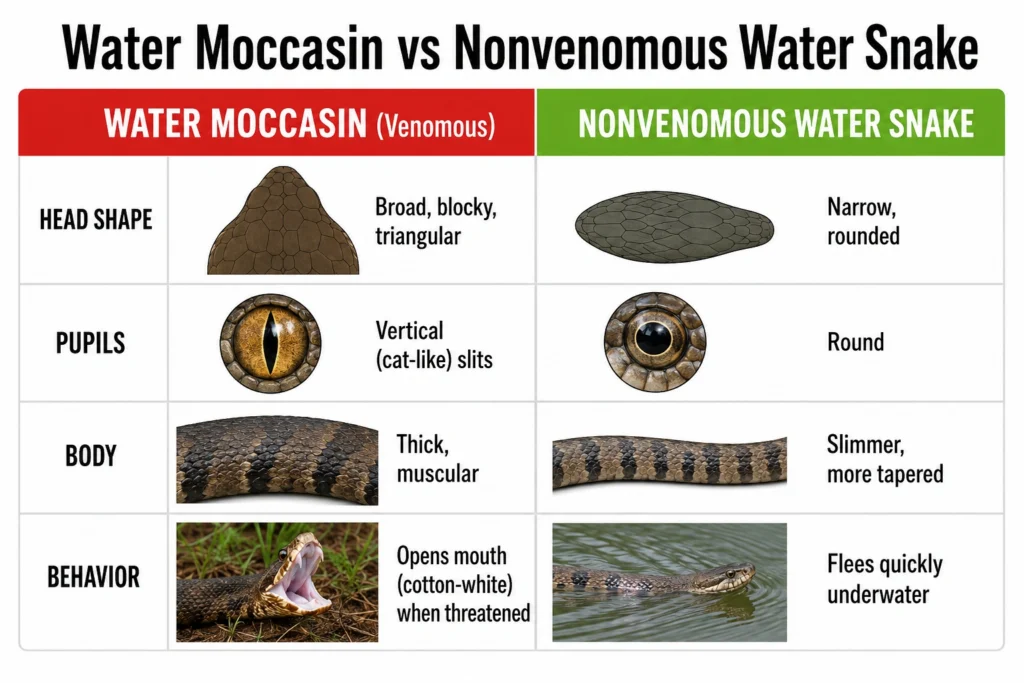
Four traits separate water moccasins from the nonvenomous water snakes they’re often confused with.
Physical Features
Body shape: Thick, muscular, often visibly heavier than nonvenomous water snakes. Adults typically 2 to 4 feet long, occasionally over 5 feet.
Color: Adults are usually dark olive, brown, or nearly black. Crossband markings are often faded or barely visible on older snakes. Juveniles are more distinctly banded with bright tail tips that fade with age.
Head shape: Broad, blocky, distinctly triangular when viewed from above. Much wider than the neck. This is the single most reliable visual identifier.
Mouth: Bright “cotton-white” mouth lining displayed when threatened (the source of the “cottonmouth” name).
Pupils: Vertical and cat-like (not round). All pit vipers in the U.S. share this trait.
Heat-sensing pits: Visible small pits between the eyes and nostrils on each side of the head.
Differences vs Nonvenomous Water Snakes
This is where misidentification causes the most unnecessary fear. Several harmless water snake species in the Southeast (especially the banded water snake, Nerodia fasciata, and the brown water snake, Nerodia taxispilota) are routinely killed because they’re mistaken for cottonmouths. The key differences:
Head shape: Nonvenomous water snakes have narrow, rounded heads not much wider than the neck. Cottonmouths have wide, blocky, triangular heads.
Pupils: Nonvenomous water snakes have round pupils. Cottonmouths have vertical slits.
Body shape: Nonvenomous water snakes are slimmer and more tapered. Cottonmouths are thick and muscular.
Behavior when threatened: Nonvenomous water snakes typically flee quickly underwater. Cottonmouths often stand their ground, coil defensively, vibrate the tail, and open the mouth to display the white lining.
Swimming style: Cottonmouths often swim with the head and most of the body visible above the water. Nonvenomous water snakes typically swim with only the head visible.
When in doubt, assume venomous and keep your distance. Identification at a distance is plenty.
Are Water Moccasins Aggressive?
This is one of the most exaggerated reputations in North American wildlife. Water moccasins are defensive, not predatory toward humans. They do not chase people. Studies tracking cottonmouth behavior consistently show they will hold ground when threatened, but they don’t pursue.
The defensive behavior that gets misinterpreted as aggression:
Standing ground: Unlike many snakes that immediately flee, cottonmouths often stay put when approached. This is conservation of energy, not aggression.
Open-mouth display: The cotton-white mouth opening is a warning (“I’m here, I’m venomous, back off”), not an attack signal.
Tail vibration: Rattled tail against leaves can sound similar to a rattlesnake. Same warning function.
Defensive striking: Will strike if cornered, stepped on, or directly handled. Bites occur almost exclusively in these scenarios.
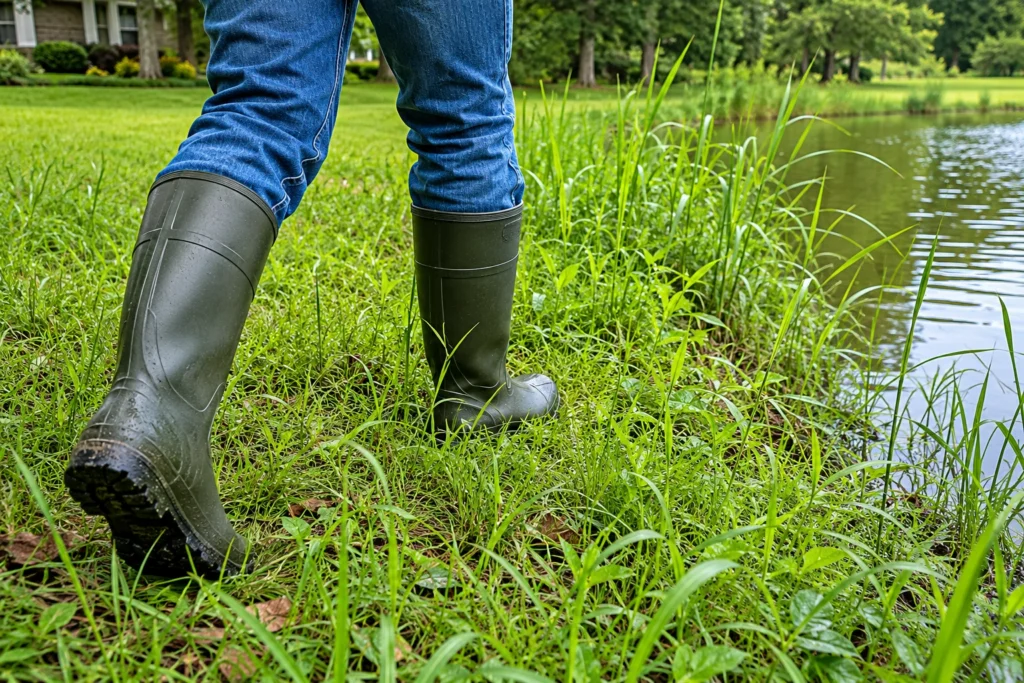
Give a cottonmouth 6+ feet of distance and step around it, not toward it, and you almost certainly won’t be bitten.
How Dangerous Is a Water Moccasin Bite?
Venom and Medical Risk
Water moccasin venom is hemotoxic, meaning it affects tissue and blood circulation rather than the nervous system. Effects of a bite include:
Immediate intense pain at the bite site
Rapid swelling and bruising
Tissue damage that can progress for hours or days without treatment
In severe cases: blood-clotting issues, blistering, and tissue necrosis
Systemic symptoms (nausea, weakness, low blood pressure) in moderate to severe envenomation
Death from a cottonmouth bite is rare in the modern era thanks to antivenom availability, but bites are medical emergencies that require immediate hospital treatment. Tissue damage from untreated bites can be permanent. Approximately 25% of cottonmouth bites are “dry bites” with no venom injected, but you cannot reliably tell at the time of the bite, so always seek emergency care.
First Aid for a Snake Bite
Current medical guidance (per CDC and major emergency medicine organizations) for any suspected venomous snake bite:
Call 911 immediately. Don’t drive yourself. Don’t wait to see if symptoms develop.
Keep the affected limb still and below heart level. Movement spreads venom faster through the lymphatic system.
Remove rings, watches, and tight clothing from the affected limb before swelling sets in.
Take a photo of the snake if you can do so safely from a distance. Helps medical providers confirm species. Do NOT try to capture or kill the snake.
Stay calm and minimize movement until help arrives.
What NOT to do (these were old advice and are now known to make outcomes worse):
Myth: Water moccasins chase humans. Fact: They don’t. They stand their ground, but they don’t pursue. Documented research shows zero cases of intentional cottonmouth pursuit of humans.
Myth: All cottonmouth bites are fatal. Fact: With modern antivenom and prompt medical treatment, fatalities are extremely rare. Tissue damage is the more common serious outcome.
Myth: You can identify them by color alone. Fact: Adult cottonmouths are often nearly solid dark color, easily confused with several harmless water snakes. Head shape, pupil shape, and behavior are more reliable identifiers.
Myth: Cottonmouths can bite underwater. Fact: They can, technically, but bites in water are extremely rare. Most defensive behavior happens on land or while basking partially out of water.
Myth: Killing a snake on your property prevents future encounters. Fact: Other snakes typically move into vacated territory. Habitat modification is far more effective than removal.
When to Call Professional Help
Professional wildlife or snake control is worth calling Northwest about if:
You’ve confirmed a water moccasin on your property (especially repeat sightings).
Snake sightings are happening near play areas, patios, pool decks, or other high-traffic zones.
You need inspection and habitat modification to prevent repeated encounters.
You’re managing a property with significant water features (ponds, retention areas, drainage ditches).
Snake activity is accompanied by visible rodent activity (the food source that’s attracting them).
Professional snake services typically include identification, safe removal when needed, habitat modification (removing harborage, addressing rodent populations), and ongoing prevention recommendations. For broader snake prevention strategies, see our snake repellent guide.
(Spotted a water moccasin or seeing recurring snake activity? Schedule a free Northwest inspection and we’ll identify what’s around, address the conditions attracting them, and lay out a prevention plan.)
Frequently Asked Questions About Water Moccasins
Can water moccasins climb trees?
Yes, but rarely. Cottonmouths can climb low branches, especially overhanging water. They’re not arboreal hunters like rat snakes. Most encounters happen at ground level or in water. Snake sightings high in trees are far more likely to be rat snakes or other nonvenomous climbers.
Do water moccasins chase people?
No. This is one of the most persistent and inaccurate myths in Southeastern wildlife folklore. Cottonmouths are defensive, not predatory toward humans. They will hold their ground when threatened, but they don’t pursue. Most perceived “chasing” is actually the snake moving toward water (its escape route), which happens to be in the same direction as the person.
Are all cottonmouths dangerous?
All cottonmouths are venomous and warrant respect. About 25% of defensive bites are “dry bites” with no venom injected, but you can’t reliably tell at the time of a bite. Always treat any suspected cottonmouth bite as a medical emergency and seek immediate hospital care.
How common are water moccasin bites?
Bites are uncommon relative to encounter rates. Most cottonmouth sightings result in zero contact between snake and human. Bites occur almost exclusively in cases where the snake is stepped on, handled, or cornered. In Georgia and Alabama combined, fewer than 100 documented cottonmouth bites occur in a typical year, the vast majority non-fatal with proper medical care.
How do I tell a water moccasin from a harmless water snake?
Four traits: (1) head shape (cottonmouth = wide, blocky, triangular; nonvenomous = narrow, rounded), (2) pupils (cottonmouth = vertical slits; nonvenomous = round), (3) body shape (cottonmouth = thick and muscular; nonvenomous = slimmer), and (4) behavior (cottonmouth = stands ground, opens mouth, vibrates tail; nonvenomous = flees quickly underwater). When in doubt, keep your distance regardless.
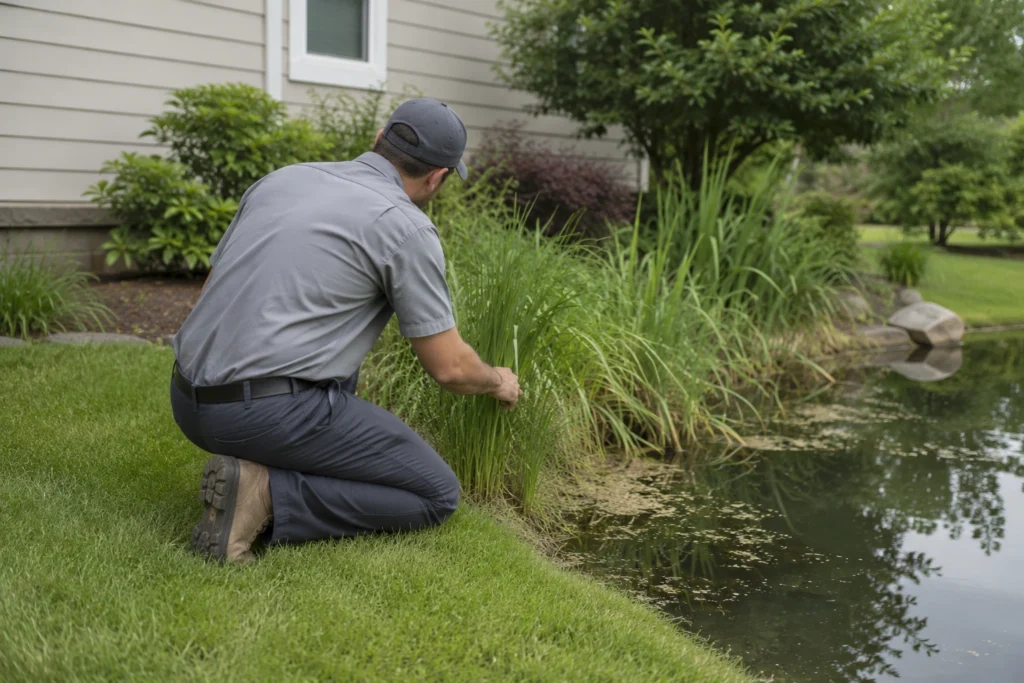
Snake prevention is mostly about removing the conditions that bring them in: harborage, rodent food sources, and overgrown ground cover.
Schedule a Snake & Wildlife Inspection
If you’ve confirmed water moccasin activity, you’re seeing recurring snake sightings, or you have property features (ponds, drainage, dense brush) that attract snakes, Northwest’s team handles identification, habitat modification, and ongoing prevention. Most snake problems are really habitat problems, and habitat changes hold longer than removal alone.
Call (888) 466-7849. Same-week service available across our Southeast service area.
About the Author
Anna V., Editorial Lead — Pest Education leads pest education content for Northwest Exterminating, working with senior technicians and service center managers across our Georgia, Alabama, Tennessee, and South Carolina service areas to translate field expertise into homeowner-friendly guides. The focus: accurate, regionally-specific answers to the pest questions Southeast homeowners are actually searching for.
By Matthew Walker, Area Technical Leader — Northwest Service Centers, Georgia · Last updated: September 2026
Reviewed for accuracy by Cory Goeltzenleuchter, B.C.E., P.H.E., Director of Technical Services for Northwest Exterminating — September 2026
Quick answer: Roof rats are climbing rodents that nest above ground, often in attics, eaves, and dense vegetation, rather than in burrows. They are most active in the Southeast during fall and winter, when cooler weather drives them indoors to nest. Identifying them correctly, removing existing rats, and then sealing entry points in the right order are the keys to lasting control.
If you are hearing scratching in the ceiling at night, roof rats are one of the most likely culprits in Georgia, Alabama, Tennessee, and the surrounding Southeast. This guide covers how to identify them, how they get in, and the removal sequence that separates a lasting fix from a repeat problem.
How to Identify a Roof Rat
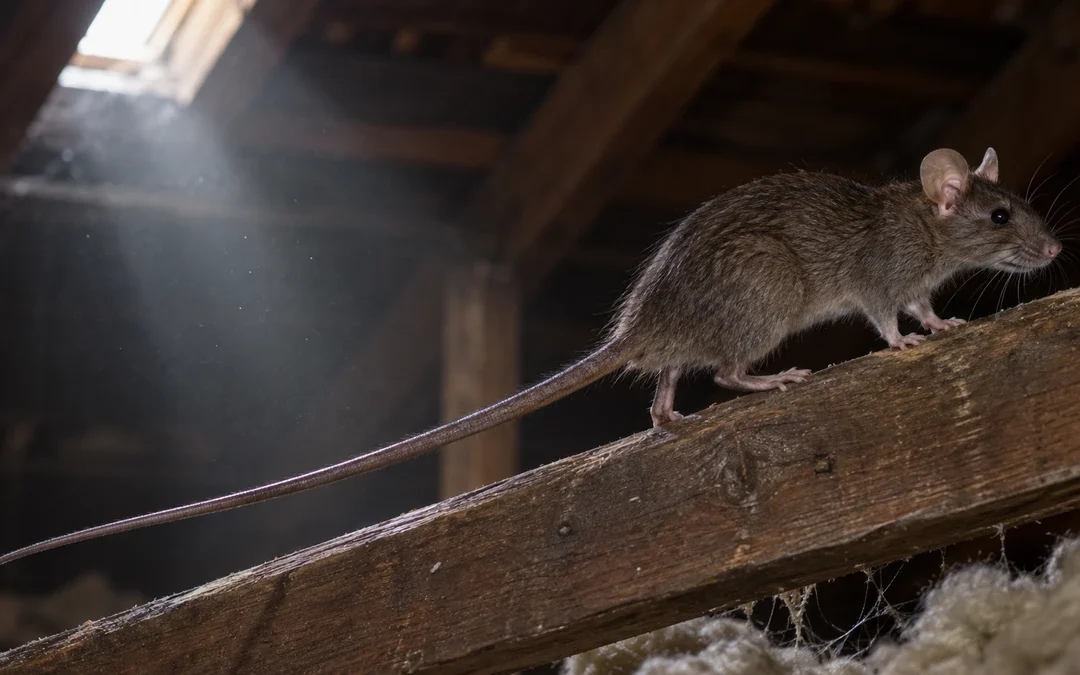
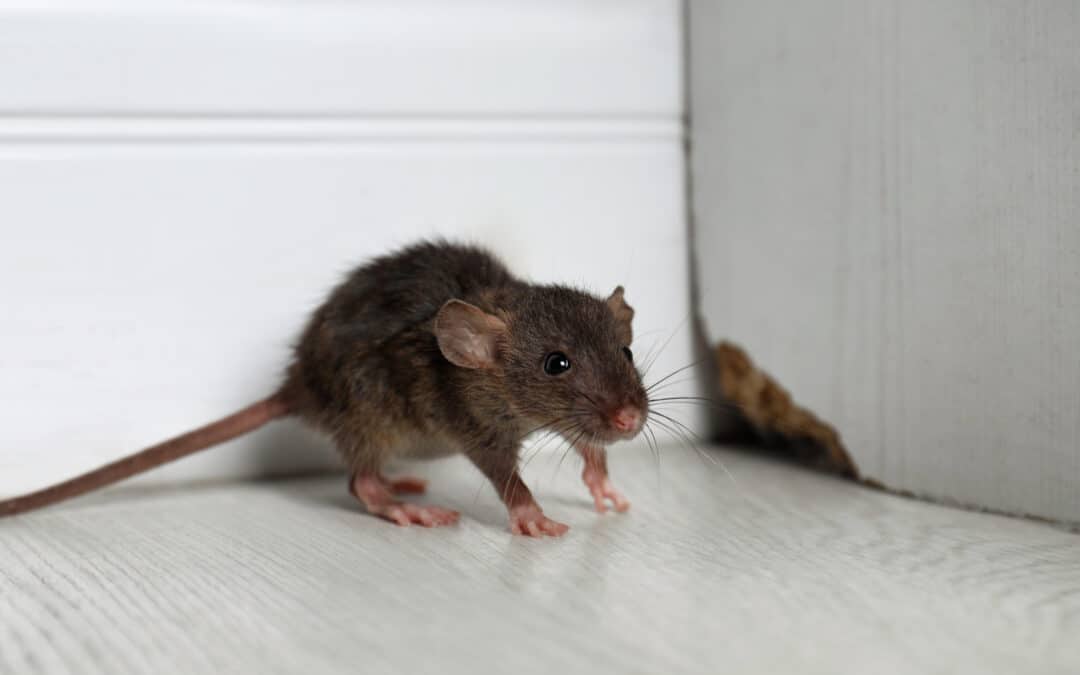
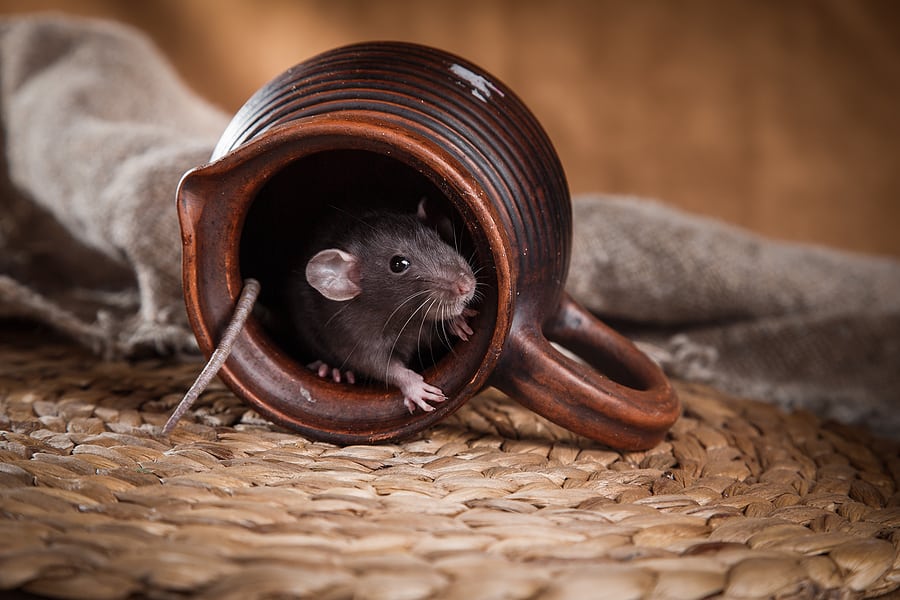
Roof rats (Rattus rattus), also known as black rats or ship rats, are among the most common rodents found in attics across the Southeast. Before any treatment plan makes sense, it helps to know exactly what you are dealing with.
Key physical traits of roof rats:
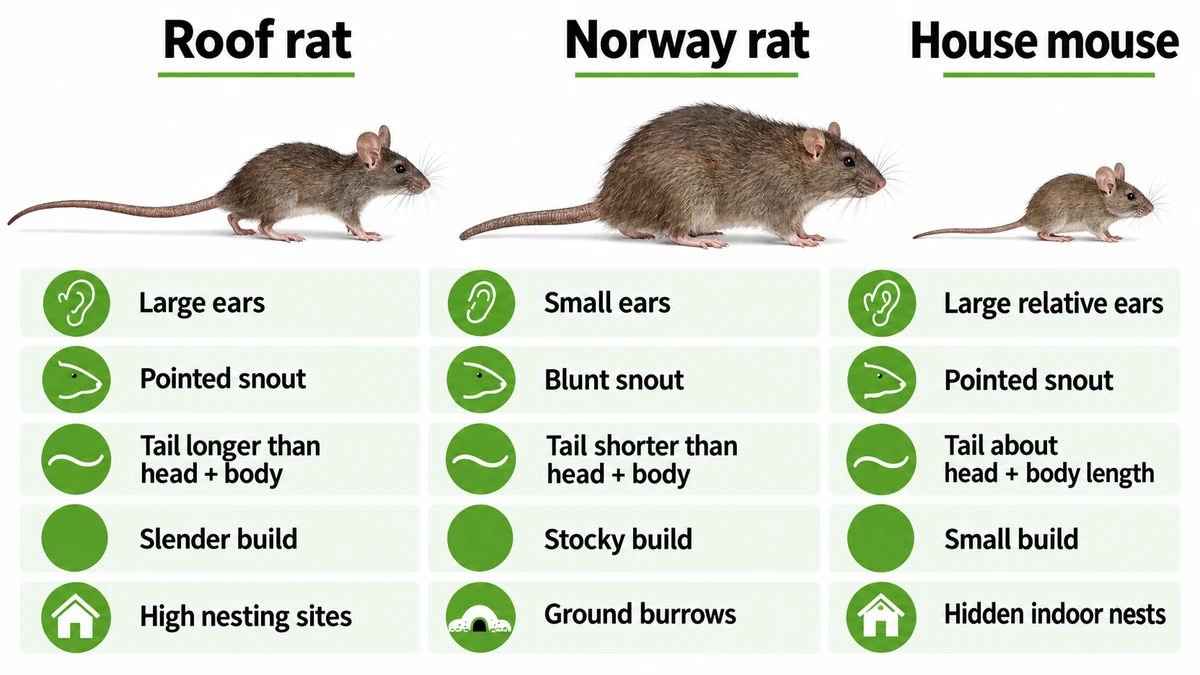
Size. Roof rats typically measure 12 to 16 inches including the tail, with a body noticeably more slender than a Norway rat’s.
Tail. Their tail is longer than their head and body combined, which is one of the clearest identifying features.
Color. Most roof rats have dark brown to black fur with a lighter gray or cream underside.
Ears and face. Large, hairless ears and a pointed snout give roof rats a more delicate appearance than Norway rats.
Behavior. Roof rats are agile climbers. They travel along power lines, fence tops, and tree limbs, and they are far more likely to enter a home from the roofline than through a ground-level gap.
Signs of a roof rat infestation often appear before the rats themselves do:
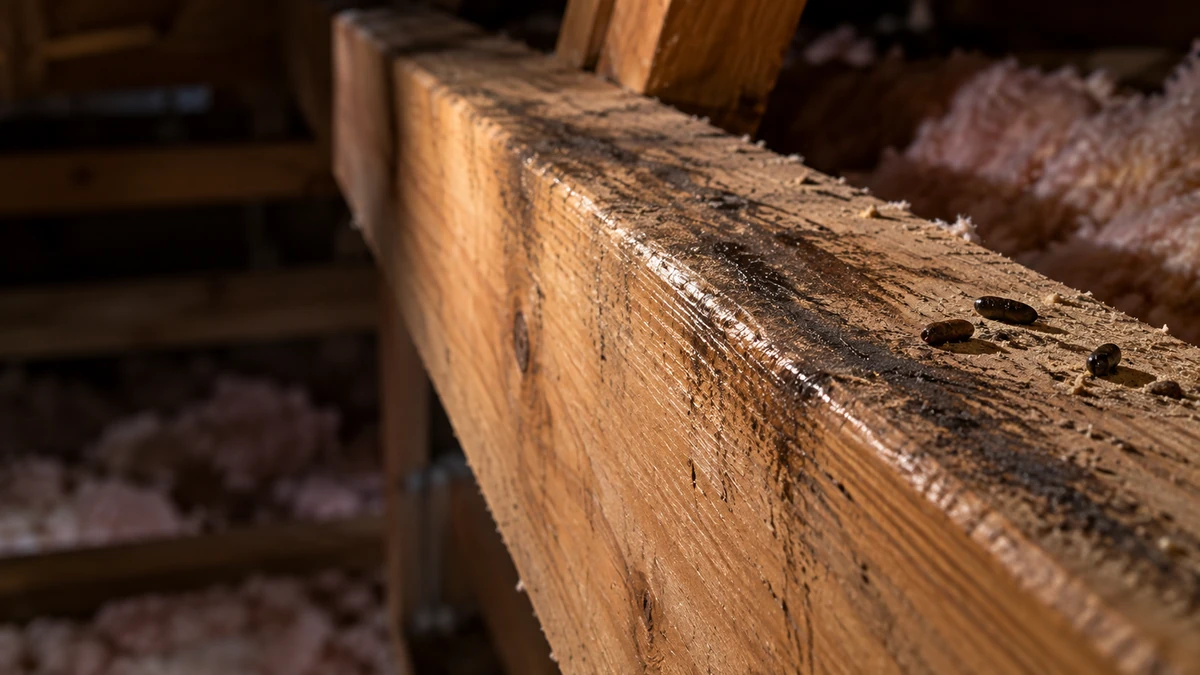
Droppings about half an inch long with pointed ends, typically found along attic joists or near stored items
Gnaw marks on eaves, soffits, or roof vents, usually just over an eighth of an inch wide
Scratching or rattling sounds from the ceiling or upper walls, especially at night
Grease marks or dark smudges along regular travel paths, left by the oil and dirt on a rat’s fur
Fruit on the ground with only the pit or seeds remaining, since roof rats favor fruit and nuts
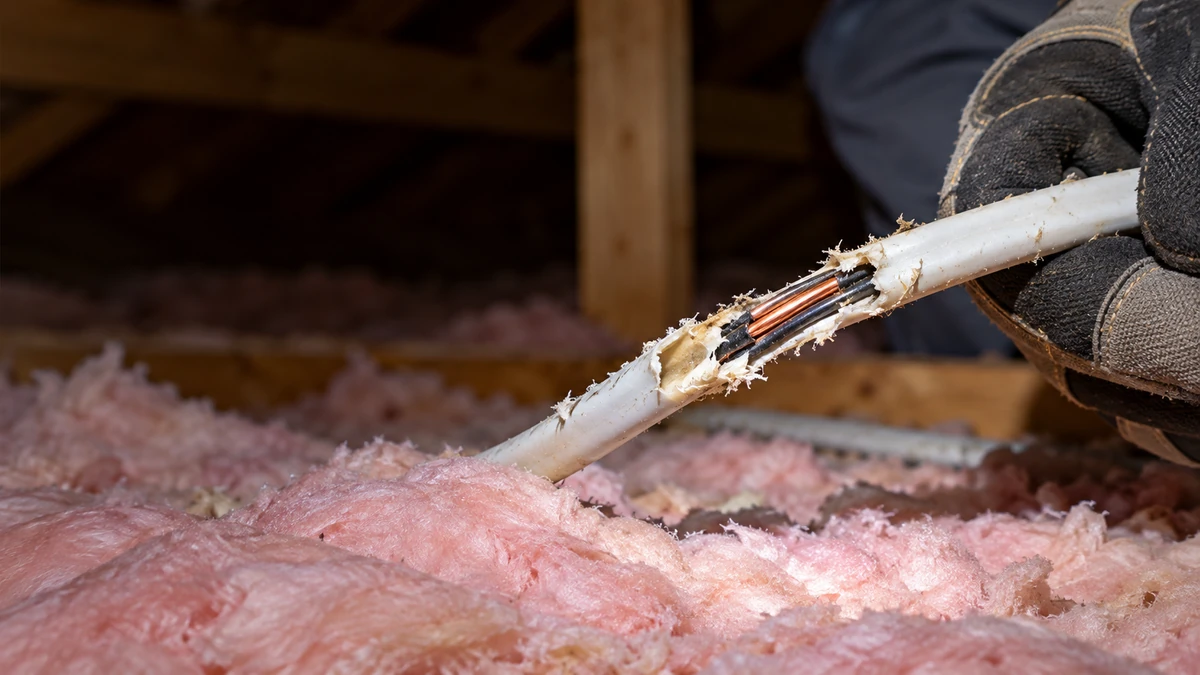
Chewed electrical wiring in the attic, which is a documented fire risk if left unaddressed
Roof Rats vs. Squirrels vs. Norway Rats: What Is Actually in Your Attic
Attic noise does not always mean roof rats. Squirrels and Norway rats produce similar sounds and damage, but the details of how they look, move, and nest are distinct enough to tell them apart.
Feature
Roof Rats
Squirrels
Norway Rats
Body size
6 to 8 inches, slender
9 to 12 inches, bushier body
7 to 9 inches, stocky
Tail
Long, hairless, longer than body
Long, bushy, furry
Shorter than body, thick and scaly
Color
Black to dark brown
Gray or reddish brown
Brown or gray
Typical activity time
Nocturnal
Daytime (diurnal)
Nocturnal
Sound type
Light scratching, running along joists
Quick scurrying, gnawing
Heavier scratching, gnawing
Preferred entry point
Roofline, eaves, gable vents
Roofline, fascia gaps, chewed openings
Ground-level gaps, foundation, pipes
Nesting location
Above ground, attics or dense vegetation
Above ground, attics or tree cavities
Below ground burrows or crawl spaces
Droppings
Small, pointed, about 1/2 inch
Larger, oval, near entry points
Larger, blunt ends, about 3/4 inch
Timing is the fastest tiebreaker. If something is moving through the attic during the day, squirrels are the more likely source. Roof rats and Norway rats are both nocturnal, which is why droppings, tail shape, and entry height matter more than sound alone when telling them apart.
How Roof Rats Get Into an Attic
Roof rats earn their name. Rather than digging under a foundation, they climb, which means the entry points that matter are almost entirely above ground.
Vertical entry points to inspect:
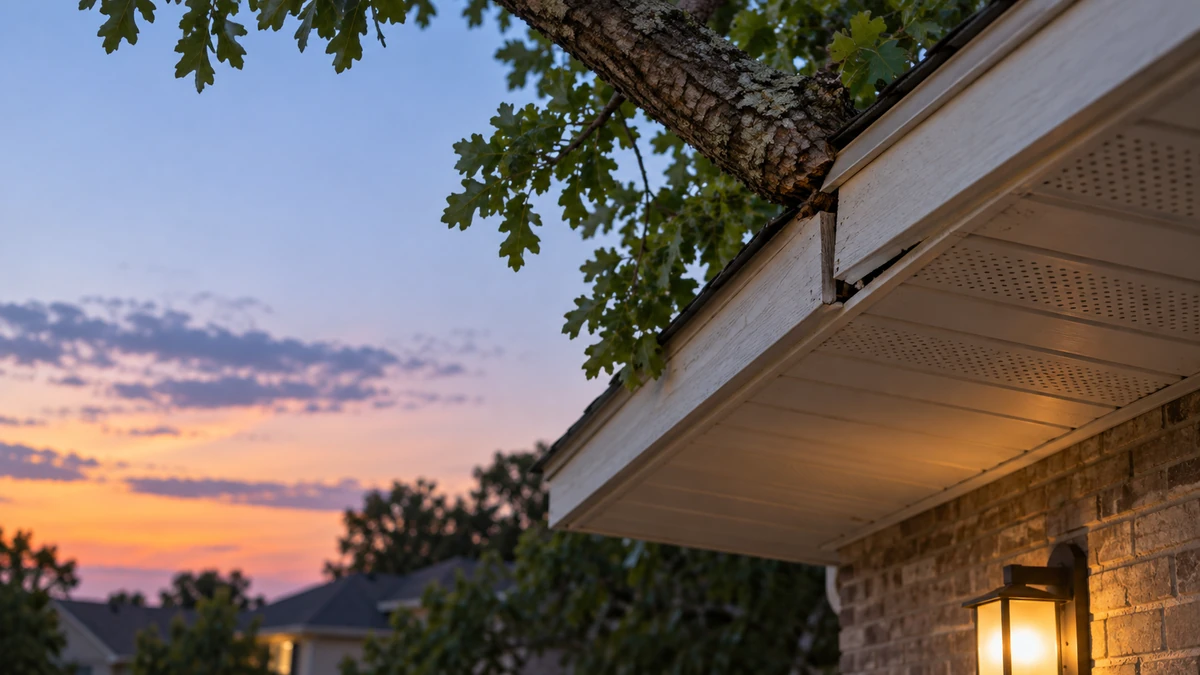
Gaps where the roofline meets the fascia or soffit
Gable vents and ridge vents with deteriorated or missing screening
Overhanging tree limbs that touch or hang within a few feet of the roof
Power lines and utility cables that run near the house
Chimney chases without a secure cap
Gaps around roof penetrations, such as vent pipes, plumbing stacks, or HVAC lines
A roof rat needs only an opening about the size of a quarter to squeeze through. Its skull, not its body, is what limits it. This is why sealing at ground level alone rarely solves an attic infestation. The real work happens along the roofline.
Why Fall Is Roof Rat Season in the Southeast
Roof rat activity rises every fall across Georgia, Alabama, and Tennessee. As outdoor temperatures drop, roof rats look for a warm, dry place to overwinter, and an attic checks every box: shelter from weather, distance from predators, and access to insulation they can use for nesting.
This overwintering pattern drives the spike in attic noise calls and chewed insulation reports that Northwest sees across the Southeast each October and November. Roof rats that move in during fall can remain active through the colder months and reproduce during that time. A single female roof rat can produce several litters per year, which means a small fall infestation can grow quickly if it goes unaddressed through winter.
Do roof rats go away on their own come spring? Not reliably. Once a colony establishes a warm nesting site with access to food, they have little reason to leave. Waiting out a fall infestation typically results in a larger, more entrenched problem by spring.
How to Get Rid of Roof Rats
Getting rid of roof rats takes more than a single trap or a sealed gap. The order of operations matters as much as the tools used.
The right sequence:
Inspect first. Identify every entry point along the roofline, attic vents, and any tree limbs or utility lines that give roof rats a path onto the roof.
Trap and remove active rats. Place traps inside the attic and along known travel paths before sealing anything.
Seal entry points last. Once rats have been removed, seal gaps, vents, and openings around roof penetrations with rodent-proof materials.
Clean and monitor. Remove contaminated insulation, sanitize affected areas, and monitor to confirm the infestation is fully resolved.
A sequencing warning every homeowner should hear: sealing entry points before rats are fully removed is one of the most common and most costly mistakes Northwest service professionals encounter. Trapping live rats inside wall voids or attic spaces leads to odor problems, secondary pest activity, and rats gnawing new openings to escape. Removal must come before exclusion.
“The order really does matter here. When a homeowner seals up the attic before the rats are out, we usually get a call about a smell problem within a week or two, and now there are two issues to solve instead of one,”
says Matthew Walker, Area Technical Leader for the Northwest Service Centers in Georgia.
Additional long-term prevention steps include trimming tree limbs away from the roofline, storing pet food in sealed containers, keeping garbage cans tightly lidded, and clearing clutter that gives rats places to hide and nest.
For homes with an active or suspected infestation, Northwest’s rodent control services follow this same inspect-trap-seal sequence, paired with follow-up monitoring.
The Damage Roof Rats Do
Roof rats cause real, compounding damage to a home. Their gnawing is not incidental. It is how they keep their continuously growing teeth at a functional length. Left unchecked, roof rats can work through:
Electrical wiring in the attic, raising the risk of shorts and house fires
Water lines and HVAC lines, which can lead to leaks and system failure
Roof rafters and eaves, weakening structural integrity over time
Attic insulation, which loses R-value once trampled, shredded for nesting material, or soiled with droppings and urine
Roof rat droppings and urine can also introduce health concerns. Pathogens and allergens can move through contaminated insulation and into the home’s air pathways, particularly through ductwork. According to the University of Georgia Cooperative Extension, rodents like roof rats can contaminate stored food and building materials, which is one more reason to treat an infestation promptly rather than waiting to see whether it resolves on its own.
Roof Rat Activity Across the Northwest Service Area
Roof rat pressure across the Southeast follows predictable patterns tied to tree canopy density, housing age, and proximity to green space. Northwest service professionals see these conditions play out differently by market.
Savannah, GA. Savannah’s mature live oak canopy and coastal humidity make it one of the most consistent roof rat markets in the Northwest footprint. Dense tree coverage in historic and coastal neighborhoods gives rats a nearly continuous bridge from yard to roofline. Getting rid of roof rats in a Savannah home means working the attic first, in this order:
Inspect the attic and the full roofline for droppings, rub marks, and daylight gaps.
Trap in the attic along the joists and runways the rats already use, before anything is sealed.
Cut back live oak limbs and any vegetation touching or overhanging the roof, since canopy contact is the dominant Savannah entry route.
Seal soffit seams, gable vents, and roof penetrations once trapping confirms activity has stopped.
Remove and replace soiled insulation, then monitor through the fall and winter peak.
Atlanta, GA. As one of the most heavily wooded metro areas in the country, Atlanta sees consistent roof rat pressure from overhanging limbs and aging rooflines, particularly heading into fall. Roof returns and ridge vents are among the most common entry points Northwest identifies in intown neighborhoods.
Marietta, GA. Marietta’s tree-lined subdivisions and mature hardwood canopy contribute to roof rat activity patterns similar to Atlanta’s, with limb contact at the roofline driving most of the calls Northwest receives in the area each fall.
Chattanooga, TN. Chattanooga’s hillside neighborhoods and ridgeline tree cover give roof rats natural elevation advantages. Properties situated near wooded lots or with vegetation growing close to the roofline see the most consistent activity.
Birmingham, AL. Birmingham’s older housing stock and dense urban canopy create frequent opportunities for roof rats to find both entry points and nesting material. Attic-related rodent calls remain a recurring pattern for Northwest’s Alabama teams as fall approaches.
“Across our Georgia service centers, the neighborhoods with the most mature tree canopy are almost always where we see the highest roof rat call volume. It tracks closely with tree cover more than anything else,”
says Matthew Walker, Area Technical Leader for the Northwest Service Centers in Georgia.
Roof rats behave differently in Northwest’s Florida markets, where they stay active year-round rather than peaking in fall. If you are in Miami, Fort Myers, Naples, Pompano Beach, or Broward County, see our guide to roof rats in South Florida for the tile roof and screen enclosure entry routes specific to that region.
What It Costs and What Is Included
Roof rat control typically starts around $450, with final pricing based on the size of the home, level of activity, number of entry points, and the amount of exclusion or remediation needed.
Depending on the situation, service may include:
Removal. Inspection, trapping, and removal of active rodents.
Exclusion and sealing. Identifying and closing entry points to help prevent rodents from returning.
Remediation. Sanitation, contaminated insulation removal or replacement, and repairs when needed.
Because every home and infestation is different, Northwest provides a free inspection and customized estimate based on the work needed. Every project begins with a free inspection, which allows a technician to assess the scope of the problem and provide an accurate quote before any work begins.
Roof rats are slender, dark-furred rodents with a tail longer than their body, large hairless ears, and a pointed snout. Adults typically measure 12 to 16 inches from nose to tail tip. Their slender build and long tail distinguish them from the stockier Norway rat at a glance.
How do I know if it is roof rats and not squirrels in my attic?
Timing is the fastest indicator. Squirrels are active during the day; roof rats are nocturnal. If the noise in your attic is happening after dark, roof rats or Norway rats are the more likely source. Droppings and tail shape can confirm which rodent is present.
How do roof rats get into an attic?
Roof rats climb rather than burrow, so their entry points are almost always above ground. Common routes include overhanging tree limbs, utility lines, gable and ridge vents, soffit and fascia gaps, uncapped chimneys, and gaps around roof penetrations. A roof rat can fit through an opening the size of a quarter.
What happens if I seal my attic before the rats are removed?
Sealing entry points before roof rats are fully removed can trap live animals inside wall voids or attic spaces, leading to odor problems and additional damage as they attempt to chew their way back out. Removal must always come before exclusion.
How long does it take to get rid of roof rats?
Most cases involve an inspection, a trapping period of one to two weeks, and a follow-up visit to confirm all activity has stopped before entry points are sealed. Timelines vary based on infestation size and the number of entry points involved.
Do I need to replace attic insulation after roof rats?
In most cases, yes. Roof rat droppings, urine, and nesting activity compress and contaminate insulation, reducing its effectiveness and creating indoor air quality concerns. A technician can assess the extent of the damage during the initial inspection.
How much does roof rat removal cost?
Rodent control services typically start around $450, as treatment often involves more than simply removing the animal. Pricing can reflect the inspection, trapping or removal, identifying and sealing entry points, the size of the home, level of activity, and any additional exclusion or remediation needed. Schedule a free inspection for an estimate specific to your home.
Hearing Movement in Your Attic After Dark?
Roof rats are persistent, but they are also predictable once you know where to look. If noise overhead has started, or picked up as the weather cools, a professional inspection is the fastest way to confirm what is up there and build the right plan in the right order.
Roof rats do not leave on their own. The longer an attic infestation goes without intervention, the more damage accumulates and the harder the cleanup becomes.
Northwest serves Atlanta, Marietta, Chattanooga, Savannah, Birmingham, and surrounding communities across Georgia, Tennessee, and Alabama.
About the Author
Matthew Walker serves as an Area Technical Leader for the Northwest Service Centers in Georgia. He provides technical support, mentorship, and field training to teammates while promoting industry best practices and effective pest management strategies. Matthew’s hands-on experience and commitment to education help teams deliver extraordinary service and exceptional customer care.
Reviewed for Accuracy
Cory Goeltzenleuchter, B.C.E., P.H.E., Director of Technical Services for Northwest Exterminating, is one of the organization’s leading technical experts in pest management. As a Board Certified Entomologist and Public Health Entomologist, he oversees technical training, service standards, and industry best practices while helping ensure customers receive extraordinary service through science-based solutions, ongoing education, and innovative approaches across the Northwest Family of Brands.
Quality Assurance Review
Jason Womack serves as a Quality Assurance Inspector for the Northwest Family of Brands. He helps uphold service quality standards through inspections, technical expertise, and a commitment to continuous improvement. Jason works closely with teams to support effective pest management solutions and extraordinary customer experiences.
We don’t often see temperatures below freezing in Cape Coral, but we do experience colder months. While it’s a nice break from the humid weather, unfortunately, it can bring unwanted pests into our homes. Rodents are looking for a warm place to inhabit and search for a food source. If these pests get inside, they can cause significant damage, such as chewed wires, damaged insulation, and risk of disease. Check out our list of common rodents in your area and how you can prevent them from entering your home.
House Mouse
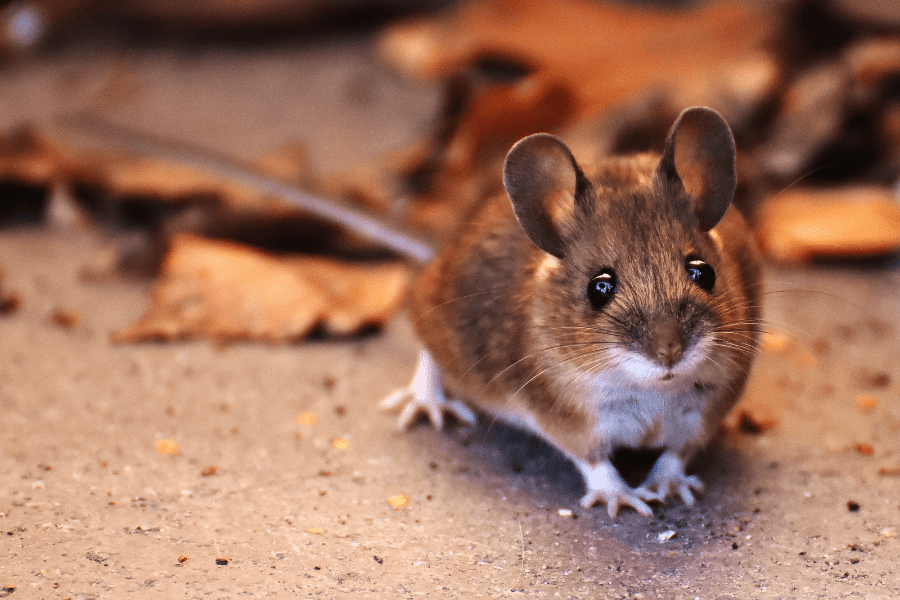
The house mouse prefers dark, secluded areas in your home, such as the crawl space, basement, or attic. These creatures can adapt very quickly to human environments, often hiding in household clutter and inside the walls of homes. Since they are skilled climbers and are able to jump a foot high, they will often reach isolated areas inside your home.
Norway Rats
One of the largest rodent species, Norway rats are nocturnal creatures, searching for food sources in garbage cans at night. You can often spot these creatures burrowing in areas that go undisturbed for a long time, such as crawlspaces and basements. Once inside, these creatures are known to gnaw on furniture, walls, plastic, lead pipes, and wires.
Roof Rats
Due to their padded feet, roof rats can easily climb up our homes, infesting our attics, eaves, and roof lines. Living in colonies, they will typically stay together in a familiar area instead of exploring new ones. If an area is providing both food and shelter, these rats will stay close or inhabit the area.
Preventing Rodents in Cape Coral
Rodents can adapt to almost any situation, making it more difficult to get rid of them. Fortunately, there are a few easy ways to help deter these creatures away from your home.
Overwintering pests pose a threat to both you and your home. They can chew through wires and insulation, contaminate surfaces and food, spread diseases, and trigger allergies and asthma.
Whether they’re in your basement, attic, crawl space, or even your living space, discovering rodents is never ideal. They carry diseases that can be harmful to you and your family and also cause damage to your home. It’s important to be aware of the signs and types of rodents that can be found in or near your home.
Types of Rodents
Norway Rat: One of the largest species of rats, they can measure from 13 to 18 inches in body length. They rely heavily on human impact and will search for any food source possible. Norway rats are known to chew through plastic materials or even lead pipes, causing considerable damage to your home.
House Mouse: These mice are on the tinier side, measuring up to 7 inches and varying in color. These critters will eat anything to survive and get most of their water intake from the food they eat. Being incredible climbers, they can become a threat once inside your home by gnawing on electrical wires.
Roof Rat: These rats are slightly smaller than a Norway rat but can still measure up to 13 inches in length, including the tail. Roof rats are excellent climbers and prefer to nest in high places, including attics.
Rodents are never an exciting creature to discover in your home, but how do you know if you have rodents? Here are some signs that rodents could be in your home already:
Discovering droppings in areas such as basements, attics, or crawlspaces.
Finding nests in your home means it has become a haven for these critters.
If you hear scratching, tapping, or squeaking coming from the walls or the attic.
If you begin to notice property damage, including gnaw marks or chewed wires.
If you suspect any of these rodents inside your home, consider contacting your local pest control company for a rodent control plan that will help remove, exclude, and prevent them in the future!
It’s a common myth that spiders come into our homes to overwinter until spring. In actuality, they most likely were already there to begin with. These household pests are more active in fall and early winter for two main reasons: they are preparing winter and the upcoming scarcity of food and they are mating and in search of a partner to reproduce with.
House spiders take up residence in your home year-round. Spiders can be beneficial to have around as a form of natural pest control as they eat other insects (even other spiders) found around your house.
One exception to this is the brown recluse spider. They will seek warmth and food indoors in the winter by hiding out in dark, unused areas of your home. Brown recluses are identified by the distinct violin-shaped mark on their back. They will bite and are considered harmful to humans.
*Inspection fee for Bird Control or Snake Removal begins at $125. These service inspection fees will be applied to total service cost if bird control and/or snake removal services are completed.
By submitting, you agree to be contacted about your quote. See our Privacy Policy.
READY TO GET STARTED?
REQUEST A FREE ESTIMATE
Fill out the form below or call (866) 800-2197 for a free, no-obligation estimate.
READY TO GET STARTED?
REQUEST A FREE ESTIMATE
Fill out the form below or call (866) 800-2197 for a free, no-obligation estimate.
READY TO GET STARTED?
REQUEST A FREE ESTIMATE
Fill out the form below or call (855) 374-3795 for a free, no-obligation estimate.