May 7, 2021 | Pest Control
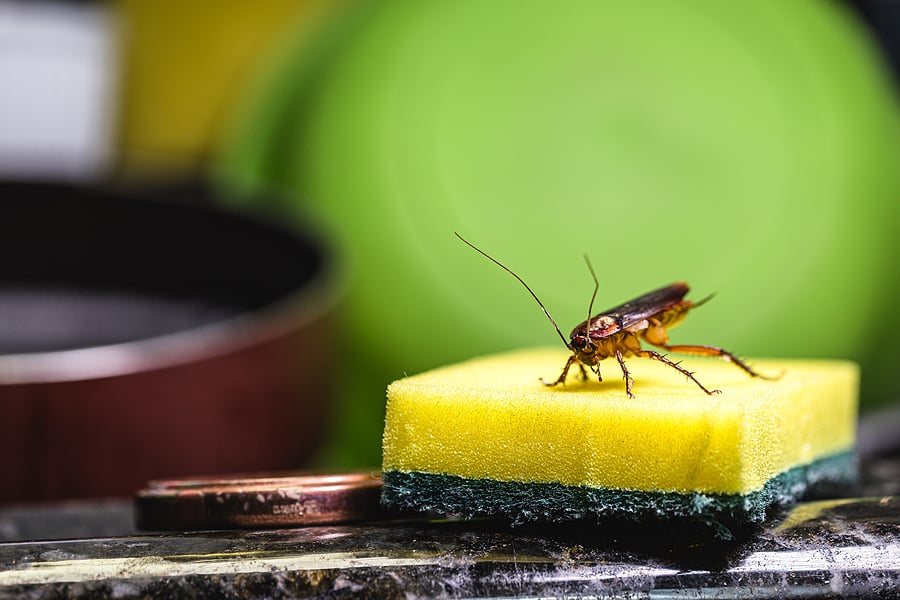
While cockroaches are active year-round, the humidity and warm weather of spring make this a prime time of year for these pests to invade your home. Roaches prefer environments that are warm and contain moisture which is why they are most often seen in kitchens and bathrooms inside your house. They can also multiply quickly and can adapt to just about any environment, making them extremely difficult to get rid of. Cockroaches are dangerous to humans in that they are known to carry and transmit serious diseases, can contaminate food and other surfaces in your home, and trigger allergies and asthma.
The most common types of roaches in our area are the German cockroach, the American cockroach, the brown-banded cockroach, and the Oriental cockroach. What attracts roaches are food, water, and warm shelter, all of which can be found in your home. Roaches are commonly drawn to crumbs, spills, dirty dishes, garbage, pet food, open food containers, cardboard, paper, glue, and excess moisture. In order to keep cockroaches out of your home, the goal is to make it as unattractive to them as you can. Check out these tips to help prevent cockroaches.
1. Keep It Clean
Roaches are attracted to dirt and filth because they provide a source of food for them. Keeping your home clean helps eliminate these food sources, making them go elsewhere in search of something to eat. Wash your dishes and put them away after meals. Clean up any crumbs and spills. Empty the garbage before going to bed. Clean grease from your stovetop. Seal any leftover food in containers. Sweep, mop, and vacuum on a regular basis. Don’t leave pet food out overnight.
2. Clear It Out
The less clutter in your home, the fewer places roaches have to hide. Besides that, cockroaches love to breed in newspaper and cardboard. Keep your home as clutter free as possible. Dust regularly. Get rid of any old newspapers and magazines. Use plastic storage bins instead of cardboard boxes whenever possible.
3. Seal It Up
Roaches can squeeze through the tiniest of holes, especially around windows and doors, along foundations and roofs, in attics and crawlspaces, through vents, and into holes used for gas, electric, and plumbing. Inspect your home for any possible entry points and seal them up. For smaller holes seal with caulk; for larger holes seal with steel wool or foam; and for vents and chimneys cover with fine wire mesh.
4. Dry It Out
Roaches love moisture and need water to survive. Routinely check your home for leaks and plumbing issues, especially around faucets, sinks, refrigerators, and other appliances. Repair any leaks you find immediately. Keep basements and crawlspaces dry and well ventilated. Consider enclosing your crawlspace to help keep these pests at bay.
5. Go Green
Cockroach prevention doesn’t have to rely solely on chemicals. There are several natural roach repellent and elimination products available today. Some of the most common include:
- Boric acid. Mix equal amounts of boric acid, sugar, and flour to make a dough. Roll out balls of dough and place them around your home. Roaches are attracted to the flour and sugar and the boric acid kills them. Use caution with boric acid – it is not recommended for use in areas with children or pets.
- Fabric softener. Roaches don’t like the smell of fabric softener so it makes a good repellent. Mix with water in a spray bottle and apply where you see roach activity.
- Fresh coffee grounds. Roaches are attracted to the caffeine but it is toxic to them. Place coffee grounds wherever you see roach activity.
- Baking soda and sugar. This combination works the same as boric acid but is safer to use with children and pets. Mix equal parts baking soda and sugar and sprinkle in areas where you’ve seen roaches. The sugar attracts them and the baking soda kills them.
- Cayenne, Garlic, and Onion Powder. Roaches hate the smell of each of these spices. Sprinkle it around your home for an effective roach repellent.
- Essential Oils. The most effective essential oils to use against roaches are tea tree, mint, and clove oils. Dilute each of these with water and spray anywhere you see roaches in your home.
6. Leave It To The Pros
For the most effective preventative and ongoing roach control, have your home inspected and treated on a regular basis – usually monthly or quarterly – by a professional pest control company. These professionals can provide you with a thorough inspection to help identify what type of pest you are dealing with, the most likely points of entry they are using, and the most up-to-date treatment and prevention options available.
You May Also Be Interested In:
Common Ant-Infested Areas
Preparing for Spring
Signs of a Rodent Infestation
How To Get Rid Of Nuisance Birds
Is That Spider Poisonous?
Aug 4, 2017 | Pest Control
Roaches can vary significantly in size and color (some even fly!), so it can be difficult to know what kind of cockroach you’re dealing with. Identification is the first step in roach control since the type of roach will determine the best treatment methods. Here are the 2 most common cockroaches you’ll see in your home and tips for getting rid of and preventing them:
German Cockroaches
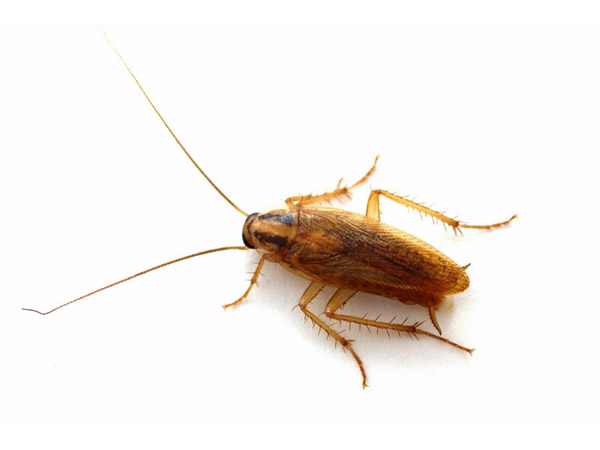
German roaches are one of the most common pest nuisances in residential structures, especially common in multi-unit apartment homes. They thrive in filth but even the cleanest homes can be at risk.
What do they look like?
- Brown with 2 longitudinal stripes running down the thorax
- 1/2 to 5/8 inches long
Where do they live?
- German cockroaches will live anywhere humans build heated structures
- Usually found in kitchens in secluded areas (behind and under appliances, in cracks and crevices behind backslashes, at counter edges, behind and under cabinets, in void areas around plumbing, backs of drawer wells)
- Will infest warm areas around appliance motors such as refrigerators and dishwashers
What are the risks?
- German cockroaches will invade your home and leave fecal matter and other debris in and around food and food preparation areas
- Can enter homes when boxes or products are shipped moved from one location to another
- Reproduces at a high rate, completing a life cycle in 30 to 45 days
- Produces 30-48 eggs at a time
- Difficult to get rid of once infested
How do you get rid of them?
- German roaches are most commonly treated inside a home with baits, sprays, or an aerosol product (baits preferred)
- Roaches disperse the bait back into their refuge sites when they ingest it
- Most have a secondary and even a tertiary killing effect, meaning roaches that die in the harborage site from a bait are cannibalized by their fellows, causing additional mortality
- Sprays are applied to surfaces that roaches crawl across or into harborage areas
- Often mixed with insect growth regulators (IGR) will reduce or eliminate egg production and cause mortality in immature forms of the German cockroach
- Aerosols are referred to as crach and crevice treatments; forces roaches out of their harborage sites with a product that excite their nervous system (flushing agent)
- Then sprayed directly with a contact product
- Residual aerosols may be applied into harborage areas and onto surfaces where roaches crawl in the same manner as sprays (commonly sold as over the counter remedies for homeowners, but typically has a short life span)
- Professional pest control is recommended
American Cockroaches (Palmetto Bugs)
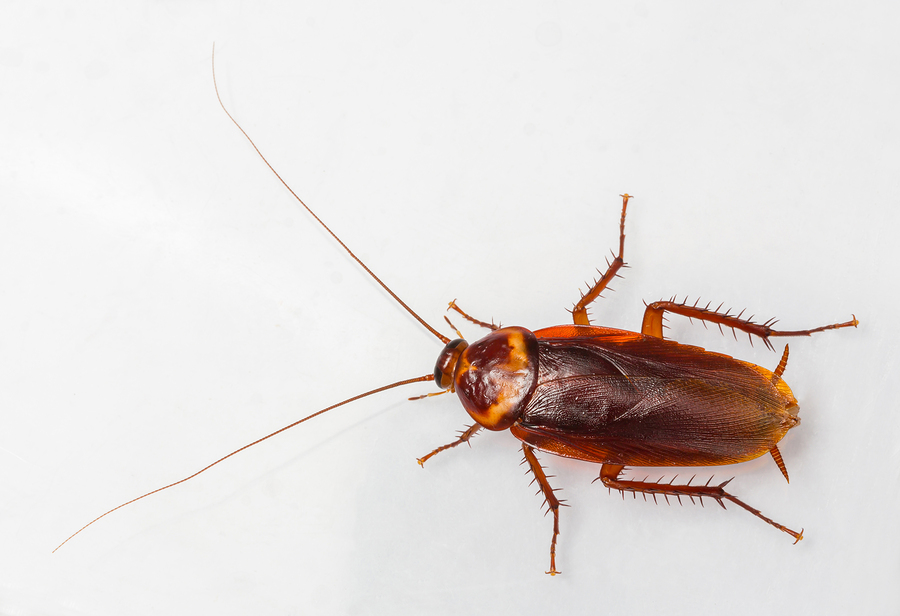
American roaches, also known as palmetto bugs or waterbugs, are large, sometimes fly, and usually only come indoors in search of warmth, food or water.
What do they look like?
- Reddish brown in color and have a yellowish margin on their body
- 1.5 to 2 inches in length
- Largest cockroach in the U.S.
Where do they live?
- American cockroaches usually lives in dark, damp areas such as sewers, storm drains, steam tunnels, and outdoors in landscaping and tree holes
- Prefer warm, dark, humid environments in homes such as wall voids, crawl spaces, basements, utility rooms, or attics
- Typically feed on decaying organic matter and a variety of other foods
What are the risks?
- Not commonly seen in homes
- May move indoors during colder months seeking warmer temperatures and food through openings in the foundation
How do you get rid of them?
- Granular baits in attics and crawl spaces
- Dust in attic and crawl spaces
- Perimeter spray treatments
- Perimeter granular bait treatments
Aug 4, 2017 | Pest Control
Roaches can vary significantly in size and color (some even fly!), so it can be difficult to know what kind of cockroach you’re dealing with. Identification is the first step in roach control since the type of roach will determine the best treatment methods. Here are the 2 most common cockroaches you’ll see in your home and tips for getting rid of and preventing them:
German Cockroaches
German roaches are one of the most common pest nuisances in residential structures, especially common in multi-unit apartment homes. They thrive in filth but even the cleanest homes can be at risk.
What do they look like?
- Brown with 2 longitudinal stripes running down the thorax
- 1/2 to 5/8 inches long
Where do they live?
- German cockroaches will live anywhere humans build heated structures
- Usually found in kitchens in secluded areas (behind and under appliances, in cracks and crevices behind backslashes, at counter edges, behind and under cabinets, in void areas around plumbing, backs of drawer wells)
- Will infest warm areas around appliance motors such as refrigerators and dishwashers
What are the risks?
- German cockroaches will invade your home and leave fecal matter and other debris in and around food and food preparation areas
- Can enter homes when boxes or products are shipped moved from one location to another
- Reproduces at a high rate, completing a life cycle in 30 to 45 days
- Produces 30-48 eggs at a time
- Difficult to get rid of once infested
How do you get rid of them?
- German roaches are most commonly treated inside a home with baits, sprays, or an aerosol product (baits preferred)
- Roaches disperse the bait back into their refuge sites when they ingest it
- Most have a secondary and even a tertiary killing effect, meaning roaches that die in the harborage site from a bait are cannibalized by their fellows, causing additional mortality
- Sprays are applied to surfaces that roaches crawl across or into harborage areas
- Often mixed with insect growth regulators (IGR) will reduce or eliminate egg production and cause mortality in immature forms of the German cockroach
- Aerosols are referred to as crach and crevice treatments; forces roaches out of their harborage sites with a product that excite their nervous system (flushing agent)
- Then sprayed directly with a contact product
- Residual aerosols may be applied into harborage areas and onto surfaces where roaches crawl in the same manner as sprays (commonly sold as over the counter remedies for homeowners, but typically has a short life span)
- Professional pest control is recommended
American Cockroaches (Palmetto Bugs)
American roaches, also known as palmetto bugs or waterbugs, are large, sometimes fly, and usually only come indoors in search of warmth, food or water.
What do they look like?
- Reddish brown in color and have a yellowish margin on their body
- 1.5 to 2 inches in length
- Largest cockroach in the U.S.
Where do they live?
- American cockroaches usually lives in dark, damp areas such as sewers, storm drains, steam tunnels, and outdoors in landscaping and tree holes
- Prefer warm, dark, humid environments in homes such as wall voids, crawl spaces, basements, utility rooms, or attics
- Typically feed on decaying organic matter and a variety of other foods
What are the risks?
- Not commonly seen in homes
- May move indoors during colder months seeking warmer temperatures and food through openings in the foundation
How do you get rid of them?
- Granular baits in attics and crawl spaces
- Dust in attic and crawl spaces
- Perimeter spray treatments
- Perimeter granular bait treatments