Mar 8, 2019 | Georgia Blogs, Pest Control
By Anna V., Editorial Lead — Pest Education · Last updated: May 2026
Georgia’s hot, humid climate is excellent for almost everything, including the dozens of spider species that live here. At Northwest, we run spider control calls year-round across our Georgia and Alabama service area, but they spike sharply from April through October as outdoor temperatures rise and spider populations boom. The good news for homeowners: the vast majority of the spiders in Georgia are harmless. Only a handful are medically significant, and even those are uncommon to encounter indoors.
Here are the 10 spiders you’re most likely to see around a Southeast home, how to identify each, which ones warrant caution, and what to do when you find one.

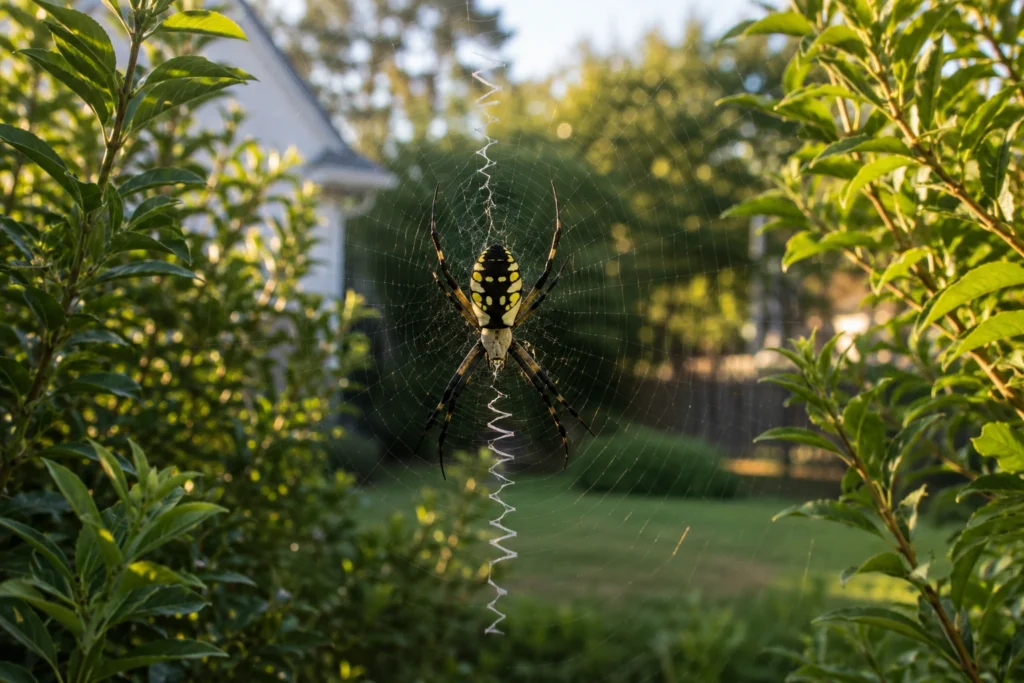
Most spiders in Georgia are outdoor garden spiders that quietly handle the local insect population.
Why Understanding Spiders in Georgia Matters
Spiders play an important role in controlling insect populations. The yellow garden spider you find in your shrubs eats hundreds of mosquitoes, gnats, and flies over a summer. The cellar spider in your basement is quietly catching the small flies you don’t want around. Most spiders in Georgia are doing free pest control on your behalf.
That said, two facts make spider identification matter for homeowners:
- A small number of species are medically significant. Three to four species in the Southeast can deliver bites that require medical attention. Identifying them quickly matters.
- Most “scary-looking” spiders are completely harmless. Wolf spiders, orb weavers, jumping spiders, and the famous Joro spider all look intimidating but pose no real threat. Knowing which is which prevents unnecessary panic and unnecessary pesticide use.
Georgia’s climate produces spider activity peaks in spring (April through May), late summer (August), and early fall (September through October). Most encounters are outdoors.
10 Common Spiders in Georgia
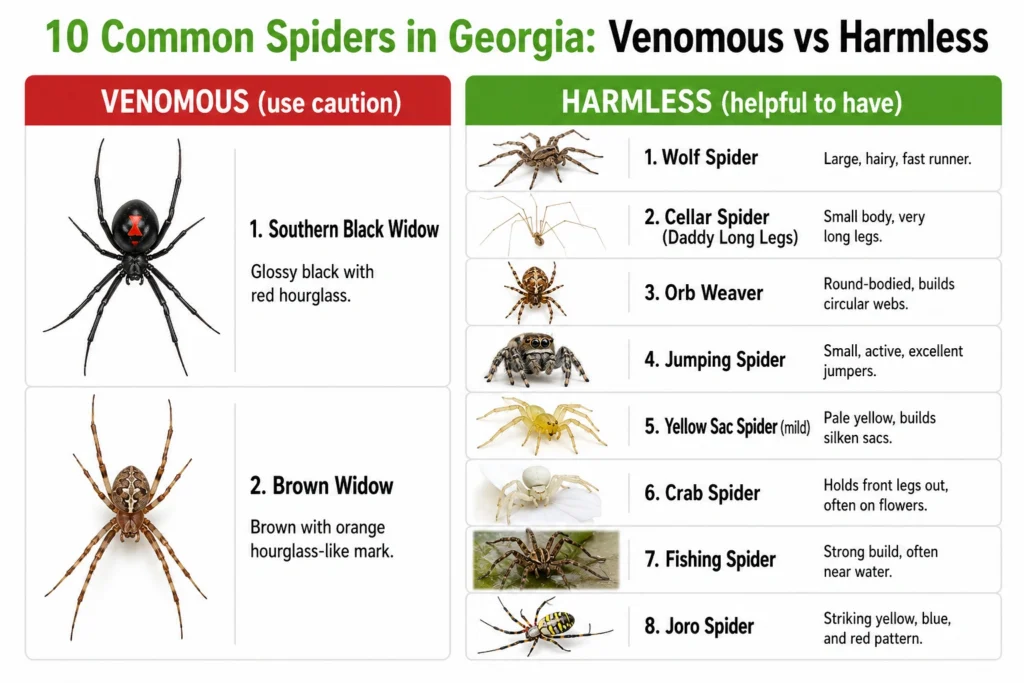
Two species require caution. The other eight are quiet helpers around Southeast homes.
1. Southern Black Widow (Latrodectus mactans)
- Status: Venomous. Bite requires medical attention.
- Appearance: Glossy black body with the distinctive red hourglass marking on the underside of the abdomen. Adult females are about 1/2 inch (legs spread to 1.5 inches). Males are much smaller and not medically significant.
- Habitat: Dark, undisturbed areas. Sheds, garages, crawl spaces, woodpiles, basement corners, under outdoor furniture. Common in rural and suburban Georgia.
- Action: If you find one in or around your home, call professional pest control. Do not attempt to capture or kill without protection. Bites cause severe muscle pain, abdominal cramping, and sometimes systemic reactions.
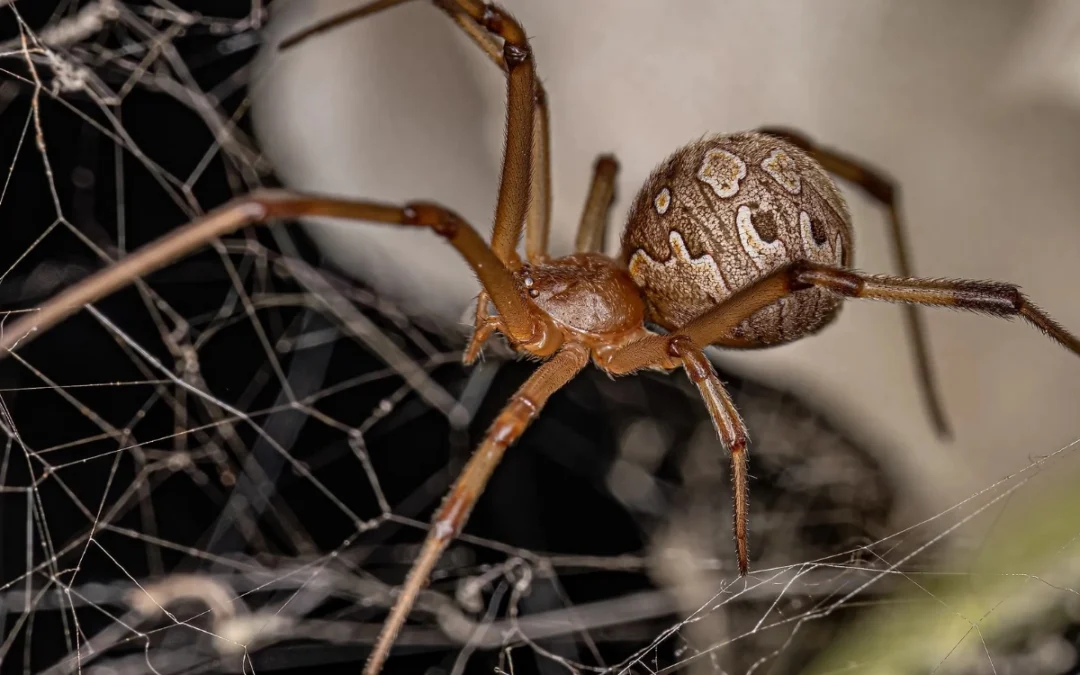
2. Brown Widow (Latrodectus geometricus)
- Status: Venomous, but less potent than the black widow
- Appearance: Tan to brown body with darker mottled markings. Distinctive orange hourglass marking on the underside (similar shape to black widow’s, but orange instead of red). Egg sacs have a spiky, golf-ball-like appearance.
- Habitat: Outdoor structures, under patio furniture, in eaves, around mailboxes, under flower pots. More common in suburban and urban Georgia than rural areas.
- Action: Bites are usually less severe than black widow bites but still warrant medical attention. Treat with the same caution and call professional control.
3. Wolf Spider
- Status: Non-venomous to humans (bite is mild, comparable to a bee sting at worst)
- Appearance: Large, hairy, brown to gray with darker markings. Body can be 1 to 2 inches with a 3-inch leg span. Eight eyes arranged in three rows.
- Habitat: Ground dwellers. They don’t build webs. They hunt. Often enter homes accidentally chasing prey. Common in basements, garages, and ground-floor rooms.
- Action: Harmless but startling. Trap with a cup and release outside.
4. Cellar Spider / Daddy Long Legs (Pholcidae)
- Status: Harmless
- Appearance: Small slender body (under 1/2 inch) with extremely long thin legs. Light tan to gray.
- Habitat: Indoor ceiling corners, basements, garages, crawl spaces. Builds messy tangled webs.
- Action: Leave them alone if you can. They eat mosquitoes, fruit flies, and other indoor pests. For a deeper dive, see our cellar spider vs daddy long legs guide.
5. Orb Weaver Spiders
- Status: Venomous to prey, harmless to humans
- Appearance: Vary widely in color and size. Many species have rounded abdomens with bright patterns (yellow, black, brown, orange). Common Georgia species include the yellow garden spider, garden orb weaver, and the spinybacked orb weaver.
- Habitat: Outdoor gardens, shrubs, between fence posts, under eaves. Builds the classic large circular web.
- Action: Leave them alone. They’re significant outdoor pest controllers. For more on whether their venom matters, see our orb weaver spider guide.
6. Jumping Spiders
- Status: Harmless
- Appearance: Small (1/4 to 3/4 inch), compact, fuzzy body. Often striking patterns and large forward-facing eyes that give them an almost cute appearance. Move in distinct jumps rather than walking smoothly.
- Habitat: Active hunters that don’t build webs. Common indoors and outdoors. Often spotted on walls, window frames, and porches during the day.
- Action: Among the most charming spiders you’ll meet. Harmless and useful.
7. Yellow Sac Spider
- Status: Mildly venomous. Bites possible but rarely serious.
- Appearance: Pale yellow to cream-colored, small (1/4 inch body). Slim legs.
- Habitat: Corners of ceilings, window sills, under loose bark, in folded leaves outdoors. Builds small silken retreats rather than full webs.
- Action: One of the few spiders that may bite without obvious provocation. Bites cause localized pain, redness, and itching that resolves in a few days. Vacuum sightings; call professionals for recurring activity.
8. Crab Spiders
- Status: Non-venomous to humans
- Appearance: Crab-like stance (front legs held out to the sides). Often brightly colored to match flowers (white, yellow, pink). Small body, usually under 1/2 inch.
- Habitat: Gardens, flowers, and shrubs. Ambush predators that wait on blooms to catch pollinators.
- Action: Beneficial outdoors. Leave them alone.
9. Hobo Spider
- Status: Low-risk venom (medical significance has been re-evaluated and downgraded in recent CDC guidance)
- Appearance: Medium-sized brown body with chevron patterns on the abdomen. Long legs. Often confused with wolf spiders.
- Habitat: Basements, dark corners, ground-level spaces. Builds funnel-shaped webs.
- Action: Less common in Georgia than in the Pacific Northwest. Treat as you would a wolf spider: trap and release, or call professionals for recurring activity.
10. Joro Spider (Trichonephila clavata) — The New Arrival
- Status: Harmless to humans and pets
- Appearance: Large, striking. Females have bright yellow and gray-blue striped legs with a yellow abdomen marked with grayish-blue lines and red markings underneath. Leg span up to 4 inches.
- Habitat: Introduced from East Asia, first confirmed in Georgia in 2014. Now established statewide. Builds huge multi-layered golden webs in trees, between buildings, on power lines, across porches.
- Action: Despite their alarming size, Joros are docile and rarely bite. Their fangs are too small to penetrate most human skin. They’re effective predators of other pest insects. Most Georgia residents have started simply leaving them alone.
Venomous vs Harmless Spiders in Georgia
Of the 10 species above, only two are considered medically significant in the Southeast:
- Southern Black Widow: severe neurotoxic venom. Bites require medical attention.
- Brown Widow: less potent than black widow but still warrants medical attention.
Two more deliver bites that can cause discomfort but rarely require medical care:
- Yellow Sac Spider: mild localized reaction.
- Hobo Spider: low-risk; previously thought to be more medically significant.
The other six species are functionally harmless to humans.
What to Do If You’re Bitten
For any suspected spider bite:
- Wash the bite area with soap and warm water.
- Apply a cold compress to reduce swelling.
- Take an over-the-counter pain reliever if needed.
- Watch for severe symptoms: rapidly spreading redness, severe pain, fever, muscle cramping, abdominal pain, difficulty breathing, or any systemic reaction.
- Seek medical attention immediately for any severe symptoms or for any bite from a confirmed widow species.
If possible (and only if safe), capture or photograph the spider for identification. Medical providers handle treatment differently depending on the species.
Spider Identification Tips
Three quick markers help with on-the-spot identification:
- Size and color: Note the body size (excluding legs), overall color, and any distinctive markings (hourglasses, stripes, bright patches).
- Web type: A circular symmetrical web means orb weaver. A messy tangled corner web means cellar spider. A funnel-shaped web means hobo spider or grass spider. No web at all (spider on the floor or wall) often means wolf spider, jumping spider, or one of the widow species (which build messy three-dimensional cobwebs in hidden spots).
- Behavior: Fast movement on the ground suggests wolf spider. Quick jumps suggest jumping spider. Sitting motionless on a flower suggests crab spider. Hanging upside down in a corner web suggests cellar spider.
For authoritative species identification, UGA Extension’s guide to insect and arthropod pests of southeastern neighborhoods covers the common spider species in our region in detail.
How to Prevent Spiders in Your Georgia Home
Spider prevention is straightforward and overlaps with prevention for the insects spiders eat (which is the underlying reason spiders show up in the first place).
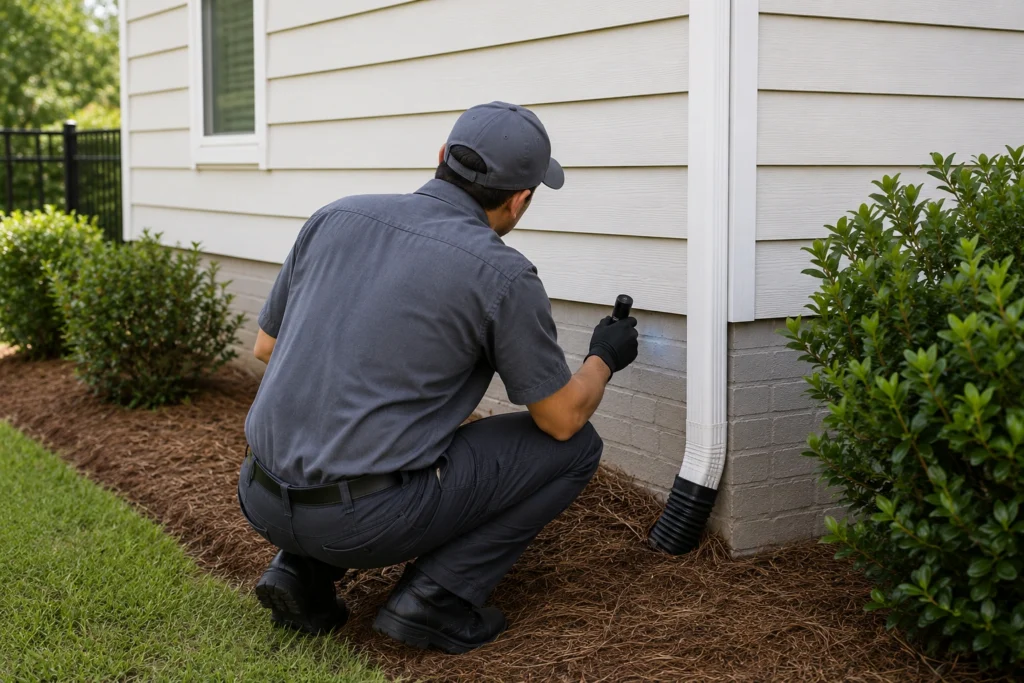
Spider prevention is mostly about sealing entry points and reducing the indoor insect population that draws them.
- Sanitation. Remove indoor clutter, especially in basements, attics, garages, and storage spaces. Spiders need stable hiding places.
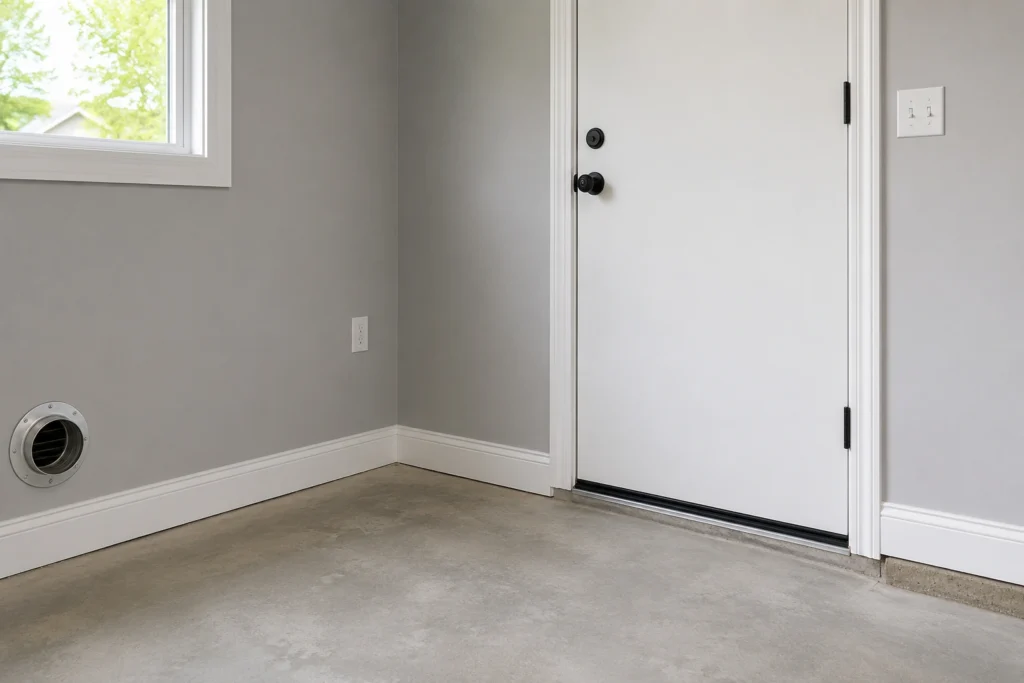
- Seal entry points. Caulk foundation cracks, install or replace door sweeps and weatherstripping, screen crawl space vents with 1/4-inch hardware cloth, seal gaps around utility line penetrations.
- Yard maintenance. Trim shrubs and tree branches back from the foundation. Remove leaf litter, woodpiles, and debris within 20 feet of the house. Outdoor harborages give spider populations a launching pad.
- Control outdoor lighting. Bright porch lights attract flying insects, which attract spiders. Switch to yellow-tone or warm-LED bulbs to reduce insect attraction.
- Humidity control. Many indoor spiders prefer slightly damp environments. Run dehumidifiers in basements; fix leaks promptly.
For active spider prevention strategies including DIY natural methods, see our natural spider repellent guide.
When to Call Professional Spider Control
Most spider sightings in a Georgia home don’t warrant professional intervention. Call Northwest if:
- You’ve found a confirmed black widow or brown widow on the property.
- You’re seeing recurring spider sightings in living spaces (bedrooms, kitchens, kids’ rooms).
- Population appears large (visible webs in multiple rooms, multiple sightings per week).
- You’re noticing other pest activity at the same time. Spiders are usually a downstream effect of an indoor insect problem.
- Anxiety or safety concerns make a professional inspection worth the peace of mind.
Professional spider control typically combines targeted treatment at active harborage spots, exclusion work to seal entry points, and addressing the underlying insect issue that drew the spiders indoors.
(Spider activity beyond what you want to handle yourself? Schedule a free Northwest spider inspection and we’ll identify what’s around, find the entry points, and lay out a treatment plan.)
Frequently Asked Questions About Spiders in Georgia
Are spiders in Georgia dangerous?
Most are harmless. Only two species in the Southeast pose real medical risk: the Southern black widow and the brown widow. The yellow sac spider and hobo spider can deliver uncomfortable bites but rarely require medical attention. The other common spiders in Georgia (wolf, cellar, orb weaver, jumping, crab, fishing, Joro) are functionally harmless to humans.
What do spider bites look like?
Symptoms vary by species. Most bites cause mild localized redness, swelling, and itching that resolves in a few days. Black widow bites cause severe muscle pain, abdominal cramping, sweating, and sometimes systemic reactions. Brown recluse bites (uncommon in Georgia) can cause a slow-healing necrotic wound. Any bite with severe pain, rapidly spreading redness, or systemic symptoms warrants medical attention.
How common are venomous spiders in Georgia?
Black widows are present statewide but uncommon to encounter indoors. Brown widows are more common around buildings, especially in coastal and urban areas. Brown recluse spiders are rare in Georgia but not impossible (they’re more common further west). Most homeowners go years between spotting a medically significant spider.
Do spiders help control other pests?
Yes, significantly. Spiders are predators of flies, mosquitoes, gnats, moths, and other household insects. A small spider presence indoors is functionally free pest control. This is one reason most pest professionals (including ours) encourage homeowners to leave individual spiders alone when possible.
What’s the Joro spider and should I worry about it?
The Joro spider (Trichonephila clavata) is an invasive species first confirmed in Georgia in 2014. It’s now established statewide and continues to spread. Despite their alarming size (leg span up to 4 inches) and bright coloring, Joros are docile and rarely bite. Their fangs are typically too small to penetrate human skin. They’re effective predators of pest insects and aren’t considered dangerous.
Most spider problems get solved by sealing entry points and treating the insects they’re feeding on.
Ready for a Professional Spider Inspection?
If you’ve spotted a widow species, you’re seeing recurring indoor sightings, or you just want a professional to identify what’s around your home, Northwest’s team handles the full spider control workflow: species identification, exclusion, targeted treatment, and addressing the underlying insect issues that draw spiders indoors. Most spider problems clear up faster than homeowners expect.
About the Author
Anna V., Editorial Lead — Pest Education leads pest education content for Northwest Exterminating, working with senior technicians and service center managers across our Georgia, Alabama, Tennessee, and South Carolina service areas to translate field expertise into homeowner-friendly guides. The focus: accurate, regionally-specific answers to the pest questions Southeast homeowners are actually searching for.
Feb 1, 2019 | Pest Control
By Anna V., Editorial Lead — Pest Education · Last updated: April 2026
If you’ve spotted roaches in your house and your first thought was but my house is clean, you’re not alone. At Northwest, we hear this exact reaction every week from Georgia homeowners. The conversation almost always starts with embarrassment and a long list of recent cleaning. Then we explain the part most homeowners haven’t heard: cockroaches don’t actually care that much about clean. They care about food, water, shelter, and warmth, in that order. A spotless kitchen counter doesn’t help if there’s grease behind the stove, a slow drip under the sink, or a single cardboard box left in the pantry corner.
Here’s what’s really pulling roaches into Georgia and Alabama homes, why immaculate houses still get them, and the changes that actually keep cockroaches out for good.
A spotless kitchen counter doesn’t matter to a roach if there’s grease behind the stove or a slow drip under the sink.
Why You’re Seeing Roaches in Your House
Cockroaches are nocturnal. They spend the day tucked into wall voids, behind appliances, inside cabinets, and under flooring transitions. They come out at night to scavenge for food, water, and pheromone trails left by other roaches. If you’re seeing one, it almost always means a small population is already established somewhere you can’t easily look.
The reason “clean” isn’t a roach repellent comes down to biology. A single roach can survive on a few crumbs a day. They eat the residue inside a sink drain. They eat the glue on cardboard boxes. They eat soap, hair, and pet food bowls that look spotless to you. Spotless to a homeowner and spotless to a cockroach are two very different standards.
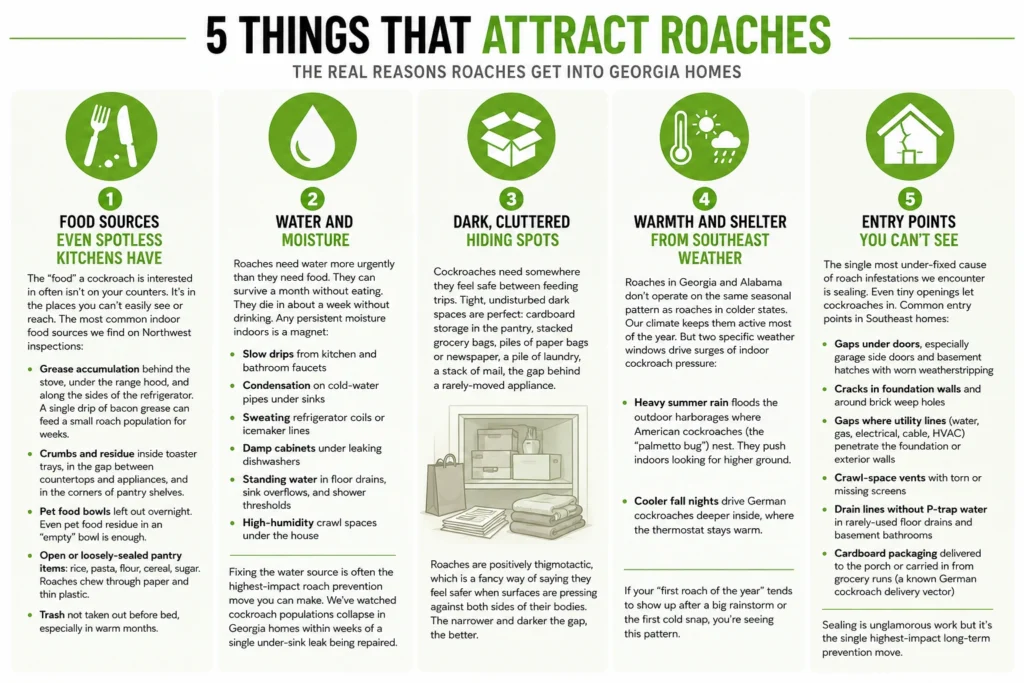
5 Things That Actually Attract Roaches Indoors
The five attractants below are what we look for first when we walk a Georgia or Alabama home for a cockroach inspection. Cleanliness affects only the first one.
Cleanliness is one factor among five, and it’s not even the most important.
1. Food Sources Even Spotless Kitchens Have
The “food” a cockroach is interested in often isn’t on your counters. It’s in the places you can’t easily see or reach. The most common indoor food sources we find on Northwest inspections:
- Grease accumulation behind the stove, under the range hood, and along the sides of the refrigerator. A single drip of bacon grease can feed a small roach population for weeks.
- Crumbs and residue inside toaster trays, in the gap between countertops and appliances, and in the corners of pantry shelves.
- Pet food bowls left out overnight. Even pet food residue in an “empty” bowl is enough.
- Open or loosely-sealed pantry items: rice, pasta, flour, cereal, sugar. Roaches chew through paper and thin plastic.
- Trash not taken out before bed, especially in warm months.
2. Water and Moisture
Roaches need water more urgently than they need food. They can survive a month without eating. They die in about a week without drinking. Any persistent moisture indoors is a magnet:
- Slow drips from kitchen and bathroom faucets
- Condensation on cold-water pipes under sinks
- Sweating refrigerator coils or icemaker lines
- Damp cabinets under leaking dishwashers
- Standing water in floor drains, sink overflows, and shower thresholds
- High-humidity crawl spaces under the house
Fixing the water source is often the highest-impact roach prevention move you can make. We’ve watched cockroach populations collapse in Georgia homes within weeks of a single under-sink leak being repaired.
3. Dark, Cluttered Hiding Spots
Cockroaches need somewhere they feel safe between feeding trips. Tight, undisturbed dark spaces are perfect: cardboard storage in the pantry, stacked grocery bags, piles of paper bags or newspaper, a pile of laundry, a stack of mail, the gap behind a rarely-moved appliance. Roaches are positively thigmotactic, which is a fancy way of saying they feel safer when surfaces are pressing against both sides of their bodies. The narrower and darker the gap, the better.
4. Warmth and Shelter from Southeast Weather
Roaches in Georgia and Alabama don’t operate on the same seasonal pattern as roaches in colder states. Our climate keeps them active most of the year. But two specific weather windows drive surges of indoor cockroach pressure:
- Heavy summer rain floods the outdoor harborages where American cockroaches (the “palmetto bug”) nest. They push indoors looking for higher ground.
- Cooler fall nights drive German cockroaches deeper inside, where the thermostat stays warm.
If your “first roach of the year” tends to show up after a big rainstorm or the first cold snap, you’re seeing this pattern.
5. Entry Points You Can’t See
The single most under-fixed cause of roach infestations we encounter is sealing. Even tiny openings let cockroaches in. Common entry points in Southeast homes:
- Gaps under doors, especially garage side doors and basement hatches with worn weatherstripping
- Cracks in foundation walls and around brick weep holes
- Gaps where utility lines (water, gas, electrical, cable, HVAC) penetrate the foundation or exterior walls
- Crawl-space vents with torn or missing screens
- Drain lines without P-trap water in rarely-used floor drains and basement bathrooms
- Cardboard packaging delivered to the porch or carried in from grocery runs (a known German cockroach delivery vector)
Sealing is unglamorous work but it’s the single highest-impact long-term prevention move.
Why Cockroaches Thrive Even in Clean Houses
Three biological facts explain why a sparkling kitchen still gets roaches:
They reproduce fast. A single female German cockroach can produce up to 400 offspring in her lifetime. Her egg cases each hold 30 to 40 eggs and hatch in three to four weeks. A handful of accidental hitchhikers can become a real infestation in 60 to 90 days. Our guide on whether one roach means an infestation goes deeper on the math.
They eat almost anything. Beyond food, roaches will eat paper, glue, soap residue, hair, dead skin cells, and other roaches. The “no food source” defense doesn’t really exist for them.
They hitchhike in. The most common way German cockroaches arrive in a clean Georgia home is inside a cardboard delivery box, a used appliance, or grocery bags from an infested store. They don’t crawl across the lawn looking for your kitchen. They get carried.
Signs You Already Have a Roach Problem
If you’ve seen one cockroach, the next move is to look for the rest of the evidence. The signs to watch for:
- Droppings that look like coffee grounds or cracked black pepper, usually in pantry corners, drawer backs, or along baseboards
- Egg cases (oothecae): pill-shaped, brown to reddish, found in tight cracks. Each species holds different numbers of eggs (German: ~40; American: ~16; Brown Banded: ~14)
- A musty, oily smell in kitchens or bathrooms that doesn’t go away after cleaning
- Smear marks along the paths roaches travel most often, especially in damp spots
- Live sightings during the day, which usually means the hidden population has outgrown its shelter
For a deeper look at the species you might be dealing with, see our guide to the brown banded cockroach, one of the trickier species to spot because it nests away from food sources.
How to Make Your House Less Attractive to Roaches
Effective roach prevention is a habit, not a product. The five-part move that consistently keeps Northwest customers roach-free:
- Seal entry points. Caulk foundation cracks. Add weatherstripping to door gaps. Replace torn crawl space screens with galvanized ¼-inch hardware cloth. Stuff steel wool into utility-line gaps before sealing with caulk or expanding foam.
- Fix every water leak. Slow drips, condensation, leaky AC condensate lines. Run a dehumidifier in damp basements or crawl spaces.
- Store food in airtight containers. Rice, pasta, flour, cereal, sugar, pet food. Glass or hard plastic, not bags or thin clamshells.
- Take out trash daily in warm months. Wipe down trash can lids and inside the cabinet under the sink.
- Cut clutter in pantries, basements, attics, and garages. Cardboard storage especially. Move to plastic bins where possible. Roaches lose their favorite hiding spots overnight.
(Already seeing roaches in the house? Schedule a free Northwest inspection and we’ll walk the space with you, find the entry points, and lay out a treatment plan.)
When DIY Roach Control Isn’t Enough
Most homeowners who call us have already tried something: traps, sprays, gel baits from the hardware store. DIY can work for very small populations caught early. It generally doesn’t work for an established infestation, for three reasons:
- Over-the-counter sprays often scatter roaches deeper into wall voids rather than kill the colony, which spreads the problem
- Most homeowners can’t access the actual nesting locations (inside electronics, behind cabinets, in wall voids)
- Roach populations rebound from any survivors faster than household products can keep up
Professional treatment uses targeted baits combined with insect growth regulators (IGRs), which interrupt the breeding cycle. Even the egg cases that hatch after the first treatment fail to mature. The EPA’s Integrated Pest Management guidance for cockroaches backs the same approach: target nesting sites, eliminate moisture and food sources, and use targeted bait rather than broad-spectrum spray.
Roaches in House: What’s Different About Georgia and Alabama Homes
Three regional factors stack the deck against Southeast homeowners:
- Climate. Long warm seasons + high humidity = year-round cockroach activity. There’s no real “off-season.”
- Construction patterns. Crawl spaces, slab additions, and unsealed soffits are common in older Atlanta, Birmingham, Macon, and Savannah neighborhoods. Each is a roach access route.
- Shared-wall housing. Apartments, townhomes, and condos let German cockroaches travel between units through plumbing chases. A neighbor’s problem becomes yours without you ever doing anything wrong.
Frequently Asked Questions About Roaches in House
Can roaches live in clean houses?
Yes. Cleanliness reduces some roach attractants but doesn’t eliminate them. Roaches need food, water, shelter, and warmth, and even spotless homes provide all four through hidden sources like grease residue, leaky pipes, cardboard storage, and warm wall voids.
How do roaches get into a clean house?
Most often by hitchhiking inside cardboard delivery boxes, grocery bags, used appliances, or secondhand furniture. They also enter through foundation cracks, gaps under doors, utility line penetrations, and unscreened crawl space vents.
What’s the best way to keep roaches out of my house?
Seal entry points, fix every water leak, store food in airtight containers, take out trash daily during warm months, and cut clutter (especially cardboard) in pantries and storage spaces. For sustained prevention, a quarterly pest control plan keeps populations from establishing in the first place.
How long does it take to get rid of roaches once they’re in?
A small early-stage infestation can be cleared in two to four weeks with targeted bait. A heavy or long-standing infestation typically takes two to three months of monthly treatments to break the egg-laying cycle completely. The faster you catch it, the shorter the timeline.
When should I call a professional roach control service?
If you’re seeing cockroaches during the day, finding egg cases, smelling a musty odor in kitchens or bathrooms, or seeing more than one or two roaches a week. Any of those signs means the population has grown past what DIY can handle.
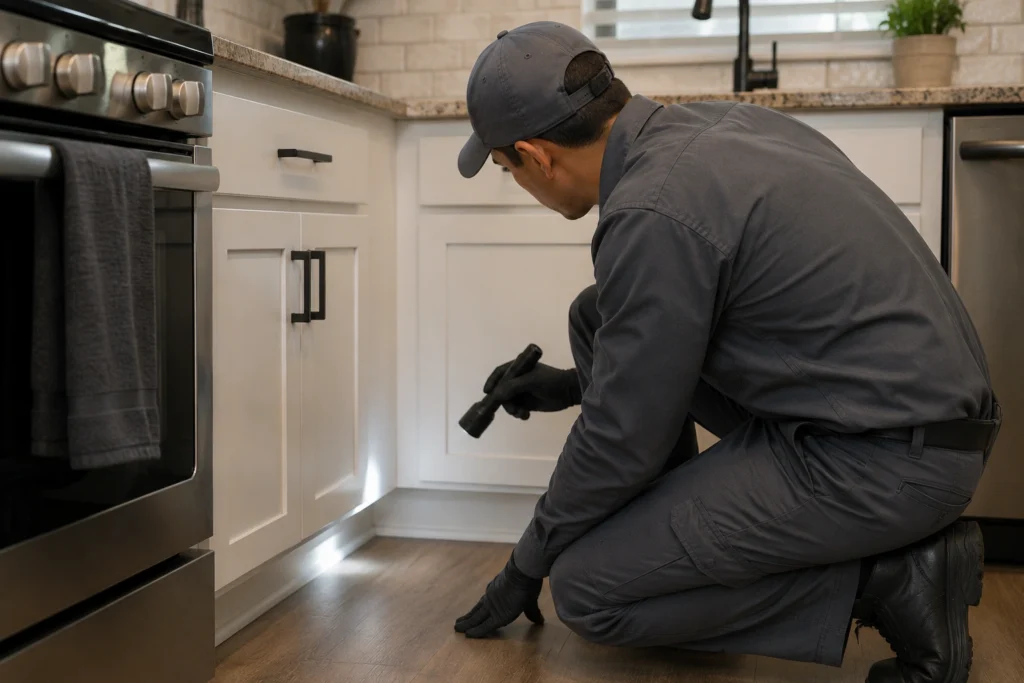
Northwest’s roach inspections find the entry points and water sources DIY treatments can’t reach.
Stop Roaches Before They Take Over
If you’ve seen roaches in your house and the DIY route hasn’t held, the issue is almost always a hidden water source, an entry point you haven’t found yet, or a population that’s already past what hardware-store products can manage. Northwest’s team handles all three: inspection, targeted treatment, and the prevention plan that keeps cockroaches gone.
About the Author
Anna V., Editorial Lead — Pest Education leads pest education content for Northwest Exterminating, working with senior technicians and service center managers across our Georgia, Alabama, Tennessee, and South Carolina service areas to translate field expertise into homeowner-friendly guides. The focus: accurate, regionally-specific answers to the pest questions Southeast homeowners are actually searching for.
Jan 30, 2019 | Pest Control
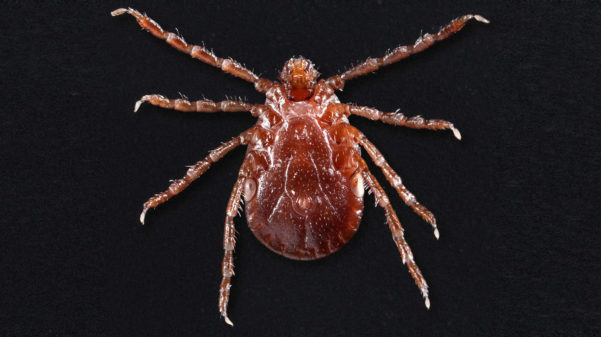
For the first time in fifty years, the U.S. has its first known invasive tick.
The longhorned tick, first discovered in November 2017, has been found in New York, Pennsylvania, Maryland, Virginia, West Virginia, North Carolina, and Arkansas. Professionals have had unsuccessful attempts to exterminate this particular species, leading it to be classified as an invasive species.
Normally an animal-attracted pest, the longhorned tick has been known to carry and transmit diseases like Lyme, spotted fever, and Severe Fever with Thrombocytopenia (SFTS). SFTS symptoms include fever, vomiting, multiple organ failure, along with many other symptoms. Fortunately, of the ticks tested here in the U.S., no human diseases have been detected.
As always, use the normal precautions towards tick exposure:
- Utilize EPA-approved insect repellent.
- Wear clothing that covers skin, leaving as little as exposed as possible.
- Always check for ticks when hiking or walking through tall grass.
- If you think you have an issue with ticks around your home, call your licensed pest professional to schedule an inspection.
Continuing to follow these precautions will help to prevent tick exposure for you and your family members.
You May Also Be Interested In:
How Much Does a Termite Inspection Cost?
Pest Control for Basements and Attics
Wildlife Control: What Threat do Rodents Pose to Humans?
Exterminating: Rain and the Bugs it Brings?
Termite Treatment: Termites vs Flying Ants
Jan 19, 2019 | Pest Control
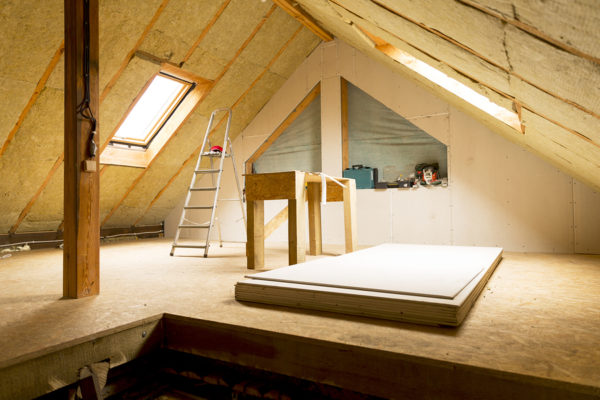
With the start of a new year, you may have begun to purge your home of unnecessary items or mapped out a major cleanup day. While the most lived in rooms are probably on your radar – the kitchen, bathroom, living room, and bedrooms – areas like your basement and attic can become catch all-areas or forgotten altogether. These neglected spaces are then susceptible to pest invasions and other home issues.
Prevent Pests with these Basement & Attic Pest Control Tips:
- Inspect insulation around your basement. Replace weather-stripping, seal any cracks and crevices, and repair any mortar that is found to be loose.
- When moving stored items to your basement or attic, consider utilizing plastic, sealed containers that are raised off the floor. Cardboard boxes tend to attract pests while plastic bins will deter them from settling inside your stored items.
- To cut down on moisture and areas of standing water, consider investing in a moisture barrier for your crawlspace and a gutter protection system to make sure water is not filtering to your crawlspace/basement area.
- Proper attic insulation is key to keeping pests and wildlife out of your home. While sealing any entry points is a great start, investing in TAP Attic Insulation not only acts as pest control, but can also lower your utility costs significantly.
These tips are only part of your healthy home journey. Schedule a pest inspection with a licensed exterminator, who can identify current pest issues, potential pest threats in the future, and provide a personalized pest control plan for ongoing prevention.
You May Also Be Interested In:
Pest Control: Where Do Pests Go In The Winter?
Wildlife Control: Sneaky Wildlife – Possums and Raccoons
: 10 Ways To Care For Your Lawn In Extreme Heat
Termite Control: 10 Things You Didn’t Know About Termites
Is Green Pest Control Worth The Investment?
Jan 18, 2019 | Going Green, Pest Control
Green pest control provides an eco-conscious option to traditional pest control and is especially beneficial in homes and businesses that house the young, the elderly, pets, and those with compromised immune systems or allergies. But are they really effective?
The answer is yes. Green pest control typically utilizes botanical and/or earth-based pesticides and a targeted approach when applying them, focusing on eliminating and controlling pest populations through both preventative measures and purposeful product application, based on your specific pest issues.
One important component of any green pest control program is Integrated Pest Management (IPM). IPM doesn’t just focus on eliminating pest populations but also on identifying and getting rid of the environmental factors that are allowing the pests to procreate and thrive, as well as preventative measures to prevent re-entry. IPM can actually cut back significantly on the amount of pesticides used in treatments (by more than 90%!).
Once green pest control companies identify the problem pests and decide that action is required, there are several methods that are used to eliminate them:
- Introduction of natural enemies to reduce or eliminate the population
- Installing barriers to entry (such as screens)
- Employing mechanical control techniques (like traps)
- Using pesticides as a last resort (carefully applied to be as safe as possible)
Once you make the decision to invest in a green pest control program, contact an exterminator near you, and they will provide you with the following:
- A customized plan: A customized pest control program using only the most innovative and advanced pest control products and equipment available
- No harsh chemicals: Pest control products whose active ingredients are derived from flowers, plants, and natural elements from the earth
- Service guarantee: Follow up visits in between regularly scheduled pest control services, if needed, at no additional cost to you
- Integrated pest management: Plan, inspection, pest identification, ongoing perimeter protection, and continuous communication from your exterminator
- Highly trained technicians: Exterminators who are experts in green pest control methods
- Whole home pest protection: Pest protection that is environmentally friendly both inside your home and outside, that covers common household pests such as ants, spiders, roaches, mice, centipedes, millipedes, silverfish, and earwigs
You May Also Be Interested In:
Wildlife Control: Unusual Winter Wildlife
What Are Your Termite Treatment Options?
Pest Control: Does The Weather Affect Pests?
Exterminating: The Last Of The Creepy Crawlers
Fall
Dec 26, 2018 | Pest Control
It’s that time of year again! 2018 is winding down and the time has come to start thinking about your New Year’s resolutions. If you’re like most of us, saving more money and having less stress definitely make our list of resolutions. What we don’t often think of as a resolution is pest-proofing your home. In fact, pest-proofing can actually save you money and stress in the long run. Most pests are seasonal – spiders and rodents are common in the winter months while mosquitoes are prevalent in the warmer months. There are, however, steps you can take any time of year to prevent pests year-round. Check out these 8 tips to pest-proof your home this New Year’s.
Put The Decorations Away Properly
As the holiday season winds down, we’re now faced with the sometimes arduous task of taking down and putting away our holiday decorations. Now is the time to go through them and get rid of any broken, worn out, or outdated decorations before you put the boxes away. Store your decorations in plastic containers that seal tightly rather than cardboard. Store your containers off the floor if possible. Make sure to properly dispose of live trees, wreaths, garland, etc.
Keep The Kitchen Clean
Pests come into our home for 3 reasons: shelter, food, and water. Keeping your home, and especially your kitchen, clean can eliminate 2 of those reasons. Clean your kitchen after each meal, wiping up crumbs and spills immediately. Store food, including pet food, in air tight containers. Sweep, dust, and vacuum regularly. Dispose of your garbage regularly and use garbage cans with lids.
Seal The Gaps
Pests often only need a very tiny crack or gap to gain access to your home. Inspect all of the exterior walls of your home for cracks and gaps and seal them tightly with caulk. Be especially careful around the places where utilities and pipes come into the home. Use door sweeps on all your exterior doors to seal the gap between the floor and the door. Use screens on doors and windows and make sure they are in good repair.
Move Your Firewood
There are lots of pests that like to hang out in the woodpile, hitching rides into your home on the logs. Keep your firewood stored at least 20 feet away from your home and elevate it if possible. Make sure to brush it off before you bring it indoors.
Prevent Pests Outdoors Too
Pest-proofing isn’t just limited to the inside of your home. Pest-proofing the outside of your home is also critical. Get rid of any dead bushes and branches and rake up all the leaves from your yard. Clean your gutters or consider installing gutter guards to eliminate clogs and standing water. Trim your bushes and trees back so they aren’t touching the sides of your home.
Eliminate The Moisture
Many pests like cockroaches are attracted to water. Check your home for leaks, even those that don’t seem like a big deal like dripping faucets and loose fixtures. Consider enclosing your crawlspace to reduce moisture under your home.
Declutter
You don’t have to wait for spring to spring clean! Check that resolution off your list a few months early. Start at the lowest level of your home and work your way up room by room. Clear the floors, dust, sweep, mop, vacuum, clean out closets and drawers and get rid of anything you don’t need.
Call A Pro
If this all seems to overwhelming or if you already have a pest problem in your home, call a professional pest control company. The pros can assess your home from top to bottom and identify any sources of pest problems and provide you with a thorough evaluation and set you up with a treatment and prevention plan.
Dec 19, 2018 | Pest Control
The holiday season is upon us with decorations, food, and traveling to see family and friends. While most of us are focused on our holiday preparations, we often lose focus on another important aspect of this time of year – pest prevention. Just because it’s cold outside doesn’t mean pests aren’t a problem. The holidays provide many opportunities for spiders, ticks, ants, mice, bed bugs, and other pests to make their way indoors and take over your home.
One of the most common ways pests can get into your home during the holidays is on live Christmas trees, wreaths, and firewood. Ants, spiders, ticks, and other pests can hide deep in the branches of trees and in the crevices of wood. They can even lay their eggs in trees or garland which can hatch once you put them out in your home, potentially causing a major infestation.
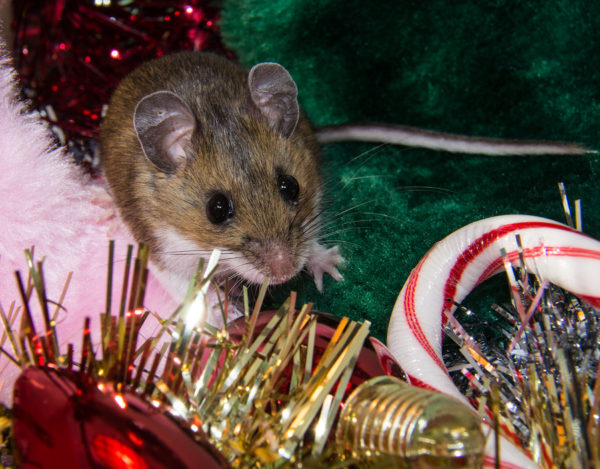
Pests can also access your home in those boxes of decorations you drag out from the attic, basement, garage, or crawlspace. Mice and other pests love to get into those cardboard boxes during the off season. You may be in for a surprise when you open your decorations by finding a live pest, droppings, or even damage to your lights and ornaments. It is especially important to check the wiring of your lights to make sure pests haven’t chewed through them.
The holidays are also one of the busiest travel times of the year. Most of us will either travel to visit loved ones or have loved ones travel to visit us. While we’re usually excited to see everyone, we’re not so excited to deal with bed bugs which often hitch rides on the luggage of these travelers. We often see a spike in bed bug cases during the holiday season.
So what can you do to pest proof your home and make sure you don’t get any unwanted guests for the holidays?
- Carefully inspect all items before bringing them into your home including trees wreaths, garland, and other decorations. Make sure to check for insects, eggs, and nests and shake them to rouse any pests that might be hidden deep within.
- Unpack your decorations outside instead of in your living room. Inspect them thoroughly for any signs of pests, droppings, gnaw marks, or any other damage before bringing them inside.
- Store your holiday decorations in plastic containers with lids that seal tightly instead of cardboard containers or bags.
- Don’t put discarded trees or cut firewood near your home. Firewood should be stored at least 20 feet away from your home and elevate it if possible.
- Thoroughly check your luggage before you enter the place you are staying and ask your guests to do the same before they enter your home.
- Put your clothing in the dryer, if possible, for at least 20 minutes.
- Keep your bags closed when not in use and store them off the floor.
- If you suspect you have a pest problem this holiday season, contact a pest control professional who can provide you with an evaluation and treatment plan.
Dec 18, 2018 | Pest Control
It’s the middle of December and you are cuddled up with your favorite book and a warm blanket. Unfortunately, this peaceful moment is interrupted by a buzzing sound followed by the sighting of a wasp! And while you might be thinking “This is odd! It’s winter!”, this occurrence is quite common.
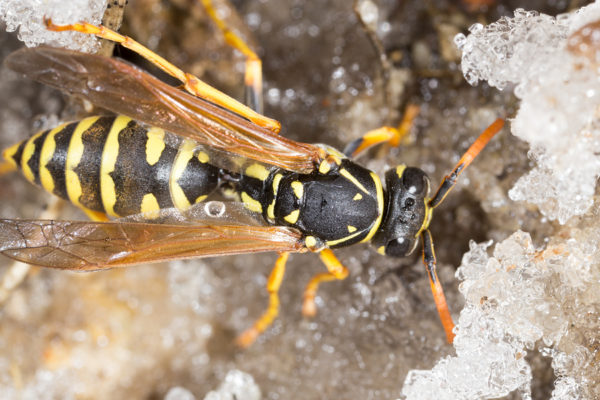
As fall starts, paper wasps will start to die off. However, there are select females who will search for a safe place to overwinter. These safe places can be inside chimneys, behind the siding of your home, and around windows and door frames.
Since winter weather in the south is very unpredictable, bouncing from 20 degrees one week to 72 the next, that random warm weather can trigger the wasps to become active and search for exits to begin making nests; thus the cause of wasp sightings in the month of December. How can you prevent these wasps from overwintering?
Steps to Prevent Wasps Overwintering:
- Look to fill cracks and holes found around the foundation of your home.
- Invest in updating weather-stripping around windows and door frames.
- Inspect around the outside of your home: roof eaves, porch ceilings, and attic rafters
If you spot a wasp in your home, don’t hit the panic button. In the winter months, wasps tend to move slower than normal and your licensed pest control professional can remove the nests with ease.
Dec 13, 2018 | Pest Control
While most of us look forward to the holidays that come with the onset of winter, many of us don’t look forward to the snow, ice, and freezing temperatures that also come along with it. Pests feel the same way we do about cold weather and have developed several different methods to survive these frigid temperatures. So where do pests go in the winter? As much as we’d like to believe they just disappear until spring, unfortunately this isn’t the case. Pests have developed 3 major ways to survive winter:
MIGRATION
Migration is the seasonal movement from one region to another. Just like humans, pests want to go where it’s warmer when the weather gets cold. Some pests will move to southern regions to escape the cold and return to the northern areas when the weather starts to warm. One of the most well known examples of migration is the monarch butterfly.
HIBERNATION
Hibernation is a period of time spent in a dormant state in order to survive the unfavorable conditions of winter. Bears aren’t the only animals that hibernate during the winter! Ladybugs hibernate at high elevations. Wasps seek shelter in eaves and attics of houses or barns to hibernate. Many other pests hibernate in trees, leaf debris, under logs, and under rocks. Honeybees stay in hives during the winter and form clusters when the temperatures start to fall.
OVERWINTERING
Overwintering is the process in which pests pass through or wait out the winter season in sites that provide protection from the cold winter temperatures. Ladybugs, box elders, and stinkbugs overwinter in secluded, sheltered places like your home. These pests tend to congregate in large numbers so if they overwinter in your home they could infest in large numbers. Pests like rodents, cockroaches, spiders and flies remain active during the winter in our homes. They move indoors in search of warmth and food. Spiders are relatively harmless but flies can contaminate food and surfaces. Rodents can not only contaminate your food and insulation but can also chew through wood causing structural damage and chew through wires putting your home at risk of fire and other issues.
Now that you know where pests go in the winter you can help get your home ready to prevent these overwintering pests from invading your space. If you suspect you have a winter pest problem contact a professional who can help identify the pests and help you develop a treatment and prevention plan.