Jul 12, 2019 | Pest Control
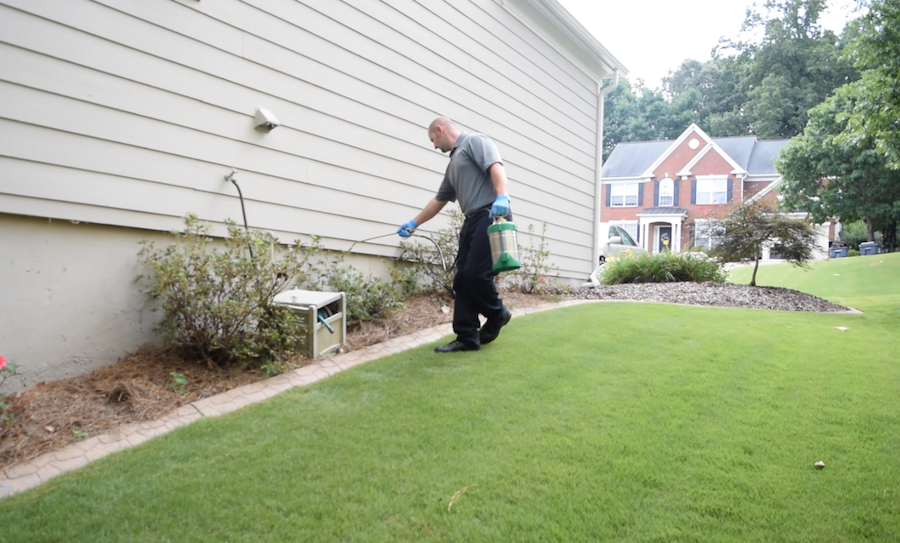
There are several methods of pest control out there from DIY pest control, to traditional pest control and green pest control from a professional exterminating company. No matter which method you choose, any pest control efforts are well worth the investment. Pest prevention is always the best first line strategy for pest control. Keeping your house clean and well-sealed, keeping your yard mowed, and practicing good hygiene in and around your home are all simple preventative measures that anyone can take. Pests can be tenacious, however, and sometimes these efforts just aren’t enough.
Pests can cause a multitude of problems for your home, property, and even your health. Some common household pests include termites, which can significantly damage or even destroy your home; cockroaches, whose droppings can spread disease and trigger allergies and asthma; mosquitoes, that can transmit diseases like West Nile virus and Zika virus; ants, which can cause painful bites and contaminate food; fleas and ticks, which not only cause painful, itchy bites but can also transmit serious diseases like Lyme disease and STARI; bed bugs, which can quickly infest your home and be quite costly to remove; and rodents, who can damage wood and wiring, as well as transmit serious diseases.
The National Pest Control Association estimates that Americans spent over $3 billion on pest control and extermination services last year. If you’ve ever had a pest problem in your home, most would agree that this investment in pest control is worth it. Here are the benefits to using a professional pest control company:
HEALTH & SAFETY
The health and safety of family and pets is at the top of the priority list for most people. Pests carry harmful diseases and bacteria that can expose your family and pets to illness. Eliminating these pests quickly can help minimize exposure and protect your family’s health and well-being in the long run. Many pest control companies now offer green pest control options that use products derived from flowers, plants, and natural earth elements rather than harsh chemicals.
EXPERTISE
Pest control professionals have the training, education, and expertise to handle many different types of pests. They know the safe and proper methods to identify, prevent, and eliminate each of these different pests, as well as where and how often to utilize them. They also have access to the most cutting edge technology and techniques in the field, as well as products and treatments that may not be readily available to consumers.
INSPECTION
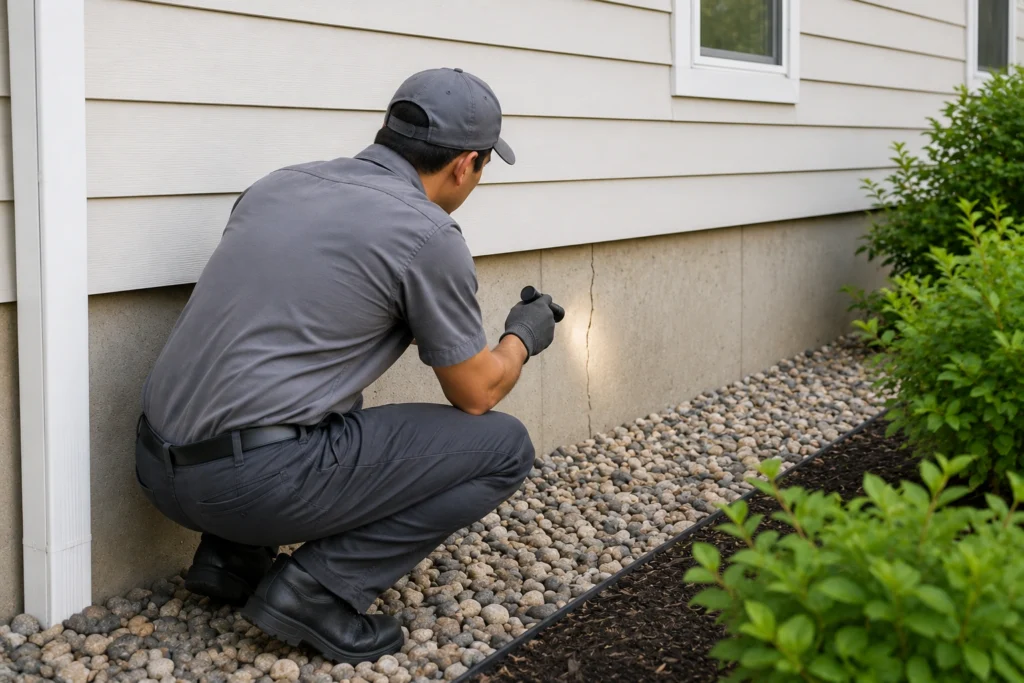
Pest control effectiveness is maximized by finding the source of the problem. If you have treatment without successfully eradicating the source, the problem will continue to recur in the future. Routine pest control includes a survey and pest control inspection inside and outside your home. This can not only help them identify the source of your current pest problem, but also identify any pest issues you may not know about yet or any issues that have the potential to become future problems. Based on their inspection, the pest control technician can provide you with a customized pest control program using the most innovative and advanced products and equipment, implementing Integrated Pest Management (IPM) techniques, that includes the inspection and plan, along with pest identification, ongoing perimeter protection, and continuous communication to help prevent problems in the future. Routine treatment and inspection also allows them to catch pest problems early before they have the chance to cause significant damage to your home and property.
COST
While there may be a cost to you upfront, the cost savings in the long run can be significant for professional pest control services. Professional exterminating provides faster and more effective results than do-it-yourself methods, in most cases. They can also save you money in the future by identifying pest problems early and eliminating them fast, preventing a costly infestation and/or damage in the future. Most pest control companies also offer a service guarantee to come back between scheduled visits, if needed, at no additional cost to the consumer.
Ready to get started? Request a Free Pest Control Estimate Now.
YOU MAY ALSO BE INTERESTED IN:
Where Do Roaches Come From?
The Dangers of Flea and Tick Bites
Summer Without Bed Bug Worry
Common Spiders: Poisonous or Painful?
Summer Snakes and How To Prevent Them

Jul 1, 2019 | Pest Control
Nothing puts a stop to outdoor summer fun faster than an encounter with a tick or flea. A bite from either is irritating and sometimes painful, but they can also cause a host of issues down the road.
Flea Bites
Bites from fleas are typically small, red bumps with a small halo that normally appear in a sequence of three to four. While pet owners are at a bigger risk of dealing with flea infestations, wandering wild animals or strays in your neighborhood can bring fleas in your yard causing a headache.
For humans, flea bites are very irritating, and the itch can lead to increased scratching. The excessive scratching can break the skin and cause secondary infections from bacteria. For your furry family members, flea bites can lead to severe dermatitis from a flea allergy, possible transmission of tapeworms, or anemia.
These bites can go away on their own; the use of calamine lotion can help with the itch. The best practice however is flea prevention. Fleas thrive in lawns with tall grass, so keeping lawns cut low and maintained will help with flea infestations. Also, regularly bathe and treat pets with preventative treatments year-round.
Tick Bites
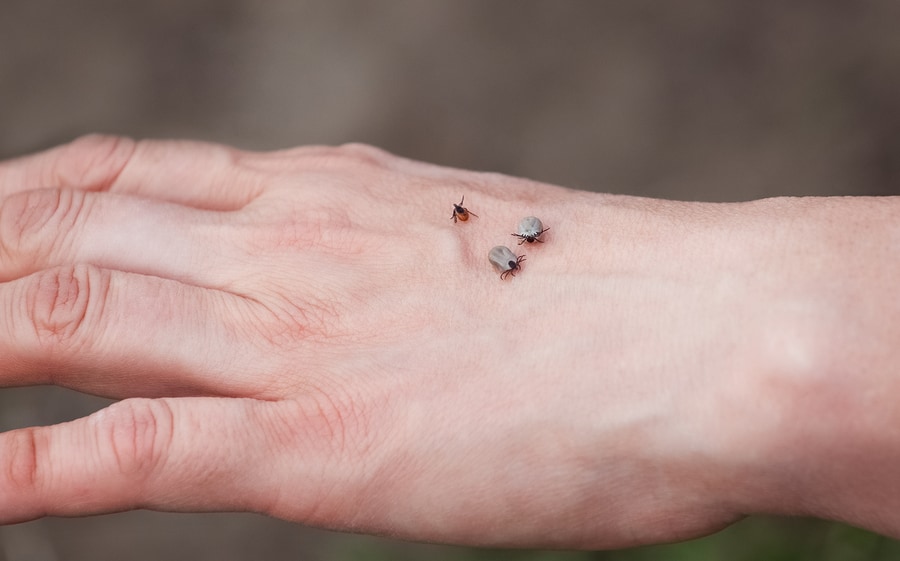
Ticks, like fleas, rely on tall grass to have access to hosts. They will position themselves at the very top of a blade of grass. Once a host brushes past, they will have the opportunity to bite and attach. Deer ticks, which are very common here in the South, fortunately do not always carry disease, and if they do, they would need to feed for up to 48 hours before a disease can be transmitted. This is why inspection of yourself and your family members after spending time outdoors is essential. Removal within 24 hours reduces your chances of being exposed to tick-borne illness, like Lyme disease.
When removing a tick, it is very important to remain calm. Pull back any hair from around where the tick is located. Find the head, and using tweezers, grasp the tick as close to the skin as possible. DO NOT grasp the body of the tick as this can squeeze the tick’s blood into the skin. Once you have a firm grasp on the head, pull in a straight motion, outward. Be sure to not twist when you pull as this can cause a tear, leaving the head to stay attached to the skin. Clean where the bite occurred and immediately flush the tick down the toilet or wrap tightly in tissue/paper towel and place in a trash can with a lid.
If you are going to be out in heavily wooded areas where the grass is unkept, wear long pants or high, light colored socks. Make sure to remove woodpiles from around your home as this makes a great hiding place for ticks. Using an insect repellant with DEET when outdoors is another great preventative measureto take against a possible tick encounter.
If you are having issues with fleas or ticks, contact your local pest control company or schedule a free inspection now.
Jun 26, 2019 | Pest Control
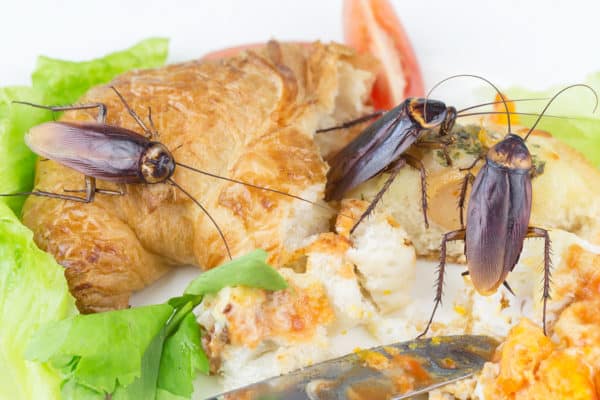
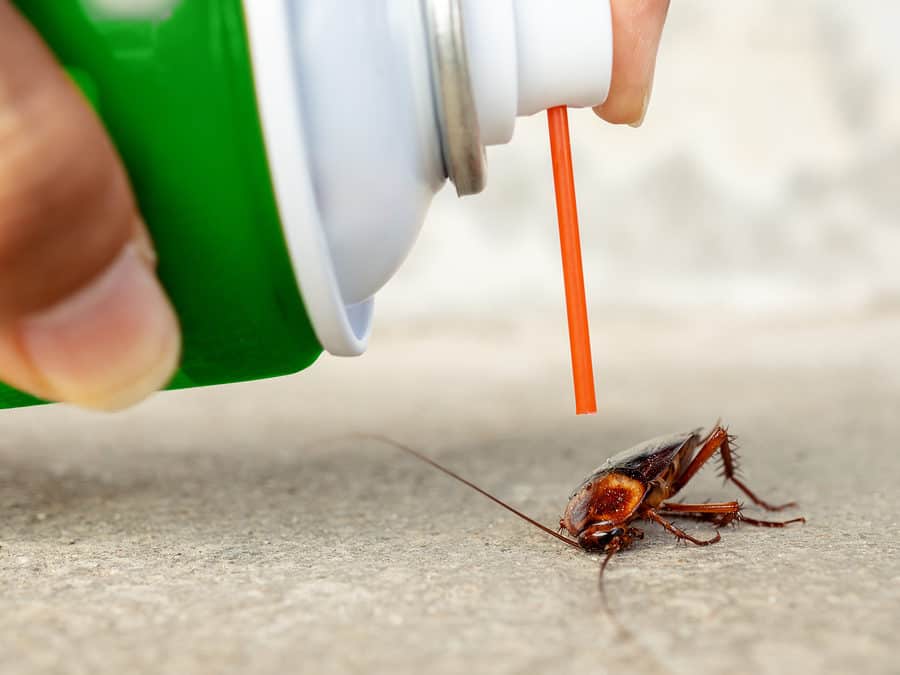
Cockroaches carry many diseases and can cause several health issues in humans including food poisoning and can trigger allergies and asthma attacks. So where do roaches come from?
If you have a roach infestation in your home, there could be several reasons why. Roaches may have already been in your home before you moved in. Roaches are also very good hitchhikers and are easily transported from one place to another. They can get into your home in grocery bags, cardboard boxes, luggage, furniture, or appliances. They can also get in through the plumbing, sewers or drains. They can travel over from your neighbor’s home into yours, too.
But what attracts cockroaches if your house is clean? Like most pests, roaches are looking for three main things: food, shelter, and water. They are year-round pests and are incredibly resilient – making them difficult to control. Different species of cockroaches are attracted to and thrive in different environments.
German cockroaches are the most common indoor roaches. They prefer dark, warm, humid places near food and water, preferably in a temperature range of 70 to 75 degrees Fahrenheit. You can usually find German roaches in kitchens, in cracks and crevices of cabinets, near sinks or appliances, and in food prep and storage areas. They can also be found in bathrooms when the roach infestation is heavy. Early detection and control of german roaches is extremely important as they can be very hard to get rid of.
Oriental roaches prefer dark, damp, cool habitats. Outdoors you can usually find them where there is an abundant supply of organic matter like mulch or wood chips, under patio bricks, or between the soil and your foundation. Once inside your home, they are often found in drains, basements, and crawlspaces. They can also be found near leaky water pipes, under sinks, refrigerators, floors, and washing machines.
Brown-banded roaches prefer warmer, drier places (greater than 80 degrees Fahrenheit). They live in higher areas, usually at eye level or above, like your cabinets, pantries, closet shelves, behind pictures, in books, or under kitchen tables and chairs. They can also be found in warm areas such as near clocks, timers, TVs, and refrigerator motors.
American cockroaches are found in homes, restaurants, bakeries, and grocery stores – anywhere food is prepped and stored. They prefer warm, moist environments and can often be found in boiler rooms, basements, around pipes and water heaters, and in drains and sewers.
Here are some tips to prevent roaches from infesting your home:
Food
Clean up spilled crumbs and food immediately. Don’t leave dirty dishes out overnight. Throw away any food that is left out on the counter. Wipe down the surface of all food prep areas every night. Clean under your appliances and wipe down any that are on your counter. Make sure to clean underneath the refrigerator and stove, also. Rinse out milk jugs, juice cartons, and cans before throwing them away. Empty your garbage can every night and use garbage cans with tight fitting lids. Check kitchen drawers for any food debris and crumbs. Store food in airtight containers. Store pet food in airtight containers and elevate them off the floor. Don’t leave your pet’s food and water bowls out overnight. Roaches communicate through chemical pheromones they secrete as they move. Cardboard and paper are excellent absorbers of these pheromones. Replace cardboard boxes with plastic containers if possible. Don’t bring any cardboard boxes used for storage inside the home. Don’t store piles of newspapers – recycle them instead.
Shelter
Carefully inspect the interior and exterior of your home. Seal any gaps or crevices you find, even the smallest ones. Roaches can squeeze through the tiniest openings to get into your home. Use weatherstripping around all entryways including doors and windows. Declutter as much as possible. Roaches can also get into your home through drainpipes. Use stoppers or metal baskets on all the drains in your sink and shower and make sure to keep your drains clean. Roaches will also hitch rides on firewood. Make sure to only bring in enough wood for one fire and don’t store any extra wood inside.
Water
Most species of roaches prefer moist areas so eliminating water is key to helping prevent them. Remove any standing water in and around your home. Check for leaks and repair them promptly. Use caulk to seal gaps around your sink and tubs to keep water out of the walls. Don’t let water stand for long periods of time in plants and flowerbeds. Don’t leave your pet’s water bowls out overnight. Hang any wet towels and mats up to dry after using them. Keep your kitchen sponges dry and don’t store them on the counter.
Call The Professionals
Roaches can be incredibly difficult to control and eliminate. If you have a roach problem, contact a professional pest control company or schedule a free pest inspection now. A pest control technician can thoroughly inspect your home to identify not only where and how roaches are getting into your home, but also the specific type of roaches to better treat and eliminate them.
You May Also Be Interested In:
Why Are There so Many Millipedes in my House?
Is Your Hotel on the Bed Bug Registry?
Lawn Survival Tips for the Summer Heat
What Attracts Cockroaches to a Clean House?
Is Termite Protection Worth It?
Jun 20, 2019 | Alabama Blogs, Georgia Blogs, Pest Control
By Anna V., Editorial Lead — Pest Education · Last updated: May 2026
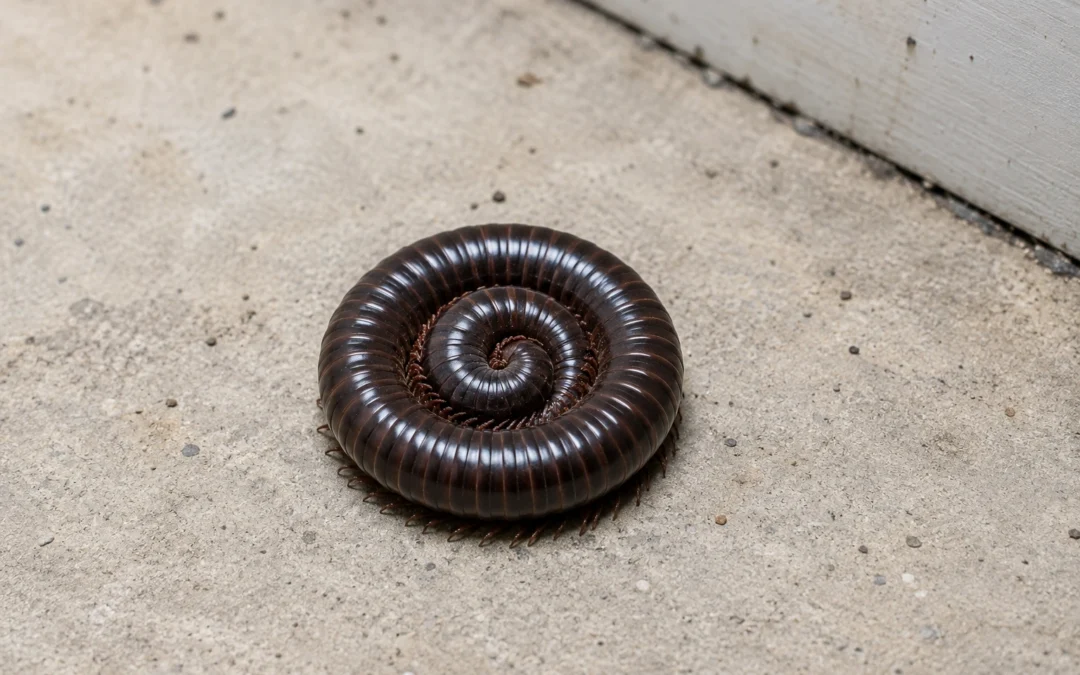
If you’ve walked into your basement or laundry room and found dozens of small, dark, segmented creatures curled up in tight spirals on the floor, you’ve met household millipedes. At Northwest, we get a sharp spike in millipede calls every spring and fall across Georgia and Alabama. The cycle is predictable: heavy rain saturates the outdoor environment where millipedes normally live, they move toward drier ground, and suddenly your basement or crawl space becomes the most appealing real estate in the county.
The good news: household millipedes are completely harmless. They don’t bite, they don’t sting, and they don’t carry disease. The less-good news: when they show up indoors, they usually show up in numbers. Here’s why they end up in Southeast homes, how to tell a millipede from a centipede (a common confusion), and what to do about an active indoor invasion.
What Are Household Millipedes?
Household millipedes are elongated, segmented arthropods with two pairs of legs per body segment. Despite the name (which translates to “thousand feet”), most species have between 80 and 400 legs. They’re typically dark brown to black, about 1 to 1.5 inches long when fully grown, and roll into a tight spiral when threatened.
Three things to know about millipede biology:
- Diet: Millipedes are detritivores. They eat decaying plant matter, leaf litter, rotting wood, and damp organic material. They don’t eat live plants, fabric, food in your pantry, or anything else inside a house.
- Habitat: They need moisture to survive. Outdoors, that means mulch beds, leaf litter, decaying logs, under stones, and the top layer of soil. Indoors, they’re drawn to basements, crawl spaces, bathrooms, and laundry rooms.
- Lifespan: Most species live 1 to 2 years. They’re slow movers, slow reproducers, and not aggressive in any way.
Millipedes vs Centipedes (Don’t Confuse Them)
This is the single most common identification mistake we see homeowners make on millipede calls. The two creatures look superficially similar but behave very differently.
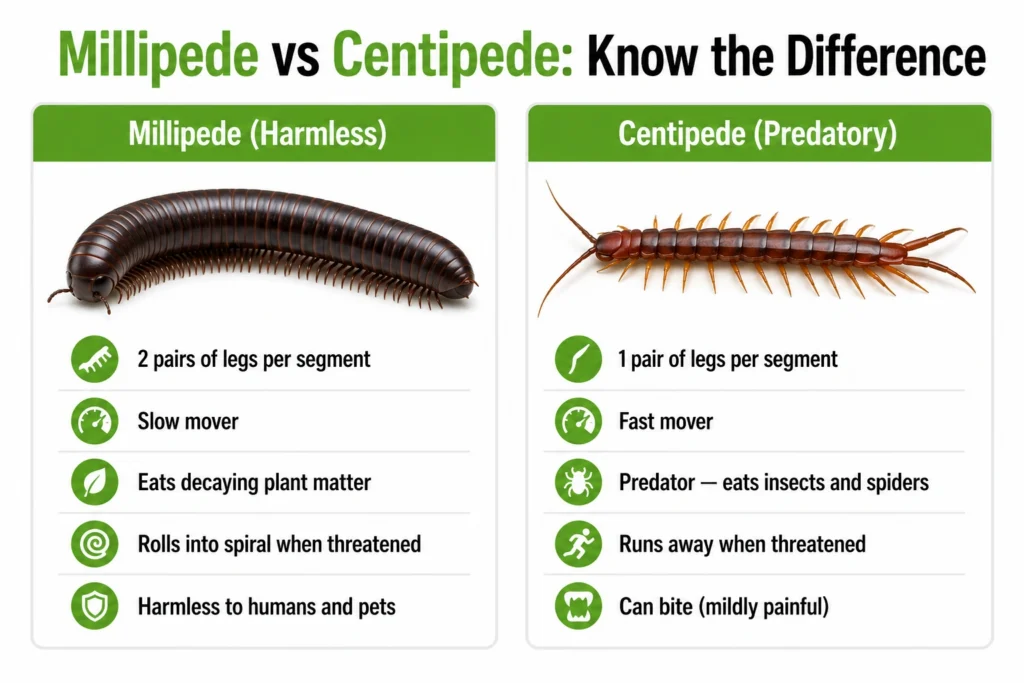
Millipedes are slow, harmless plant-matter eaters. Centipedes are fast, predatory, and can deliver a painful bite.
Quick reference for distinguishing millipedes from centipedes:
| Feature |
Millipede |
Centipede |
| Legs per body segment |
2 pairs (4 legs) |
1 pair (2 legs) |
| Body shape |
Round, tube-like, segmented |
Flat, more ribbon-like |
| Speed |
Slow, deliberate movement |
Fast, darting movement |
| Diet |
Decaying plant matter |
Other insects and small invertebrates |
| Defense |
Curls into a tight spiral |
Runs away, can deliver a mild bite |
| Danger to humans |
None |
Bite can sting, similar to a bee |
If you found something moving slowly, curled up when you got close, and looks tube-shaped, it’s almost certainly a millipede. If something darted away fast on flat legs, it was a centipede. Both can show up in the same conditions (damp basements, leaf litter), but treatment and concern levels differ. For the broader category of misunderstood “creepy” household pests, see our granddaddy long legs guide, which covers another commonly feared but harmless household visitor.
Why Are There So Many Household Millipedes in Your House?
Millipedes don’t choose to be indoors. They end up in homes because the conditions outside become inhospitable and your basement, crawl space, or laundry room offers what they need: moisture and shelter. Four conditions reliably push millipedes indoors in the Southeast:
Heavy Rain or Saturated Soil
The most common trigger for a sudden millipede invasion is a heavy spring or fall rainstorm. When soil becomes waterlogged, millipedes move to higher ground. If “higher ground” is the dry concrete of your basement floor, that’s where they go. We see millipede calls spike within 48 hours of major rain events across Georgia, Alabama, and Tennessee.
Drought or Extreme Dryness
The opposite condition triggers a similar response. During extended dry periods, outdoor environments become too dry for millipedes to survive. They migrate toward any source of moisture, which often means crawling under doors, through foundation cracks, or up basement window wells to find indoor humidity.
Yard Conditions Around the Foundation
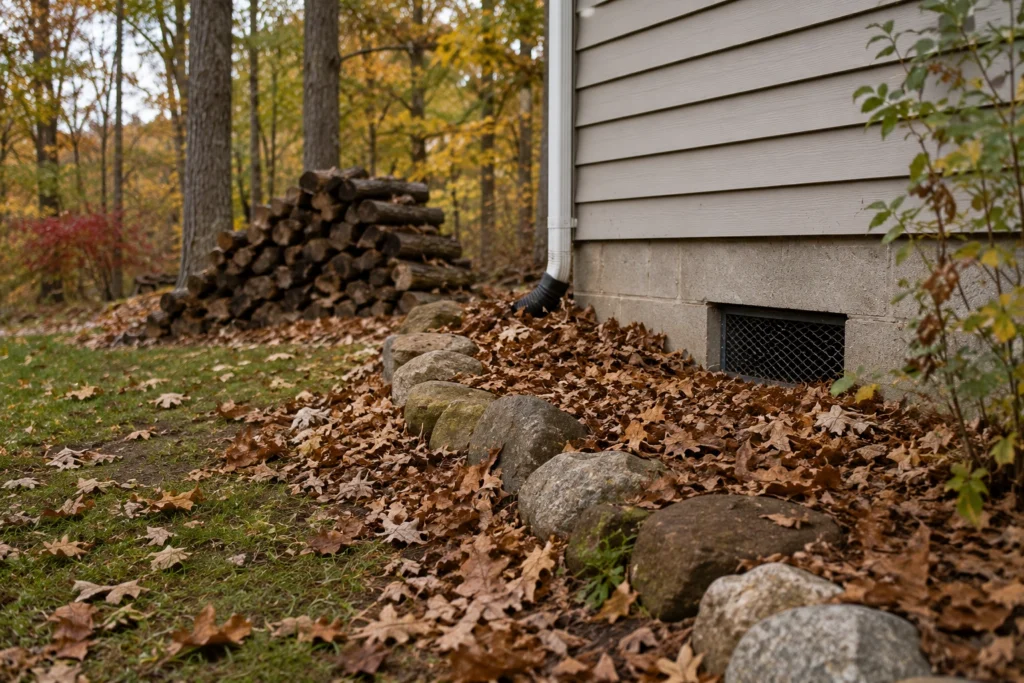
Yards that hold moisture against the house make millipede invasions more likely. The biggest contributing factors:
- Heavy mulch beds within 3 feet of the foundation (especially wood chip mulch)
- Leaf litter that accumulates against the house
- Decorative stones or wood timbers laid directly on soil
- Irrigation systems that spray foundation walls
- Downspouts that empty within 2 feet of the foundation
- Stacked firewood, lumber, or yard debris near the house
Indoor Moisture and Cracks
Millipedes can’t enter a house without an opening, and they can’t survive indoors long without humidity. Both have to be present. Common entry points:
- Foundation cracks at grade level
- Gaps under exterior doors (especially garage side doors and basement hatches)
- Unsealed crawl space vents
- Window wells with cracked or missing covers
- Gaps around utility line penetrations
- Weep holes in brick veneer that aren’t screened
Indoor conditions that let them stick around once inside: damp basements, leaking pipes, condensation on cold water lines, poor ventilation in crawl spaces, and standing water in floor drains.
Signs of a Millipede Presence
Most homeowners notice millipedes because they see them directly. Other signs to watch for:
- Live sightings on basement or crawl space floors, especially after rain or in early morning hours.
- Curled-up “dead” millipedes in dry indoor environments — the spiral defense posture also happens when they die from dehydration indoors. Finding several curled millipedes in a basement corner is a sign that more are entering and dying.
- Movement after rain. If you see a single millipede the day after a thunderstorm, you’ll probably see more over the next 48 hours.
- Clusters near damp areas like basements, laundry rooms, bathrooms, and crawl space access points.
- Shed exoskeletons in undisturbed corners, which suggests an established indoor population rather than just visitors.
Are Household Millipedes Harmful?
No. Household millipedes do not bite, sting, transmit disease, damage structures, contaminate food, or harm pets. They are completely harmless to humans and pets.
Three small caveats:
- Defensive secretions. Some millipede species release a mild liquid when handled or threatened. The secretion can stain skin briefly and irritate eyes if rubbed in. Wash hands after handling any millipede. Don’t let pets eat them in large numbers — the secretion can cause mild mouth irritation in dogs and cats.
- Allergic reactions. A small percentage of people have allergic skin reactions to millipede secretions. Reactions are mild (redness, itching) and resolve quickly.
- Dead millipede smell. Large numbers of dead millipedes in basement corners can develop a faint, unpleasant odor as they dry out. Vacuum them up promptly.
The UGA Extension Bulletin B 1412 on Southeastern household pests classifies millipedes as a “nuisance pest” — uncomfortable to encounter but not harmful.
How to Prevent Household Millipedes
The most effective millipede prevention works on three fronts: outdoor conditions, entry points, and indoor moisture.
A 3-foot mulch-free zone around the foundation is the single highest-impact millipede prevention move for most Southeast homes.
Outdoor Conditions
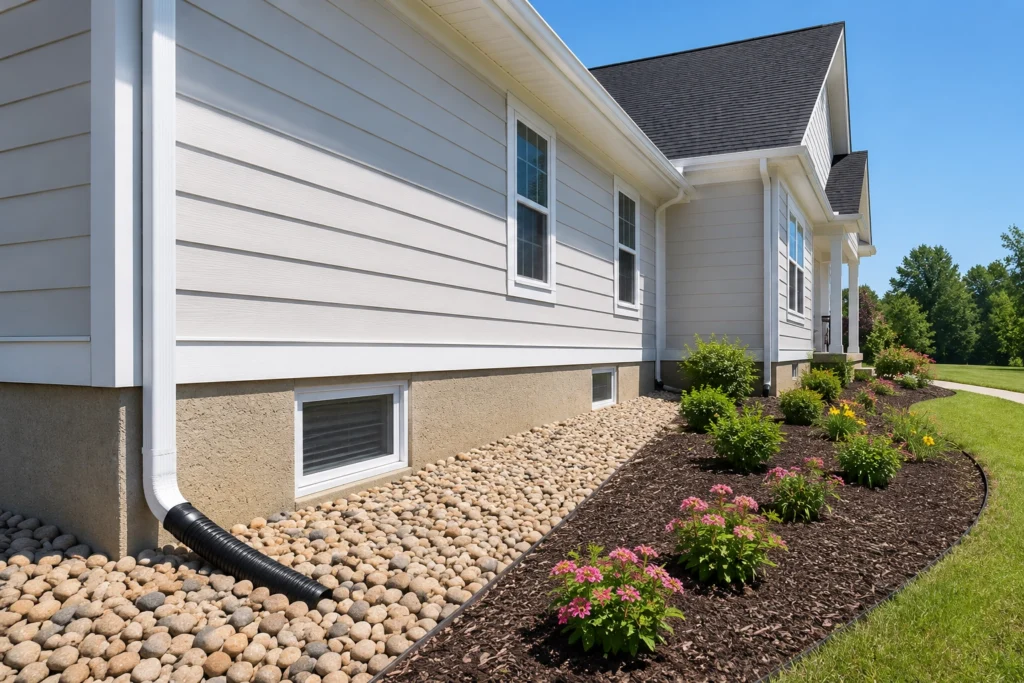
- Keep mulch beds at least 3 feet from the foundation. If you have mulch right against the house, that’s the single biggest contributor to millipede invasions. Replace the foundation perimeter with gravel, river rock, or bare soil.
- Remove leaf litter from the foundation line. Rake regularly during fall and after storms.
- Move firewood, lumber, and debris piles at least 20 feet from the house.
- Direct downspouts and irrigation away from the foundation. Pooling water within 2 feet of the house is millipede paradise.
- Trim shrubs back so air can circulate against the foundation. Damp, shaded foundation walls hold millipedes longer.
Seal Entry Points
- Caulk foundation cracks at ground level.
- Install or replace door sweeps and weatherstripping, especially on garage doors and basement hatches.
- Screen crawl space vents with galvanized 1/4-inch hardware cloth.
- Cover window wells with rigid plastic or metal covers.
- Seal gaps around utility line penetrations with steel wool and caulk.
Indoor Moisture Control
- Fix leaky pipes promptly. Even small leaks support indoor millipede populations.
- Run a dehumidifier in basements and crawl spaces.
- Improve ventilation in bathrooms and laundry rooms.
- Don’t store cardboard boxes directly on damp basement floors.
How to Get Rid of Household Millipedes
Once millipedes are already inside, the treatment approach is straightforward.
DIY Methods
- Vacuum them up. A regular vacuum with a hose attachment handles individual millipedes quickly. Empty the canister or bag outside afterward.
- Sweep into a dustpan. Slower but works for small numbers.
- Reduce indoor humidity. A dehumidifier in active areas often resolves an indoor population within a few weeks. Without moisture, millipedes can’t survive indoors.
- Skip insecticide sprays. Indoor sprays don’t work well on millipedes because they don’t stay in one place long enough to absorb the active ingredients. Sprays also leave residue that’s unnecessary for a harmless pest.
For ongoing prevention while you address the conditions, see our companion guide on natural ways to remove and prevent millipedes in your house.
When to Call Northwest
Most millipede problems clear up once you fix the outdoor conditions and seal the entry points. Call us if:
- Indoor sightings continue for more than 2 weeks despite your prevention efforts.
- You’re finding more than 10 to 15 millipedes per day in any single room.
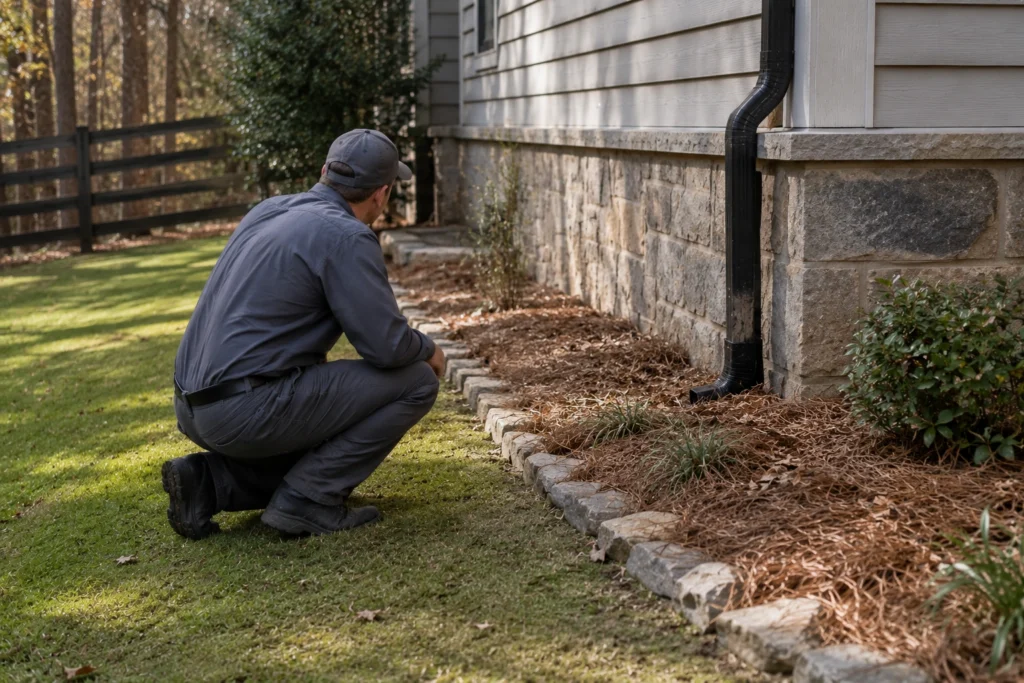
- You can’t identify the entry points and want a professional inspection.
- You’re dealing with millipedes plus another pest (centipedes, sowbugs, springtails). All share the same moisture-driven entry pattern and can be solved together.
(Persistent millipede problem? Schedule a free Northwest inspection and we’ll find the entry points and address the moisture issues driving them indoors.)
Household Millipedes & Local Environmental Factors
Millipede pressure in Georgia, Alabama, Tennessee, and South Carolina is consistently higher than in drier or colder regions. Three Southeast-specific factors:
- Humidity. Long humid summers create constant indoor and outdoor moisture, which sustains millipede populations year-round.
- Heavy spring and fall rains. The Southeast’s two rainy seasons drive the two annual peaks in indoor millipede sightings.
- Construction patterns. Many Southeast homes have crawl spaces and slab additions with foundation features (cracks, vents, soffit gaps) that are reliable millipede entry points.
The good news: the conditions that attract millipedes also attract other “moisture pests” (sowbugs, springtails, centipedes, sometimes ground beetles). Fixing the conditions for millipedes generally fixes the conditions for all of them at once.
Frequently Asked Questions About Household Millipedes
Do millipedes bite?
No, household millipedes do not bite humans or pets. They have no biting mouthparts capable of penetrating skin. Some species release a mild defensive secretion when handled, which can briefly irritate sensitive skin. Wash hands after handling.
Are millipedes attracted to lights?
Not typically. Unlike many flying insects, millipedes don’t navigate by light. They’re drawn to moisture, organic matter, and dark sheltered spaces. If you’re seeing them near lights, it’s usually because the lighted area happens to have moisture or shelter nearby, not because of the light itself.
Will household millipedes go away on their own?
They can. If the outdoor conditions that drove them indoors change (rain stops, drought ends, mulch dries out), most millipedes will leave or die from dehydration within a few days. However, large indoor populations or homes with persistent moisture issues usually need active intervention to fully clear.
How long do household millipedes live?
Most household millipede species live 1 to 2 years in the wild. Indoors, they typically don’t survive long without consistent moisture access. The “dead millipede” curls you find in dry basement corners are often individuals that entered seeking moisture and dehydrated before finding any.
What’s the difference between a household millipede and a centipede?
Millipedes have 2 pairs of legs per body segment, move slowly, eat decaying plant matter, and curl into a spiral when threatened. Centipedes have 1 pair of legs per body segment, move fast, are predatory (they eat other insects), and can deliver a mildly painful bite. Both can show up indoors in similar conditions, but only centipedes warrant any caution.
Most millipede problems get solved by fixing the outdoor conditions and sealing the entry points — not by spraying inside.
Stop the Millipede Problem at the Source
If household millipedes keep showing up in your basement, laundry room, or crawl space, the answer almost always lies outside the house. Northwest’s team handles the full millipede workflow: identifying the moisture and entry-point conditions driving them in, sealing the access points, and addressing any underlying drainage or humidity issues. Most homeowners are surprised how much of the work happens around the foundation rather than inside.
About the Author
Anna V., Editorial Lead — Pest Education leads pest education content for Northwest Exterminating, working with senior technicians and service center managers across our Georgia, Alabama, Tennessee, and South Carolina service areas to translate field expertise into homeowner-friendly guides. The focus: accurate, regionally-specific answers to the pest questions Southeast homeowners are actually searching for.
Jun 10, 2019 | Bed Bug, Pest Control, Termite Control
Just as the weather changes with the seasons, pest activity shifts to usher in new groups of active pests. Let’s take a look at what pests are active in your area and some tips to keep them away.
Subterranean Termites
The humidity and moisture that come with early summer is what helps to increase subterranean termite activity. “Swarm season” is in full effect, and this can present a problem for your home.
- Avoid water accumulation around your home, specifically around the foundation.
- Invest in a moisture-reducing program to help reduce humidity in your home’s crawl space.
Bed Bug
Summer is the biggest travel time for many. College students are coming back home, and family vacations are planned. This increases the chances of having an incident with bed bugs, and a bed bug infestation is no easy battle.
- When returning from vacation, leave suitcases in the garage or driveway. Remove clothing and take immediately to your laundry room to be washed in warm water.
- Consider packing a large garbage bag to place your suitcase in while on vacation.
- Do not unpack your clothing and place them in the hotel drawers as these can be hiding places for bed bugs.
American Cockroaches
As the summer weather starts to rev up, American cockroach activity will skyrocket. While they live outdoors, if they find themselves low on food or if the weather experiences a drastic change (extreme heat or excessive rain), they will try move indoors.
- Put dirty dishes directly into the dishwasher or wash them immediately after using them instead of leaving them in the sink overnight.
- Make sure to eliminate any sources of standing water around your home.
Pest infestation can be costly and a major hassle. Contact a professional pest control company like Northwest for a free pest control estimate to protect your home from pests year-round.
Jun 7, 2019 | Pest Control
As a business owner or manager with a commercial property, you’ll most likely be faced with a pest issue during the duration of operating your business. And while pest control service may be optional for homeowners, it’s often a necessity or requirement for businesses, especially those where food preparation, distribution, or storage is involved, or any facility that offers a storefront or location for customers to visit. The appearance and condition of your commercial property is often your customer’s first impression of the business, so it’s critical that pests are not an issue or seen by existing and potential customers, or even employees!
Because of the health risks and threats pests can present, it’s essential to take a proactive approach to commercial pest control. This includes regular pest inspections by an exterminating company that specializes in pest control for businesses and routine, often monthly or quarterly, pest control treatments. So what are your options when it comes to commercial pest control and what can you expect from the initial call to an exterminator to service and follow ups? Here’s what you need to know:
The first step in any pest control plan, commercial or residential, is to identify past, current or potential pest threats. Businesses commonly experience issues with roaches, rodents, termites and mosquitoes – but may also experience wildlife invasions (squirrels, raccoons, birds, bees, snakes, and more) and other minor pests issues.
Because of the sanitation conditions associated with roaches, rodents and wildlife, treatment and prevention is key. Your exterminator will inspect the entire property to identify entry points and areas of infestation, and provide prevention recommendations for clean-up and a pest control plan for monthly or quarterly treatments, depending on the severity of the pest issue.
Mosquitoes also pose health risks by spreading diseases like zika, West Nile, Encephalitis, and dog heart worm and causing mosquito bite allergies. If your business serves customers outdoors, you should have your property inspected for current and potential mosquito resting and breeding sites, eliminate or reduce these areas, and request monthly mosquito treatments during peak mosquito season, usually April through October. Mosquito control service is the best way to prevent mosquito bites and minimize risk of mosquito-borne diseases.
Wildlife invasions are also common and can present damage and sanitation issues for business owners. If you suspect a wildlife issue, contact a wildlife control company immediately to inspect the property, identify wildlife issue, and offer solutions for wildlife exclusion and prevention.
Once you have your property inspected, pest issues identified, and you have treatment and prevention options, review proposals and determine the best fit for your business. If you’re looking for eco-friendly options that are effective yet utilize non-toxic products and careful application, consider an exterminating company that specializes in green pest control.
Other factors to consider when choosing an exterminator for your business:
- Does the pest control service come with a guarantee?
- What pests are covered under the pest control agreement?
- Is the exterminating company reputable, reliable, licensed and experienced? Consider checking online reviews before making purchase decisions, to determine the best pest control companies near you.
- Does the pest control company offer multiple pest control solutions, including green options?
- Will an IPM (Integrated Pest Management) approach be used to ensure pests are accurately identified and targeted, using minimal product when and where needed?
Have more questions about commercial pest control? Call us now or request a free estimate to get started.
May 20, 2019 | Pest Control
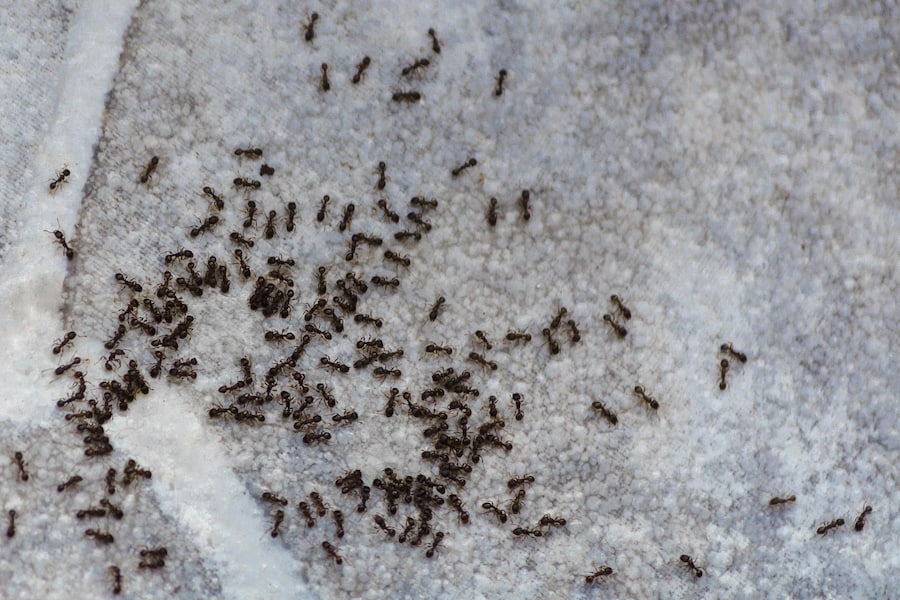
Little black ants are common household pests that are seen throughout the year in the Southeast U.S. but most commonly encountered in larger swarms during warmer months, beginning in late spring and continuing throughout summer, when they’re reproducing. During this time, you may also see winged little black ants (sometimes mistaken for termites). More often, you’ll see trails of these tiny black ants in and around your home, foraging from nests to food source.
Little black ants, like the name suggests, are small, shiny, dark-colored ants ranging from 1/16 – 1/8 of an inch in size. They feed on fruit and vegetable matter, cornmeal and other sweets, oil residue and greases, meat, and even other insects and plants. This makes control of little black ants difficult since most homes provide an ideal food supply in some form. They will make their way into your home in search of warmth, moisture, and/or food. If you see little black ants in large numbers, usually in kitchens and bathrooms, it’s likely an indication of an infestation in wall voids and other areas in and around your home.
To prevent an infestation of little black ants, measures should be taken around the exterior of your home and outside: eliminate or reduce areas conducive to little black ant nests – dark, protected areas – such as rock and wood piles, yard debris, piles of masonry supplies like bricks and lumber, decaying or rotting wood, logs and trees, or any densely wooded areas.
To keep little black ants (and other common pests) out of your home, seal cracks and crevices around windows, doors, foundation, or any exterior walls to prevent entry, keep plants and shrubbery trimmed back, store firewood and other yard debris at least 20 feet away from home’s exterior, eliminate food supplies by keeping a clean home and store all food items in sealed containers, reduce indoor clutter, and most importantly, maintain routine (usually quarterly) pest control service. An exterminator will identify entry points and treat ants in a method that works to eliminate entire ant colonies, which can consist of thousands of little black ants – the only effective, long-term solution to ant control.
Apr 26, 2019 | Pest Control, Wildlife
By Anna V., Editorial Lead — Pest Education · Last updated: April 2026
When a snake shows up in your yard or near the foundation, the instinct is almost always the same: go to Google and search for something to make it go away. Mothballs. Garlic. Essential oils. Ultrasonic stakes. At Northwest, we get asked about home remedies to keep snakes away almost every warm-weather day, and here’s the honest version most homeowners don’t hear: the vast majority of DIY snake remedies don’t work, and a few are actually illegal or dangerous. What does work is nearly always free, already in your toolshed, and takes a Saturday morning.
This guide walks through the most common home remedies for keeping snakes away, which ones have any real science behind them, which ones are outright myths, and what’s actually effective in a Georgia or Alabama yard. We’ll also cover where snakes go in cold weather (the question we get every fall) and how to quickly tell a harmless snake from one that needs a pro.
Why Snakes Come Into Residential Properties
Before you can keep snakes away, it helps to know why they showed up. Snakes don’t pick yards at random. They follow food, shelter, and water, in that order.
- Food: Rodents, frogs, lizards, and large insects. If you have a mouse problem in the crawl space or under the deck, you’ll eventually have a snake problem.
- Shelter: Wood piles, rock piles, thick mulch beds, tall grass, debris along the fence line, untrimmed shrubs touching the foundation.
- Water: Standing puddles, dripping outdoor faucets, leaky AC condensate lines, overwatered flower beds, low spots in the lawn.
- Easy access: Gaps around dryer vents, foundation cracks, torn crawl-space screens, missing weatherstripping on garage doors.
Remove those four things and snake activity drops fast, with or without a single bottle of repellent.
Common Home Remedies to Keep Snakes Away: What the Evidence Actually Says
Here’s how the most-searched home remedies stack up in the research and in the field.
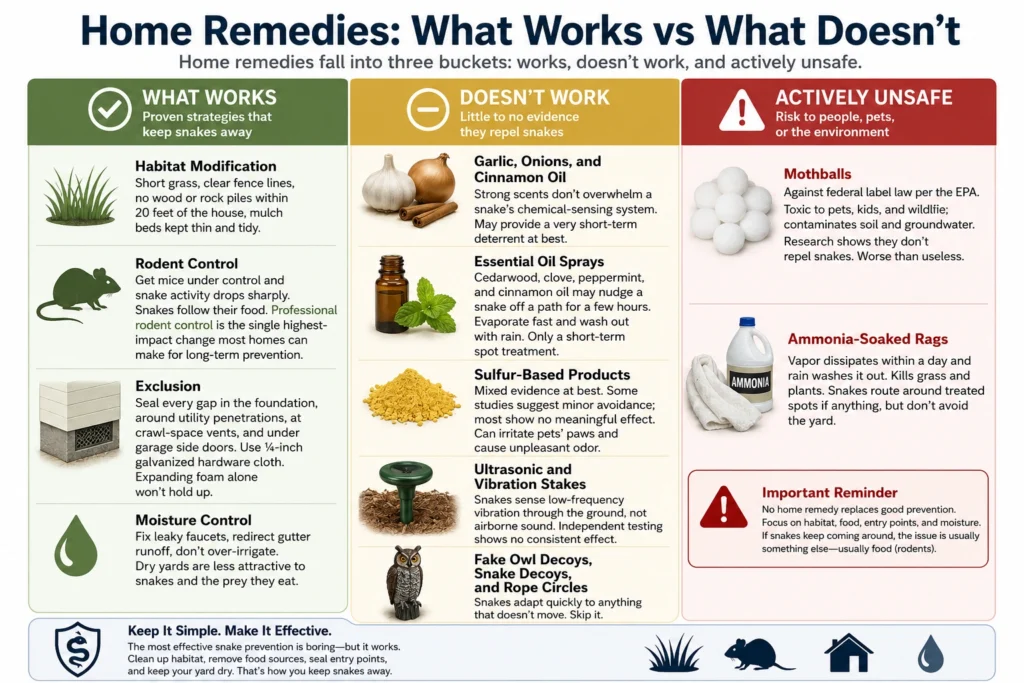
Home remedies fall into three buckets: works, doesn’t work, and actively unsafe.
Mothballs
Mothballs are the single most common home remedy we hear about, and the single worst one. Their active ingredients (naphthalene or paradichlorobenzene) are registered pesticides with very specific label instructions that limit use to closed containers indoors for clothing moths. Scattering mothballs outdoors to keep snakes away is against federal label law per the EPA. They’re also toxic to pets, kids, and wildlife, and contaminate soil and groundwater. On top of all that, the research shows they don’t actually repel snakes. This is a “worse than useless” remedy: it creates real health risk while producing no benefit.
Ammonia-Soaked Rags
Ammonia is another scent-based remedy that circulates online. In practice, the vapor dissipates within a day, the first rain washes it out completely, and ammonia kills surrounding grass and plants. Snakes route around treated spots if anything, but don’t avoid the yard. Skip it.
Garlic, Onions, and Cinnamon Oil
These show up in almost every online list of home remedies for snakes. The idea is that strong botanical scents overwhelm a snake’s chemical-sensing system. The science is thin. Snakes navigate primarily via the Jacobson’s organ on the roof of their mouth, which processes airborne chemicals very differently than a mammal’s nose. A snake hunting a mouse isn’t going to be turned back by a border of onions. These remedies can provide a very short-term deterrent effect at best, and only at high concentrations close to the application point.
Essential Oil Sprays
Cedarwood, clove, peppermint, and cinnamon oil sprays are the “natural” version of a commercial snake repellent. At close range and high concentration, they may nudge a snake off a specific path for a few hours. They evaporate fast in summer heat, wash out with the first rain, and do nothing to address the reason the snake came. Use them as a short-term spot treatment if you’re so inclined, but never as a standalone plan.
Sulfur-Based Products
Granular sulfur products marketed as snake repellents have mixed evidence at best. Some studies suggest minor avoidance behavior; most show no meaningful effect. Sulfur can also irritate pets’ paws and contribute to an unpleasant smell around the yard. Not unsafe, but not reliable either.
Ultrasonic and Vibration Stakes
The marketing on these is aggressive, the research is not. Snakes don’t hear airborne sound the way mammals do. They sense low-frequency vibration through the ground. Solar-powered ultrasonic stakes emit sound waves that snakes mostly ignore. Independent testing has not shown a consistent repellent effect.
Fake Owl Decoys, Snake Decoys, and Rope Circles
Plastic owls might fool a few snakes for a week. Decoy king snakes might deter a copperhead momentarily. A rope laid in a circle around your tent (a long-running outdoor myth) does nothing. Snakes adapt fast to anything that doesn’t move. Skip.
What Actually Works to Keep Snakes Away
Almost without exception, the effective ways to keep snakes away are free. They’re not remedies, they’re habits.
- Habitat modification. Short grass, clear fence lines, no wood or rock piles within 20 feet of the house, mulch beds kept thin and tidy.
- Rodent control. Get mice under control and snake activity drops sharply. Snakes follow their food. Professional rodent control is the single highest-impact change most homes can make for long-term snake prevention.
- Exclusion. Seal every gap in the foundation, around utility penetrations, at crawl-space vents, and under garage side doors. Use ¼-inch galvanized hardware cloth. Expanding foam alone won’t hold up.
- Moisture control. Fix leaky faucets, redirect gutter runoff, don’t over-irrigate. Dry yards are less attractive to snakes and the prey they eat.
We covered the detailed seven-method playbook in our Snake Repellent: Natural & Effective Ways to Keep Snakes Away article. This post stays focused on the myth-busting side.
Snakes don’t leave for winter. They shelter in piles, burrows, and crawl spaces and emerge on warm days.
Where Do Snakes Go in Cold Weather?
One of the most common questions we get in October and November is whether snakes “leave for the winter” in Georgia and Alabama. They don’t, not exactly. Snakes are cold-blooded, so when temperatures drop they enter a state called brumation, which is similar to hibernation but not identical. They don’t sleep through winter; they slow way down and shelter in protected, insulated spots.
In the Southeast, those spots are often:
- Rock piles, wood piles, and dense leaf litter
- Abandoned rodent burrows (which is why a mouse problem in October becomes a snake problem in March)
- Crawl spaces and basement crevices, especially homes without sealed vents or where screen is torn
- Gaps under concrete porches, sheds, and slab additions
- Root balls, tree hollows, and stump cavities
Warm winter afternoons in the South will often bring snakes out briefly to bask, even in January. If you see a snake on a 65-degree February day, it hasn’t “woken up early.” It’s just thermoregulating. The bigger story is where it’s spending the rest of the season, because that shelter spot is almost certainly on or under your property.
What Kind of Snake Is That? A Quick Southeast Field Guide
Most snake sightings in Georgia and Alabama yards turn out to be non-venomous species. Knowing what you’re looking at dramatically changes how much action is needed.
- Eastern Rat Snake (Black Rat Snake), non-venomous. Long, black, strong climber. Often found in attics and shrubs hunting rodents. One of the best natural rodent controls you can have on a property.
- Black Racer, non-venomous. Slender, fast, solid jet-black. Harmless. Feeds on insects, lizards, and small rodents.
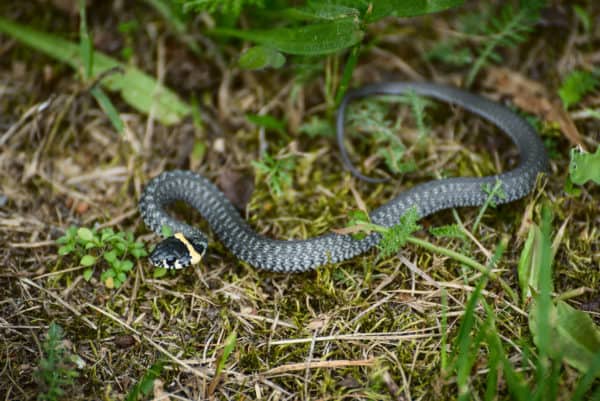
- Garter Snake, non-venomous. Small, striped, common near gardens, water features, and rock edges.
- Kingsnake, non-venomous. Black with pale bands. Notable because it actually eats venomous snakes. Leave it alone if you can.
- Copperhead, venomous. Tan body, dark hourglass banding. Hides in pine straw and leaf litter, which makes it the cause of most venomous bites in the Southeast. If you see one, back up and call.
- Cottonmouth / Water Moccasin, venomous. Thick-bodied, found in or near water. Will stand its ground rather than retreat. Call a pro.
- Timber Rattlesnake, venomous. Less common in suburban yards, more common in wooded lots, rural properties, and at elevation. Distinctive rattle, heavy body.
When in doubt, the UGA Extension guide to Snakes of Georgia is the best free identification resource for the region.
When Home Remedies Aren’t Enough
DIY approaches top out fast. Here’s when to stop experimenting and call a professional:
- You’ve confirmed or suspect a venomous species on the property.
- A snake has been inside the house, garage, crawl space, or attic. Inside means an entry point that needs finding and sealing, not a remedy.
- You’re seeing snakes repeatedly in the same spot. More than two sightings in the same part of the yard within a season means there’s harborage or a food source you haven’t found.
- There are kids, pets, or people with limited mobility on the property. The cost-benefit of a professional inspection shifts the moment safety tolerance drops.
(Not sure if it’s time to call? Request a free Northwest inspection and we’ll walk the yard with you, identify what you saw, and lay out what’s worth doing.)
Professional Snake Control & Prevention
Northwest’s wildlife team handles the full snake-control workflow: identification, safe and humane removal, sealing the entry points that let snakes in, and treating the underlying rodent or moisture issue that drew them in the first place. Most of what we do isn’t catching snakes. It’s removing the reason snakes keep showing up. That’s the difference between a one-time removal that repeats next season and a long-term solution.
Frequently Asked Questions About Keeping Snakes Away
Do snake repellents really work?
Most commercial and home-remedy snake repellents offer limited, short-term effects at best. The most reliable way to keep snakes away is removing what attracts them in the first place: rodents, hiding places, standing water, and gaps in the home’s perimeter.
What smells keep snakes away?
Snakes show some sensitivity to strong scents like cinnamon, clove, and cedarwood, but these smells don’t stop a snake tracking prey. Treat scent-based remedies as supplemental at best and never as a standalone plan.
Are snakes dangerous to pets?
Most snakes you’ll encounter in a Southeast yard are non-venomous and not a threat to pets. Copperheads, cottonmouths, and rattlesnakes are the three venomous species most likely to injure a dog or cat. If your pet is bitten, assume venomous until proven otherwise and go straight to a vet.
Should I try to remove a snake myself?
No, not if you can’t confidently identify it as non-venomous, and not if it’s inside the home. Non-venomous snakes in the yard can usually be left alone or gently encouraged to move on by turning on a sprinkler. Anything else is a job for a pro.
Do mothballs really keep snakes away?
No. Mothballs are not an effective snake repellent and are illegal to use outdoors for that purpose under federal pesticide law. They’re also toxic to pets, kids, and the environment. Skip them entirely.
When home remedies stop working, it’s time to address the rodent or moisture issue feeding the problem.
Ready to Actually Keep Snakes Away?
If you’ve tried a home remedy or two and the snakes keep coming back, the problem isn’t the remedy. It’s the yard. Northwest has been solving snake problems in Georgia, Alabama, Tennessee, and South Carolina homes for over 70 years, and we solve them by addressing the cause, not just the sighting.
About the Author
Anna V., Editorial Lead — Pest Education leads pest education content for Northwest Exterminating, working with senior technicians and service center managers across our Georgia, Alabama, Tennessee, and South Carolina service areas to translate field expertise into homeowner-friendly guides. The focus: accurate, regionally-specific answers to the pest questions Southeast homeowners are actually searching for.
Apr 5, 2019 | Going Green, Pest Control
With the recent focus on going “green” and harmful impacts on the environment, many people are ramping up their efforts to establish eco-friendly practices in both the workplace and at home. Efforts to recycle, reduce energy usage, and limit carbon emissions are all common ways to make a positive impact on the environment. One area that isn’t often thought of in the “green” movement is pest control. Green pest control is an environmentally friendly alternative to traditional pest control that is commonly used in areas that house the young, the elderly, the immunocompromised, and pets. But what is the difference between the two?
Traditional pest control provides most of the same benefits as green pest control but utilizes synthetic chemicals to eliminate and control pest populations. These chemicals are used sparingly, however, with just enough used to target the specific pest issue.
Green pest control, on the other hand, eliminates common household pests with the lowest environmental impact possible. This is achieved with ingredients derived from flowers, plants, and natural elements rather than harsh chemicals. Green pest control has proven to be just as beneficial as traditional pest control methods. Green pest control uses preventative measures combined with purposeful application of natural products.
Green pest control also utilizes a 5 step Integrated Pest Management (IPM) process which is an “effective and environmentally sensitive approach to pest management that relies on a combination of common sense practices.” The 5 steps of an IPM program include Plan, Inspection, Pest Identification, Ongoing Perimeter Protection, and Continuous Communication.
NorPest Green is Northwest’s quarterly pest control program performed by only the highest-trained professionals, using high-quality, non-toxic products derived from botanicals. We customize a plan based on your needs, so you can be sure your home is healthy and your family and pets are protected. NorPest Green also comes with a service guarantee meaning we come back in between regular scheduled pest control visits, if needed, at no additional cost to you.
Pests are a nuisance and can be detrimental to both your home and your health. Regardless of whether you choose a traditional pest control service or a green pest control service, protecting your family is of the utmost importance. Contact a professional pest control company like Northwest for a free pest control estimate.
You May Also Be Interested In:
Don’t Bring Bed Bugs Home!
German Roaches vs American Roaches: What’s The Difference?
Is Green Pest Control Worth The Investment?
Is That Spider Poisonous?
How Much Does A Termite Inspection Cost?