May 4, 2018 | Mosquito, Pest Control, Termite Control
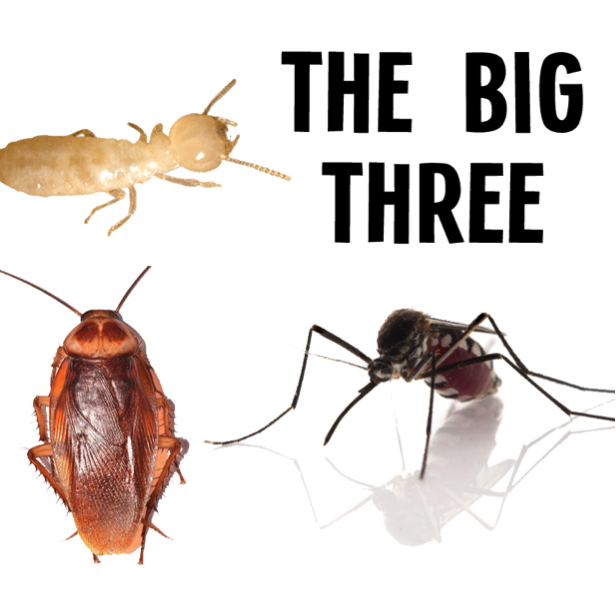
As we approach the warmer and more humid months, the chance of encountering pests increases. While some are more occasional invaders, there are some that will make it a point to stick around.
Cockroaches
With the weather changing and a large amount of rain in the forecast, your home provides cockroaches with shelter and an ever-flowing food source. The larger roaches you may encounter are more than likely American cockroaches; an infestation that is normally easy to stop with a quarterly pest service. However, if you notice smaller roaches in the kitchen and/or bathroom of your home, you may be dealing with German cockroaches. They are a much harder infestation to control and will usually require a monthly treatment by your exterminator.
Mosquitoes
There is a consensus in the South that mosquitoes are despised, and we would all like them gone. Unfortunately, they seem to be here to stay, as they thrive in this area due to the humid climate. Also, because of where we are located, our mosquito season starts before other regions in the U.S. They are more of a hazard than just a casual annoyance; mosquito bites have the potential to spread diseases like Malaria, Dengue, and Zika. At Northwest, our Mosquito Reduction Service reduces adult mosquitoes and limits mosquito breeding around your home, reducing your risk of mosquito bites and mosquito diseases.
Termites
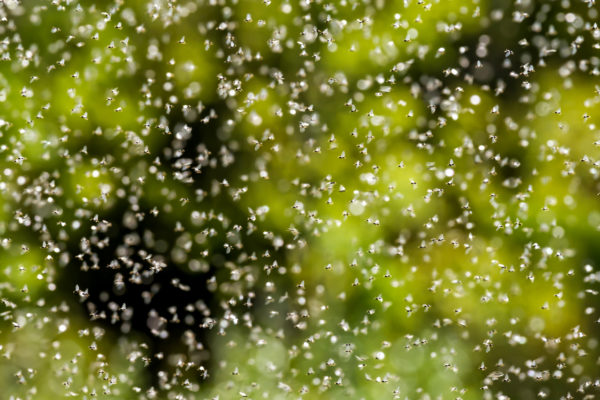
In the pest world, we refer to the warmer months as “swarm season.” This is when pests that have been overwintering emerge and begin to swarm. Termites only swarm once a year and, here in the South, the type you will see swarming are Subterranean termites. The ones you see flying around your home are not the ones that will cause destruction; however, it’s a sign that a termite colony is nearby. A termite inspection by a professional exterminator will not only look for signs of termite damage around your home but will also provide you with a personalized plan for treatment, if damage is found, and prevention moving forward.

May 4, 2018 | Termite Control
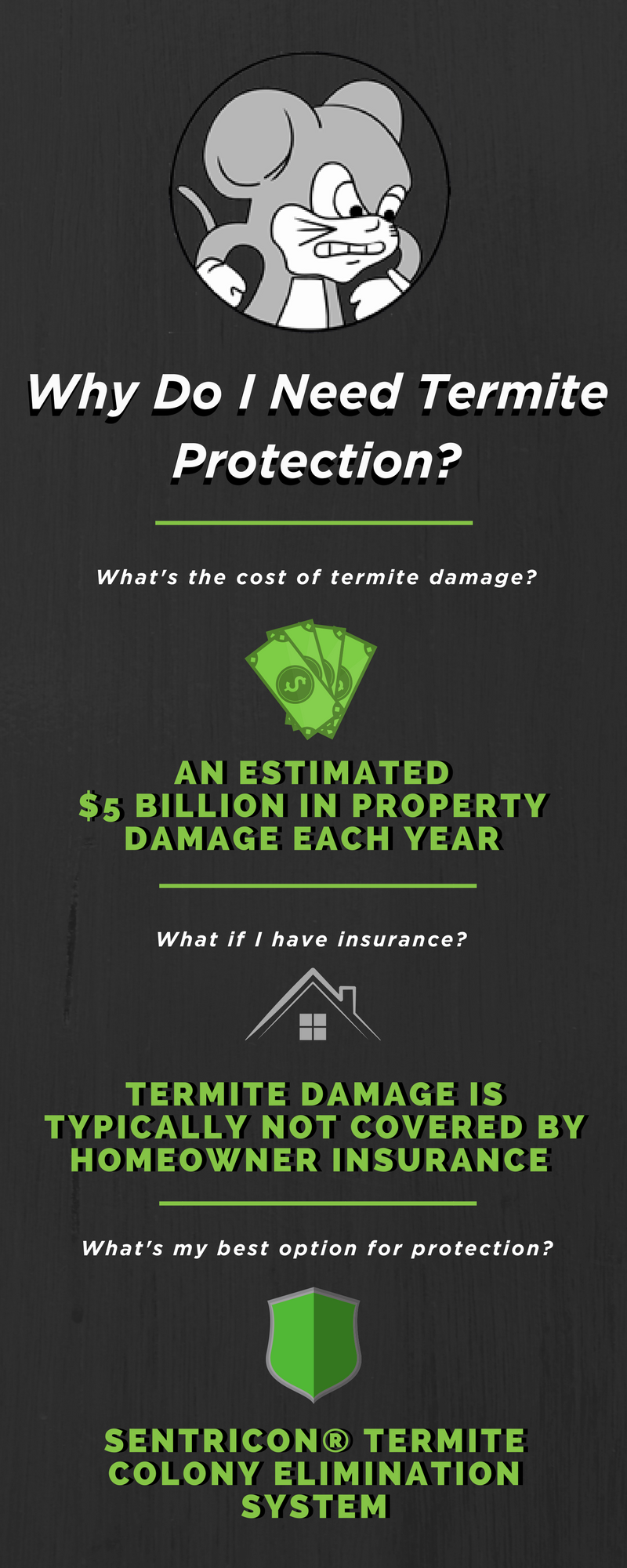
Spring is the time of year when termites swarm, emerging to mate and establish new colonies. Unfortunately, these new colonies are often established inside our homes. An average of 5 million US homes are infested each year by termites, causing an average of $5 billion in damage annually. What many people don’t realize is that termite damage isn’t covered by homeowner’s insurance policies. What’s a homeowner to do? One thing to consider is the Sentricon Always Active bait system for termite control. Sentricon is a highly effective, environmentally responsible treatment option for termites. What is included with the Sentricon system?
- Immediate Prevention. Sentricon bait is scientifically engineered to naturally enter the termite food chain and destroy both the queen and her entire colony. Sentricon begins working immediately upon installation.
- Home Termite Inspection. When you have Sentricon installed, a comprehensive property inspection is performed checking for signs of existing or previous termite infestations and damage.
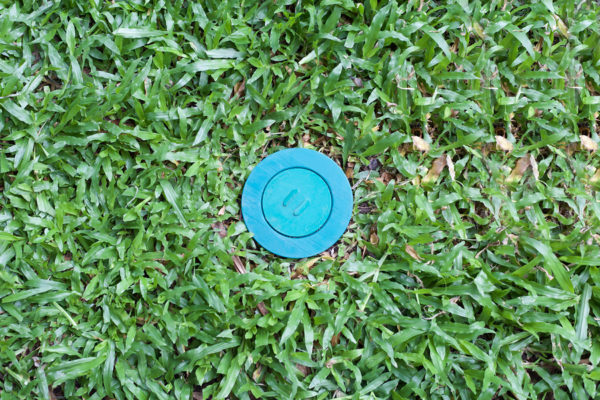
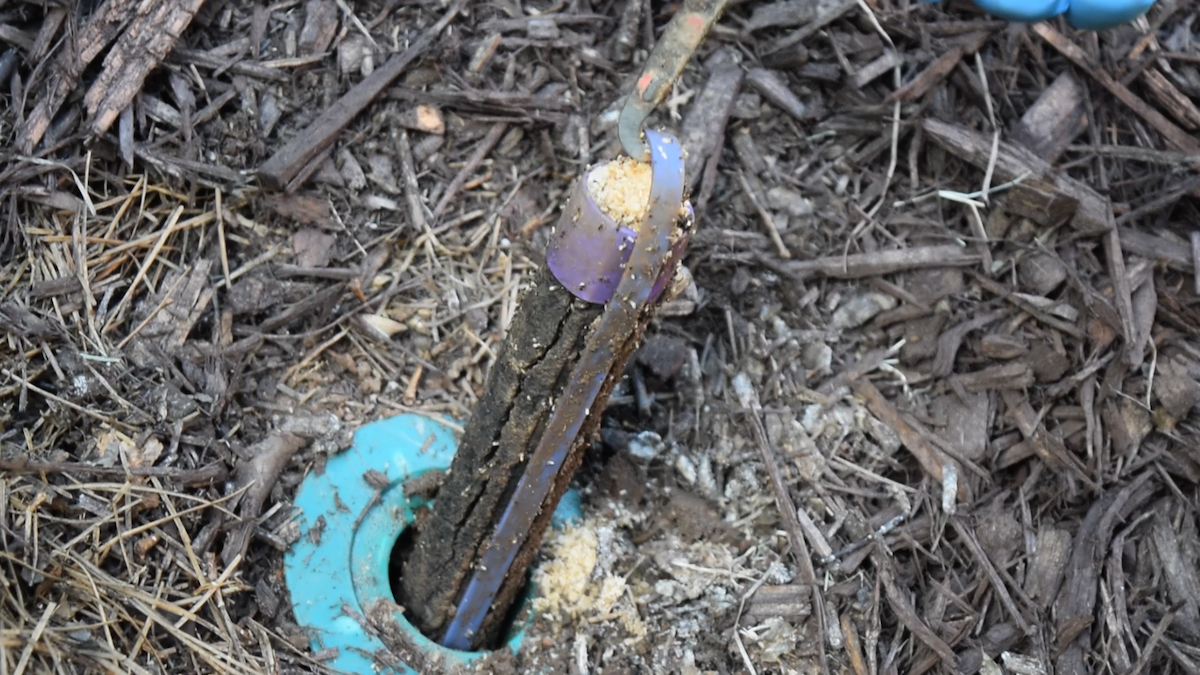
- Bait Station Installation. Bait stations containing Recruit HD termite bait are installed in the soil around your home’s perimeter.
- Termite Colony Elimination. Recruit HD termite bait works 24/7 to protect your home from termites and damage.
- Continuous Monitoring. Bait stations are monitored as needed to protect your home against future termite invasions.
- Annual Termite Inspections. Annual interior home inspections for termites and pests are included at no additional charge.
- Lifetime Termite Warranty. Every installation of The Sentricon System with Always Active comes with a lifetime warranty against termite infestations and damage.
- Green Termite Control. Sentricon Always Active bait, Recruit HD, poses no hazard to groundwater and has no label restrictions for use around wells and cisterns. The Sentricon system was registered under the Reduced Risk Pesticide Initiative of the US Environmental Protection Agency and is the only termite control product ever to receive the Presidential Green Chemistry Challenge Award.
If you suspect you have a termite problem contact a professional pest control company who can provide you with a thorough inspection and recommend a comprehensive termite treatment and prevention plan.
Apr 25, 2018 | Termite Control
Termite season is here! You may be seeing many ads for termite protection for your home, but you’ve gone years without termite protection. Is it even worth it?
Well, let’s look at the facts when it comes to termites and your home.
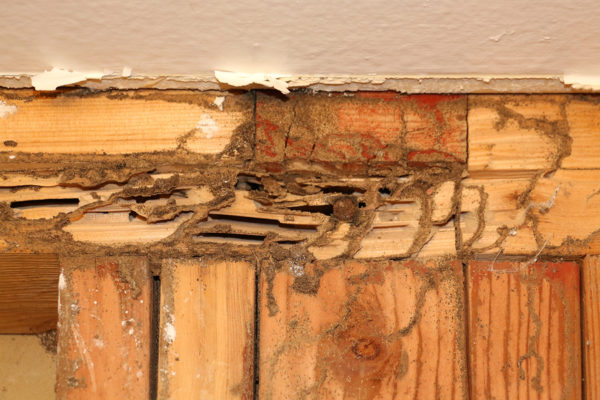
While you may not notice any signs of termite damage in your home currently, that doesn’t mean there’s not a silent, ongoing termite infestation causing damage to the structural integrity of your home. By having your home inspected, you may be able to catch the damage before it’s too late or prevent damage from ever impacting your largest investment.
When you sign up for Northwest Termite Service, here is what you can expect:
- Inspections of the property for signs of termites
- Placement of Sentricon® stations containing Recruit® HD termite bait in the soil around the home
- Once termites enter the station, the Recruit® HD termite bait is immediately available
- Continued monitoring of Sentricon® stations as needed to protect against future invasion
- Lifetime Termite Warranty
Don’t wait until you’re stuck with an insurmountable repair bill. Call (888) 466-7849 and set up a free termite inspection today!
Apr 20, 2018 | Termite Control
If you’ve been outside lately you’ve probably seen signs of spring – blooming flowers, pollen that aggravates our allergies, and lots of new insects buzzing around. Another thing that spring brings is swarms – of termites! Termites are present year round but their swarming season is during spring and early summer.
Termites cause billions of dollars in damage to homeowners each year. Here in the Southeast, subterranean termites are the most common types and are particularly destructive. These insatiable eaters can damage not only wooden structures, but have even been known to cause damage to brick and concrete homes as well. Termites can invade your home through cracks and holes as small as 1/32 of an inch!
Swarms are most common in spring and summer because they are triggered by warm, humid weather. Swarming marks the start of a new termite colony. Winged termites leave their nests when they become overcrowded and their isn’t enough food to sustain them. They then take flight and actually reproduce in mid-air. The females will then shed their wings and fall back to the ground. They then go in search of a new location to start their colonies.
Swarmers don’t usually cause any damage but once they establish their new colonies their offspring can cause significant damage – usually within 2 years. If you see flying termites it can signal one of two problems:
- There could be an existing termite problem nearby.
- Your home could potentially be at risk of a termite infestation when the swarm lands looking for a new place to colonize.
If you see winged termites inside your home this is a good indication that you already have an established termite colony inside or that there is existing damage already.
What can you do to prevent termites from coming into your home? Check out these tips to keep the termites out!
- Have regular inspections done by a termite control company.
- Do regular inspections of the outside of your home and the subfloor of your home checking for wood damage and the presence of mud tubes. (Mud tubes are pencil-sized tunnels located around termite nests, wood structures, and concrete or stone foundations.)
- Repair any damaged roof tiles, soffits, and fascia on your home.
- Keep mulch away from your foundation as this retains water and the moisture can attract termites.
- Keep your basements, attics, and crawlspaces well ventilated and dry. Consider enclosing your crawlspace completely.
- Make sure gutters are clear of debris and downspouts are working to make sure water is diverted away from your home. Consider installing gutter guards to help prevent clogs.
As always, if you suspect you have termites or find signs of damage, contact a termite control company who can come in and do a thorough inspection and set you up with a comprehensive treatment plan.
Mar 6, 2018 | Termite Control
Here in the south, nothing causes terror or fear more than the word, termite. Termites cause more than $5 million dollars in property damage throughout the United States. And what’s worse, most damage is not covered by homeowner’s insurances policies.
Before it gets out of control, look for signs of termites and consider getting a preventative termite treatment and termite warranty from an exterminating company.
Swarmers are your first sign that things may be awry, because while swarmers do not cause wood damage, they are a sign that a destructive colony is nearby. Look around doors and windowsills and for discarded wings. This is one of the first signs of a termite infestation.
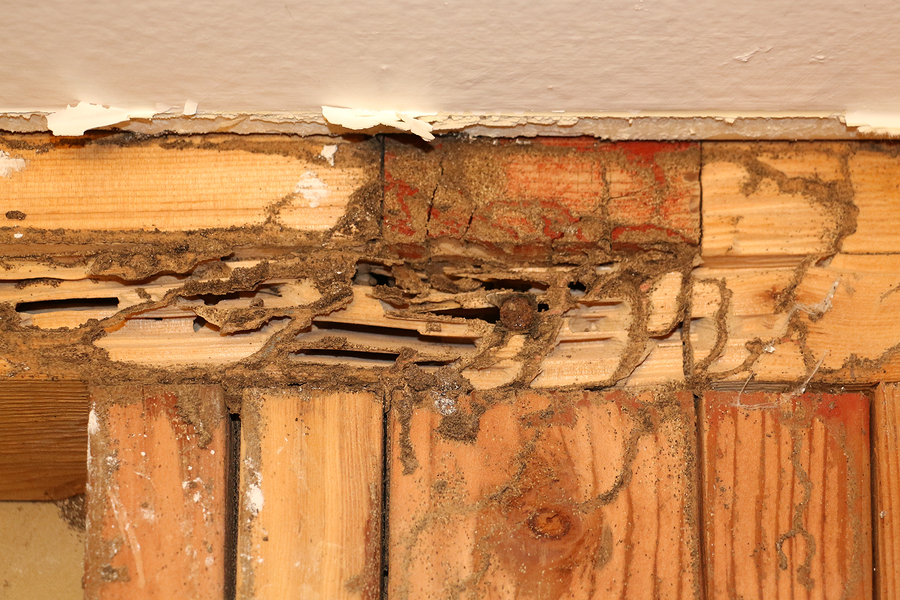
If you notice mud tubes or tunnels along the foundation of your home, the next step would be to contact your pest control provider to schedule a termite inspection. Termites use the mud tubes to keep moisture when traveling to and from their colony and your home (their delicious food source).
Other signs of termites that you may notice:
- Bubbles in paint: this will often be a sign of moisture build which points to either termites or water damage
- Wood Damage: wood that is suspected to be infested by termites will normally sound hollow, as termite prefer to eat wood from the inside out
- Frass: the sign of a Drywood termite infestation is the appearance of wood colored droppings that litter the ground as they feast on your home
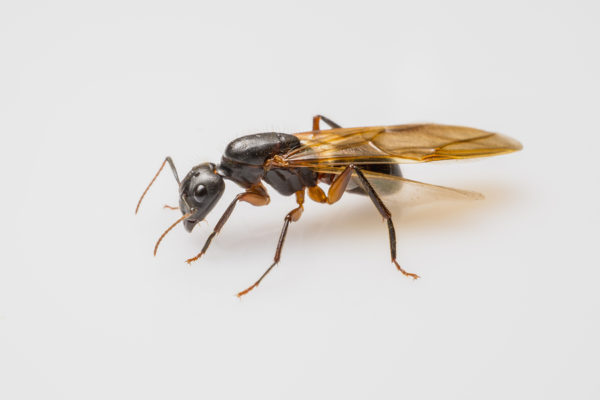
If you are able to get close enough to get a look, make sure that that you are dealing with a swarmer; flying ants are often mistaken for a flying termite.
If you do not find any of the signs of termites, now’s the time to get preventative termite protection! Sentricon Always Active, a termite baiting system, is the best protection to have for your home; it’s environmentally-responsible and comes with a lifetime termite warranty.
To schedule a free termite inspection, call (888) 466-7849 today!
Mar 2, 2018 | Pest Control, Termite Control
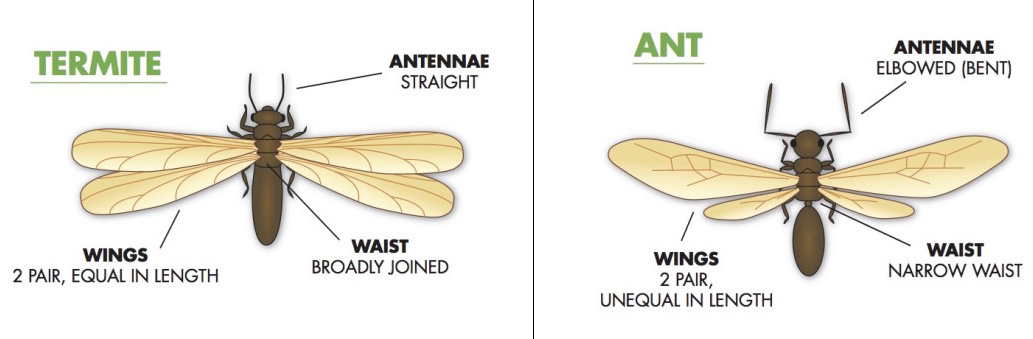
The change of season from winter to spring brings warm weather, sunshine, and … bugs! This is the time of year when many pests emerge from overwintering and begin the mating process. Spring is also known as swarm season – because this is the time when termites and flying ants emerge in droves, sometimes in swarms of thousands! While flying ants can cause problems in and around your home, termites are much more common – and much more costly! How can you tell if those swarming insects are terrible termites or flying ants? Check out our handy reference below for the key differences between the two, as well as what to do if you have these pests swarming in or near your home.
TERMITES
APPEARANCE:
- 4 wings of uniform size
- Straight antennae
- Wings are twice as long as their body
- Broad waist with uniform body width
TIMING:
Termites usually swarm once a year for reproduction and expansion of their colonies. Swarms mark the official beginning of termite season. Subterranean termites swarm in spring and during the daytime. Drywood termites swarm in late summer and early fall. Dampwood termites swarm in the summer.
BEHAVIOR:
Termites swarm after their colony reaches a certain size and the weather conditions are optimal. The termites are attracted to light and are often found near windows and light fixtures. Swarming termites will try to squeeze through racks and crevices in your walls and foundations to try and reach open air. If you see swarming termites then there is a good chance there is a well-established termite colony in or near your home.
FLYING ANTS:
APPEARANCE:
- Also have 4 wings, with larger front wings than back wings
- Elbowed antennae
- Shorter wings that are more proportionate to their bodies
- Segmented bodies with thin waists
TIMING:
Flying ants will swarm in late spring and early summer. They have to have bright sunlight, low winds, high humidity, and warm temperatures to swarm. They prefer to swarm after there has been 3 to 5 days of rain.
BEHAVIOR:
Flying ants swarm for the same reasons as termites – to reproduce and expand their colonies. Flying ants don’t represent any greater threat to humans than their wingless counterparts. Flying ants aren’t as significant a threat to your home as termites but they can still cause damage. If you have flying ant swarms in your home there is a good chance you have an established ant colony in your walls.
TREATMENT:
So now that you can identify exactly what kind of pest is swarming around your home, what should you do next?
- Contact a professional pest control company to come out and evaluate the swarm, as well as provide you with a treatment plan and prevention strategy.
- Don’t spray the swarms yourself with insecticide. Mark the areas where they are getting into your home and notify your pest control professional. Make sure to inspect the entire exterior of your home for possible entry points.
- Vacuum up any pests that get into your home. Both species are attracted to light so you may see them congregate around light fixtures or windows.
- Don’t tear away any woodwork, trim, baseboards, wall coverings, or floorboards. Instead, inspect them for termite damage by pressing your thumb against the wood and feeling for defects.
- Try to keep your windows and doors closed as much as possible during swarm season.
May 4, 2017 | Termite Control
Most of us know that termites‘ preferred food source is often the wood our homes are constructed of and that they cause billions of dollars in structural damage each year. But aside from being a costly nuisance, termites are actually interesting and beneficial insects – here’s why:
- Termites help keep our planet clean by eating/decomposing old, moldy, decaying, wet trees, wood, debris and other plant material. This process is vital to our eco-system and produces new soil which then grows new life – trees, plants, and provides food sources and homes to other animals and insects.
- Termites have been around for over 200 million years, making them one of the oldest insects, and live on almost every continent.
- Termites provide an excellent food source for bugs, lizards, birds, anteaters, other small animals, and even people in some parts of the world.
- Termites live in colonies that can consist of millions of termites. They’re organized, social insects that have very specific roles within their colonies and use pheromones to communicate with one another. Queens & kings reproduce and care for nymphs (babies), workers provide food, and soldiers protect the colony.
- Termites eat poop. Yes, it sounds gross but it’s actually totally necessary to prepare their digestive systems for eating wood and other plant material – a process called trophallaxis.
- Swarming termites – sometimes mistaken for flying ants – don’t actually cause structural damage. These winged termites (reproductive kings and queens) fly from the colony in search of mates to reproduce with.
- While termites may look similar to ants, they’re actually more closely related to cockroach species.
- Termites build mounds or nests where the colony resides – usually made of digested wood, soil, mud, and feces. Sometimes these nests are extremely large and intricate, with the one of the largest found being 42 feet tall!
- A female queen termite can live for up to 25 years and have millions of offspring in her lifetime!
- In some cultures, termites in a home represent a bad omen (death in the near future for the homeowner!). In this case, the only way it’s believed to escape death is to eliminate the termite colony or abandoning the infested home.
May 4, 2017 | Termite Control
Most of us know that termites‘ preferred food source is often the wood our homes are constructed of and that they cause billions of dollars in structural damage each year. But aside from being a costly nuisance, termites are actually interesting and beneficial insects – here’s why:
- Termites help keep our planet clean by eating/decomposing old, moldy, decaying, wet trees, wood, debris and other plant material. This process is vital to our eco-system and produces new soil which then grows new life – trees, plants, and provides food sources and homes to other animals and insects.
- Termites have been around for over 200 million years, making them one of the oldest insects, and live on almost every continent.
- Termites provide an excellent food source for bugs, lizards, birds, anteaters, other small animals, and even people in some parts of the world.
- Termites live in colonies that can consist of millions of termites. They’re organized, social insects that have very specific roles within their colonies and use pheromones to communicate with one another. Queens & kings reproduce and care for nymphs (babies), workers provide food, and soldiers protect the colony.
- Termites eat poop. Yes, it sounds gross but it’s actually totally necessary to prepare their digestive systems for eating wood and other plant material – a process called trophallaxis.
- Swarming termites – sometimes mistaken for flying ants – don’t actually cause structural damage. These winged termites (reproductive kings and queens) fly from the colony in search of mates to reproduce with.
- While termites may look similar to ants, they’re actually more closely related to cockroach species.
- Termites build mounds or nests where the colony resides – usually made of digested wood, soil, mud, and feces. Sometimes these nests are extremely large and intricate, with the one of the largest found being 42 feet tall!
- A female queen termite can live for up to 25 years and have millions of offspring in her lifetime!
- In some cultures, termites in a home represent a bad omen (death in the near future for the homeowner!). In this case, the only way it’s believed to escape death is to eliminate the termite colony or abandoning the infested home.
Mar 18, 2016 | Termite Control
The first official day of spring is Sunday, March 20th (the earliest arrival of spring of our lifetime so far in the Northern Hemisphere, according the the Old Farmer’s Almanac). This is also the first official day of termite season!
Termites cause billions of dollars in structural damage each year in the U.S. Don’t let your home be part of the statistic! Here are some things you can do to prevent termite damage:
- Keep any items made of wood away from your home: firewood, cross ties, construction projects – all are potential food sources for termites
- Another food source for termites: mulch; keep it away from your home’s perimeter
- Termites love moisture, so eliminate sources of moisture by keeping gutters clean
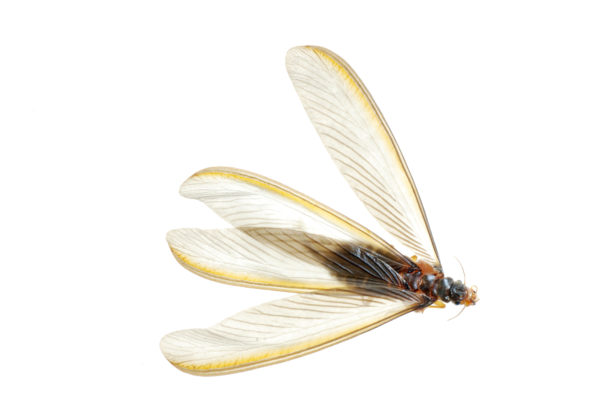
It’s also important to know what to look for. Identifying a termite infestation early is key in preventing damage to your home. Termites swarm in the spring and although swarming termites don’t cause damage, it’s a sign of a destructive termite colony nearby. Swarming termites are often mistaken for flying ants; they have two pairs of long narrow wings, equal in size and, unlike other termites in the colony, are dark or black in color. Warm or wet weather brings termite (subterranean) swarmers out of their nest, typically during daytime hours, to start new colonies. They’re attracted to light so you’ll most likely see swarming termites around windows, doors, and light fixtures, or the wings they sometimes leave behind.
If you notice termite swarmers in your home, it’s a good indication of an established termite colony nearby, that could be causing significant structural damage. If you have an active termite warranty, call your exterminator and request a termite inspection. If termite activity is found, you should be provided with termite treatment options and, depending on your warranty’s coverage, damage repair solutions.
If you don’t currently have termite protection, call a professional termite control company immediately. They will provide a thorough inspection of your home (usually free) and give you the best treatment options to eliminate the active termites and prevent a future termite infestation. Be sure your pest control provider offers multiple warranties with damage repair options. Some even offer lifetime damage repair warranties with termite baiting systems, like Sentricon Always Active, an eco-friendly alternative to termite control.