We’ve all been there before… you’re sitting in your house and you hear an incessant buzzing. All of a sudden something flies past your face! If you’re like most of us, your first thought it aghh! A bug in my house! Once you get over the initial shock of being dive bombed by this home invader, your next thoughts might be: What kind of bug is this? Is there more than one? How did it get in my house? How do I get rid of it? While we can’t answer all of your questions, we can help with a few. We’ve listed some of the most common flying pests below, as well as some tips to prevent them from getting into your home.
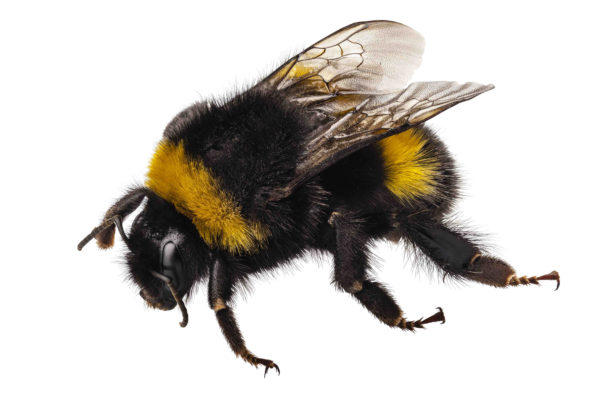
Bumblebees are large, clumsy looking insects with oval shaped bodies. They are extremely fuzzy. They are yellow and black striped in color. They typically grow between 1/4″ and 1″ in length.
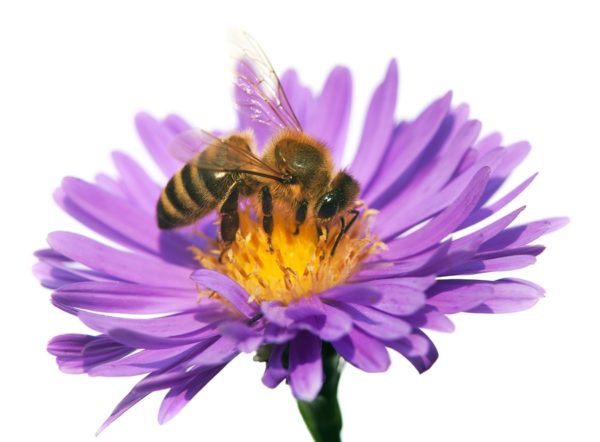
Honeybees are predominantly golden yellow with brown bands, but they can also be orange-brown in color. They have a very hairy appearance. They can grow to be about 1/2″ in length. They also have flat hindmost legs which are used to carry pollen.
Carpenter bees have a fuzzy body that is very robust in shape. Their bodies are yellow except for their abdomen which is shiny black. Males also have a white patch on their faces. Carpenter bees grow from 1/2″ to 1″ in length.
HABITAT:
Bumblebees typically make their nests underground so their nests may not be visible. They will often make their nests in old mouse burrows or in dense clumps of grass. They have also been known to make their nests under woodpiles or behind the siding of homes. Bumblebees are found throughout the United States.
Honeybees typically make their nests in beehives, trees, hollow logs, and piles of logs. It is very common for them to get inside your home and nest in attics, wall voids, chimneys, and crawlspaces. Honeybees are found throughout the United States.
Carpenter bees create their nests in pieces of wood – preferably soft wood that has not been painted or sealed. They will often make their nests in decks, porches, roof eaves, wooden shingles, wooden playgrounds, in wooden outdoor furniture, and in sheds. The entry holes for carpenter bees are perfectly round.
DIET:
All three species of bees feed on nectar and pollen from flowering plants. Contrary to popular belief, carpenter bees don’t actually eat the wood they burrow in to make their nests.
BEHAVIOR:
Female bumblebees have stingers but males do not. Bumblebees are not significantly aggressive but they will sting if they feel threatened. Their sting can be dangerous to humans with an allergy.
Honeybees are the only bee colonies that can survive for many years. They are very social insects. Female honeybees have stingers but males don’t. The female stinger is barbed which means it is only able to sting once. Honeybees aren’t known for being aggressive but they will sting if they are directly attacked.
Carpenter bees are very solitary insects and don’t create very large nest. Female carpenter bees have stingers but males don’t. Their sting is strong enough to cause a reaction in humans. Female carpenter bees are docile and rarely sting unless they are directly attacked. Male carpenter bees are very aggressive but don’t have stingers to do harm with.
PREVENTION:
All bees are protected as pollinators so treatment is only provided when they are deemed to be a nuisance or a threat. Removal is always the first treatment option because of this protected status.
Avoid planting flowering plants and vegetation near the exterior of your home.
Keep woodpiles and compost piles a safe distance from your home.
Remove any fallen trees and other piles of debris from your property.
Make sure your outdoor trashcans have tight lids.
Paint or stain any wooden structures including porches on your property.
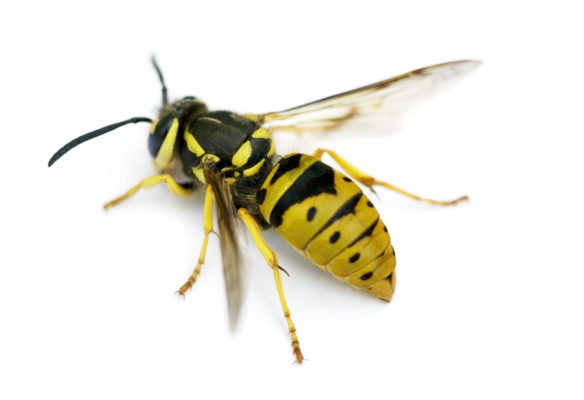
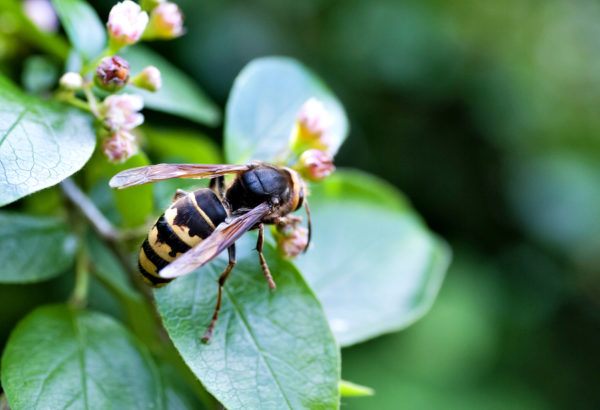
Yellow jackets have a sleek appearance. They are not fuzzy. They are black and yellow striped in color. They can grow to be 3/8″ to 5/8″ long.
HABITAT:
Yellow jackets build their nests either high up or in the ground. Their elevated nests can be found in the walls of buildings or in attics and chimneys. Their ground nests are usually in areas that lack vegetation or in spaces next to the entrance of buildings.
DIET:
Yellow jackets feed on other insects. They also eat any sweets and proteins that they come across. You can often find yellow jackets at outdoor events because they like to feed on sugary food scraps and drinks that are left out.
BEHAVIOR:
Yellow jackets have a smooth stinger which allows them to sting multiple times. They are usually docile unless their nests are approached. Then they become very aggressive and will sting repeatedly. Their sting can be life threatening if you are allergic. Yellow jackets are beneficial both as pollinators and because they help control the population of nuisance insects.
PREVENTION:
Trim back shrubbery and trees from the exterior of your home.
Make sure outdoor trash cans have tight fitting lids.
Seal cracks in foundations.
Caulk any gaps around windows and doors.
Cap chimneys.
Make sure vent covers are secure.
If you are outdoors, make sure food is kept covered and dispose of cans, cups, and bottles quickly.
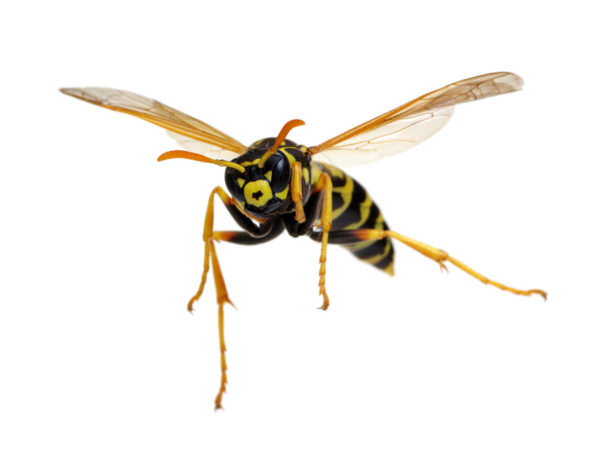
Paper wasps have a sleek appearance with a pinched waste and long, thin legs. They have gray wings and their bodies are black or brown with yellow or orange markings. Paper wasps can grow to be 5/8″ to 3/4″ in length.
HABITAT:
Paper wasps are found throughout the United States. They will build their nests of the ground on any horizontal surface they can find. Their nests are commonly found hanging from trees, shrubs, porches, decks, roofs, outdoor grills, and door frames. Their nests resemble an umbrella attached by a stem. Their name comes from the paper-like nests that they build.
DIET:
Paper wasps are predatory insects and feed on a wide variety of insects and spiders. They also eat nectar and pollen.
BEHAVIOR:
Paper wasps have smooth stingers that allow them to sting multiple times. They are not typically aggressive but will sting to defend their nests. Paper wasps have facial recognition capabilities like humans and chimpanzees do. They can actually recognize the faces of their colony members.
PREVENTION:
Nests have to be knocked down in order to prevent rebuilding and overwintering.
Adult wasps must also be killed to prevent the nest from being rebuild. This should be done in the early morning or late at night.
Trim back shrubs and trees from the exterior of your home.
Make sure outdoor trashcans have tight fitting lids.
Cap chimneys.
Fix any loose roof shingles.
Repair any holes in your roof line.
Make sure windows and doors have screens that are in good repair.
Caulk any gaps around windows and doors.
If you have a wasp nest or suspect you have a wasp problem, contact a professional pest control company.
BALD FACED HORNETS:
APPEARANCE:
Hornets are much bigger than wasps. They are almost completely black except for an off white pattern on their face. They are long and thin with wasp-like bodies. They can grow from 3/4″ to 1-3/8″ in length.
HABITAT:
Hornets are found throughout the United States. Hornet colonies only survive for 1 year. They build aerial nests that can be found in trees, on utility poles, on the side of homes, and under eaves. Hornet nests can be more than 14″ around and more than 24″ long.
DIET:
Hornets are pollinators. Adults have a liquid diet that mostly consists of nectar and plant juices. They are also predatory and will prey on insects that they bring back to their nests to feed their larvae.
BEHAVIOR:
Hornets have a more painful sting than wasps do. A single hornet sting can be fatal if the victim is allergic. When hornets sting or feel threatened, they give off a pheromone that signals the rest of the colony to attack as well.
PREVENTION:
It is difficult to prevent hornets from building nests. If the nest is up high, it is best to just leave it alone.
Trim back shrubs and trees from the exterior of your home.
Make sure outdoor trashcans have tight fitting lids.
Cap chimneys.
Fix any loose roof shingles.
Repair any holes in your roof line.
Make sure windows and doors have screens that are in good repair.
Caulk any gaps around windows and doors.
If you have a hornet nest or suspect you have a hornet problem, contact a professional pest control company.
LADYBUGS
APPEARANCE:
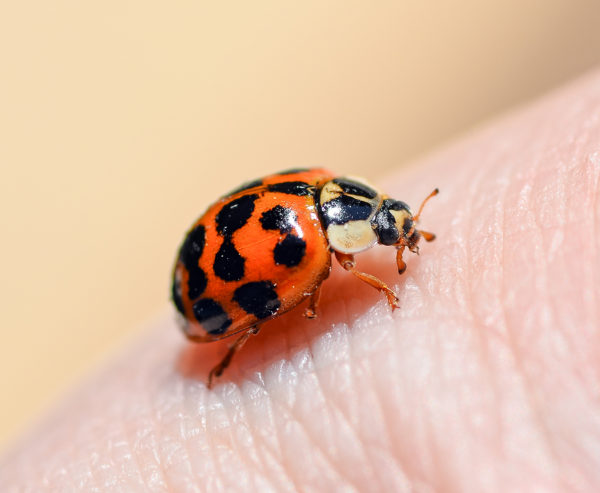
Ladybugs have a distinctive appearance. They are bright red, orange, or yellow with black spots. Their bodies are oval and dome shaped.
HABITAT:
Ladybugs are found worldwide. There are over 5000 species total and 450 species in North America. Ladybugs live outside in gardens and landscaped areas. They aren’t able to tolerate cold weather so in the fall they will invade homes in search of a place to overwinter. They will typically gather on windowsills or you will see them crawling along walls. They tend to end up in attics, under flooring, and in wall voids.
DIET:
Despite their appearance, ladybugs are predatory insects. They feed on a variety of other insects, helping to keep nuisance populations down.
BEHAVIOR:
Ladybugs secrete a substance wen they are threatened that makes them taste bad to their predators. They can also play dead if they feel threatened.
PREVENTION:
Install chimney caps.
Caulk any gaps around doors and windows.
Makes sure doors and windows have screens that are in good repair.
Install door sweeps on any doors that go outside.
Seal any cracks in your foundation.
Secure all vent covers.
Fill in any spaces around utility entrances.
Try to limit garden areas near the exterior of your home.
Trim back shrubs and trees from the sides of your home.
You can use an insect light trap to catch any ladybugs that make their way into your home.
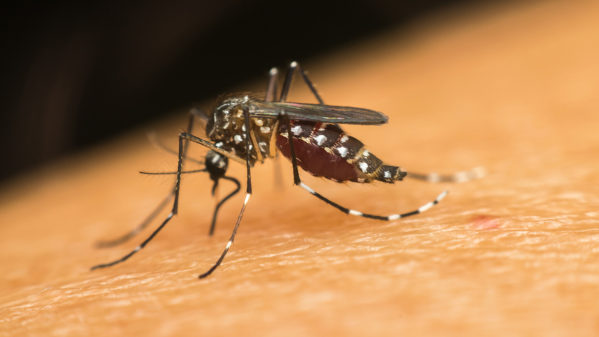
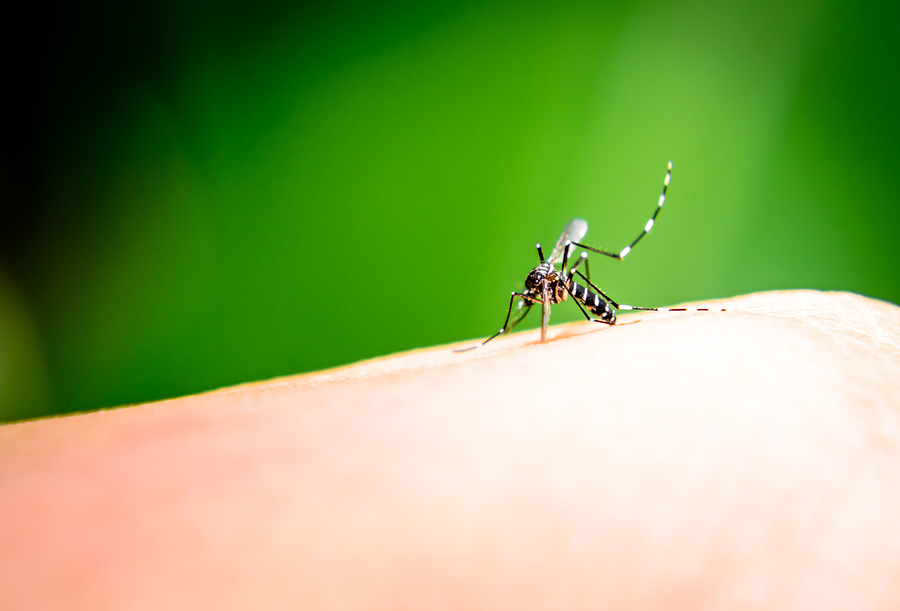
Mosquitoes have narrow bodies with long thin legs and transparent wings. They have gray bodies with white stripes on their abdomen. They also have long beaks that allow them to penetrate the skin. Mosquitoes can grow to be 1/4″ to 3/8″ long.
HABITAT:
Mosquitoes can be found in almost every landscape environment on earth with the exception of deserts and the arctic. Mosquitoes are most often found near stagnant water as this is where they lay their eggs. They are often found on the edges of streams, lakes, and ponds; near wading pools; old tires; bird baths; tarps; piles of trash; clogged gutters; and wheelbarrows.
DIET:
Mosquitoes feed on nectar and plant juices. Female mosquitoes bite to feed on blood.
BEHAVIOR:
The species of mosquito determines when they are most active. Some species are more active in the daytime while others become active at dark. Mosquitoes are capable of transmitting several diseases and pathogens to both humans and animals. Mosquitoes can transmit West Nile virus, Zika virus, Chikungunya fever, malaria, and canine heartworm among others.
PREVENTION:
Eliminate any standing water on or near your property.
Check gutters and downspouts to make sure they are not clogged.
Consider installing Leafproof gutter guards on your home to prevent clogs and stagnant water.
Store buckets, wading pools, wheelbarrows, and empty pet food bowls upside down so they can’t collect water.
Shake off any water that collects on tarps.
Dispose of your trash on a regular basis and store it in cans with tight-fitting lids.
Keep your grass cut short.
Keep doors and windows shut as much as possible.
Make sure doors and windows have screens that are in good repair.
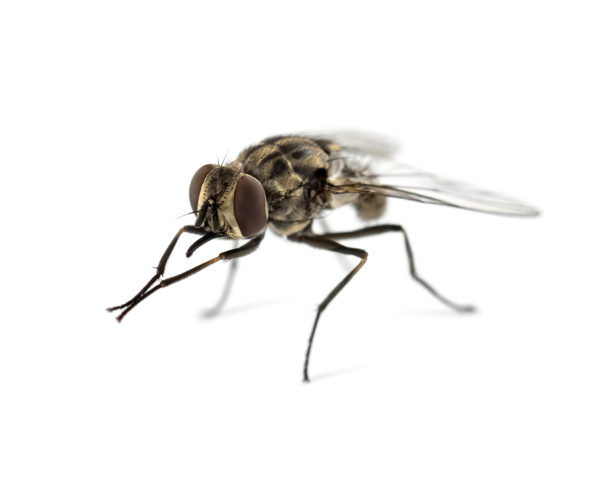
Houseflies have a very distinctive appearance. They have dull gray bodies with vertical lines on the top, a single gold stripe, and a silver stripe on their face. They can grow to be 1/8″ to 1/4″ in size.
HABITAT:
Flies can be found in most homes. They enter through tears in screens, gaps around windows and doors, doors and windows that have been left open, and cracks in the foundation. They are attracted to homes by garbage, animal feces, compost piles, and leaky pipes. They will often rest on your floors, walls, and ceilings.
DIET:
Houseflies are scavengers that eat a variety of different foods. They will feed on food found in pantries and kitchens, pet food, carcasses, garbage, or excrement. Houseflies are only able to eat liquids but they are able to turn many solid foods into liquid form so that they can eat it.
BEHAVIOR:
Houseflies can spread diseases when they land on your food or your food prep areas. They are the most common fly found in homes and only live from 15 to 25 days.
PREVENTION:
Clean up pet waste daily.
Use garbage cans with tight fitting lids.
Keep garbage and compost piles away from your home.
Use screens on windows and doors and make sure they are in good repair.
Seal any cracks in your foundation.
Caulk gaps around windows and doors.
Keep food in sealed containers or in the fridge, including pet food.
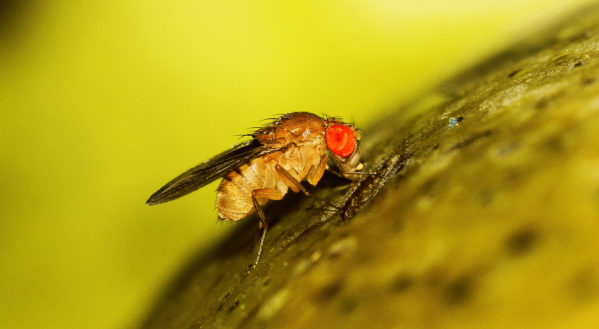
Fruit flies are extremely small in size, only getting about 1/8″ in length. They are usually brown, tan or black with distinctive red eyes. They are too small, however, for you to determine their color with the naked eye.
HABITAT:
Fruit flies are found throughout the United States. They are usually seen in the kitchen, especially around fruits and vegetables. They live outside in spring and summer. They enter homes as hitchhikers on fruits and vegetables that we buy from stores that are already infested. They can also enter through small spaces in widows, doors, and walls. They are attracted by large gardens, compost piles, and fruit trees.
DIET:
Fruit flies feed on very ripe fruits and vegetables like bananas, strawberries, melons, cucumbers, potatoes, and more. They also feed on fermented liquids like vinegar, cider, and beer.
BEHAVIOR:
Fruit flies are a nuisance. They enter your home in large numbers and are very difficult to eliminate. They can carry dangerous that can be transmitted to humans.
PREVENTION:
Inspect your fruits and vegetables before you buy them and before you bring them into your home.
Store produce in the refrigerator instead of on the counter.
Get rid of overripe fruits and vegetables quickly.
Pick up any fallen fruit and vegetables from your garden.
Make sure your compost bins have lids on them.
Empty your trash frequently.
Store trash in outdoor cans with tightly fitting lids.
During the colder months of winter, most of us like to stay bundled up and warm – with warmer clothes and inside our cozy homes. Unfortunately, many animals also seek this same shelter and warmth in the winter – oftentimes in our homes! Do you know which animals can cause problems for you during these colder months? What can you do to prevent them from seeking shelter in your home? Check out these common winter wildlife pests and 6 ways you can prevent them.
SQUIRRELS
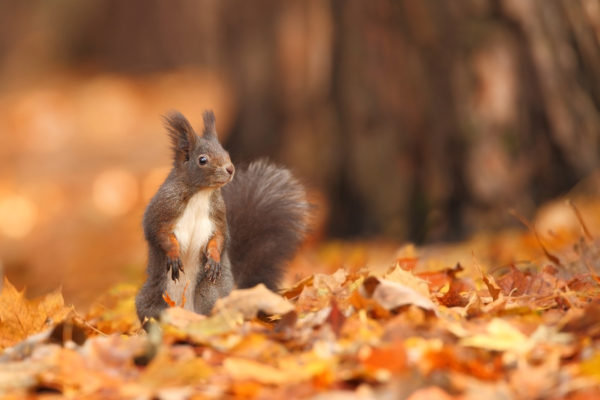
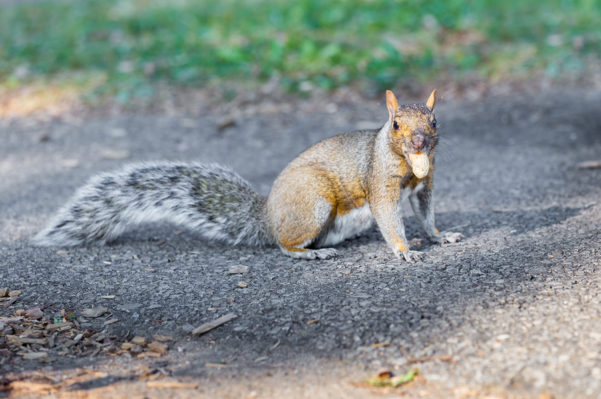
Squirrels can be a problem year round. They don’t hibernate in the winter and stay very active. They like to seek shelter and warmth in attic spaces. They may also seek out your attic as a storage space for their winter stash of nuts, grains, and seeds so they don’t have to search for food in the cold winter months. Squirrel nests are easy to spot in the winter in bare trees. Squirrels are notorious chewers – so if you have them in your attic you can expect your wood, insulation, and electrical wiring to suffer damage.
SKUNKS
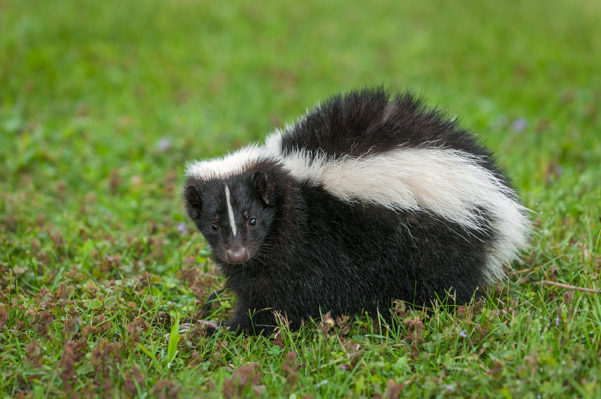
Skunks live in the same areas during the winter as they do in the summer. They like to burrow under our decks, patios, and stoops. Skunks don’t technically hibernate, but they do lower their body temperature and heart rate in the winter to conserve energy and therefore become less active. They can go up to a week without food and water but will venture out on a semi-regular basis in search of sustenance. They live in larger communities in the wintertime for warmth.
RATS/MICE
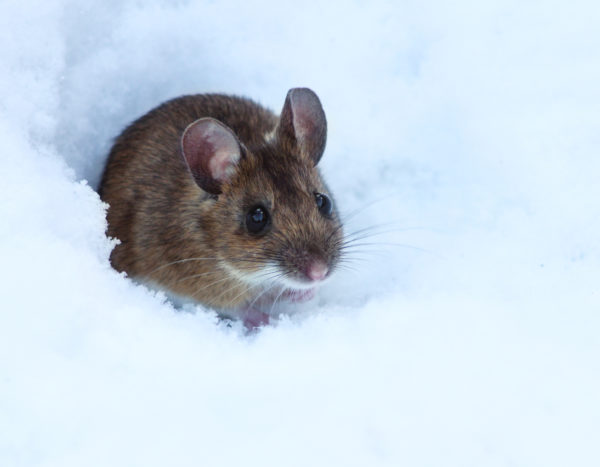
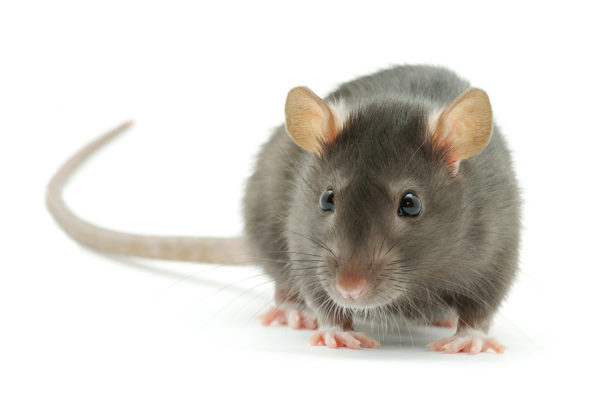
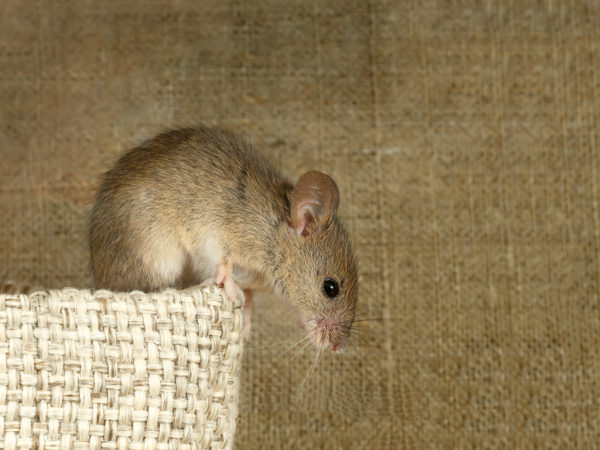
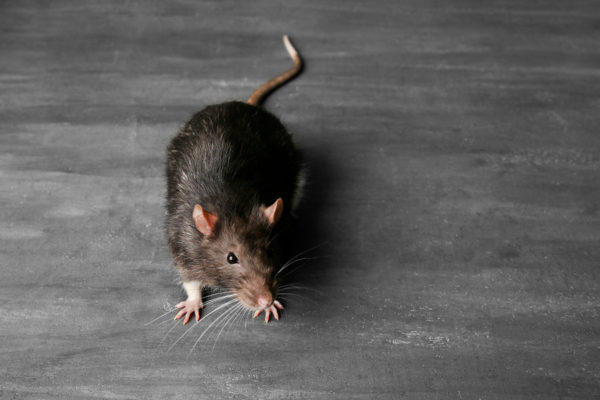
Rats and mice are also year round pests but they can become more of a problem in the winter. These rodents seek out warmth, food, shelter, and water inside our homes during the harsh winter months. They can squeeze into your home through extremely small openings. Like squirrels, they are also notorious for chewing through insulation, wiring, and wood.
BATS
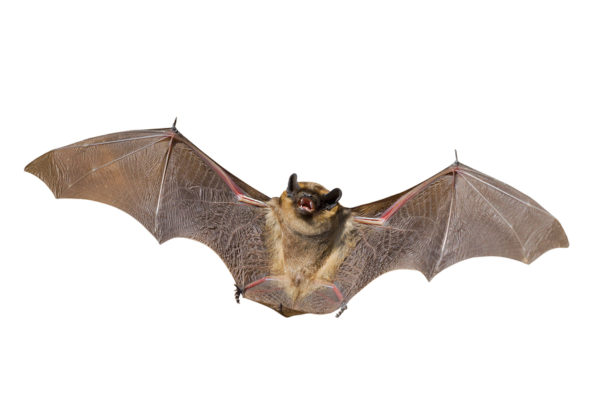
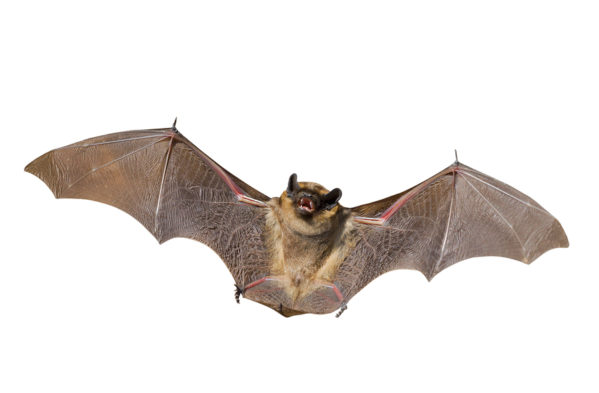
There are at least 40 different species of bats in the United States. Bats are mostly active in the summer months and will hibernate in the winter. They will, however, hibernate in your attic! Bats like to roost in attics, belfries, behind shutters, and loose boards. They are carriers of rabies and can spread disease.
RACCOONS
Raccoons are nocturnal and rarely seen during the day. Raccoons can cause significant damage to roofs and chimneys in their search for den sites. They will also get into crawlspaces in search of den sites. They are a major carrier of rabies.
CHIPMUNKS
Chipmunks are like squirrels in that they gather and store their food in the fall. They are less active in the colder weather, lowering their body temperatures and heart rates to conserve energy. They usually make their nests in underground burrows that can be up to 10 feet long. They will venture out every few days to eat, drink, and go to the bathroom. Oftentimes they will use attics as a storage space for their winter stash.
OPOSSUMS
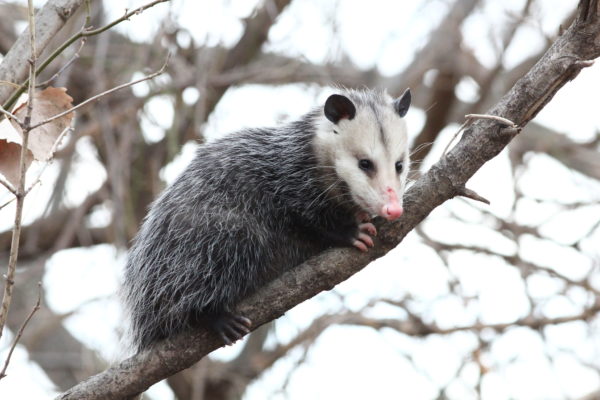
Opossums are the only marsupial found in North America. They will occasionally make their dens in attics and garages. They are known to make very messy nests. Opossums have very sharp teeth and will show them, as well as hiss, when they feel threatened. They are known to bite in very rare cases.
PREVENTION:
Winter wildlife can be a problem especially if they build a nest or store food in or near your home in the wintertime. The cold weather also doesn’t eliminate the diseases that they carry and spread. If these pests get into your home they can cause significant damage to your roof, insulation, foundation, wiring, and more. What can you do to prevent winter wildlife from making your home theirs? Check out these 6 tips to prevent winter wildlife.
Eliminate Entry Points. Winter wildlife can’t get into your home if they don’t have a way in. Carefully inspect your home for any openings that animals can use to get in. Check and proof any weep vents in your bricks. Seal around HVAC and utility lines, in gaps in the foundation and siding, in gaps between your roof and soffits, and gaps between the soffits and fascia. Check your roof vents, as well. Seal gaps around windows and doors, including your garage door. Many rodents can chew through rubber or thin plastic seals so consider using heavy duty metal seals or caulk. Check screens on doors and windows to make sure they are in good repair. Use chimney caps. Consider enclosing your crawlspace to prevent unwanted critters, as well.
Clean Your Gutters. Clogged gutters can block the drainage of rain and melting snow and ice. This can not only cause damage to your home, but also invites birds and other wildlife to build their nests here. Make sure drains are clean and that your spouts are far enough away from your foundation. Consider installing Leafproof XP Gutter Guards to make gutter cleaning and maintenance easier for you.
Clear Out The Clutter. Now is the time to reorganize your belongings. This not only lets you get your garage or attic cleaned out, but also allows you to inspect areas of these spaces that you might not normally have access to. If possible, get rid of cardboard storage boxes and use plastic containers with lids instead. Get rid of old newspapers or other paper products as these invite rodents and other pests to make nests.
Get Rid Of Their Food. Winter wildlife will eat anything they can get their hands on. If you have birdfeeders, take them down in the evenings and put them back out in the mornings. Clean up any spilled birdseed from the ground underneath them. If you do keep your birdfeeders out all the time, consider squirrel proofing them. Use trash and compost bins with locks and store them in the garage if possible. Make sure outdoor composts are well sealed. Store food in airtight containers and refrigerate them if possible. Don’t leave pet food out overnight, especially outdoors. Clean up any spilled food and crumbs daily and sweep and vacuum often.
Clean Up Your Yard. Clutter and debris in your yard can invite all sorts of pests to invade. Keep your yard clean and free of debris. Trim shrubs and branches away from your home as pests can use these to access your house. Stack firewood at least 2 feet off the ground to keep animals from nesting underneath. Dead trees, brush piles, and tall grasses should be put in yard waste bags and kept in the garage until garbage day.
Call The Pros. If you suspect you have a wildlife problem, call a professional wildlife control company. They can come out and inspect your home, remove any unwanted critters, and provide you with a prevention and treatment plan to keep them from coming back.
Rodents are one of the most common pests that come into our homes in the winter. Rodents are in search of 3 things – food, water, and shelter – and they can find all 3 of them in and around our homes. Squirrels, raccoons, rats, and mice are some of the most frequently seen rodents in the colder months. Rodents can cause significant damage to property and can also be a big health risk to humans. Prevention is critical in managing and preventing an infestation of rodents. Check out these tips to keep the rodents out this winter:
Put A Lid On Your Trash: If possible, use trashcans made of metal with snug fitting lids. If you must use plastic, make sure there are no holes in it.
Put Up Your Pet Food: Store pet food and birdseed in glass or metal containers with tight lids. Make sure to remove them at night and store them away until morning. Make sure to pick up any fallen fruit or nuts off the ground outside your home, as well. Remove standing water from bird feeders.
Elevate Your Compost: Raise your compost container at least 1 foot off the ground.
Keep Your Garage Clean: Rodents like to eat lawn seed, tulip bulbs, bone meal, and other items frequently used in gardening. Make sure they are stored in glass or metal containers with tight lids. Keep firewood a good distance from the house. Organize and store boxes in the garage off the ground to eliminate nesting places.
Clean The Kitchen: Keep food stored in tightly sealed containers. Clean up spilled food and crumbs nightly.
Keep Your Home Maintained: Make sure openings around your home are properly sealed. Keep your gutters clear of debris and water. Screen your attic vents. Keep screens on windows and doors in good repair and replace when needed.
Call A Pro: If you suspect you have a rodent problem, call a professional pest control company or a professional wildlife removal company who can evaluate your home and provide you with a comprehensive treatment plan.
Mice and rats will seek shelter and warmth during the cold winter months. They can fit through very small openings so eliminating entry points is an effective way at preventing them from coming into your home. Eliminating food and water sources is also effective. Replace damaged roof tiles and fill any cracks in the roofing cement. Keep your attics and garages tidy and clutter free. Store your items in plastic containers versus cardboard. Install chimney caps to keep them from nesting inside your chimney. Cover your air vents with wire mesh. Store food in airtight containers and don’t leave any dirty dishes in the sink. Empty your trash regularly and make sure trash can lids are secure. Don’t leave trash bags out in the open. Clean countertops, stoves, and behind the fridge regularly and sweep and vacuum often. Seal holes around pipes using caulk or expanding foam. Keep branches and shrubbery trimmed away from the house and store firewood at least 20 feet from the home. Don’t leave pet food out overnight and seal unused pet food in airtight containers. Replace weatherstripping on windows and doors.
2. Squirrels
Squirrels like to frequent attics and chimneys to make their nests. Cover chimneys with chimney caps. Keep shrubbery trimmed away from the house and cut down overhanging limbs. Replace rotting wood and seal any entry points including where pipes and utilities come into the home and overhanging eaves.
3. Birds and Bats
Birds and bats can and will come into your home through any opening in the exterior of the house. Chimneys should be sealed with chimney caps. Inspect the outside of your home for any openings and seal them with steel wool or foam rubber. Keep doors and windows shut as much as possible. Use screens if you must have your windows open and inspect the screens regularly for damage.
4. Cockroaches
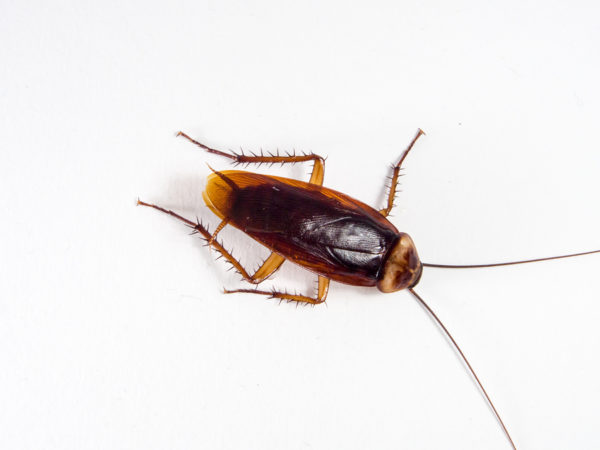
Cockroaches are attracted to moisture and excess water. They will also enter your home in search of food. Check your pipes regularly for leaks and repair quickly. Remove obstructions in pipes to prevent bursting and leaks. Seal around pipe entry points into the home. Clean your gutters. Store items in plastic containers rather than cardboard and keep them off the floor. Store food (including pet food) in airtight containers. Don’t leave dirty dishes in the sink. Wipe down countertops and sweep and vacuum regularly. Clean under sinks, in stoves, and behind appliances regularly. Empty the trash regularly.
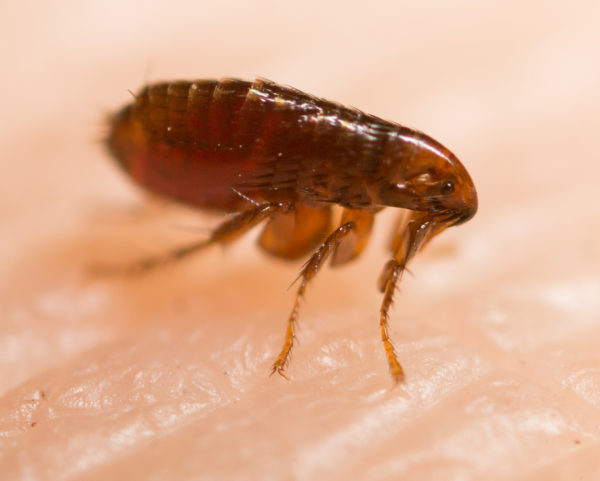
5. Fleas
Fleas will hitch a ride into your home on your pets. The first step in preventing fleas is to treat your animals with a flea preventative, whether through medicine or shampoos or both. Check your rugs, carpets, furniture, and pet bedding for signs of fleas. Wash your pet’s bedding and other items in hot water frequently. Vacuum regularly and be sure to empty the vacuum each time you use it. Keep your grass mowed and your shrubs trimmed as this gives fleas less room to hide. Fleas can come into your yard on wild animals so don’t leave pet food out overnight to tempt them to enter your yard. Seal entry points into the house or under porches to prevent them from hiding there, as well.
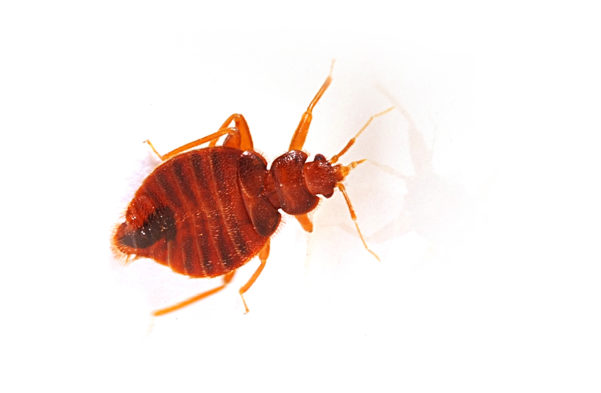
6. Bed Bugs
Bed bugs can come into your home in luggage (be vigilant about preventing bed bugs when traveling!) on furniture, bedding, boxes, and even clothing. Check luggage, furniture, bedding, etc. carefully before bringing it into your home. Use a mattress cover that encases the mattress and the box springs. Vacuum frequently. Wash and dry bedding on high heat regularly. Do the same with clothing after traveling.
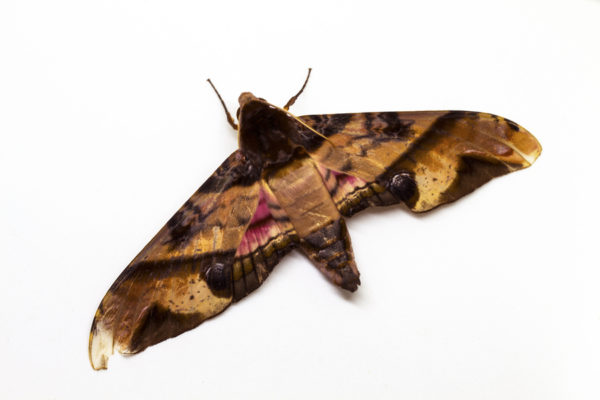
7. Moths
Moths are attracted to wool, fur, and upholstered furniture. Be sure to check your clothes regularly for signs of damage. Wash clothes and store them in sealed bags. Use moth balls. Vacuum and clean the insides of storage areas including wardrobes, closets, and drawers regularly.
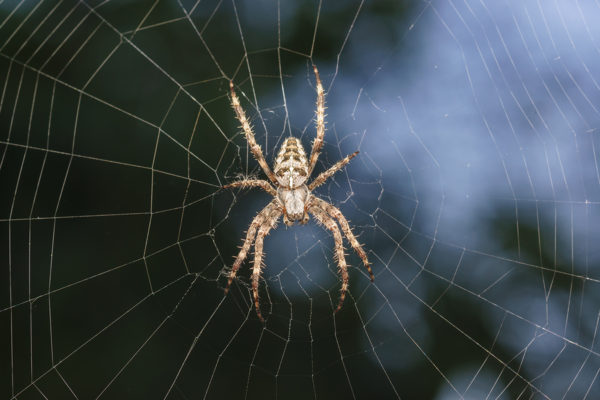
8. Spiders
Spiders like to hide in areas of the home that are seldom used. Store seldom used items in sealed plastic containers. Seal cracks and holes in the exterior of your home to keep them from coming inside. Keep your outdoor lights off and use blinds or curtains to block the inside light. Spiders aren’t attracted to the lights but other insects are which the spiders feed on. This eliminates a food source for spiders. Keep shrubbery trimmed away from your home. Keep the grass mowed and remove debris from around your home. Sweep and vacuum regularly. Clear out as much clutter as possible. Vacuum spiders and spider webs.
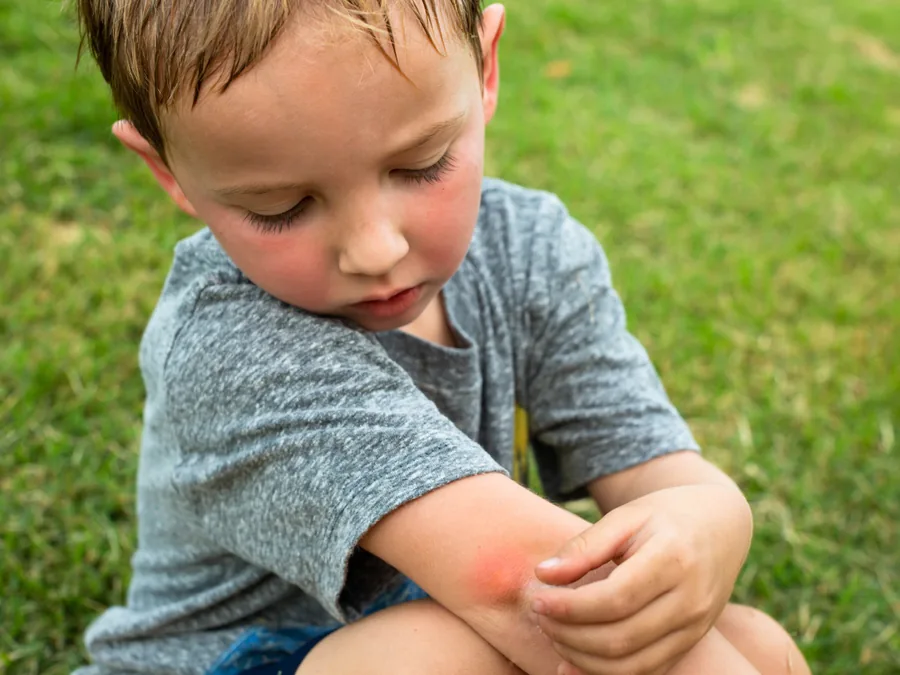
The sun is shining, the warm breeze is blowing, you’ve got your feet up, unwinding from the week, when…OUCH! That moment of relaxation you’ve been waiting for was suddenly interrupted by a painful mosquito bite. At this point you’re annoyed, thinking about going back inside to avoid more bites, or wondering if you should make an appointment with your doctor to check for Zika or West Nile. What a summer bummer!
Mosquitoes not only pose serious risks for your family, but pets are a target too. Heartworms are parasites transmitted to dogs and cats through mosquito bites, that live in pets’ bloodstream, lungs and heart, and can cause serious, even deadly, side effects.
Don’t let mosquitoes suck the life out of your summer. Protect family and pets and take back your yard with these easy mosquito bite prevention tips:
Attack Mosquitoes at the Source
Mosquitoes breed in areas with stagnant, standing water like fountains and water features, toys, buckets, outdoor pet bowls, bird baths, clogged gutters, vases, flowerpot saucers, old tires or tire swings, rain barrels, trash cans and trash can lids, tarps, kiddie pools, and pool covers. The best way to prevent mosquito bites is to remove these items/areas and to treat your yard with mosquito control products. This is included in a monthly mosquito reduction program and is guaranteed to drastically reduce the number of mosquitoes in and around your yard.
Use Insect Repellent
One of the best ways to prevent Zika and other mosquito-borne diseases is to use skin-applied insect repellent when you’re going to be outside. Formulas that contain DEET and picaridin were found to be most effective at preventing mosquito bites (and those with natural plant oils least effective), according to Consumer Reports.
Cover Up
If you really want to further prevent bites, keep arms and legs covered when outdoors with light-colored, loose clothing. Sometimes this can be just as uncomfortable as getting bitten, though, with the scorching summer heat. If you leave skin exposed, be sure to reapply insect repellent often (especially if you’ll be swimming).
Use Fans
Consider using fans in areas you’ll be hanging out this summer – on decks, patios, around pools, etc. Mosquitoes are weak fliers so the winds from fans will make it hard for them to get close enough to bite.
By Matthew “Logan” Walker, Area Technical Leader — Northwest Service Centers, Georgia · Last updated: July 2026 Reviewed for accuracy by Mike Vilchez, Quality Assurance Technical Field Trainer — South Florida
Quick answer: To get rid of a mosquito bite, wash the area with soap and water, apply a cold compress for 10 minutes, then use an over-the-counter anti-itch cream containing hydrocortisone or an oral antihistamine. Most bites resolve within 3 to 7 days. Scratching slows healing and raises your infection risk.
A mosquito bite seems like a minor problem until it isn’t. The relentless itch, the swelling that won’t quit, the bite you can’t stop scratching at 2 a.m. For residents across Georgia, Tennessee, Alabama, and the Carolinas, this plays out from March through November every single year. Some summers, it feels like the mosquitoes win.
This guide covers what actually works to stop the itch, which home remedies have real evidence behind them (and which don’t), how long you should expect a bite to last, and the warning signs that mean it’s time to call a doctor. It also covers the bigger picture: how to reduce the number of mosquitoes around your home so you’re not treating bites every other day.
The itch isn’t the bite itself. It’s your immune system reacting to proteins in mosquito saliva.
How to Stop a Mosquito Bite From Itching: The Short Answer
If a bite just happened, these three steps give you the fastest relief:
Wash the bite with soap and water to remove bacteria from the skin surface.
Apply a cold compress, a cloth-wrapped ice pack or a bag of frozen peas, for 10 minutes at a time. Cold constricts blood vessels, reduces swelling, and briefly numbs the itch.
Use an over-the-counter anti-itch treatment. A 1% hydrocortisone cream is the most effective option for most people.
That combination handles the immediate reaction. The sections below explain why bites itch, what else actually works, and what to skip.
Why Mosquito Bites Itch, and Why Yours May Be Worse Than Others
What triggers the itch
When a mosquito bites, it injects saliva into your skin. That saliva contains proteins your immune system doesn’t recognize. Your body responds by releasing histamine, a chemical that increases blood flow to the area and signals surrounding nerves to fire. The result is the familiar combination of redness, swelling, and itch.
The itch is not the bite itself. It’s your immune response to it.
Why reactions vary so much from person to person
Two people can sit outside in the same backyard and walk away with completely different reactions. One has barely visible bumps. The other has quarter-sized welts. Several factors drive that difference:
Immune sensitivity: People who have had frequent mosquito exposure over many years sometimes develop partial tolerance. Children and adults with highly reactive immune systems often respond more dramatically.
Hydrocortisone cream is the first-line recommendation for a single, uncomplicated bite. If you have several bites or your reaction is significant, an oral antihistamine treats the whole-body histamine response rather than addressing each bite individually.
Home remedies, separated by evidence level
Not all popular home remedies are created equal. Here’s a clear breakdown.
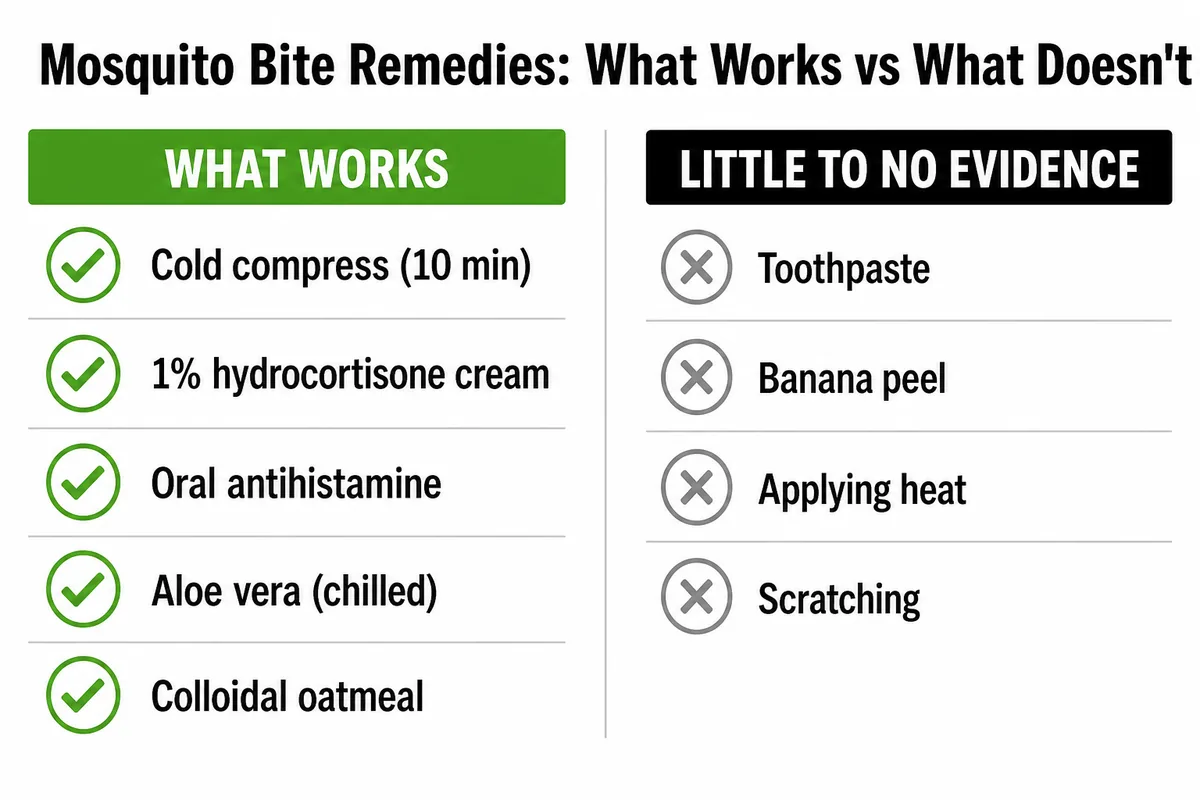
Evidence-supported or plausible:
Cold compress: Reliably reduces swelling and numbs itch. Apply for 10-minute intervals. This works.
Aloe vera: Contains compounds with anti-inflammatory properties. Chilled aloe gel may help with both itch and swelling. There’s reasonable evidence behind this one.
Colloidal oatmeal: Used in dermatology for decades. Oatmeal-based products (like Aveeno) have demonstrated skin-soothing effects. An oatmeal bath is a sensible option for widespread reactions.
Baking soda paste: A small amount mixed with water and applied to the bite may provide modest itch relief. The mechanism is plausible (mild pH buffering), but clinical evidence is limited.
Folk remedies with little to no evidence:
Toothpaste: Commonly suggested online. The menthol may create a brief cooling sensation, but there’s no meaningful anti-itch effect.
Banana peel: No evidence.
Heat (spoon, hot shower): Applying heat to a bite can temporarily interrupt the itch signal, but it also increases circulation to the area and can worsen swelling. Skip this.
What NOT to do
Scratching is the most common mistake. Scratching breaks the skin barrier, introduces bacteria, and causes additional histamine release, making the bite bigger and itchier.
Popping or squeezing the bite does nothing to help and raises your infection risk significantly.
Applying products not intended for skin, such as essential oils at full concentration, household cleaners, or anything caustic, can cause chemical burns on top of an already irritated bite.
How Long Do Mosquito Bites Last?
The typical timeline
For most people, a mosquito bite follows a predictable arc:
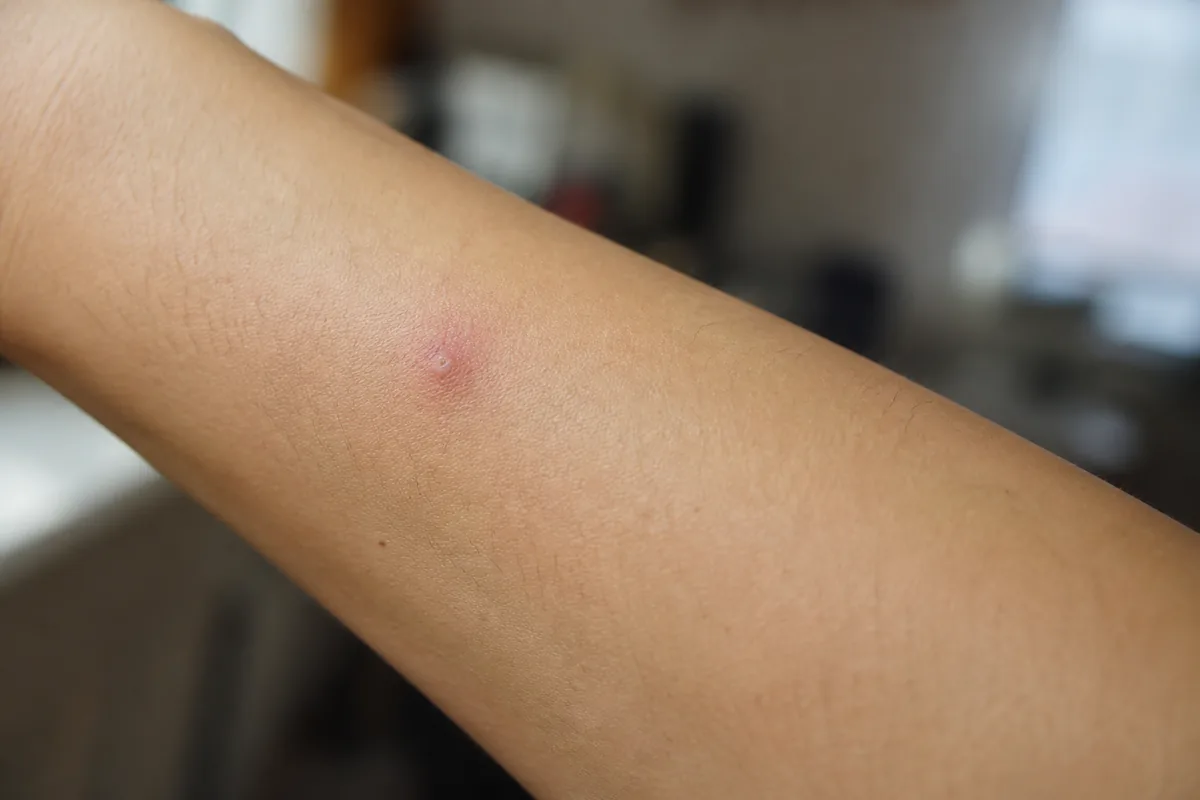
Minutes 1 to 20: A raised, white wheal forms at the bite site. This is the immediate immune response.
Hours 1 to 24: The wheal flattens. A red, itchy bump develops. This is the delayed reaction.
Days 2 to 4: Swelling and redness peak, then begin to fade.
Days 3 to 7: The bite resolves completely in most adults.
Children and people with sensitive immune systems may experience reactions that last 7 to 10 days.
When swelling is normal vs. a red flag
Some swelling around a bite is completely expected. Bites on ankles and feet tend to swell more than bites elsewhere, partly due to gravity and partly due to thinner skin. A bump the size of a dime or nickel is within normal range. See a doctor if you notice any of the following:
Swelling that continues to grow after 24 to 48 hours
A bite that looks infected: increasing warmth, red streaks extending outward, pus, or significant tenderness
Swelling that spreads well beyond the bite site
Mosquito Bite Allergies, and When to See a Doctor
Skeeter syndrome: large local reactions
Most people think of allergic reactions as hives or anaphylaxis. Mosquito bite allergies usually look different. Skeeter syndrome is a hypersensitivity to mosquito saliva proteins that causes an exaggerated local reaction: significant swelling, redness, warmth, and sometimes low-grade fever at or near the bite site.
Skeeter syndrome is not life-threatening, but the reaction can be uncomfortable and alarming. It is more common in young children, elderly individuals, and people with immune system conditions. An oral antihistamine taken promptly after a bite can reduce the severity of the reaction.
Signs of a bite that has become infected
Bites get infected when scratching introduces bacteria, most commonly Staphylococcus or Streptococcus, through broken skin. Watch for:
Increasing redness that spreads beyond the bump
Red streaking under the skin radiating outward from the bite
Warmth and swelling that worsens after 48 hours
Yellow or green discharge
Fever
A bite that shows these signs needs medical attention. A course of antibiotics is usually sufficient, but skin infections that go untreated can become serious.
“Most bite reactions, even the ones that look bad, are just your immune system doing its job,” says Mike Vilchez, Quality Assurance Technical Field Trainer at Northwest Exterminating. “What we tell homeowners to watch for is anything that keeps getting worse after 48 hours: spreading redness, streaking, or a fever. That is when you stop treating it at home and call a doctor.”
When a mosquito bite may signal something more serious
In the Southeast, mosquitoes are vectors for several diseases, including West Nile virus and Eastern equine encephalitis. According to the CDC, most people infected with West Nile virus have no symptoms, but about 1 in 5 develop a fever, headache, body aches, or rash within 2 to 14 days of a bite. Contact a healthcare provider if a mosquito bite is followed by:
Fever, chills, or sweating
Severe headache
Stiff neck
Muscle weakness or confusion
Rash that appears across the body
These symptoms are rare, but they are worth taking seriously, especially after significant mosquito exposure.
The Real Fix: Fewer Mosquitoes Around Your Home
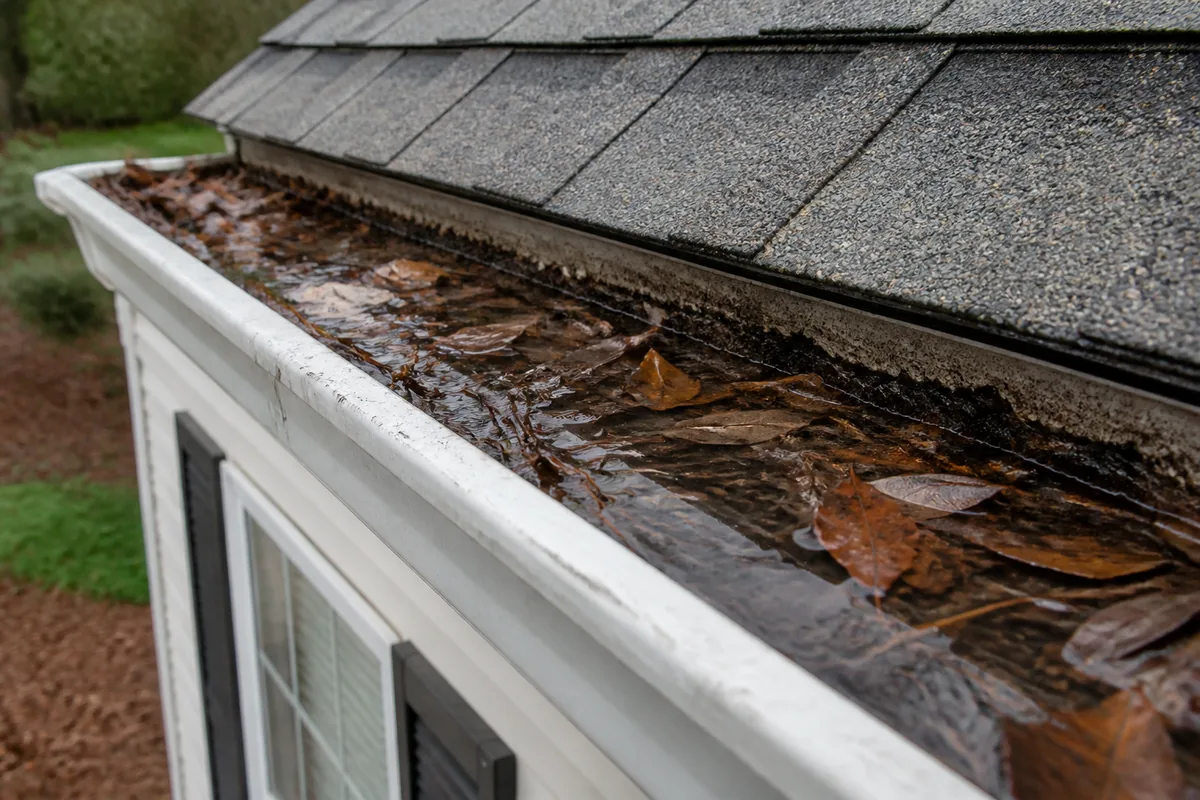
Every container or clogged gutter that holds water after rain is a potential mosquito nursery.
Treating bites helps after the fact. Reducing the mosquito population around your yard addresses the root cause.
Personal protection measures that work
EPA-registered repellents containing DEET, picaridin, or oil of lemon eucalyptus (OLE) are the most effective options for personal protection. According to the CDC, DEET-based repellents remain the standard for preventing mosquito bites when used as directed.
Wear long sleeves and long pants during peak biting hours, dawn and dusk.
Avoid outdoor activity at dusk and dawn when mosquito activity is highest, particularly for species like Culex mosquitoes that transmit West Nile virus.
Eliminate standing water in your yard
Mosquitoes breed in standing water. Every container, low spot, or neglected corner that holds water after rain is a potential breeding site. Common sources include:
Clogged gutters
Birdbaths (change water weekly)
Unused pots, buckets, or tarps
Low-lying lawn areas that hold water after rain
Children’s toys left outside
Eliminating breeding sources reduces the next generation of mosquitoes before they hatch. For a deeper look at yard-level control strategies, see our backyard mosquito control guide.
When to call a professional mosquito control company
Personal protection and source reduction help, but they have real limits, particularly in the Southeast, where the warm season runs long and standing water is abundant after summer storms.
“The Southeast doesn’t give you much of a break,” says Mike Vilchez, Quality Assurance Technical Field Trainer at Northwest Exterminating. “Georgia, the Carolinas, Alabama, those states have a mosquito season that stretches from spring into late fall. By the time homeowners feel like they’re getting ahead of it, the next rain event has reset everything.”
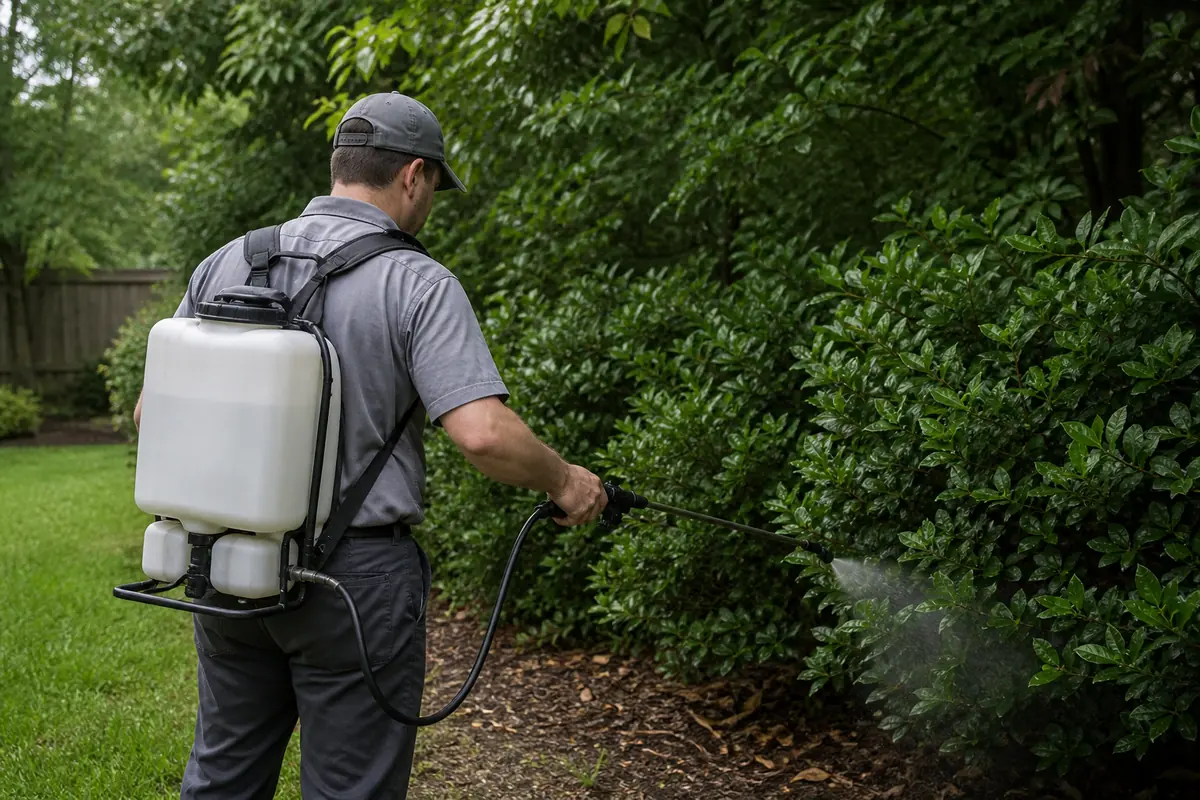
Professional mosquito control programs treat the areas where adult mosquitoes rest, dense vegetation, shaded shrubs, the undersides of leaves, and apply larvicide to water features that can’t be removed. Regular treatments maintain a barrier around your yard throughout the season rather than reacting to each population spike after rain.
Mosquito Bites in the Southeast: Why This Region Gets It Worse
A longer, harder season
Georgia, Tennessee, Alabama, North Carolina, and South Carolina all share one thing: a mosquito season that starts in March or April and doesn’t meaningfully taper until October or November. Summer heat and regular afternoon thunderstorms create ideal breeding conditions from June through September, with population peaks that follow every significant rain event.
For comparison, homeowners in the Midwest may deal with six to eight weeks of significant mosquito pressure. Southeast residents deal with six to eight months.
Species and peak biting patterns
The Southeast is home to several mosquito species that behave differently from each other:
Aedes albopictus (Asian tiger mosquito): Aggressive daytime biter, breeds in very small amounts of water (bottle caps, leaf axils), common in urban and suburban yards across the Southeast.
Culex quinquefasciatus (Southern house mosquito): Most active at dawn and dusk, associated with West Nile virus transmission, breeds in stagnant water including storm drains and neglected birdbaths.
Aedes aegypti (Yellow fever mosquito): Present in coastal Georgia and the Carolinas, also a daytime biter.
The presence of aggressive daytime-biting species like Aedes albopictus is one reason Southeast residents get bitten even when they take precautions. These mosquitoes don’t wait for sunset.
Professional barrier treatments target the shaded vegetation where adult mosquitoes rest between meals.
Tired of Getting Eaten Alive in Your Own Yard?
Knowing how to treat a bite helps in the moment. The better long-term answer is reducing the number of mosquitoes around your home so bites happen less often.
Northwest Exterminating’s mosquito control programs are built for the Southeast’s extended season, not designed around a three-month Midwest schedule. Regular yard treatments target mosquitoes where they live and breed, reducing populations throughout the season.
Call (888) 466-7849 to speak with your local Northwest branch today.
Frequently Asked Questions About Mosquito Bites
Why do mosquito bites itch?
Mosquito bites itch because of your immune system’s response to mosquito saliva. When a mosquito feeds, it injects saliva containing foreign proteins into your skin. Your body releases histamine in response, which increases blood flow to the area and activates nearby nerve fibers, producing the characteristic swelling and itch.
How do you stop a mosquito bite from itching fast?
The fastest relief comes from three steps: wash the bite with soap and water, apply a cold compress for 10 minutes, and use 1% hydrocortisone cream. For multiple bites or a strong reaction, an oral antihistamine like cetirizine (Zyrtec) or diphenhydramine (Benadryl) addresses the histamine response more broadly.
How long do mosquito bites last?
Most mosquito bites resolve within 3 to 7 days in adults. The itching and swelling typically peak in the first 24 to 48 hours and then gradually fade. Children and people with sensitive immune systems may experience reactions lasting up to 10 days.
Can you be allergic to mosquito bites?
Yes. Skeeter syndrome is a hypersensitivity to mosquito saliva proteins that produces an exaggerated local reaction: significant swelling, warmth, and redness well beyond the bite site, sometimes accompanied by low-grade fever. It is more common in young children and elderly individuals. Prompt use of antihistamines can reduce the severity of the reaction.
What’s the fastest way to get rid of a mosquito bite overnight?
Apply 1% hydrocortisone cream to reduce inflammation, take an oral antihistamine to address itching system-wide, and avoid scratching. Keeping the bite covered with a bandage can help prevent scratching during sleep. By morning, most bites will be noticeably less swollen and irritated if left alone.
When should I see a doctor for a mosquito bite?
See a doctor if a bite shows signs of infection: spreading redness, red streaking, warmth, pus, or worsening swelling after 48 hours. Also seek medical attention if fever, severe headache, stiff neck, or muscle weakness develop within two weeks of significant mosquito exposure, as these may indicate a mosquito-borne illness.
About the Author
Matthew “Logan” Walker serves as an Area Technical Leader for the Northwest Service Centers in Georgia. He provides technical support, mentorship, and field training to teammates while promoting industry best practices and effective pest management strategies. Logan’s hands-on experience and commitment to education help teams deliver extraordinary service and exceptional customer care.
Reviewed for accuracy by Mike Vilchez, Quality Assurance Technical Field Trainer for the Northwest Family of Brands in South Florida. Mike provides hands-on coaching, technical training, and field support to teammates while promoting industry best practices and service excellence.
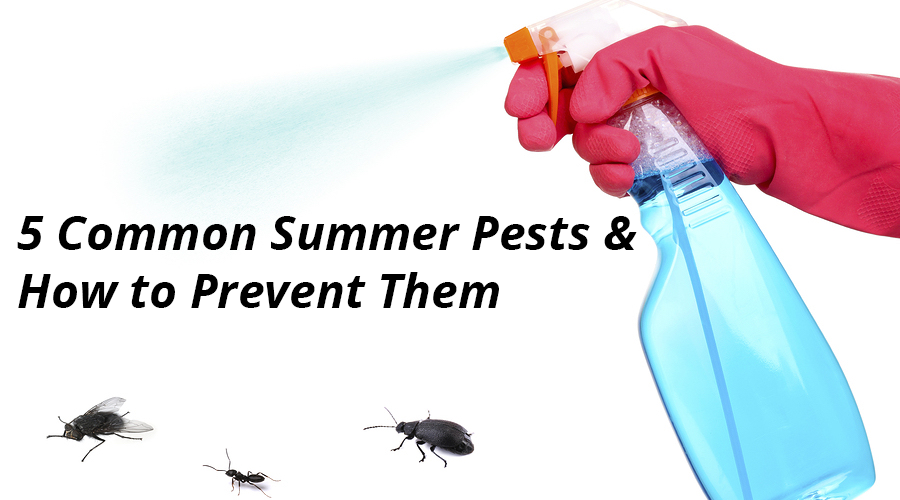
While pests in the house are a year-round nuisance here in the South, certain bugs are more active in warmer months. If you own or rent a home or apartment, you’re likely to come across one or all of these 5 summer pests. Here’s what you can do to prevent them.
1. Ants
Most of the ants you’ll find in your home won’t bite, but that’s not always the case. It’s best to eliminate any potential food sources and entry points to keep them out. You can do this by sealing cracks and crevices and by keeping a clean house. Take the trash out regularly, store food in sealed containers, and clean up spills immediately. Leaving pet food unattended can also attract ants and other pests, so keep the food in a sealed container when not being eaten by pets, and off of floors.
2. Mosquitoes
We’ve likely all been bitten at some point by mosquitoes. They’re active in warmer months and lay their eggs in standing water. In order to have the nutrients to lay these eggs, female mosquitoes need a food source – blood from humans and pets. If bitten, you may experience stinging or itching. In rare cases, mosquitoes will transmit diseases to their host. To prevent mosquitoes, eliminate any standing water around your home – debris, toys, bird baths, fountains, ponds, pet water bowls, etc. Wear mosquito repellent when outdoors, make sure pets are current on heartworm medication, and consider a professional mosquito control service from your local exterminating company.
3. Fleas
As temperatures heat up, fleas come out to play by attaching themselves to a food source – usually your pets. Because flea allergies are common, the bites can be itchy and painful, and they transmit diseases, it’s important to keep your pets current on preventative flea medication. Give them baths regularly, keep pet beds clean, and vacuum often. If your pet gets infested with fleas, we recommend contacting a pest control professional. Fleas reproduce quickly and can be hard to get rid of.
4. Flies
Keeping flies out can be hard to do in the summer. Just like most other pests, they’re looking for food. Prevent flies from spreading bacteria throughout your home by keeping windows and doors closed, taking the trash out often and moving garbage cans away from the exterior of your home. Don’t leave food out and clean up dishes and spills immediately.
5. Roaches
Roaches thrive in warm, humid temperatures. And because they eat almost anything, they can be hard to get rid of once inside your home. They’re most often seen in kitchens and bathrooms. Because they spread bacteria and often cause severe allergic reactions, it’s a good idea to contact an exterminator if you’re seeing roaches. Where there’s one roach, there’s probably a few hundred more hiding somewhere close. They reproduce quickly and are one of the most difficult pests to get rid of once your home is infested. To prevent roaches, keep a clean house, don’t bring in boxes or newspapers, and seal any cracks, holes or crevices.
With Spring only a few weeks away, now is a good time to start preparing for allergy season. And what’s one of the major causes of allergies and asthma? PESTS! Don’t suffer through the beautiful spring season this year. Here are some tips to keep your home pest and allergen-free.
Pest prevention measures can be very effective at combating allergies and asthma. Common household pests, like cockroaches and stinging insects, can pose a significant threat to asthma and allergy sufferers. Roach droppings, saliva, shed skins and other body parts contain allergen proteins known to cause flare-ups and increase asthma symptoms, especially in children. And stinging insects send more than 500,000 people to the emergency room each year due to serious reactions from the pest’s venom.
The first step to a pest and allergen-free home: practice good sanitation.
In addition, the National Pest Management Association (NPMA) recommends the following tips for safeguarding homes against common indoor allergens caused by pests:
Exclude pests by sealing cracks and gaps on the outside of the home. Pay special attention to utility pipe entry points.
Vacuum at least once a week using a vacuum with a HEPA (high-efficiency particulate) filter.
Keep food sealed and stored properly, and clean kitchen floors and counters daily.
Dispose of garbage regularly and store in sealed containers.
If allergic to stinging insects, learn how to use an epinephrine kit and carry it with you at all times.
Should you experience symptoms of an allergic reaction following a stinging insect encounter, such as tongue and throat swelling, wheezing, dizziness, or shortness of breath, call 911.
If you suspect an infestation, contact a licensed pest control professional to safely remove the threat.
Are you a mosquito magnet? Do you live in a warm humid climate? Do you have children and pets that love to enjoy time outside during the summer? If you answered yes to any of these questions, keep reading.
Mosquitoes are a huge annoyance here in Atlanta and throughout the world. Not only are mosquito bites painful but they carry a variety of dangerous diseases. And they can be a real downer when you’re trying to spend time outdoors. So is there a way to prevent mosquitoes? The answer is yes. There are several ways you can eliminate and prevent mosquitoes from around your home and yard.
1. Remove Mosquito Breeding Areas
Mosquitoes will breed almost anywhere that stagnant, standing water is present. Be sure and put toys away, remove any buckets, containers, debris or trash, correct any drainage issues, and keep gutters clean. If you have fountains, bird baths, or any other feature that contains water, change the water often (at least once a week).
2. Make Plans
Mosquitoes are most active in the late afternoon and evening. If you’re making outside plans, try and schedule activities before sunset.
3. Replace Outdoor Lighting
The EPA recommends using yellow “bug” lights in all of your outdoor lighting fixtures. These will not repel mosquitoes but also won’t attract them like standard lights will.
4. Wear Light-colored Clothing
Mosquitoes are drawn to dark colors. While wearing lighter colored clothing doesn’t guarantee you won’t be bitten, it will help make you a less attractive food source.
5. Use Fans & Candles
Citronella candles have a mild effect at deterring mosquitoes. You can also set up fans in areas where you spend the most time outside, like on decks or patios since mosquitoes are weak fliers.
6. Use Mosquito Repellent
Find an insect repellent labeled specifically for mosquitoes. There are many options available including natural repellents. Use the EPA’s helpful tool to find a mosquito repellent that’s right for you and your family.
7. Get a Professional Opinion
You can take all the precautions for mosquito prevention and still get bitten. Having your property inspected by a professional mosquito control company will give you more insight into the problem areas – potential or existing mosquito breeding sites – and provide you with options for mosquito treatments. Most mosquito control companies either utilize a combination of larvicide and adulticide mosquito treatments or mosquito misting systems. Contact your local exterminator to find out which one is right for your home.
Monthly yard treatments during peak mosquito season, targeting mosquitoes where they live and breed.
No harsh chemicals, family-friendly
Guaranteed to reduce mosquitoes
Same or next day service
🐭Trust the Mouse · Serving the Southeast
Free, no-obligation quote. Tell us where to send it and take back your yard.
$75 initial, then only $75/monthMosquito special, now through August 31st
$75 for the initial cost, and $75 per month after for the length of the mosquito season. For green recurring mosquito control service. New customers only. Restrictions apply. Call for more details.