Mar 23, 2018 | Pest Control, Wildlife
Pollination is when pollen grains are transferred from one flower to another. Pollination allows plants to produce seeds which is how they reproduce. Pollinators are animals and insects that are responsible for helping with the pollination of over 80% of the world’s flowering plants. Animal pollinators are vital in the reproduction of flowering plants and the production of most fruits and vegetables. They accomplish this by getting their food from flowers (think nectar and pollen) and collecting pollen on their bodies in the process. They then move on to another plant and leave the hitchhiking pollen behind, providing the new plants with the pollen they need to reproduce.
Some of the most common animal pollinators that come to mind are bees and butterflies. But did you know there are several other animals you might not have known who are expert pollinators? Here are a few animal pollinators along with the types of plants they pollinate:
ANTS:
Ants love nectar. Because they don’t fly they have to crawl into flowers to get to this nectar. Once inside the flower, pollen sticks to their bodies, allowing them to transfer it to other flowers when they move on. Tropical plants have nectar outside their flowers to attract ants to them. They then use these ants as “protectors” from other insects.
Ants pollinate flowers that:
- Are low growing
- Are small and inconspicuous
- Have flowers close to their stems
BATS:
Bats are known as one of the “night shift” pollinators. They are most common in tropical and desert climates. They are prevalent in the southwest US, Africa, Southeast Asia, and the Pacific Islands as pollinators. In fact, mangoes, bananas, and guavas depend on bats for pollination. In the US and Central America, the agave plant (which is used to make tequila) and the Saguaro cactus are also dependent on bats for pollination.
Bats pollinate flowers that:
- Open at night
- Are large in size
- Are pale or white in color
- Are very fragrant
- Have copious nectar
BEES:
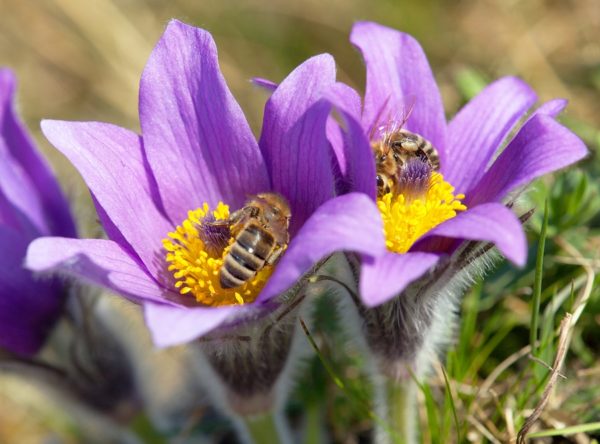
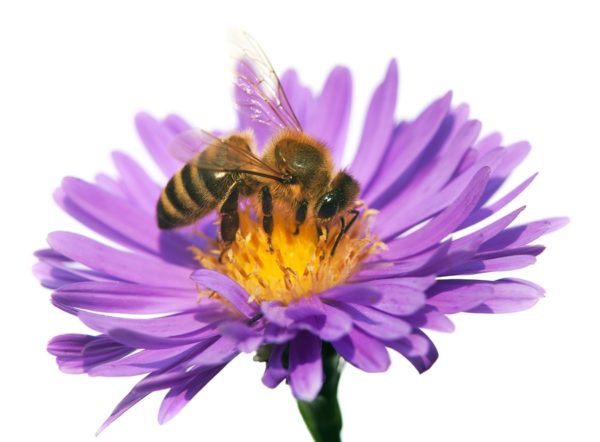
Bees are known as the “champion” pollinators and are also the most common. There are over 4000 species of bees in the United States alone. Bees purposefully visit flowers to collect pollen and nectar which they use to feed themselves and their young. Many flowers that bees pollinate have an area of low UV reflection near their centers. Humans can’t see UV reflection so we don’t notice them. Bees, however, use them as a target to guide them to the center of the flower.
Human Perspective Bee Perspective
Photos courtesy of Apalachicola National Forest.
Bees pollinate flowers that:
- Are full of nectar
- Are brightly colored (usually blue or yellow) (bees can’t see red)
- Have a sweet or minty flavor
- Are open in daytime
- Provide landing platforms
- Have tubular flowers with nectar at the base
BEETLES:
Beetles were among the first insects to visit flowers. They are important pollinators for ancient species like magnolias. They are known as “mess and soil” pollinators because they eat through flower petals to get to the nectar and then defecate inside the flowers. Fossil records show that beetles were abundant as far back as 200 million years ago.
Beetles pollinate flowers that:
- Are bowl shaped with their sexual organs exposed
- Are white to green in color
- Have a strong fruity fragrance
- Are open during the day
- Have a moderate amount of nectar
- Have large, solitary flowers
BIRDS:
Birds are important pollinators of wildflowers. Hummingbirds are the most important bird pollinators in the United States. In the eastern United States there is only one species that acts as a pollinator and that is the ruby throated hummingbird. Hummingbirds have good eyesight and are extremely attracted to red flowers. They use their long bills to collect nectar and the pollen then dusts their heads and faces.
Hummingbirds pollinate flowers that:
- Are tubular with recurved petals
- Have tubes, funnels, and cups
- Are brightly colored red, yellow, and orange
- Are odorless
- Are open during the day
- Have prolific amounts of nectar
- Have a modest amount of pollen
BUTTERFLIES:
Butterflies are very active during the day. Their body structure doesn’t allow them to pick up as much pollen as bees and other insects but they can see red where bees can’t. Butterflies produce scents that attract other butterflies of the opposite sex. This scent they produce smells like the flowers that they are attracted to.
Butterflies pollinate flowers that:
- Have flowers with clusters and landing platforms
- Are brightly colored (red, orange, yellow)
- Are open during the day
- Have ample nectar
TWO-WINGED INSECTS:
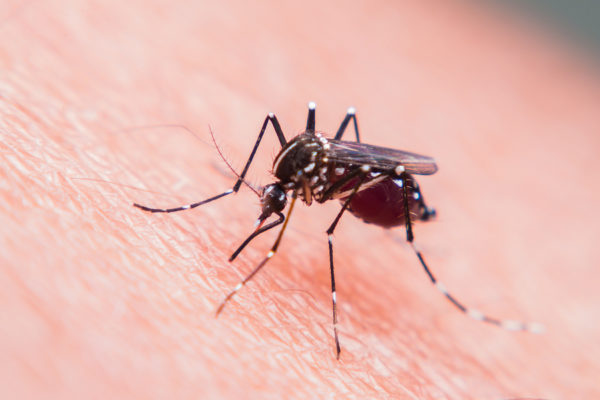
Two winged pollinators include flies, gnats, and mosquitoes. These insects aren’t as fuzzy as bees so they don’t pick up as much pollen. They are still, however, important pollinators, especially for some species of orchids.
Two-winged insects pollinate flowers that:
- Are pale and dull to dark brown or purple in color
- Are sometimes flecked with translucent patches
- Have a putrid odor
- Produce pollen
- Have funnel-like pollen
MOTHS:
Moths are the other member of the pollination “night shift” along with bats. Some moths are also active as pollinators during the day. The yucca plant is one important plant that is dependent on moths for survival.
Moths pollinate flowers that:
- Have clusters and landing platforms
- Are white or dull in color
- Are open in late afternoon or at night
- Have ample nectar
- Have nectar that is deeply hidden
WASPS:
Wasps look like bees but have much less hair. This makes them less efficient as pollinators because pollen is less likely to stick to their bodies. Wasps need pollen and nectar for energy. Fig wasps are responsible for pollinating almost 1000 species of figs.
Wasps pollinate flowers that:
- Are full of nectar
- Are brightly colored (usually blue or yellow) (bees can’t see red)
- Have a sweet or minty flavor
- Are open in daytime
- Provide landing platforms
- Have tubular flowers with nectar at the base
OTHER POLLINATORS:
There are several other uncommon pollinators. Lizards, geckos, and skinks can be pollinators. They climb inside flowers to drink the nectar and the pollen then sticks to their scales. Lemurs and possums can also pollinate. They use their snouts and tongues to get nectar from plants and then have their faces and snouts dusted with pollen.
We consider most of the animals and insects that are pollinators as nuisances and pests. As much as we don’t want them in our homes, they do play a very critical role in the survival of plants and food. It is important that while we should take steps to prevent them from invading our homes, we should be very careful with how we handle them should they make themselves at home in our area. If you suspect you have a problem with any of these pollinators, contact a professional pest control company who can give you a thorough evaluation and provide you with a treatment plan that both benefits you and protects these important species.
Mar 9, 2018 | Fire Ant, Pest Control
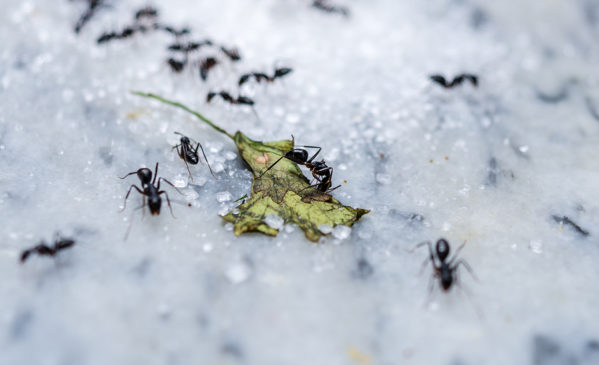
Ants have been named the #1 nuisance pest in the United States. Ants are social insects that live in colonies. They enter our homes looking for food and shelter. Ants primarily look for foods that are sugary and sweet or greasy and protein-based. Once they find food, they leave a pheromone trail behind that other ants will follow.
There are over 700 species of ants in the United States. At least 20 of these species are known to infect homes and other structures. There are several species of ants that are common to our area. The 5 most common are:
FIRE ANTS:
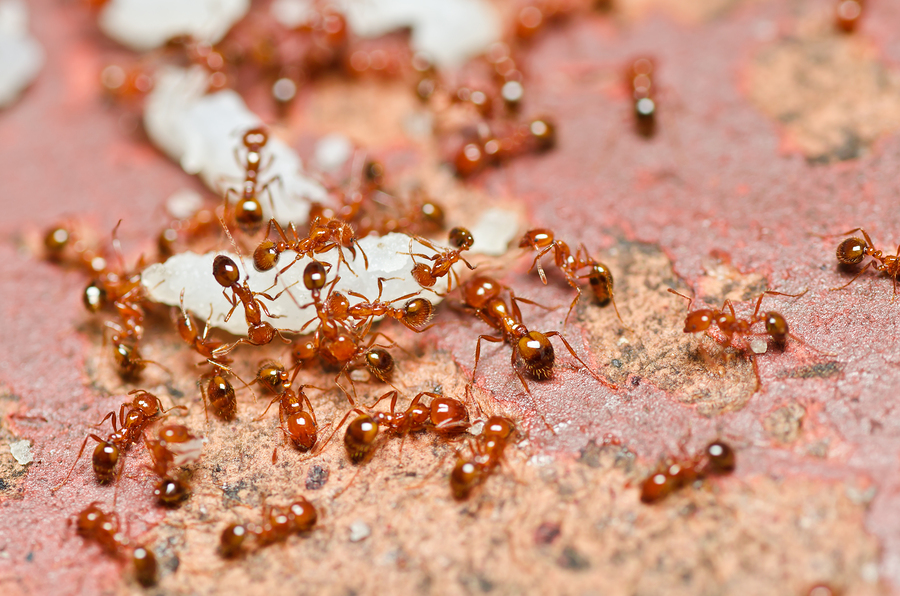
Fire ants build large, raised mounds. They prefer to nest in open, disturbed areas. They commonly nest in yards, fields, and roadsides. Fire ants are known to devastate local insect populations and small wildlife. They are also known to eliminate ground nesting bird species because they attack their newly hatched nestlings. Fire ants cause painful stings when they bite and will bite humans when threatened.
CARPENTER ANTS:
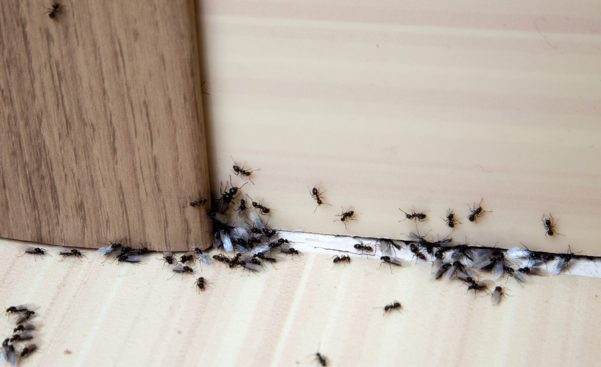
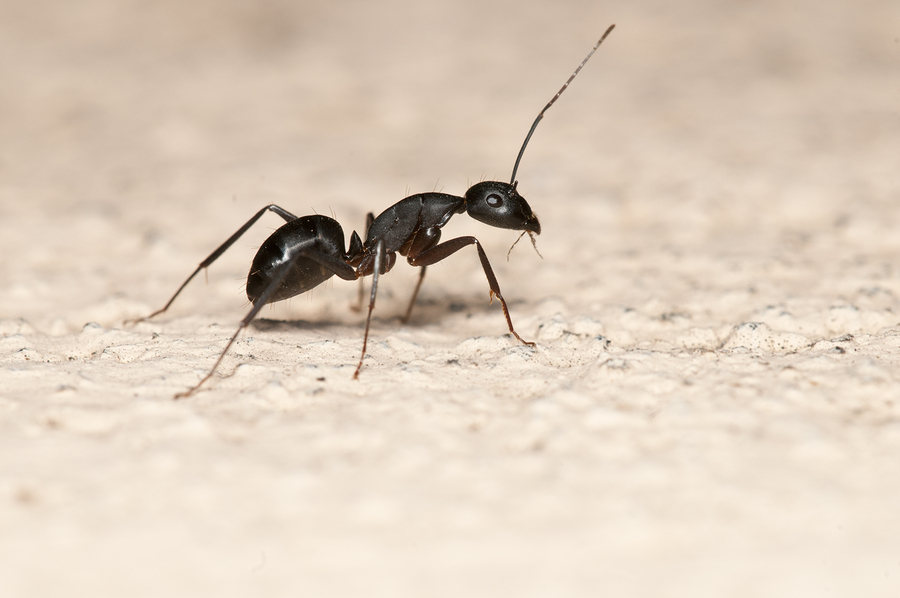
Carpenter ants are black in color. They are nocturnal and will exit their nests about 15 minutes after sunset in large numbers. Carpenter ants will invade kitchens in the summer months in search of food and water. They will invade structures if moisture is present. Carpenter ants can be very destructive to homes.
ARGENTINE (SUGAR) ANTS:
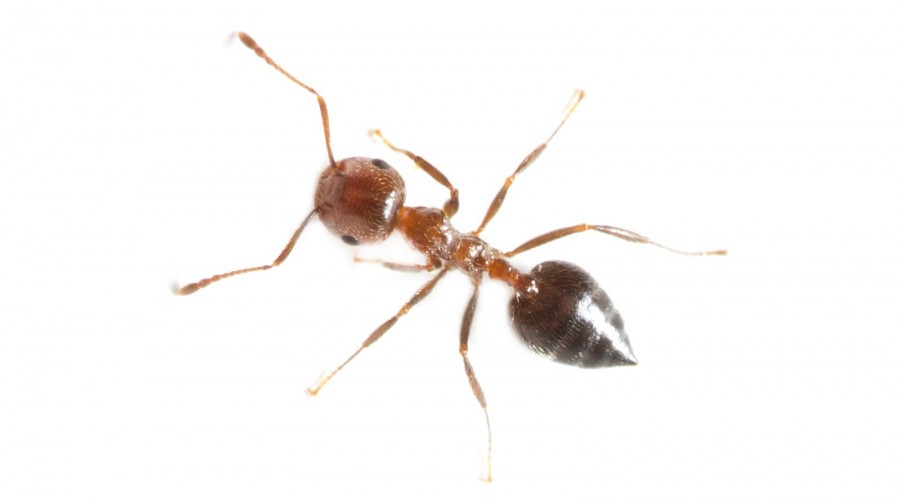
Argentine ants are light brown in color. They can easily squeeze through small cracks and holes. Argentine ants are known to set up colonies in the ground, in concrete walls, between boards and timbers, and among the belongings in your home. These ants are commonly seen in homes and will enter them in search of food and water. They are especially common during dry or hot weather or after a heavy rainfall. Argentine ants exhibit strong trailing behavior and can exist in high numbers. They move very quickly and are named among the world’s 100 worst animal invaders.
ACROBAT ANTS:
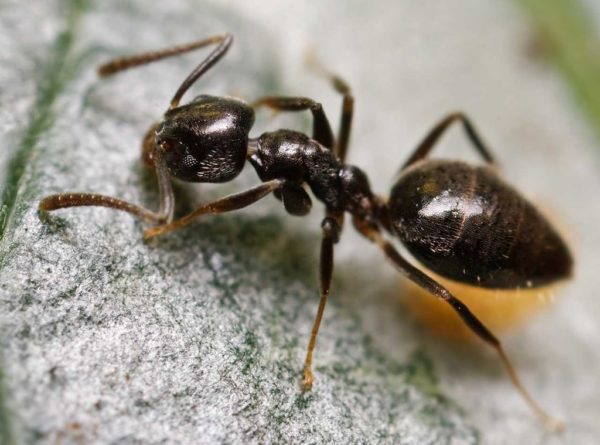
Acrobat ants are dark colored with a heart shaped abdomen that they will hold up in the air like a flag when disturbed. They will nest inside decaying wood. Acrobat ants form single file trails and leave behind small sawdust piles that are similar to those of carpenter ants. These ants produce a mild sting when they bite. Acrobat ants may move into your attic to incubate their eggs and will tunnel into water damaged wood.
ODOROUS HOUSE ANTS:
Odorous house ants are dark colored and give off a strong rotten coconut smell when they are crushed. They exist in large numbers where there is plenty of moisture. They form trails similar to Argentine ants. Odorous house ants are one of the most difficult pests to get rid of from structures. They will often establish their colonies in earth filled porches and block walls.
PREVENTION:
Since ants are one of the most difficult pests to get rid of, what can you do to keep them from invading your home in the first place? Check out these tips for keeping the ants out of your personal space.
LOCATION:
- Learn where ants are common and routinely inspect those areas for activity.
- Ants will frequently infest kitchens because of the ample supply of food and water.
- Ants are also commonly found in bathrooms, bedrooms, living rooms, basements, attics, inside walls, and in and around HVAC units.
FOOD:
- Ants will come into your home in search of food for themselves and their young.
- Keep your kitchen clean and tidy.
- Wipe down counters routinely.
- Sweep on a regular basis.
- Clean up crumbs and spills immediately.
- Store your food in air-tight containers.
- Keep ripe fruit in the fridge.
- Wipe down sticky jars such as jelly or jam.
- Use lids on trashcans and empty them regularly.
- Make sure sink drains and filters are cleaned regularly.
- Enclose mulch and compost heaps when possible.
WATER:
- Reduce moisture and standing water around your home.
- Repair leaky pipes and check under your sinks routinely for drips.
- Use a dehumidifer in damp basements, crawlspaces, and attics.
- Consider enclosing your crawlspace to eliminate moisture.
- Make sure gutters and downspouts are clear and functional so water flows away from foundations.
- Paint or seal any exposed wood before it gets wet.
- Replace or remove any water damaged wood.
ACCESS POINTS:
- Ants can squeeze through extremely small openings.
- Inspect the outside of your home for any easy access points and eliminate them.
- If you are having trouble identifying the access point, follow the trail of ants.
- Once you find the entry point, clean around it with detergent to remove the pheromone trail that attracts fellow ants.
- Trim trees and bushes away from the exterior of your home.
- Seal any cracks and crevices in the outside of your home with silicone-based caulk. Make sure to check around areas where utility pipes come into your home.
- Remove dead stumps from your property.
- Store firewood off the ground and at least 20 feet from your home.
- Flying ant season begins in spring/summer. During this time of year keep doors and windows closed as much as possible.
PETS:
- Pet food and water bowls also attract ants.
- Keep pet food bowls clean and clean up any spilled food or water immediately.
- Don’t leave pet food bowls out overnight.
- Store dry pet food in sealed plastic containers instead of bags.
- Inspect dog and cat doors to make sure pests can’t get through them.
CALL THE PROS:
Eliminating ants can be an uphill battle. If they aren’t properly treated, the infestation can continue to grow despite your best efforts. Some ants like carpenter ants can cause serious property damage. Other ants like fire ants can pose a serious health threat to your family. Other species, while not necessarily a threat to your family, can still contaminate your food. If you suspect you have an ant problem call a professional pest control company. A professional can identify what species of ant you have which is the first step in eliminating these nuisance pests. They can also find the entry points and provide you with a thorough and comprehensive treatment plan.
Mar 2, 2018 | Pest Control, Termite Control
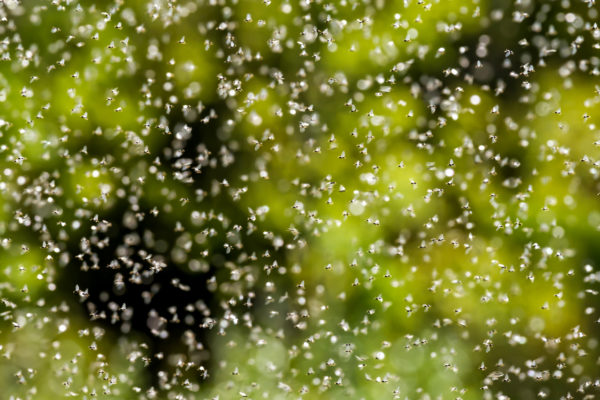
The change of season from winter to spring brings warm weather, sunshine, and … bugs! This is the time of year when many pests emerge from overwintering and begin the mating process. Spring is also known as swarm season – because this is the time when termites and flying ants emerge in droves, sometimes in swarms of thousands! While flying ants can cause problems in and around your home, termites are much more common – and much more costly! How can you tell if those swarming insects are terrible termites or flying ants? Check out our handy reference below for the key differences between the two, as well as what to do if you have these pests swarming in or near your home.
TERMITES
APPEARANCE:
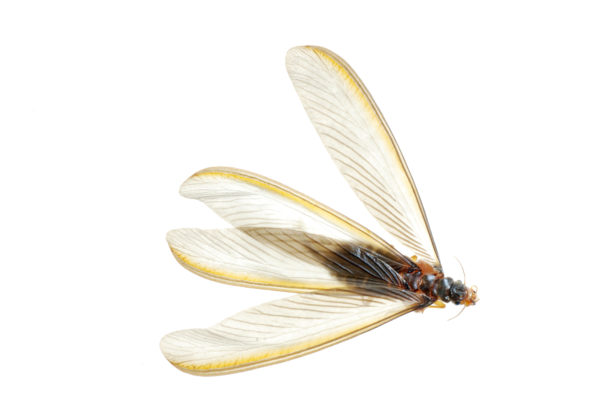
- 4 wings of uniform size
- Straight antennae
- Wings are twice as long as their body
- Broad waist with uniform body width
TIMING:
Termites usually swarm once a year for reproduction and expansion of their colonies. Swarms mark the official beginning of termite season. Subterranean termites swarm in spring and during the daytime. Drywood termites swarm in late summer and early fall. Dampwood termites swarm in the summer.
BEHAVIOR:
Termites swarm after their colony reaches a certain size and the weather conditions are optimal. The termites are attracted to light and are often found near windows and light fixtures. Swarming termites will try to squeeze through racks and crevices in your walls and foundations to try and reach open air. If you see swarming termites then there is a good chance there is a well-established termite colony in or near your home.
FLYING ANTS:
APPEARANCE:
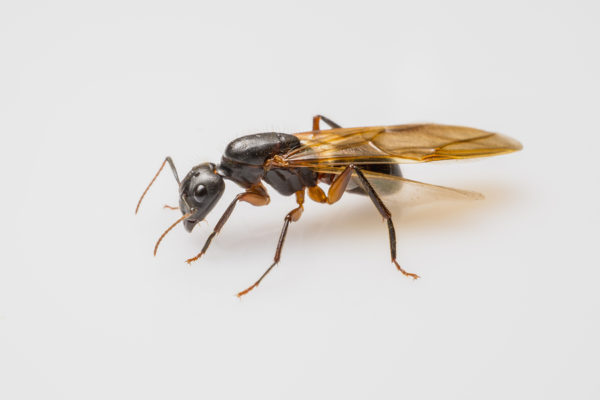
- Also have 4 wings, with larger front wings than back wings
- Elbowed antennae
- Shorter wings that are more proportionate to their bodies
- Segmented bodies with thin waists
TIMING:
Flying ants will swarm in late spring and early summer. They have to have bright sunlight, low winds, high humidity, and warm temperatures to swarm. They prefer to swarm after there has been 3 to 5 days of rain.
BEHAVIOR:
Flying ants swarm for the same reasons as termites – to reproduce and expand their colonies. Flying ants don’t represent any greater threat to humans than their wingless counterparts. Flying ants aren’t as significant a threat to your home as termites but they can still cause damage. If you have flying ant swarms in your home there is a good chance you have an established ant colony in your walls.
TREATMENT:
So now that you can identify exactly what kind of pest is swarming around your home, what should you do next?
- Contact a professional pest control company to come out and evaluate the swarm, as well as provide you with a treatment plan and prevention strategy.
- Don’t spray the swarms yourself with insecticide. Mark the areas where they are getting into your home and notify your pest control professional. Make sure to inspect the entire exterior of your home for possible entry points.
- Vacuum up any pests that get into your home. Both species are attracted to light so you may see them congregate around light fixtures or windows.
- Don’t tear away any woodwork, trim, baseboards, wall coverings, or floorboards. Instead, inspect them for termite damage by pressing your thumb against the wood and feeling for defects.
- Try to keep your windows and doors closed as much as possible during swarm season.
Feb 21, 2018 | Mosquito, Pest Control
The best approach to controlling mosquitoes takes advantage of every life stage of a mosquito. This approach is known as an Integrated Pest Management approach (IPM). IPM employs a variety of different pest management techniques with an emphasis on pest prevention, pest reduction, and the elimination of habitats that can lead to pest infestations. A successful IPM strategy is made up of 4 different strategies:
- Removal Of Habitats. Mosquitoes require a water habitat for 2 stages of their life cycle. Elimination of water leaves them with nowhere to breed. Get rid of any standing water in gutters, buckets, toys, old tires, tarps, and any other container in and around your home. Consider installing gutter guards to prevent standing water in your gutter systems. Empty and change out the water in your fountains, bird baths, rain barrels, wading pools, and potted plants at least once a week. This will get rid of any eggs that may have been laid in the water since emptying it the week before. Make sure to keep your swimming pools treated and circulating.
- Use Structural Barriers. Using structural barriers decreases the incidence of mosquito bites. Install screens on your windows and doors and make sure they are in good repair. Make sure the edges are sealed. Cover any gaps in walls, doors, and windows.
- Control Adult Mosquitoes. This is the best and fastest method to prevent diseases transmitted by adult mosquitoes. Adult mosquito control uses an EPA-registered pesticide and is applied by aircraft or on the ground by truck-mounted sprayers.
- Control Larval Mosquitoes. Controlling mosquitoes in the larval stage allows them to be eliminated before they emerge as adult mosquitoes. This involves a method called source reduction (also known as physical or permanent mosquito control). Source reduction is the removal or permanent destruction of mosquito breeding sites. The goal of source reduction is to minimize larval mosquito production through habitat destruction. It can minimize or completely eliminate the need for multiple applications of both larvacides and adulticides. Source reduction can be as simple as properly disposing of containers that can hold water or as complex as draining swamps or installing ditches. Some methods of source reduction you can do at home include disposing of, covering, or tipping over any containers that can hold water such as flowerpots, cans, and old tires. Source reduction for freshwater lakes and ponds include periodic drainage, minimizing emergent or standing vegetation, and maintaining steep banks. Source reduction for swamps and marshes is difficult because of severe restrictions in environmental law.
If you suspect you have a problem with mosquitoes in or around your home, contact a professional pest control company who can provide you with a thorough inspection and comprehensive treatment plan.
Feb 16, 2018 | Pest Control, Wildlife
When the weather turns cold we tend to spend more time indoors enjoying the warmth from our heaters and blankets. Animals are no different! Fall and winter are the time of year when animals invade our homes in search of warmth, shelter, food and water. One of the most common pests we see in cold weather season is rodents. While rats and mice are the most common rodents we see in our area, they aren’t the only ones that can cause a problem. Chipmunks and squirrels can also cause significant damage to our homes if they get inside. Here are a few of the most common rodents in our area, as well as some tips to keep them from invading your home.
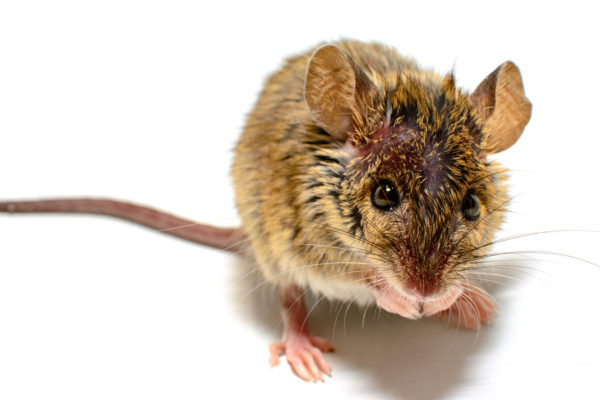
HOUSE MOUSE
- Light to dark gray in color
- Weighs 1 ounce or les
- Small and slender
- Rod shaped droppings
- Live in and around homes, farms, and commercial buildings
- Prefer foods high in fat, protein, and sugar
- Teeth grow continuously
- Cause damage by gnawing on wood and electrical wires
- Can contaminate your home with urine and feces
- Can fit through an opening the size of a dime
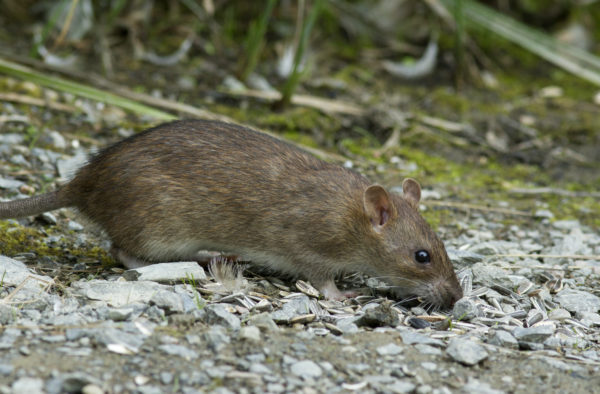
NORWAY RAT
- Gray in color
- Small ears
- Tail is short in relation to its head and body
- Blunt ended droppings
- Exist in large numbers
- Live in and around homes, in basements, in stores, in warehouses, on docks, in sewers, and in dumpsters
- Burrow to nest under buildings, under concrete slabs, around lakes and ponds, and near garbage
- Line their nests with shredded paper, cloth, and other fibrous material
- Nocturnal
- Eat nearly any type of food but prefer cereal grains, meat, fish, nuts, and fruit
- Can fit through an opening the size of a quarter
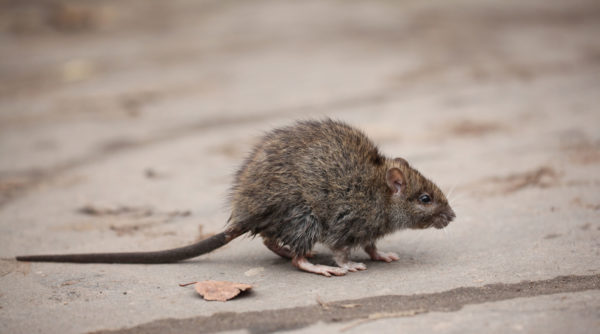
ROOF RAT
- Dark in color
- Weighs less than 1 lb
- Large ears
- Tail is longer than its head and body
- Spindle shaped droppings
- Spends 90% of its time above ground
- Nests in trees and sometimes attics
- Run on power lines or along the tops of fences
- Nocturnal
- Can fit through openings the size of a quarter
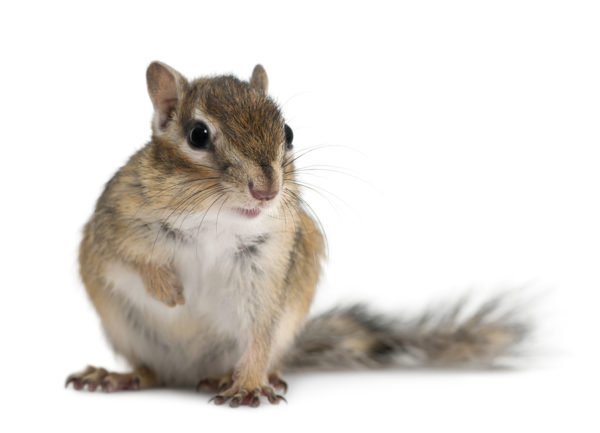
CHIPMUNK
- Small squirrels
- Tan and brown with dark and light stripes
- Make a series of high pitched chirps and flip tail back and forth to attract attention
- Active during the day
- Sleep in underground burrows
- Attracted to homes with gardens, flowers, bird feeders, pet food, and nut trees
- Can damage electrical lines, cable, and AC pipes
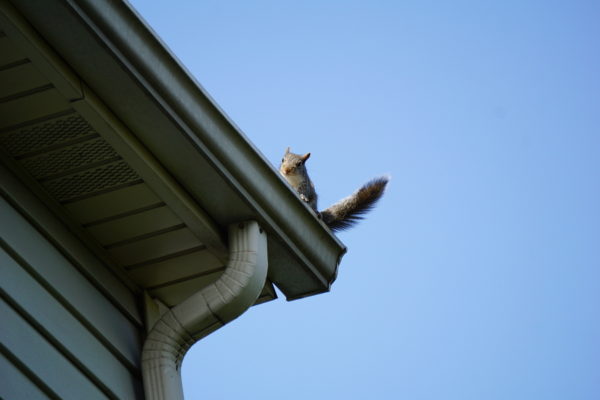
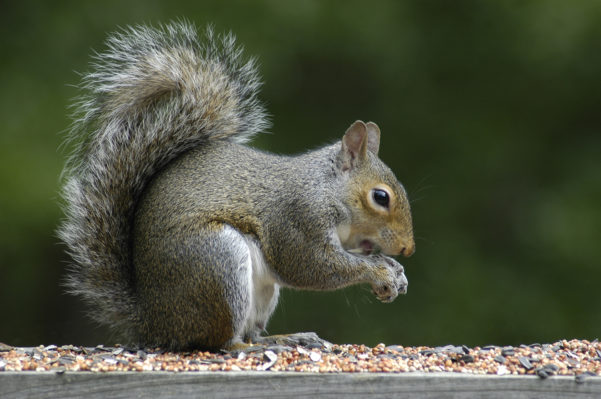
GRAY SQUIRREL
- Predominantly gray with white markings
- Short thick fur
- Bushy tail
- Weighs 1 to 1.5 lbs
- Sends most of its time looking for food
- Active year round
- Active in mornings and evenings
- Nests in attics or garages
- Also invade bird feeders and garbage cans
- Can cause significant damage to electrical wires and telephone cables
- Can also cause damage to wood, insulation, wires, and storage boxes in your attic
- Can contaminate your attic with urine and feces
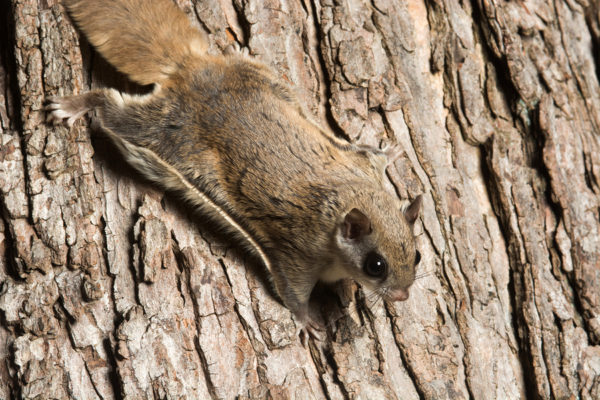
FLYING SQUIRREL
- Grayish brown body
- White belly
- Soft thick fur
- 4 to 6.5 ounces
- Up to 12″ long with tail
- Large eyes
- Low soft chirp
- Nocturnal
- Eat mostly plants, seeds, nuts, leaves, bark, flowers, roots
- Nest in tree cavities
- Occasionally nest in attics (enter through roof gaps)
- Will nest in your insulation
- Can cause contamination with urine and feces
So now that you know some common rodents, what can you do to keep them from coming into your home? Check out these tips to prevent a rodent infestation.
- Clean up spilled food immediately.
- Put away all food at night, including pet food and bird feeders.
- Keep food, including pet food and bird seed, in sealed, airtight containers.
- Keep garbage can lids tightly sealed.
- Declutter your attic and basement, especially anything made of cardboard.
- Store any items you can on shelves rather than in the floor.
- Keep your yard clear of debris.
- Keep grass and shrubs cut short.
- Trim shrubs and trees away from the sides of your home.
- Store firewood off the ground and a safe distance from your home.
- Repair holes in your foundation, garage, and interior walls and any gaps in your roof.
- Seal any openings larger than 1/4″.
- Use rubber seals under garage doors.
- Use door sweeps on exterior doors.
- Use weatherstripping around windows and doors.
- Use screens that are in good repair on doors and windows.
- Seal around pipes, drains, and vents.
- Use chimney caps.
- If you suspect you have a rodent problem, contact a pest control professional.
Feb 12, 2018 | DIY, DIY Pest Control, Pest Control
We’ve all been there before… you’re sitting in your house and you hear an incessant buzzing. All of a sudden something flies past your face! If you’re like most of us, your first thought it aghh! A bug in my house! Once you get over the initial shock of being dive bombed by this home invader, your next thoughts might be: What kind of bug is this? Is there more than one? How did it get in my house? How do I get rid of it? While we can’t answer all of your questions, we can help with a few. We’ve listed some of the most common flying pests below, as well as some tips to prevent them from getting into your home.
BEES:
While there are several different species of bees in North America, we are going to look at bumblebees, honeybees, and carpenter bees.
APPEARANCE:
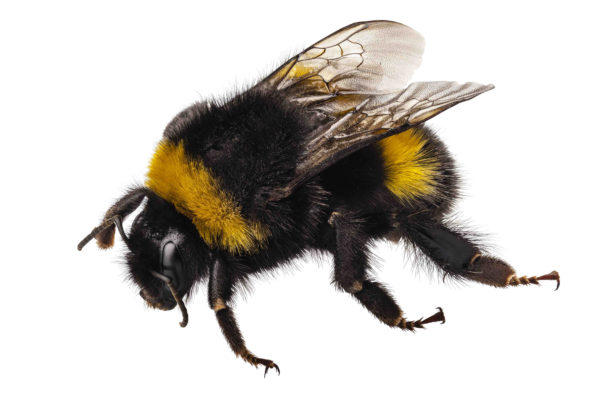
Bumblebees are large, clumsy looking insects with oval shaped bodies. They are extremely fuzzy. They are yellow and black striped in color. They typically grow between 1/4″ and 1″ in length.
Honeybees are predominantly golden yellow with brown bands, but they can also be orange-brown in color. They have a very hairy appearance. They can grow to be about 1/2″ in length. They also have flat hindmost legs which are used to carry pollen.
Carpenter bees have a fuzzy body that is very robust in shape. Their bodies are yellow except for their abdomen which is shiny black. Males also have a white patch on their faces. Carpenter bees grow from 1/2″ to 1″ in length.
HABITAT:
Bumblebees typically make their nests underground so their nests may not be visible. They will often make their nests in old mouse burrows or in dense clumps of grass. They have also been known to make their nests under woodpiles or behind the siding of homes. Bumblebees are found throughout the United States.
Honeybees typically make their nests in beehives, trees, hollow logs, and piles of logs. It is very common for them to get inside your home and nest in attics, wall voids, chimneys, and crawlspaces. Honeybees are found throughout the United States.
Carpenter bees create their nests in pieces of wood – preferably soft wood that has not been painted or sealed. They will often make their nests in decks, porches, roof eaves, wooden shingles, wooden playgrounds, in wooden outdoor furniture, and in sheds. The entry holes for carpenter bees are perfectly round.
DIET:
All three species of bees feed on nectar and pollen from flowering plants. Contrary to popular belief, carpenter bees don’t actually eat the wood they burrow in to make their nests.
BEHAVIOR:
Female bumblebees have stingers but males do not. Bumblebees are not significantly aggressive but they will sting if they feel threatened. Their sting can be dangerous to humans with an allergy.
Honeybees are the only bee colonies that can survive for many years. They are very social insects. Female honeybees have stingers but males don’t. The female stinger is barbed which means it is only able to sting once. Honeybees aren’t known for being aggressive but they will sting if they are directly attacked.
Carpenter bees are very solitary insects and don’t create very large nest. Female carpenter bees have stingers but males don’t. Their sting is strong enough to cause a reaction in humans. Female carpenter bees are docile and rarely sting unless they are directly attacked. Male carpenter bees are very aggressive but don’t have stingers to do harm with.
PREVENTION:
All bees are protected as pollinators so treatment is only provided when they are deemed to be a nuisance or a threat. Removal is always the first treatment option because of this protected status.
- Avoid planting flowering plants and vegetation near the exterior of your home.
- Keep woodpiles and compost piles a safe distance from your home.
- Remove any fallen trees and other piles of debris from your property.
- Make sure your outdoor trashcans have tight lids.
- Paint or stain any wooden structures including porches on your property.
- If you find a nest or suspect you have a bee problem, contact a professional pest control company.
YELLOW JACKETS
APPEARANCE:
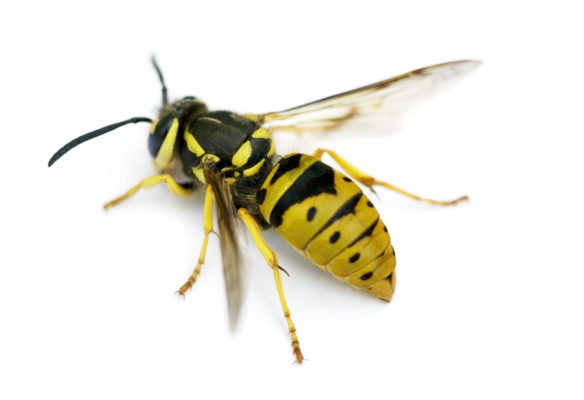
Yellow jackets have a sleek appearance. They are not fuzzy. They are black and yellow striped in color. They can grow to be 3/8″ to 5/8″ long.
HABITAT:
Yellow jackets build their nests either high up or in the ground. Their elevated nests can be found in the walls of buildings or in attics and chimneys. Their ground nests are usually in areas that lack vegetation or in spaces next to the entrance of buildings.
DIET:
Yellow jackets feed on other insects. They also eat any sweets and proteins that they come across. You can often find yellow jackets at outdoor events because they like to feed on sugary food scraps and drinks that are left out.
BEHAVIOR:
Yellow jackets have a smooth stinger which allows them to sting multiple times. They are usually docile unless their nests are approached. Then they become very aggressive and will sting repeatedly. Their sting can be life threatening if you are allergic. Yellow jackets are beneficial both as pollinators and because they help control the population of nuisance insects.
PREVENTION:
- Trim back shrubbery and trees from the exterior of your home.
- Make sure outdoor trash cans have tight fitting lids.
- Seal cracks in foundations.
- Caulk any gaps around windows and doors.
- Cap chimneys.
- Make sure vent covers are secure.
- If you are outdoors, make sure food is kept covered and dispose of cans, cups, and bottles quickly.
- If you suspect you have a yellow jacket problem, contact a professional pest control company.
PAPER WASPS:
APPEARANCE:
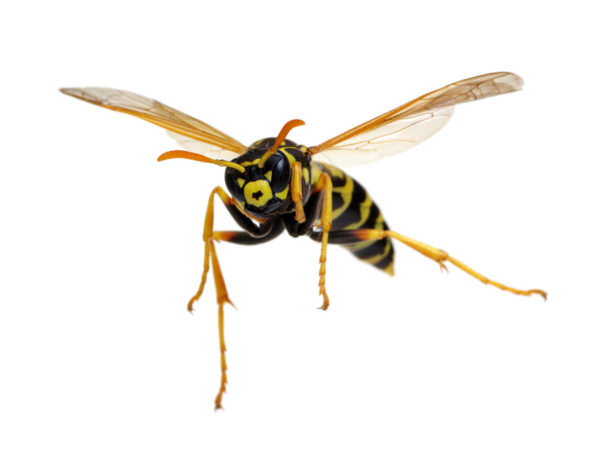
Paper wasps have a sleek appearance with a pinched waste and long, thin legs. They have gray wings and their bodies are black or brown with yellow or orange markings. Paper wasps can grow to be 5/8″ to 3/4″ in length.
HABITAT:
Paper wasps are found throughout the United States. They will build their nests of the ground on any horizontal surface they can find. Their nests are commonly found hanging from trees, shrubs, porches, decks, roofs, outdoor grills, and door frames. Their nests resemble an umbrella attached by a stem. Their name comes from the paper-like nests that they build.
DIET:
Paper wasps are predatory insects and feed on a wide variety of insects and spiders. They also eat nectar and pollen.
BEHAVIOR:
Paper wasps have smooth stingers that allow them to sting multiple times. They are not typically aggressive but will sting to defend their nests. Paper wasps have facial recognition capabilities like humans and chimpanzees do. They can actually recognize the faces of their colony members.
PREVENTION:
- Nests have to be knocked down in order to prevent rebuilding and overwintering.
- Adult wasps must also be killed to prevent the nest from being rebuild. This should be done in the early morning or late at night.
- Trim back shrubs and trees from the exterior of your home.
- Make sure outdoor trashcans have tight fitting lids.
- Cap chimneys.
- Fix any loose roof shingles.
- Repair any holes in your roof line.
- Make sure windows and doors have screens that are in good repair.
- Caulk any gaps around windows and doors.
- If you have a wasp nest or suspect you have a wasp problem, contact a professional pest control company.
BALD FACED HORNETS:
APPEARANCE:
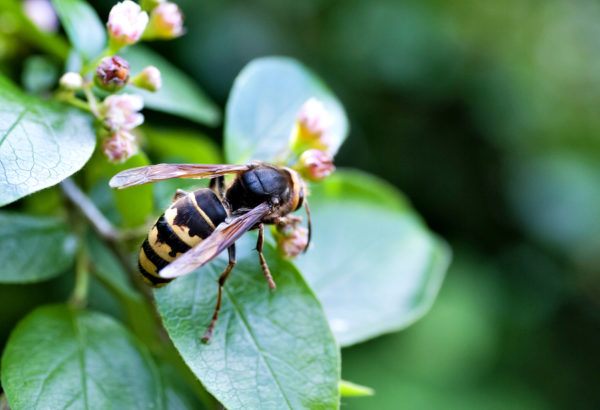
Hornets are much bigger than wasps. They are almost completely black except for an off white pattern on their face. They are long and thin with wasp-like bodies. They can grow from 3/4″ to 1-3/8″ in length.
HABITAT:
Hornets are found throughout the United States. Hornet colonies only survive for 1 year. They build aerial nests that can be found in trees, on utility poles, on the side of homes, and under eaves. Hornet nests can be more than 14″ around and more than 24″ long.
DIET:
Hornets are pollinators. Adults have a liquid diet that mostly consists of nectar and plant juices. They are also predatory and will prey on insects that they bring back to their nests to feed their larvae.
BEHAVIOR:
Hornets have a more painful sting than wasps do. A single hornet sting can be fatal if the victim is allergic. When hornets sting or feel threatened, they give off a pheromone that signals the rest of the colony to attack as well.
PREVENTION:
- It is difficult to prevent hornets from building nests. If the nest is up high, it is best to just leave it alone.
- Trim back shrubs and trees from the exterior of your home.
- Make sure outdoor trashcans have tight fitting lids.
- Cap chimneys.
- Fix any loose roof shingles.
- Repair any holes in your roof line.
- Make sure windows and doors have screens that are in good repair.
- Caulk any gaps around windows and doors.
- If you have a hornet nest or suspect you have a hornet problem, contact a professional pest control company.
LADYBUGS
APPEARANCE:
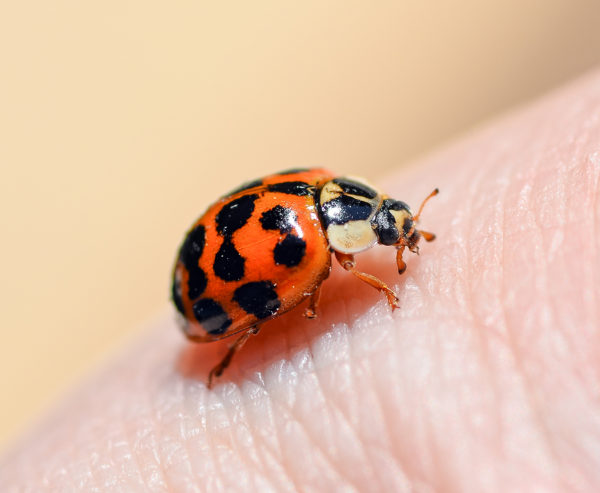
Ladybugs have a distinctive appearance. They are bright red, orange, or yellow with black spots. Their bodies are oval and dome shaped.
HABITAT:
Ladybugs are found worldwide. There are over 5000 species total and 450 species in North America. Ladybugs live outside in gardens and landscaped areas. They aren’t able to tolerate cold weather so in the fall they will invade homes in search of a place to overwinter. They will typically gather on windowsills or you will see them crawling along walls. They tend to end up in attics, under flooring, and in wall voids.
DIET:
Despite their appearance, ladybugs are predatory insects. They feed on a variety of other insects, helping to keep nuisance populations down.
BEHAVIOR:
Ladybugs secrete a substance wen they are threatened that makes them taste bad to their predators. They can also play dead if they feel threatened.
PREVENTION:
- Install chimney caps.
- Caulk any gaps around doors and windows.
- Makes sure doors and windows have screens that are in good repair.
- Install door sweeps on any doors that go outside.
- Seal any cracks in your foundation.
- Secure all vent covers.
- Fill in any spaces around utility entrances.
- Try to limit garden areas near the exterior of your home.
- Trim back shrubs and trees from the sides of your home.
- You can use an insect light trap to catch any ladybugs that make their way into your home.
- If you have a ladybug problem, contact a professional pest control company.
MOSQUITOES:
APPEARANCE:
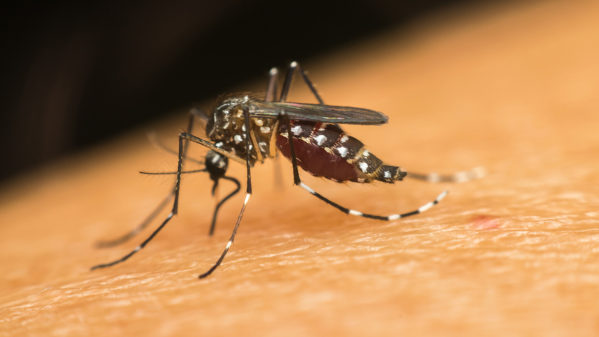
Mosquitoes have narrow bodies with long thin legs and transparent wings. They have gray bodies with white stripes on their abdomen. They also have long beaks that allow them to penetrate the skin. Mosquitoes can grow to be 1/4″ to 3/8″ long.
HABITAT:
Mosquitoes can be found in almost every landscape environment on earth with the exception of deserts and the arctic. Mosquitoes are most often found near stagnant water as this is where they lay their eggs. They are often found on the edges of streams, lakes, and ponds; near wading pools; old tires; bird baths; tarps; piles of trash; clogged gutters; and wheelbarrows.
DIET:
Mosquitoes feed on nectar and plant juices. Female mosquitoes bite to feed on blood.
BEHAVIOR:
The species of mosquito determines when they are most active. Some species are more active in the daytime while others become active at dark. Mosquitoes are capable of transmitting several diseases and pathogens to both humans and animals. Mosquitoes can transmit West Nile virus, Zika virus, Chikungunya fever, malaria, and canine heartworm among others.
PREVENTION:
- Eliminate any standing water on or near your property.
- Check gutters and downspouts to make sure they are not clogged.
- Consider installing Leafproof gutter guards on your home to prevent clogs and stagnant water.
- Store buckets, wading pools, wheelbarrows, and empty pet food bowls upside down so they can’t collect water.
- Shake off any water that collects on tarps.
- Dispose of your trash on a regular basis and store it in cans with tight-fitting lids.
- Keep your grass cut short.
- Keep doors and windows shut as much as possible.
- Make sure doors and windows have screens that are in good repair.
- Caulk gaps around windows and doors.
- If you suspect you have a mosquito problem, contact a professional pest control company.
HOUSEFLIES:
APPEARANCE:
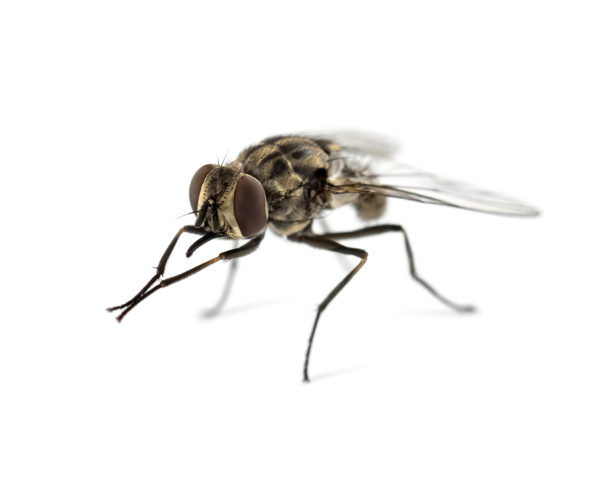
Houseflies have a very distinctive appearance. They have dull gray bodies with vertical lines on the top, a single gold stripe, and a silver stripe on their face. They can grow to be 1/8″ to 1/4″ in size.
HABITAT:
Flies can be found in most homes. They enter through tears in screens, gaps around windows and doors, doors and windows that have been left open, and cracks in the foundation. They are attracted to homes by garbage, animal feces, compost piles, and leaky pipes. They will often rest on your floors, walls, and ceilings.
DIET:
Houseflies are scavengers that eat a variety of different foods. They will feed on food found in pantries and kitchens, pet food, carcasses, garbage, or excrement. Houseflies are only able to eat liquids but they are able to turn many solid foods into liquid form so that they can eat it.
BEHAVIOR:
Houseflies can spread diseases when they land on your food or your food prep areas. They are the most common fly found in homes and only live from 15 to 25 days.
PREVENTION:
- Clean up pet waste daily.
- Use garbage cans with tight fitting lids.
- Keep garbage and compost piles away from your home.
- Use screens on windows and doors and make sure they are in good repair.
- Seal any cracks in your foundation.
- Caulk gaps around windows and doors.
- Keep food in sealed containers or in the fridge, including pet food.
- Wash dirty dishes regularly.
- Take out the trash regularly.
- Clean up spills and crumbs immediately.
- If you have a problem with flies, contact a professional pest control company.
FRUIT FLIES:
APPEARANCE:
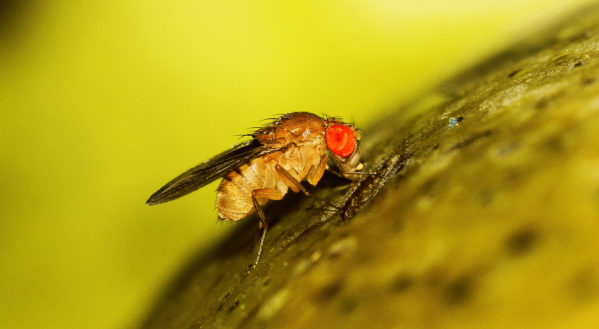
Fruit flies are extremely small in size, only getting about 1/8″ in length. They are usually brown, tan or black with distinctive red eyes. They are too small, however, for you to determine their color with the naked eye.
HABITAT:
Fruit flies are found throughout the United States. They are usually seen in the kitchen, especially around fruits and vegetables. They live outside in spring and summer. They enter homes as hitchhikers on fruits and vegetables that we buy from stores that are already infested. They can also enter through small spaces in widows, doors, and walls. They are attracted by large gardens, compost piles, and fruit trees.
DIET:
Fruit flies feed on very ripe fruits and vegetables like bananas, strawberries, melons, cucumbers, potatoes, and more. They also feed on fermented liquids like vinegar, cider, and beer.
BEHAVIOR:
Fruit flies are a nuisance. They enter your home in large numbers and are very difficult to eliminate. They can carry dangerous that can be transmitted to humans.
PREVENTION:
- Inspect your fruits and vegetables before you buy them and before you bring them into your home.
- Store produce in the refrigerator instead of on the counter.
- Get rid of overripe fruits and vegetables quickly.
- Pick up any fallen fruit and vegetables from your garden.
- Make sure your compost bins have lids on them.
- Empty your trash frequently.
- Store trash in outdoor cans with tightly fitting lids.
- Wash your dishes daily.
- Clean up crumbs and spills immediately.
- If you suspect you have a fruit fly problem, contact a professional pest control company.
Feb 8, 2018 | Pest Control
From tiny mice in the colder months to mosquitos in the summer, every season seems to bring a new pest to bother you and your family. We feel it is best to always have a contact near your home that can help to eliminate the pesky pests that may show up in or around your home. Aside from Northwest, check out the top four companies near Rome, Georgia that can help keep your home pest free.
- Cook’s Pest – They have been trusted for over 85 years in pest control and offer a multitude of services that could help protect your home.
- Rome City Pest Control – A trusted community member that boasts great reviews, Rome City Pest Control is family owned and operated.
- Allgood Pest – They serve Rome and the surrounding area and treat for a variety of home invasions, like pests, termites and bed bugs.
- Active Pest – With great hours and a strong reputation, Active Pest is another option for pest control in Rome.
It is important to rid your home of pests for several reasons, but most importantly because pests can spread diseases and cause unfortunate damage to your home. Termites alone cause over one billion dollars in damage each year in the U.S., and mosquitos are known for carrying diseases that are transmitted through their bite.
When selecting a pest control company for your home, one of the best ways to choose the right company for you is by reading customer reviews. From sites like Angie’s List to social media networks, online reviews give you a glimpse into the company before you hire. You can also run a quick Google search to determine if they offer options like Green Pest Control, other home services, or appointment availability. It’s important that you feel confident in who you hire to get the job done!
At our Northwest Rome location, we like to evaluate a home for any issue that could cause a concern for the home owner. While inspecting your home inside and out, we check for any wildlife concerns, insulation needs, lawn conditions, and pest issues you may be experiencing, while offering relief to all those concerns and more. With over 60 years of pest control experience, we like to ensure that every customer gets to fully enjoy one of their largest investments.
Overall, pest control is personal. No matter your home needs, there is a company out there that is right for you! Have any questions? Northwest Exterminating is always available to answer any questions you may have about your type of pest and solutions available. Give us a call at (888) 466-7849 or request a free estimate using the form on this page.
Feb 2, 2018 | Pest Control
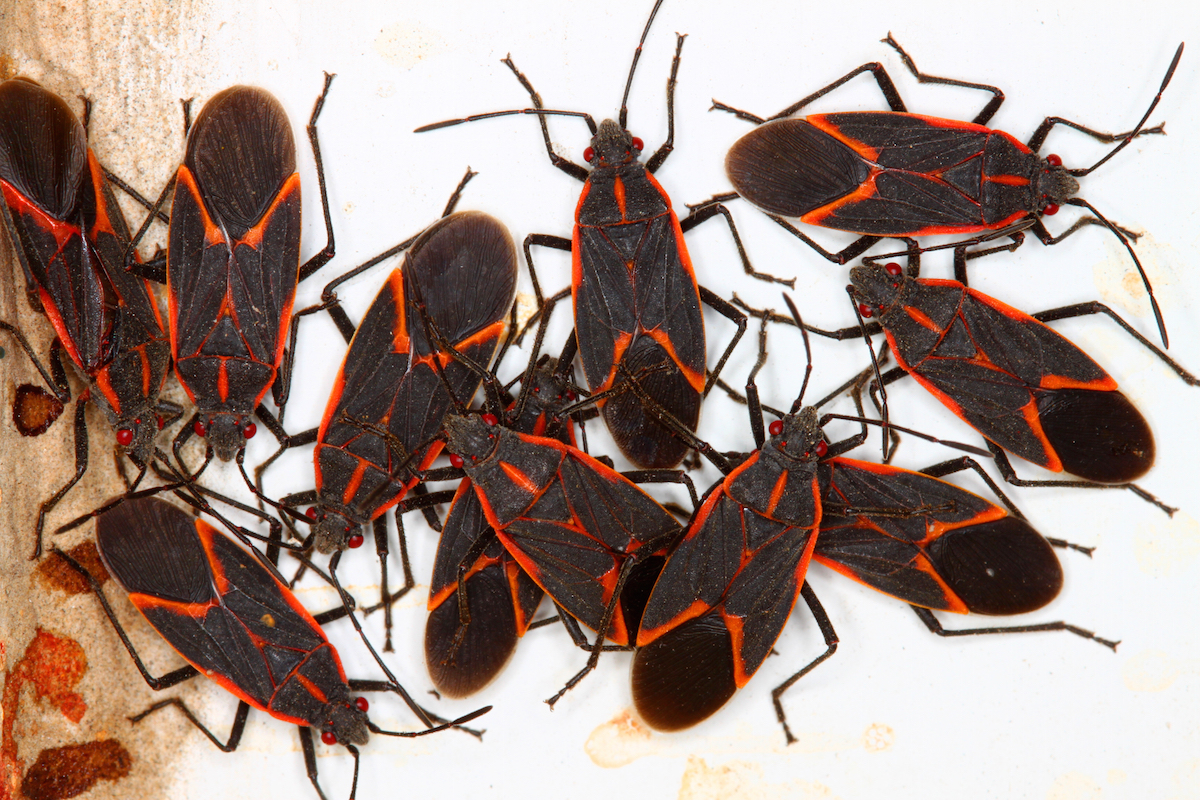
You may have walked outside recently and come across a congregation of small black and red bugs either on your home or car. These are boxelder bugs or, as they are affectionately called in the south, “lovebugs”; one of the many overwintering pests we tend to encounter when the temperatures drop and take up residence on the south side of homes, vehicles, and rocks where the sun shines in abundance. The question is, should you be concerned?
Let’s break down what “overwintering” means and the process by how it affects bugs and your home. Overwintering is defined as the process of insects passing the winter seasons. In the warmer months, boxelder bugs reside and thrive in boxelder and silver maple trees. There they lay their eggs and feed on leaves and flowers.
Once temperatures start to drop, these bugs will migrate by the thousands out of the trees and take up residence on the south side of buildings and homes. Then, they either migrate to a nearby site to hibernate for winter OR make your home their hibernation spot for the winter season.
So, what’s the risk of a boxelder bug home invasion? While boxelder bugs are not known to bite, they may bite when threatened and puncture the skin, causing a slight irritation and leaving a mark, similar to a mosquito bite. They will also leave a reddish orange stain from their fecal matter that will add discoloration to fabrics when crushed.
How to Prevent and Remove Boxelder Bugs
- Seal entry points near doors and windows
- Install weatherstripping where needed
- Use a vacuum for removal
If you’re having a boxelder bug problem, our Rome Northwest team is ready to help. A professional pest control plan has proven to be effective in controlling these overwintering pests when infested tress and the other areas around your home are treated with a residual pest control product. Schedule a free estimate to get started.
Feb 2, 2018 | Pest Control
Just like the weather changes with each season, so do the pests that we see. Some pests prefer warmer weather and peak in spring and summer while other pests will surge in the winter as they come inside to get out of the cold. The ways that you prepare your home will depend on what time of year it is and what pests you are preparing for. We have provided you with a few of the most common pests for each season so you can be better prepared all year long.
SPRING:
Springtime brings about an increase in temperatures, the melting of ice, and the blooming of flowers. These warmer temperatures bring many pests out from their winter hiding places. As these animals emerge they will have one thing on their minds – food and water! Spring is also mating season for many species. Here are some common spring pests to look out for:
- Ants: Ants forage for food in warmer weather. As the temperatures increase, ants will venture farther and farther from their colonies in search of food. This will eventually drive them into our homes. The heavy rains in spring also drive ants out of their colonies in search of higher ground.
- Termites: Spring is the start of termite season as they leave their nests to mate and start new colonies. This is also known as “swarming.”
- Mosquitoes: Heavy spring rains provide the ideal breeding ground for mosquitoes. Mosquitoes will increase their activity in spring in preparation for their peak season which is summer.
- Flies: Flies reach maturity at the beginning of spring. Once they mature, they will flock to areas that humans inhabit as they look for food. They prefer liquids and other sweet foods.
- Spiders: Spiders become active in the spring as they search for food. The increase in insect activity as they wake from their winter slumber provides ample opportunities for spiders to feed.
- Stinging Insects: Stinging insects include bees, wasps, yellow jackets, and hornets. These insects wake up from their dormant stage in the spring and they become more active. Spring is the start of their mating season as they seek to establish their nests and breed.
- Bed Bugs: Although bed bugs are a year round problem, their populations can spike in springtime because of the increased travel for Easter and spring break from schools.
SUMMER:
While we get somewhat of a break from pests in the summer months, there are a few species who peak during this hot season. Summer is typically the time in many pests’ life cycles where they are maturing and are less of a threat to humans. Here are some common summer pests:
- Mosquitoes: Mosquitoes are the most common summer pest. The warmer temperatures allow mosquitoes to move through their life cycle faster which means they lay more eggs in the summer months. The summer rains also provide the ideal setting for mosquitoes to breed.
- Stinging Insects: Stinging insects reach their highest populations in the summer. They will often build their nests in any openings in your house, under overhangs or in the ground near your foundation.
- Ants: Ants continue to be a nuisance in the summer. As the rains continue through the season, ants will continue to seek shelter in higher ground. They will also continue to forage into our homes in search of food.
- Flies: Flies are most active in the summer months. This is also their peak breeding season. Flies will spawn in animal waste, garbage, and rotting foods.
- Termites: Termites are most productive in the summer. This is the season when they continue to consume wood while the queen continues to lay eggs and build their colonies.
- Bed Bugs: Once again, bed bugs are year round pests. Many populations thrive in the summer months because of an increase in travel during summer break from school.
FALL:
Fall brings about cooler temperatures. This is the time of year when pests start to prepare for the upcoming winter. Many pests will start to seek warmth and shelter inside our homes. Here are some common fall pests:
- Cockroaches: Cockroaches are some of the most common fall pests. Cockroaches cannot survive in colder temperatures so fall is when we see them start to migrate indoors in search of shelter and warmth. Cockroaches are known to hide near pipes and drains. They can spread disease and exacerbate asthma.
- Spiders: Spiders are also common in the fall for the same reasons as cockroaches. They will move indoors to avoid the harsh colder temperatures, as well as in search of food as many of the flying insect populations decline as the weather cools. Spiders also breed in the fall so activity will increase as males go in search of mates.
- Rodents: Rodents are another common fall pest. Rodents will migrate indoors as the weather cools in search of warmth, shelter, food, and water. Rodents not only spread disease but will also chew through wood supports and electrical wires in your home.
- Fleas: With rodents come fleas. Fleas flourish in warmer weather so as the weather cools, we see their populations indoors thrive. Fleas will hitchhike into your home on both your pets and any other wildlife that come into your home in the fall.
- Stinkbugs: Stinkbugs become a nuisance in the fall. Stinkbugs are known for emitting an extremely foul odor when they feel threatened. Stinkbugs are also considered a serious threat to agriculture as they can cause significant damage to crops.
WINTER:
While many pests hibernate or become dormant over the winter, don’t relax just yet! There are still many pests that we see in larger numbers in the winter months as they make their way into our home to avoid the harsh cold weather. Here are some common winter pests:
- Rodents: Rodents are the most common pests we see in the winter. Rats, mice, and squirrels will invade our homes in search of a warm place to stay and an ample supply of food and water.
- Roaches: While most cockroach species die off in the winter, Oriental roaches and German roaches are still active during this time of year. They seek dark, damp areas which are prevalent in the wintertime.
- Bed Bugs: Once again, bed bug populations are active year round but they often flourish during the winter months as these are some of the busiest travel times of the year.
As you can see, no two pests are alike and no two seasons are alike. In the same manner, one universal pest control method won’t work for different pests or for different seasons. It is important to know which pests thrive during which seasons so that you can better prepare your home year round to prevent an invasion. If you suspect that you have a pest problem in your home, contact a professional pest control company who can provide you with a thorough evaluation and set you up with a comprehensive treatment plan.