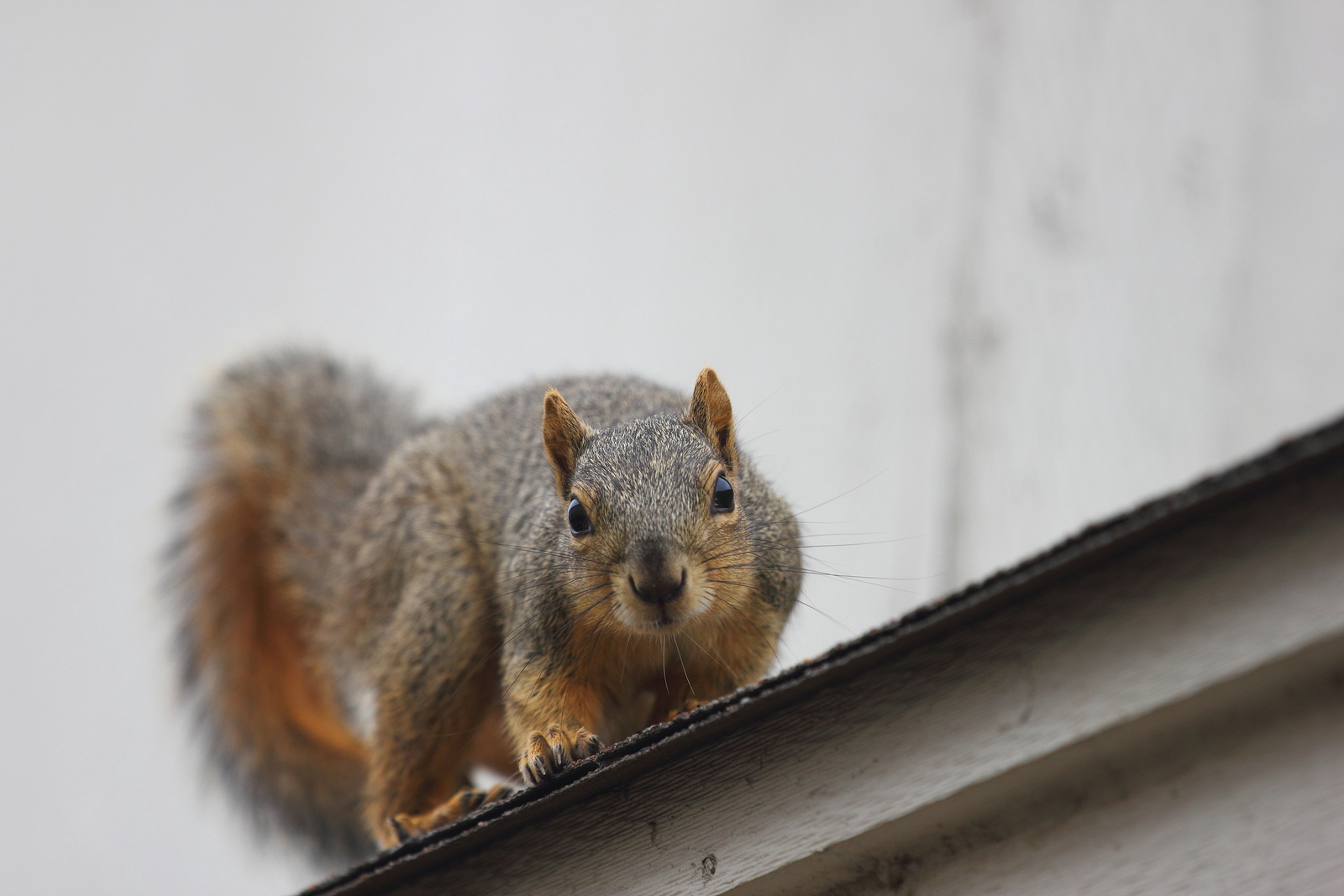
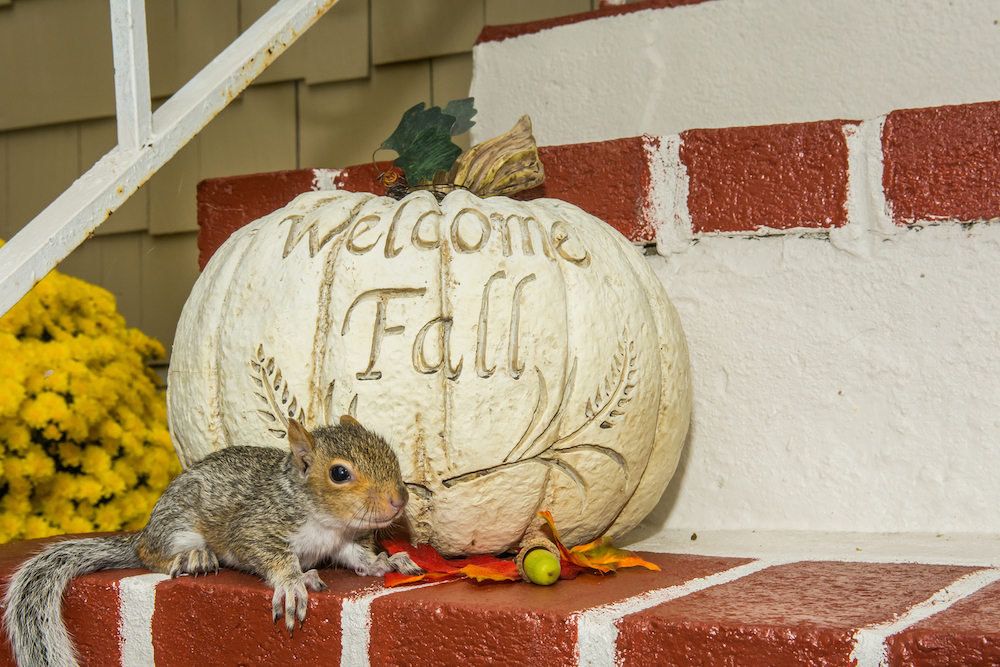
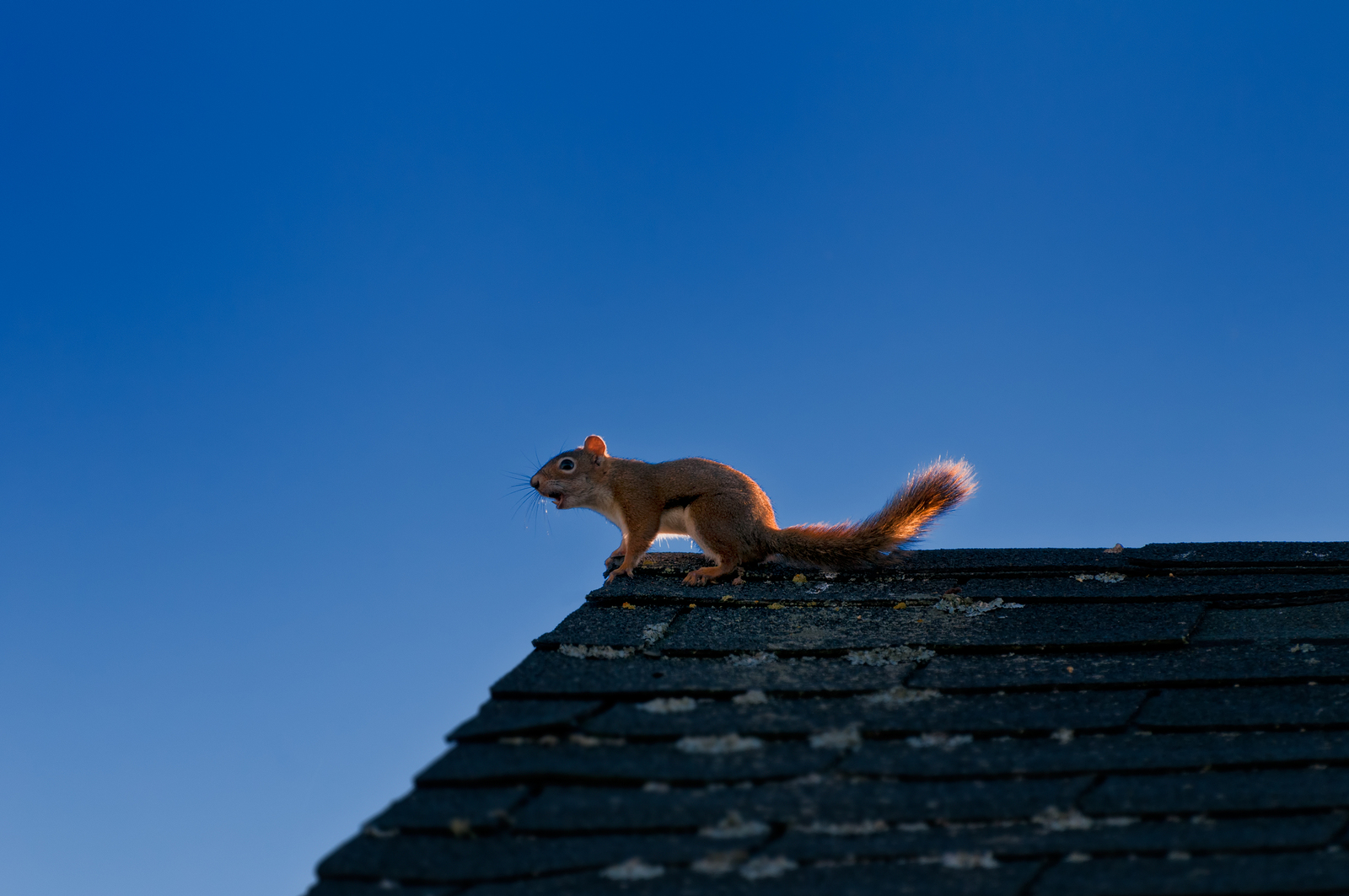
Squirrels may seem cute and harmless…until they’re seeking warmth and shelter inside your home. As the weather gets colder, it’s common for small animals like squirrels to nest in your attic, usually gaining access from gaps around your roofline, through vents, or even chimneys. Other than being annoyingly noisy, squirrels can cause major damage inside your home by chewing on wires, which can lead to power outages or fire, by contaminating storage areas and insulation with fur, urine, and droppings, and by allowing other pests or rodents to enter your home through holes they’ve created to gain access into your home.
Follow these tips to keep squirrels out of your home this fall & winter:
Seal Your Attic
Because squirrels can chew through a lot of roofing materials, like wood, aluminum, or shingles, and fit through small openings, gaining access points into your attic is easy. If you see any gaps or holes, use wire to seal off the areas and caulking to seal smaller cracks and crevices.
Set Traps
If you’re sealing gaps, it’s possible to trap squirrels inside your attic where they could eventually die or create more damage by chewing their way out in other places. By trapping the squirrels, you can prevent this from happening. Trapping should be done by someone that’s experienced; we recommend calling in a wildlife control company for this that uses live traps and places the traps in strategic areas that the squirrels are likely to come across. Once the squirrels are caught, they should be moved outside of your home, far enough away so as not to tempt them to return.
Trim Trees
Keeping tree limbs cut back and trimmed will further prevent squirrels from gaining access to your attic. Squirrels use tree limbs as a direct route onto your roof; cutting off these access points will eliminate a source of entry.
To get rid of squirrels isn’t an easy task. It often requires the knowledge and expertise of a wildlife control company. It’s equally as important to trap and remove the squirrels as it is to prevent them from coming back. A squirrel control professional will know how to find the squirrels, the most effective trapping and removal methods, and provide services and recommendations for future squirrel prevention.
While we’re enjoying more time outdoors this fall, pests and wildlife are making their way indoors looking for warmth and shelter to survive the winter. Here are 15 easy ways prevent a pest invasion this fall:
1. Thoroughly inspect your home for gaps around windows and doors and fix any areas in need of repair
2. Wildlife commonly enter your home through the attic which you can help to prevent by screening attic vents and chimney openings
3. Eliminate excess moisture by fixing leaking pipes and correcting drainage issues
4. Keep gutters cleaned and clear of debris
5. Seal any crack and crevices around your home’s exterior with caulk and steel wool, especially around utility pipes
6. Install door sweeps on any exterior doors and replace window & door screens that have been damaged
7. Keep a clean home – wipe up spills immediately, don’t leave food out, store leftovers in sealed containers, and take the garbage out daily
8. Store garbage in sealed receptacles away from your home’s exterior
9. Don’t leave pet food out, inside or outside your home
10. Replace weather stripping and loose mortar around basement foundation and windows
11. Store firewood at least 20 feet away from your home’s exterior
12. Keep shrubbery and trees trimmed
13. Avoid bringing in boxes or storage containers into your home; instead, go through them outside and bring in what you need after inspecting the items for pests
14. Use yellow bug lights around exterior doors; while they don’t deter bugs, they also don’t attract them like standard white light bulbs
15. Pest control and wildlife control from a professional exterminator – preventative treatments, usually on a quarterly basis, are the best way to eliminate current pest problems and prevent future infestations
It’s officially summer! While outside enjoying the warm weather, beware. Snakes are also active this time of year, soaking up the sunshine and in search of abundant food sources – around rocks, in gardens, on stone patios, around brush & vegetation, or even in attics, crawlspaces and basements. Here are some common snakes you may encounter in Southern states and what you can do to keep them away from your home.
Common Types of Snakes
King Snakes
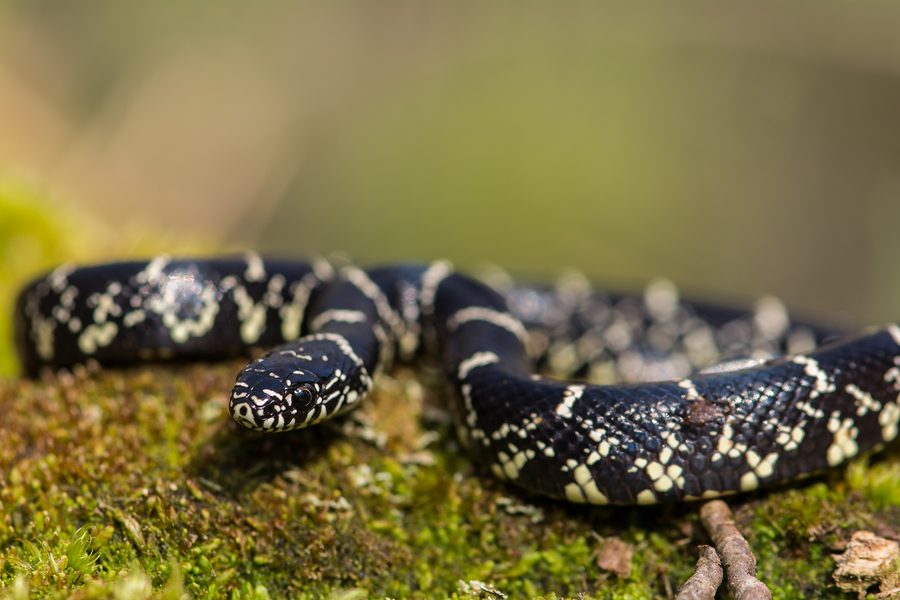
King snakes are usually large, black with white or yellow bands, with a short, blunt mouth and face. They’re commonly found in protected areas such as woods, overgrown vegetation, and cluttered areas. Although king snakes are non-venomous, they may bite if threatened. Keep them away from your home by eliminating food sources (rodents, birds, etc.), wood, clutter, and overgrown vegetation. You can also use a preventative snake repellent product, although these treatments are not always effective.
Rat Snakes
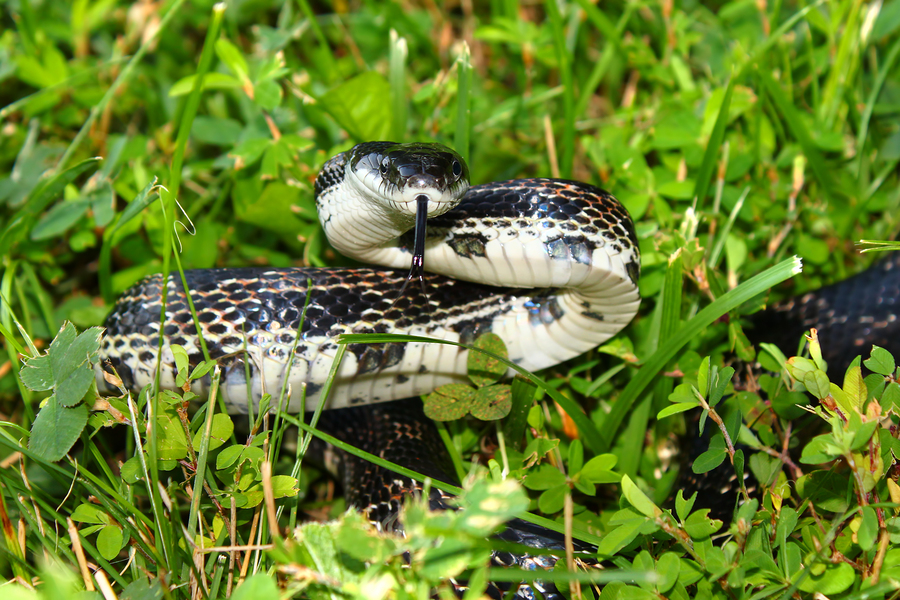
Rat snakes are large, usually ranging from 3-6+ feet in length and their color depends on what region they’re found in – usually black, yellow with stripes, or grey with darker patches. You’ll usually encounter rat snakes in semi-protected areas such as woods, over grown vegetation, swamps, or abandoned/vacant buildings. They’re known to climb if there’s a food source within reach and will bite if threatened (non-venomous). Keep them away from your home by eliminating their favorite food source – small rodents. For rodent control, contact your local wildlife removal company.
Garter Snakes
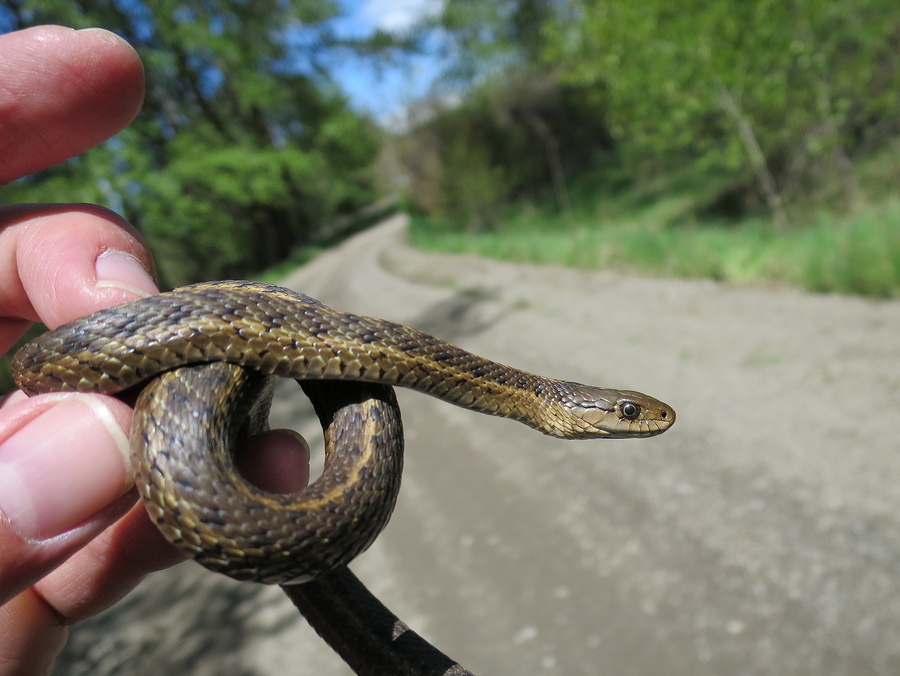
Garter snakes are small to medium-sized snakes with three vertical, yellow stripes on a dark-colored body. They prefer to hang out around protected areas such as woods and marshes, but are also very common in grassy areas and around water. Garter snakes can be found in mostly any suburban area throughout the southeast and U.S. as long as there is cover for them. Limit food sources around your home to keep them away – insects, lizards, small rodents, etc.
Black Racer Snakes
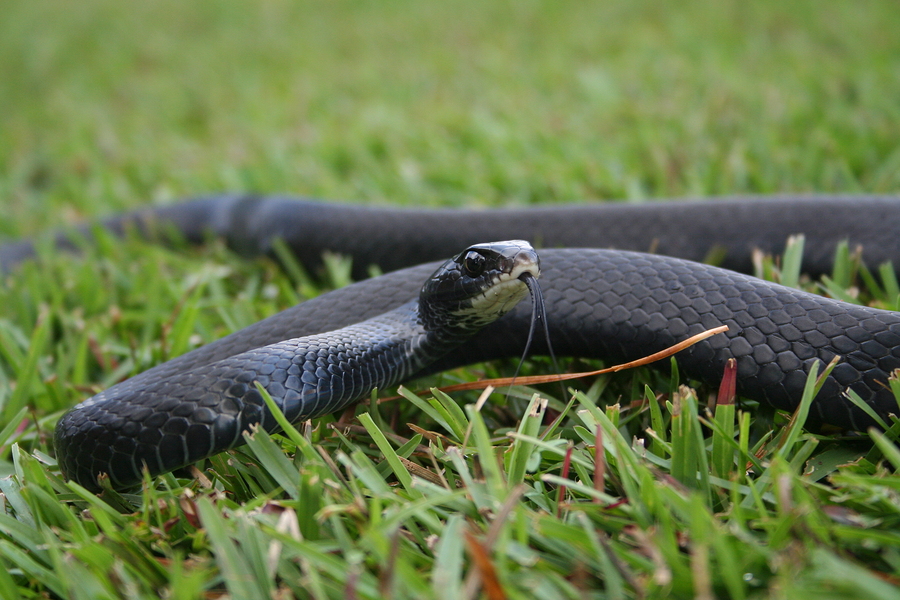
Black racers are large snakes, usually 5+ feet long, with slender, black bodies (sometimes with a white chin), and are often confused with other black snakes. Black racer snakes can be found throughout the eastern U.S. in nearly any habitat, but are more abundant near forest edges, old fields, or wetland edges. They’re non-venomous snakes but may bite if provoked. Keep them away from your home by reducing potential food sources (insects, lizards, snakes, birds, rodents, & amphibians) with regular pest control or bird control services.
Brown Snakes
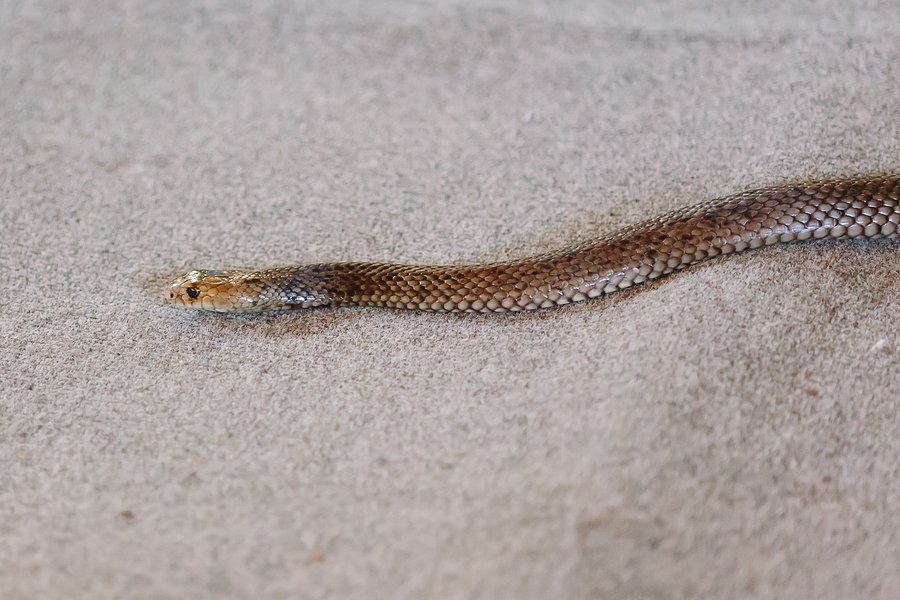
Brown snakes are small (6-13″ long), brown or sometimes yellowish, reddish, or grayish-brown with rows of darker spots on the back, and are common in wooded areas, near wetlands, urban areas, under debris in residential areas, and any other area with adequate ground cover (but not found in areas of high elevation). Brown snakes are the most common snake seen in urban environments. Because brown snakes prefer to eat insects like earthworms, snails, and slugs, it’s important to eliminate sources of moisture, debris, and vegetation around your home’s exterior to keep them away.
Copperhead Snakes
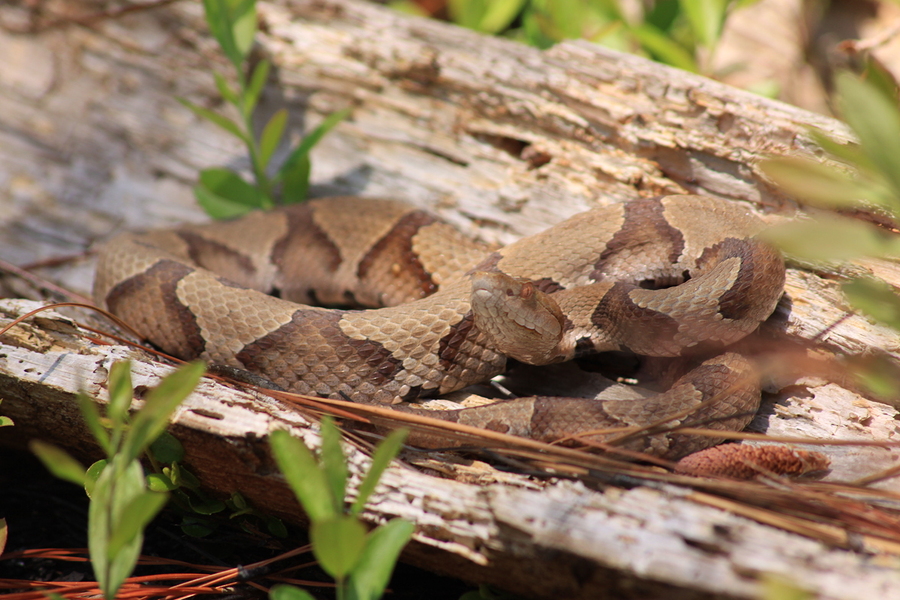
Copperheads are large snakes, 2-4 feet long with heavy bodies. They have a distinct, triangular-shaped head, are tan to brown with hour glass shaped darker bands running across the body, while juvenile copperheads have a distinct yellow tail tip. You’ll encounter copperhead snakes throughout central and eastern US, excluding some southern portions of Georgia and all of Florida, in semi-protected areas such as woods and swamps, but also in suburban areas. Copperheads are venomous snakes that will bite if bothered. To prevent copperhead snakes, eliminate potential food sources – mice, small birds, lizards, other small snakes, amphibians, and insects – and use caution when outside at night in the summer.
Water Moccasins
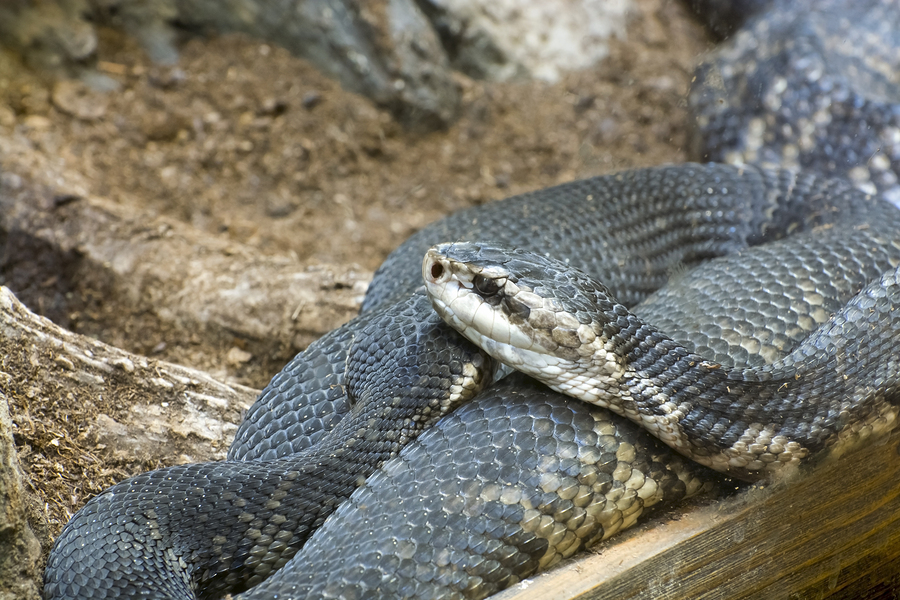
Water moccasins, also referred to as cottonmouth snakes, are large snakes, 2-4 feet long with very heavy bodies, of varying colors – solid brown to brown or yellow with dark cross bands (juveniles have a yellow tip) – with distinctly triangular heads. Water moccasins are venomous snakes known to open their mouths wide when threatened (which is white on the inside, hence the name “cottonmouth”). They’re found throughout the southeast, but are slightly more common in coastal regions, in freshwater habitats, cypress swamps, river floodplains, and heavily vegetated wetlands. It’s unlikely you’ll see water moccasins around your home unless you live near bodies of freshwater.
Coral Snakes
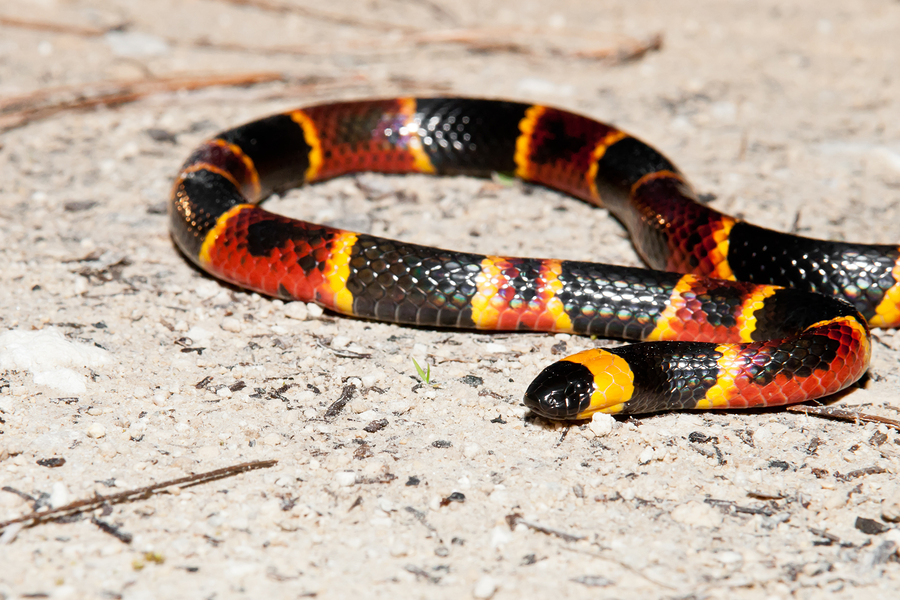
Coral snakes are medium-sized snakes, 1.5-2.5 feet long, brightly-colored red, yellow, and black, commonly found throughout much of the southern coastal plain (most common in Florida), in pine and scrub sandhill habitats, hardwood forests and pine flatwoods that flood, and suburban areas; they spend the majority of their time underground. Coral snakes are venomous and, when threatened, will lift their tail with the tip of the tail curled over.
It’s officially summer! While outside enjoying the warm weather, beware. Snakes are also active this time of year, soaking up the sunshine and in search of abundant food sources – around rocks, in gardens, on stone patios, around brush & vegetation, or even in attics, crawlspaces and basements. Here are some common snakes you may encounter in Southern states and what you can do to keep them away from your home.
Common Types of Snakes
King Snakes
King snakes are usually large, black with white or yellow bands, with a short, blunt mouth and face. They’re commonly found in protected areas such as woods, overgrown vegetation, and cluttered areas. Although king snakes are non-venomous, they may bite if threatened. Keep them away from your home by eliminating food sources (rodents, birds, etc.), wood, clutter, and overgrown vegetation. You can also use a preventative snake repellent product, although these treatments are not always effective.
Rat Snakes
Rat snakes are large, usually ranging from 3-6+ feet in length and their color depends on what region they’re found in – usually black, yellow with stripes, or grey with darker patches. You’ll usually encounter rat snakes in semi-protected areas such as woods, over grown vegetation, swamps, or abandoned/vacant buildings. They’re known to climb if there’s a food source within reach and will bite if threatened (non-venomous). Keep them away from your home by eliminating their favorite food source – small rodents. For rodent control, contact your local wildlife removal company.
Garter Snakes
Garter snakes are small to medium-sized snakes with three vertical, yellow stripes on a dark-colored body. They prefer to hang out around protected areas such as woods and marshes, but are also very common in grassy areas and around water. Garter snakes can be found in mostly any suburban area throughout the southeast and U.S. as long as there is cover for them. Limit food sources around your home to keep them away – insects, lizards, small rodents, etc.
Black Racer Snakes
Black racers are large snakes, usually 5+ feet long, with slender, black bodies (sometimes with a white chin), and are often confused with other black snakes. Black racer snakes can be found throughout the eastern U.S. in nearly any habitat, but are more abundant near forest edges, old fields, or wetland edges. They’re non-venomous snakes but may bite if provoked. Keep them away from your home by reducing potential food sources (insects, lizards, snakes, birds, rodents, & amphibians) with regular pest control or bird control services.
Brown Snakes
Brown snakes are small (6-13″ long), brown or sometimes yellowish, reddish, or grayish-brown with rows of darker spots on the back, and are common in wooded areas, near wetlands, urban areas, under debris in residential areas, and any other area with adequate ground cover (but not found in areas of high elevation). Brown snakes are the most common snake seen in urban environments. Because brown snakes prefer to eat insects like earthworms, snails, and slugs, it’s important to eliminate sources of moisture, debris, and vegetation around your home’s exterior to keep them away.
Copperhead Snakes
Copperheads are large snakes, 2-4 feet long with heavy bodies. They have a distinct, triangular-shaped head, are tan to brown with hour glass shaped darker bands running across the body, while juvenile copperheads have a distinct yellow tail tip. You’ll encounter copperhead snakes throughout central and eastern US, excluding some southern portions of Georgia and all of Florida, in semi-protected areas such as woods and swamps, but also in suburban areas. Copperheads are venomous snakes that will bite if bothered. To prevent copperhead snakes, eliminate potential food sources – mice, small birds, lizards, other small snakes, amphibians, and insects – and use caution when outside at night in the summer.
Water Moccasins
Water moccasins, also referred to as cottonmouth snakes, are large snakes, 2-4 feet long with very heavy bodies, of varying colors – solid brown to brown or yellow with dark cross bands (juveniles have a yellow tip) – with distinctly triangular heads. Water moccasins are venomous snakes known to open their mouths wide when threatened (which is white on the inside, hence the name “cottonmouth”). They’re found throughout the southeast, but are slightly more common in coastal regions, in freshwater habitats, cypress swamps, river floodplains, and heavily vegetated wetlands. It’s unlikely you’ll see water moccasins around your home unless you live near bodies of freshwater.
Coral Snakes
Coral snakes are medium-sized snakes, 1.5-2.5 feet long, brightly-colored red, yellow, and black, commonly found throughout much of the southern coastal plain (most common in Florida), in pine and scrub sandhill habitats, hardwood forests and pine flatwoods that flood, and suburban areas; they spend the majority of their time underground. Coral snakes are venomous and, when threatened, will lift their tail with the tip of the tail curled over.
[vc_row css=”.vc_custom_1461783466399{margin-bottom: 20px !important;}”][vc_column][vc_column_text]
Now that we’re well into the Spring season, you may be noticing an influx of pests that were hiding out over the winter – mosquitoes, ants, termites, and BEES. While some bees you’ll encounter are harmless, others can seem threatening and leave behind painful stings and cause allergic reactions. Here’s a list of common bees in the South to be on the lookout during the Spring and Summer seasons, with bee control tips:
Carpenter bees are large black and yellow bees, often mistaken for bumble bees. You’re likely to see them in the Spring hovering around the eaves of your house or under and around decks and porches. Carpenter bees can cause damage to structures by creating small, circular holes as entry points into nests with multiple tunnels, leaving behind trails of sawdust. Any area of exposed wood can be a target for carpenter bee nests. The good news: carpenter bees rarely sting unless bothered; males do not have a stinger but can become aggressive towards other bees, animals or people near their nest and females usually only sting when extremely agitated. You can also prevent carpenter bees from nesting by treating or painting any exposed wood. If you’re already seeing carpenter bee nests, each nest hole should be treated with a pesticide if bees are inside the nest. If no bees are in the nest, seal or paint entry holes. For best results, call a pest control company that specializes in bee control and removal.
Cicada killer bees are large bees, black or rusty-colored with yellow markings, that resemble a larger version of a yellow jacket. Unlike a lot of other bee species, cicada killer bees do not live in colonies and prefer to nest underground in areas of bare ground. Female cicada killer bees dig burrows 1/2″ in diameter that can extend up to 10″ deep which can cause significant lawn damage. You’re likely to encounter cicada killer bees in the Summer – usually July and August – when they emerge from burrows.
While relatively harmless bees, bumble bees – identified by their fuzzy, black and yellow-striped appearance and a buzzing sound while flying – can become aggressive and sting if their nest is threatened. They’re normally seen in flowering plants and typically don’t nest in structures.
Yellow jackets are one of the most commonly encountered bees and also one of the most aggressive. Their stings can be extremely painful and cause severe allergic reactions for some. Yellow jackets are also know to sting repeatedly. Avoiding yellow jackets is the best method of sting prevention or remain still if you encounter them; swatting or sudden movements can cause them to attack.
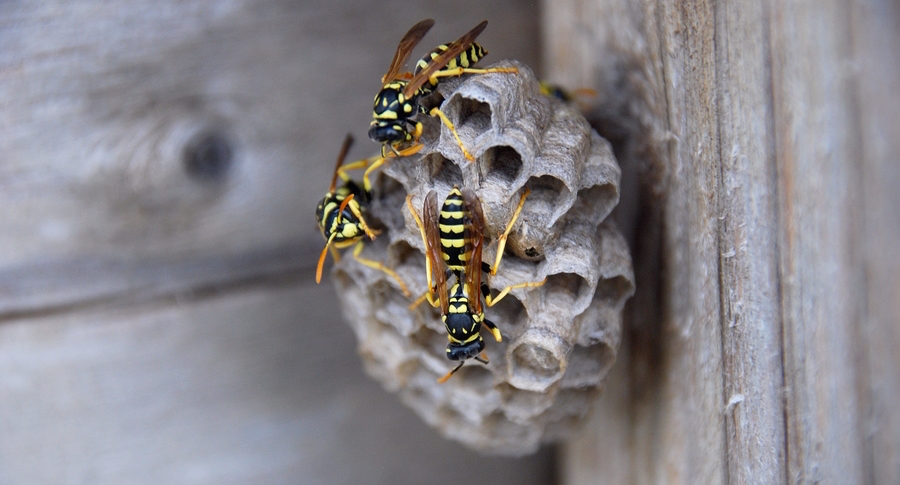
Paper wasps are large, aggressive wasps that cause painful bites and sometimes severe allergic reactions. They’re most likely to sting if their nest is threatened or disturbed. It’s recommended to contact an exterminating company for wasp nest removal.
Hornets are brown and yellow striped with reddish colored wings, and sometime mistaken for cicada killer bees. They build above-ground nests, usually in trees, and are active in the Spring. It’s recommended that you contact a pest control company to remove a hornet nest, but they do not pose a serious threat to humans and will die or hibernate in the Fall.
[vc_row css=”.vc_custom_1461783466399{margin-bottom: 20px !important;}”][vc_column][vc_column_text]
Now that we’re well into the Spring season, you may be noticing an influx of pests that were hiding out over the winter – mosquitoes, ants, termites, and BEES. While some bees you’ll encounter are harmless, others can seem threatening and leave behind painful stings and cause allergic reactions. Here’s a list of common bees in the South to be on the lookout during the Spring and Summer seasons, with bee control tips:
[/vc_column_text][/vc_column][/vc_row][vc_row css=”.vc_custom_1461783788041{margin-bottom: 20px !important;}”][vc_column][vc_row_inner][vc_column_inner][ctitle title=”Carpenter Bees” uppercase=”no” background=”#ffffff” font_size=”26″ position=”left” separator_color=”#ffffff”][/vc_column_inner][/vc_row_inner][vc_separator style=”blank” padding_top=”5″ padding_bottom=”5″][vc_row_inner][vc_column_inner width=”1/3″][vc_single_image image=”15376″ img_size=”300×155″ style=”vc_box_outline” img_link_target=”_blank” link=”https://www.callnorthwest.com/identify-pest/bees/carpenter-bees/”][/vc_column_inner][vc_column_inner width=”2/3″][vc_column_text] Carpenter bees are large black and yellow bees, often mistaken for bumble bees. You’re likely to see them in the Spring hovering around the eaves of your house or under and around decks and porches. Carpenter bees can cause damage to structures by creating small, circular holes as entry points into nests with multiple tunnels, leaving behind trails of sawdust. Any area of exposed wood can be a target for carpenter bee nests. The good news: carpenter bees rarely sting unless bothered; males do not have a stinger but can become aggressive towards other bees, animals or people near their nest and females usually only sting when extremely agitated. You can also prevent carpenter bees from nesting by treating or painting any exposed wood. If you’re already seeing carpenter bee nests, each nest hole should be treated with a pesticide if bees are inside the nest. If no bees are in the nest, seal or paint entry holes. For best results, call a pest control company that specializes in bee control and removal.
[/vc_column_text][/vc_column_inner][/vc_row_inner][/vc_column][/vc_row][vc_row css=”.vc_custom_1461783795963{margin-bottom: 20px !important;}”][vc_column][vc_row_inner][vc_column_inner][ctitle title=”Cicada Killer Bees” uppercase=”no” background=”#ffffff” font_size=”26″ position=”left” separator_color=”#ffffff”][/vc_column_inner][/vc_row_inner][vc_separator style=”blank” padding_top=”5″ padding_bottom=”5″][vc_row_inner][vc_column_inner width=”1/3″][vc_single_image image=”15377″ img_size=”300×155″ style=”vc_box_outline” img_link_target=”_blank” link=”https://www.callnorthwest.com/identify-pest/bees/cicada-killer-bees/”][/vc_column_inner][vc_column_inner width=”2/3″][vc_column_text] Cicada killer bees are large bees, black or rusty-colored with yellow markings, that resemble a larger version of a yellow jacket. Unlike a lot of other bee species, cicada killer bees do not live in colonies and prefer to nest underground in areas of bare ground. Female cicada killer bees dig burrows 1/2″ in diameter that can extend up to 10″ deep which can cause significant lawn damage. You’re likely to encounter cicada killer bees in the Summer – usually July and August – when they emerge from burrows.
[/vc_column_text][/vc_column_inner][/vc_row_inner][/vc_column][/vc_row][vc_row css=”.vc_custom_1461783803707{margin-bottom: 20px !important;}”][vc_column][vc_row_inner][vc_column_inner][ctitle title=”Bumble Bees” uppercase=”no” background=”#ffffff” font_size=”26″ position=”left” separator_color=”#ffffff”][/vc_column_inner][/vc_row_inner][vc_separator style=”blank” padding_top=”5″ padding_bottom=”5″][vc_row_inner][vc_column_inner width=”1/3″][vc_single_image image=”15378″ img_size=”300×155″ style=”vc_box_outline”][/vc_column_inner][vc_column_inner width=”2/3″][vc_column_text]
While relatively harmless bees, bumble bees – identified by their fuzzy, black and yellow-striped appearance and a buzzing sound while flying – can become aggressive and sting if their nest is threatened. They’re normally seen in flowering plants and typically don’t nest in structures.
[/vc_column_text][/vc_column_inner][/vc_row_inner][/vc_column][/vc_row][vc_row css=”.vc_custom_1461783813281{margin-bottom: 20px !important;}”][vc_column][vc_row_inner][vc_column_inner][ctitle title=”Yellow Jackets” uppercase=”no” background=”#ffffff” font_size=”26″ position=”left” separator_color=”#ffffff”][/vc_column_inner][/vc_row_inner][vc_separator style=”blank” padding_top=”5″ padding_bottom=”5″][vc_row_inner][vc_column_inner width=”1/3″][vc_single_image image=”15379″ img_size=”300×155″ style=”vc_box_outline”][/vc_column_inner][vc_column_inner width=”2/3″][vc_column_text]
Yellow jackets are one of the most commonly encountered bees and also one of the most aggressive. Their stings can be extremely painful and cause severe allergic reactions for some. Yellow jackets are also know to sting repeatedly. Avoiding yellow jackets is the best method of sting prevention or remain still if you encounter them; swatting or sudden movements can cause them to attack.
[/vc_column_text][/vc_column_inner][/vc_row_inner][/vc_column][/vc_row][vc_row css=”.vc_custom_1461783821501{margin-bottom: 20px !important;}”][vc_column][vc_row_inner][vc_column_inner][ctitle title=”Paper Wasps” uppercase=”no” background=”#ffffff” font_size=”26″ position=”left” separator_color=”#ffffff”][/vc_column_inner][/vc_row_inner][vc_separator style=”blank” padding_top=”5″ padding_bottom=”5″][vc_row_inner][vc_column_inner width=”1/3″][vc_single_image image=”15381″ img_size=”300×155″ style=”vc_box_outline”][/vc_column_inner][vc_column_inner width=”2/3″][vc_column_text]
Paper wasps are large, aggressive wasps that cause painful bites and sometimes severe allergic reactions. They’re most likely to sting if their nest is threatened or disturbed. It’s recommended to contact an exterminating company for wasp nest removal.
[/vc_column_text][/vc_column_inner][/vc_row_inner][/vc_column][/vc_row][vc_row css=”.vc_custom_1461783548104{margin-bottom: 40px !important;}”][vc_column][vc_row_inner][vc_column_inner][ctitle title=”Hornets” uppercase=”no” background=”#ffffff” font_size=”26″ position=”left” separator_color=”#ffffff”][/vc_column_inner][/vc_row_inner][vc_separator style=”blank” padding_top=”5″ padding_bottom=”5″][vc_row_inner][vc_column_inner width=”1/3″][vc_single_image image=”15382″ img_size=”300×155″ style=”vc_box_outline”][/vc_column_inner][vc_column_inner width=”2/3″][vc_column_text]
Hornets are brown and yellow striped with reddish colored wings, and sometime mistaken for cicada killer bees. They build above-ground nests, usually in trees, and are active in the Spring. It’s recommended that you contact a pest control company to remove a hornet nest, but they do not pose a serious threat to humans and will die or hibernate in the Fall.
[/vc_column_text][/vc_column_inner][/vc_row_inner][/vc_column][/vc_row]
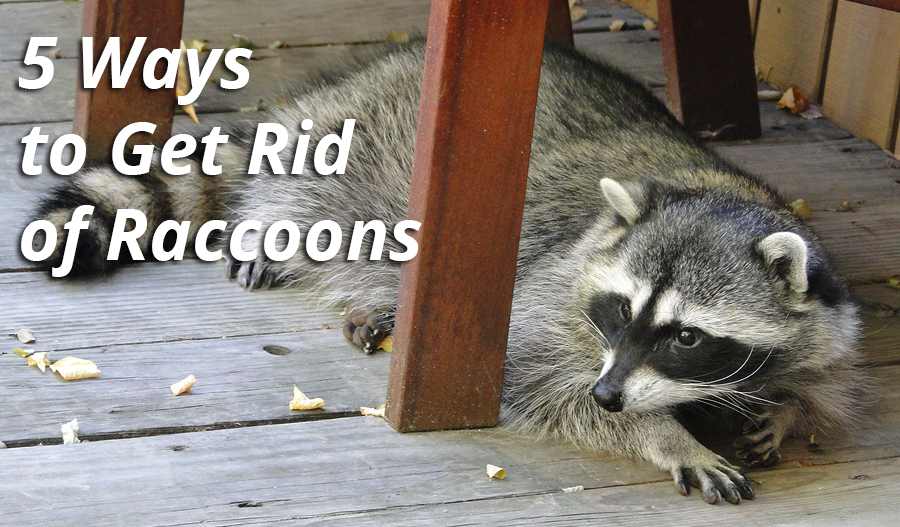
Raccoons, a common animal nuisance throughout the U.S., are nocturnal therefore rarely seen during the day. At night, they’ll leave their dens (often your chimney or attic), in search of food and water. Because they’re omnivorous and will eat mostly anything – other animals, fruit, plants, nuts, fish, insects, mice, etc. – there’s likely a food source in or around your home. So what’s the risk? Raccoons are known to carry rabies, cause significant structural damage to homes, destroy gardens, and leave behind a messy trail of trash after raiding garbage cans left outside.
Prevent disease and destruction by following the 5 tips below.
1. Store Garbage Cans Inside
If left outdoors around your home, trash cans will surely attract raccoons looking for food. Instead, keep garbage stored in your garage, basement, or storage building and take out regularly. If you don’t have storage space indoors, use garbage bins with animal-proof lids.
2. Seal Raccoon Entry Points
Inspect your home regularly for access points – holes, gaps, broken vents, loose siding, broken shingles, etc. – and seal or repair these to prevent raccoons from getting inside.
3. Cover Chimney Openings
Chimneys are common entry points into your home for raccoons. Install a mesh cover or cap over chimney openings to keep them out, or call a wildlife control company to do this for you. They will also inspect your home for other issues and provide you with raccoon exclusion solutions to prevent an invasion.
4. Remove Bird Feeders and Pet Food
Having bird feeders and pet food containers around your home will likely attract raccoons as it provides them with a steady food source. Consider removing bird feeders and only leave pet food out when your pets are eating.
5. Lock Pet Doors at Night
Have a doggie door? This is an obvious and easy opening for raccoons to get in. Once your pet is indoors for the night, lock the pet door. You could also consider installing a door that only opens for your pet via an electronic signal, usually in the form of a collar your pet can wear.
These methods are great for raccoon prevention. If you think you have raccoons living in your attic, chimney, or crawl space, you don’t want to block them inside. Call a professional wildlife trapper that can safely remove the raccoons, clean up contamination, and offer exclusion methods that will keep them from coming back.
With so many exterminators to choose from, it can be overwhelming for a business or homeowner to determine which company is the best option. Here are a few things to look for when considering which pest control company is right for you:
1. Multiple Service Options
Does the pest control company offer multiple services for pests, termites, mosquitoes, bed bugs, wildlife, and other household pests? As temperatures and weather conditions change throughout the year, it’s likely that you’ll encounter several different pests at different times. Having an exterminating company that can handle all of your pest needs will save you time AND money. Most often, the pest company can handle multiple service requests during one appointment, send you one bill for all services, that’s usually at a discounted rate (bundle services and SAVE!).
2. Green, Eco-friendly Services
Is the environment and your family & pets a concern for you when considering exterminators? Most likely it is, and should be. Pest control companies today should offer green alternatives to traditional services – like green pest control, green termite control, and green mosquito control. With advancements in technology, green services are just as effective as traditional services if applied correctly and will give you peace of mind, knowing family and pets are not at risk. It’s also not a bad idea to ask for a list of products used. Some exterminating companies claim to offer “green” pest control, but are only using an integrated pest management (IPM) approach – which utilizes less product to target specific pests – but not always with eco-friendly pest control products.
3. A Positive Reputation
Most pest control companies, like other services companies, will have customer reviews online or a word-of-mouth reputation. Use caution if a company has no reviews or if you’ve never heard of them; they may be newly established with less industry experience.
4. Years in Business
Because there is so much competition in the pest industry, some newer start-up companies won’t stay in business. While they may offer cheaper prices up-front, your warranty could be compromised, OR they could close their doors without fulfilling their agreement. It’s best to choose a company that’s been around for awhile, that has proven, effective pest control methods, offers highly-trained technicians, and that stands behind their warranties.
Squirrels may seem cute and harmless…until they’re seeking warmth and shelter inside your home. As the weather gets colder, it’s common for small animals like squirrels to nest in your attic, usually gaining access from gaps around your roofline, through vents, or even chimneys. Other than being annoyingly noisy, squirrels can cause major damage inside your home by chewing on wires, which can lead to power outages or fire, by contaminating storage areas and insulation with fur, urine, and droppings, and by allowing other pests or rodents to enter your home through holes they’ve created to gain access into your home.
Follow these tips to keep squirrels out of your home this winter:
1. Seal Your Attic
Because squirrels can chew through a lot of roofing materials, like wood, aluminum, or shingles, and fit through small openings, gaining access points into your attic is easy. If you see any gaps or holes, use wire to seal off the areas and caulking to seal smaller cracks and crevices.
2. Set Traps
If you’re sealing gaps, it’s possible to trap squirrels inside your attic where they could eventually die or create more damage by chewing their way out in other places. By trapping the squirrels, you can prevent this from happening. Trapping should be done by someone that’s experienced; we recommend calling in a wildlife control company for this that uses live traps and places the traps in strategic areas that the squirrels are likely to come across. Once the squirrels are caught, they should be moved outside of your home, far enough away so as not to tempt them to return.
3. Trim Trees
Keeping tree limbs cut back and trimmed will further prevent squirrels from gaining access to your attic. Squirrels use tree limbs as a direct route onto your roof; cutting off these access points will eliminate a source of entry.
To get rid of squirrels isn’t an easy task. It often requires the knowledge and expertise of a wildlife control company. It’s equally as important to trap and remove the squirrels as it is to prevent them from coming back. A squirrel control professional will know how to find the squirrels, the most effective trapping and removal methods, and provide services and recommendations for future squirrel prevention.
*Inspection fee for Bird Control or Snake Removal begins at $125. These service inspection fees will be applied to total service cost if bird control and/or snake removal services are completed.
By submitting, you agree to be contacted about your quote. See our Privacy Policy.
READY TO GET STARTED?
REQUEST A FREE ESTIMATE
Fill out the form below or call (866) 800-2197 for a free, no-obligation estimate.
READY TO GET STARTED?
REQUEST A FREE ESTIMATE
Fill out the form below or call (866) 800-2197 for a free, no-obligation estimate.
READY TO GET STARTED?
REQUEST A FREE ESTIMATE
Fill out the form below or call (855) 374-3795 for a free, no-obligation estimate.