Mar 26, 2021 | Pest Control
By Anna Vaccaro, Editorial Lead — Pest Education · Last updated: April 2026
If you spot a cockroach skittering across your kitchen floor in Georgia, it’s natural to hope it’s just one stray bug passing through. At Northwest, we hear this question more than almost any other: “If I see one cockroach, does it mean I have a roach infestation?” The short answer is usually yes. Where there’s one, there are almost always more hiding out of sight, and catching a roach infestation early is the difference between a quick treatment and a long battle.
Here’s what a single sighting actually tells you about what’s happening behind the walls, the signs that confirm it, and the moves that stop a small problem from turning into a full-blown infestation.

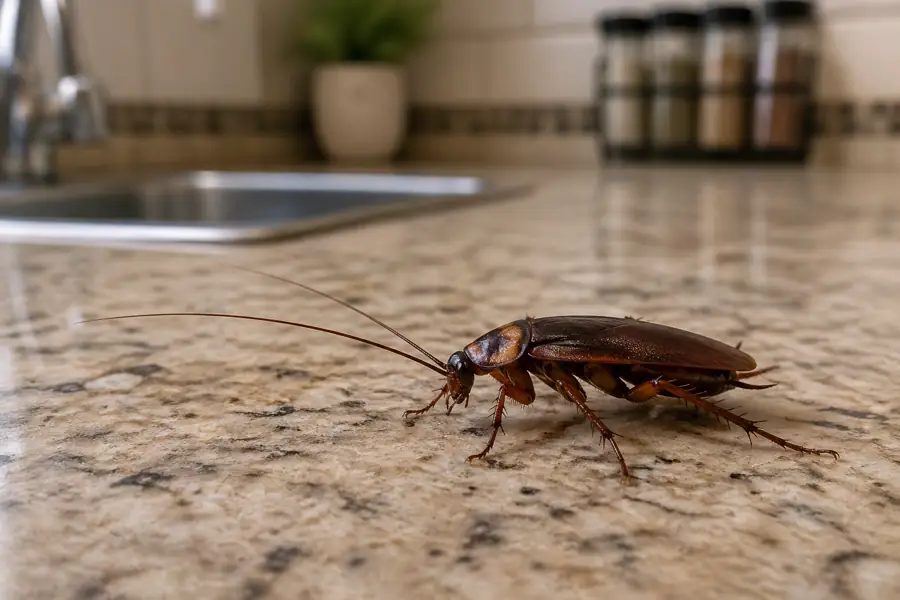
One cockroach in daylight usually means dozens more in hiding.
Why Seeing One Cockroach Is a Red Flag
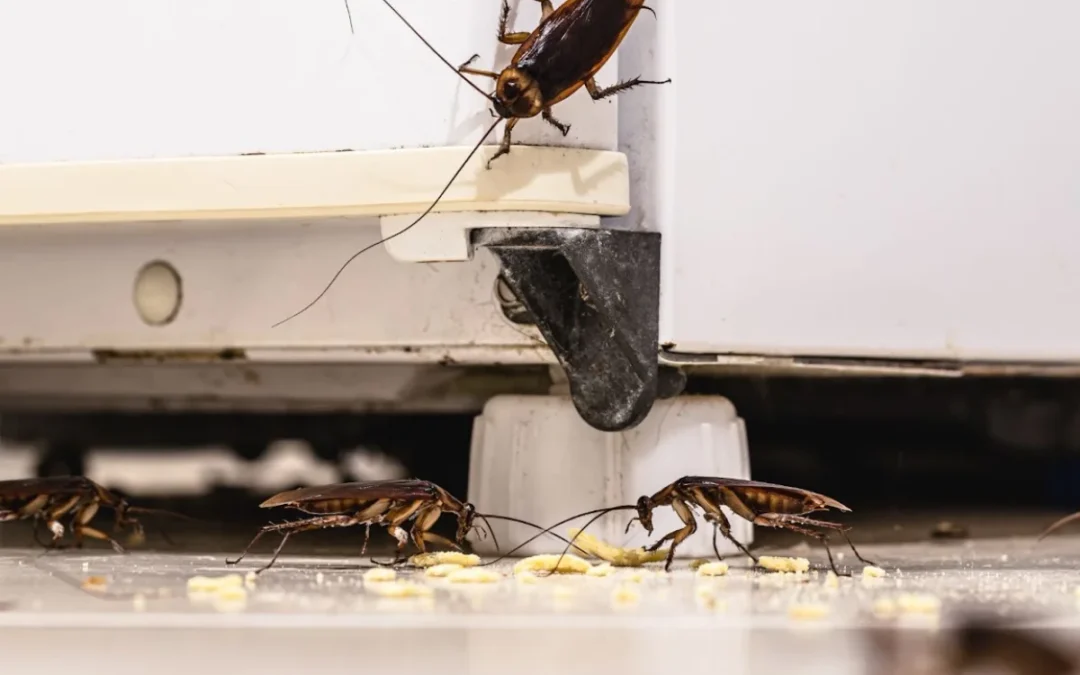
Cockroaches are built to stay hidden. They’re nocturnal, which means they do their exploring in the dark while you’re asleep. During the day, they squeeze into the narrow, warm crevices behind your refrigerator, inside wall voids, under the bathroom sink, and under the stove. You almost never see them unless something has gone wrong.
They’re also social. Roaches leave pheromone trails that tell other roaches where the good food, water, and hiding spots are. If you see a cockroach out in the open, especially during the day, it usually means their hidden nest has become crowded enough that some bugs are being pushed out to find new territory. One roach in the daylight isn’t the whole picture. It’s a symptom of a colony that’s outgrown its hiding place.
How Many Roaches Count as an Infestation?
There’s no magic number, but pest pros use a working definition. In Georgia homes, spotting one or two roaches a week signals a light roach infestation. Seeing multiple roaches daily, spotting them in the daytime, or finding widespread evidence like droppings and egg cases points to a heavy infestation. At Northwest, we treat even a single confirmed sighting as a warning, because roach populations move fast.
Why treat a small number like an emergency? Because a few adult roaches can multiply into hundreds in a matter of weeks. Waiting to see if a problem resolves itself is the single biggest mistake homeowners make with roaches. You’re giving them exactly what they need: time.
Signs of a Roach Infestation
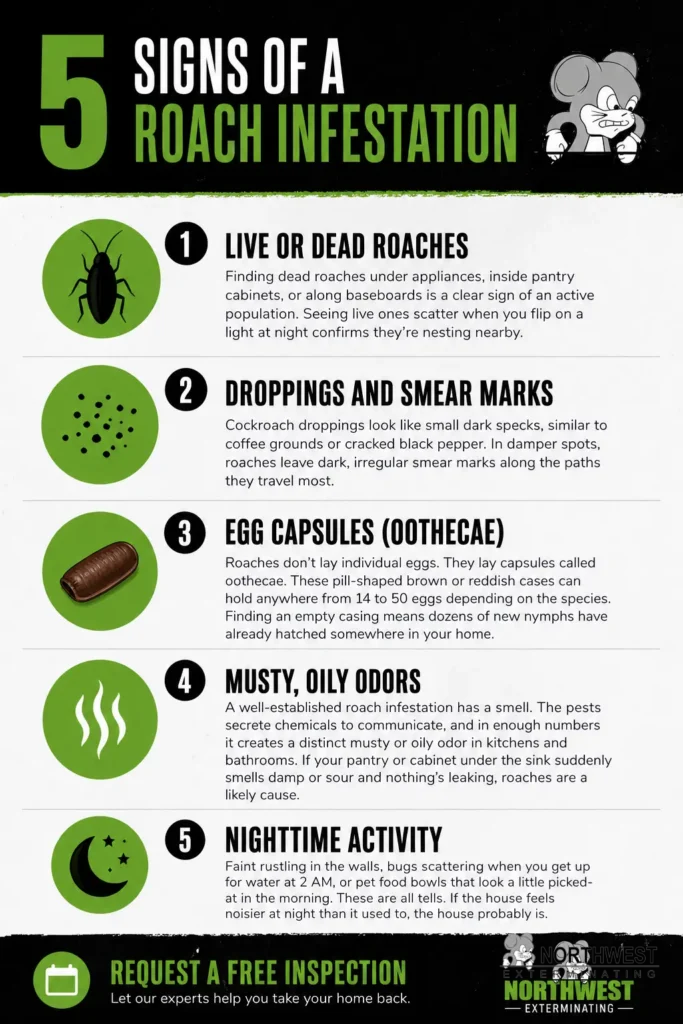
After a sighting, start looking for the rest of the evidence. These are the clues that confirm the problem is bigger than one bug.
Five signs that confirm a roach infestation is bigger than one bug.
1. Live or Dead Roaches
Finding dead roaches under appliances, inside pantry cabinets, or along baseboards is a clear sign of an active population. Seeing live ones scatter when you flip on a light at night confirms they’re nesting nearby.
2. Droppings and Smear Marks
Cockroach droppings look like small dark specks, similar to coffee grounds or cracked black pepper. You’ll typically find them in pantry corners, along the back edges of countertops, inside drawers, and under sinks. In damper spots, roaches leave dark, irregular smear marks along the paths they travel most.
3. Egg Capsules (Oothecae)
Roaches don’t lay individual eggs. They lay capsules called oothecae. These pill-shaped brown or reddish cases can hold anywhere from 14 to 50 eggs depending on the species. Finding an empty casing means dozens of new nymphs have already hatched somewhere in your home.
4. Musty, Oily Odors
A well-established roach infestation has a smell. The pests secrete chemicals to communicate, and in enough numbers it creates a distinct musty or oily odor in kitchens and bathrooms. If your pantry or cabinet under the sink suddenly smells damp or sour and nothing’s leaking, roaches are a likely cause.
5. Nighttime Activity
Faint rustling in the walls, bugs scattering when you get up for water at 2 AM, or pet food bowls that look a little picked-at in the morning. These are all tells. If the house feels noisier at night than it used to, the house probably is.
(Need help checking these signs? Schedule a free Northwest roach inspection and we’ll do the detective work for you.)
Common Types of Cockroaches Found in Georgia Homes
Not all roaches are the same, and identifying the species matters. Different species have different behaviors, hideouts, and treatment needs.
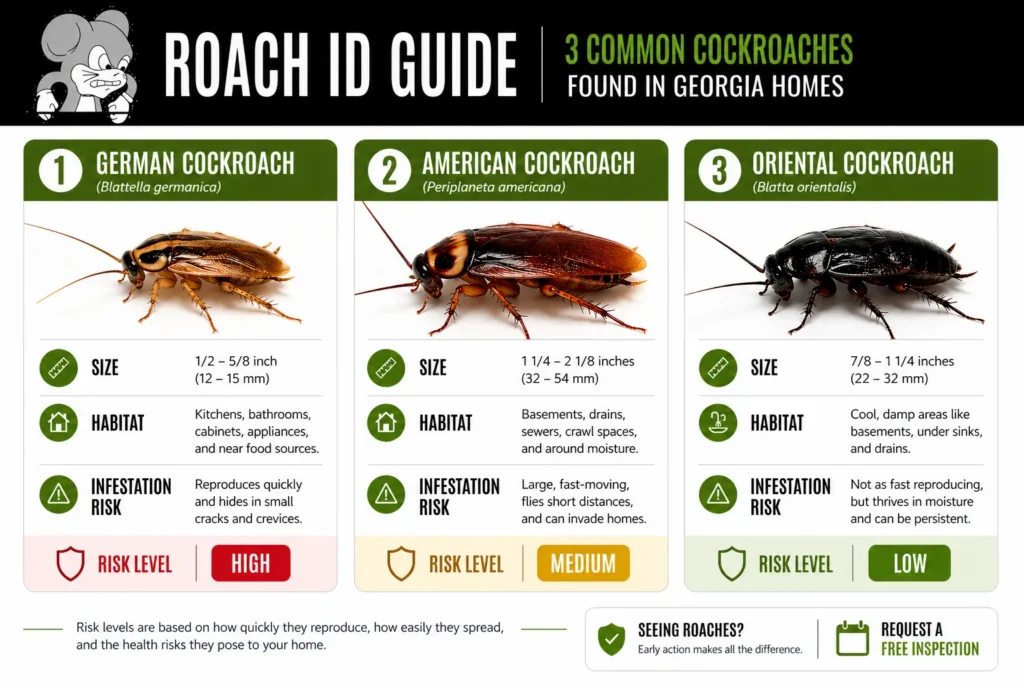
Identifying the cockroach species helps determine treatment urgency.
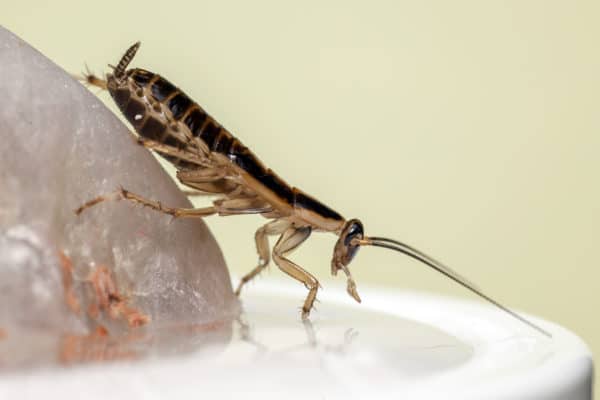
- German cockroaches. Light brown with two dark stripes on the back. The highest-risk species for a fast-spreading roach infestation, because they breed quickly and strongly prefer warm, humid indoor spots like kitchens and bathrooms. Almost every serious indoor infestation in the Southeast is German.
- American cockroaches. Often called “palmetto bugs” in Georgia. Large, reddish-brown, and usually outdoor-dwelling. They live in mulch, sewer lines, and tree hollows, but push into homes during extreme heat or heavy rain.
- Oriental cockroaches. Dark brown to nearly black with a glossy shell. They prefer cool, damp, dark places, which makes basements, crawl spaces, and drain lines their favorite hangouts.
Why Cockroach Infestations Spread So Quickly
A roach problem in a house can spiral in a matter of weeks. The main reason is reproduction. A single female German cockroach can produce up to 400 offspring in her lifetime. Combine that with their willingness to eat almost anything (crumbs, pet food, grease, cardboard, even glue and soap) and their ability to nest in hollow spaces you’d never think to check, like inside electronics, behind outlet plates, and under peeling wallpaper. The result is a population that multiplies quietly and out of sight.
The Southeast climate doesn’t help. Warm temperatures, high humidity, and our heavy spring and summer rain push outdoor American roaches indoors looking for shelter, while German roaches thrive year-round anywhere the thermostat stays cozy.
What To Do If You See One Cockroach
Don’t panic, but don’t shrug it off either. The right first moves can stop a single sighting from becoming a full infestation.
- Deep clean the area. Wipe up grease and crumbs, move pantry items into airtight glass or hard plastic containers, take the trash out nightly, and vacuum under the kitchen appliances you can reach.
- Fix the water. A dripping faucet or slow-draining sink is a roach magnet. They need water more than food.
- Set sticky monitor traps. Place them flush against baseboards in the kitchen and bathroom. In 3 to 5 nights they’ll tell you where the real activity is.
- Skip the DIY bug bomb. Foggers and heavy repellent sprays often just scatter roaches deeper into the walls and spread the problem to rooms that were previously clean. This is the single most common mistake we see, and the one that turns a $200 problem into a $2,000 problem.
When to Call a Professional for Roach Control
DIY methods rarely eliminate a roach infestation entirely. Call a professional cockroach exterminator if you’re still seeing roaches after a thorough clean-up, if you spot them during the day, or if you find egg casings anywhere in the home.
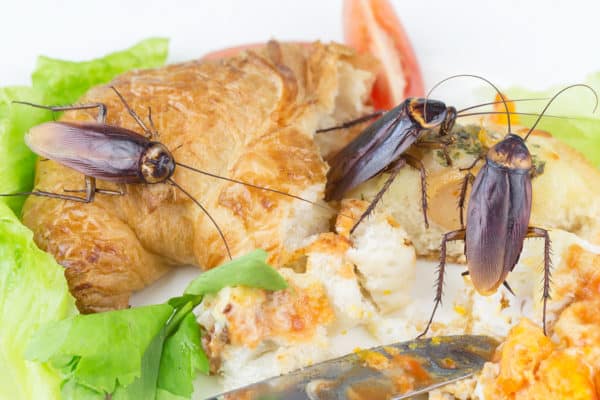
Getting ahead of a roach infestation isn’t just about comfort. Roaches crawl through garbage, grease traps, and sewage, then across your counters and dishes, picking up and depositing bacteria like E. coli and Salmonella along the way. Their droppings, shed skins, and saliva are also a documented asthma trigger, especially for young children; the EPA’s guidance on asthma triggers flags roach allergens as a leading cause of indoor asthma attacks. Professional treatment uses targeted baits and insect growth regulators that collapse the whole colony, including the eggs you can’t see, in a way DIY sprays simply can’t.
“Cockroach allergens likely play a significant role in asthma in many urban areas. Cockroach feces, saliva, eggs, and outer covering left behind on surfaces contain substances that are allergenic to humans, especially those with asthma.”
— U.S. Environmental Protection Agency, Asthma Triggers
Roach Infestations in the Southeast
If you live in Georgia or Alabama, the climate is working against you. Warm temperatures, high humidity, and long rainy seasons create ideal breeding conditions for both indoor and outdoor cockroach species. During heavy spring and summer rains, outdoor species like American roaches push inside looking for higher ground. In apartments, townhomes, and tighter suburban developments across Atlanta, Birmingham, Columbus, and Macon, German roaches move easily between units through shared plumbing and cardboard shipments, which is why a neighbor’s problem can become yours without warning.
Frequently Asked Questions About Roach Infestations
Can one roach turn into an infestation?
Yes. If the roach you saw is a pregnant female, she can start an entirely new colony on her own. Even if it’s a male, its presence almost always means a larger nest is nearby, because roaches don’t travel far from home.
How fast do roaches multiply?
Fast. A German cockroach population can multiply into the thousands in a single year if left untreated. Their eggs hatch in a few weeks, and the nymphs reach reproductive age in another month or two.
Are cockroach infestations dangerous?
They can be. Roaches don’t bite, but they spread harmful bacteria, contaminate food surfaces, and trigger allergic reactions and asthma attacks through their droppings and shed skins. Families with young children or asthma are most at risk.
How long does professional roach treatment take?
It depends on the severity of the infestation. A light roach infestation can be knocked out in a few weeks with targeted baiting. Heavy or long-standing infestations may need multiple treatments over two to three months to break the egg-laying cycle completely.
How do I prevent roaches from coming back?
Keep food sealed, fix every leak, take the trash out daily, vacuum weekly, seal gaps around pipes and outlets, and get on a quarterly pest control plan. Prevention is dramatically cheaper than treatment.
Northwest’s team checks the spots where roaches nest — under sinks, behind appliances, along baseboards.
Take Action Against Roaches Today
Don’t wait for that one cockroach to multiply into hundreds. If you suspect a roach infestation, the fastest way to shut it down is to act while the population is still small. Our Northwest team has been clearing roach problems out of Georgia and Alabama homes for decades. We handle the inspection, the targeted treatment, and the prevention plan that keeps them gone.
About the Author
Anna Vaccaro, Editorial Lead — Pest Education leads pest education content for Northwest Exterminating, working with senior technicians and service center managers across our Georgia, Alabama, Tennessee, and South Carolina service areas to translate field expertise into homeowner-friendly guides. The focus: accurate, regionally-specific answers to the pest questions Southeast homeowners are actually searching for.
Nov 20, 2020 | Pest Control
One of the lesser known species of cockroaches, the oriental cockroach (Blatta orientalis), also known as the black beetle cockroach and the waterbug, is actually one of the largest next to its cousin, the American cockroach. These pests are great at hiding and fitting into tight locations and have adapted to thrive both indoors and outdoors. Let’s take a look at how to identify Oriental cockroaches, as well as some cockroach prevention tips.
Appearance
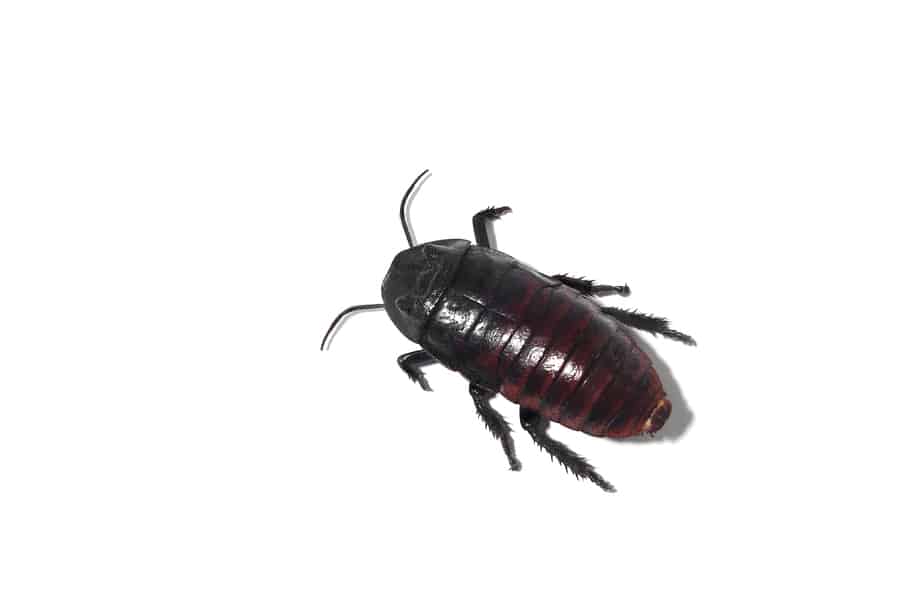
The Oriental cockroach is dark brown to nearly black in color with a smooth shiny exoskeleton. Although not quite as big as American cockroaches, these bugs do get up to 1 inch in length. Males are slightly shorter than females with stubbed wings and females are longer and skinnier without wings.
Habitat
These roaches are found throughout the United States and prefer warm, moist, dark locations. They thrive outdoors, often residing under piles of leaves, mulch, stone, wood, flower beds, and debris. They will travel through sewers and can come into your home through pipes and drains. Indoors, they can be found in rarely used sink drains, garbage disposals, under cabinets with plumbing, and in bathroom voids.
Diet
Oriental roaches are omnivores, eating nearly any type of food source but preferring decaying plants and rotting garbage. They will also make do with crumbs, pet food, and leftover human food, too. They are very dependent on water which is why they are usually found in areas with high moisture. They can survive up to 1 month with no food but only 2 weeks without water.
Behavior
These cockroaches are slower than most of their counterparts. They prefer to be active outdoors and are nocturnal. Males have wings but don’t fly. They have a lifespan of 1 to 6 months and their reproduction is seasonal – they produce more eggs in the spring and summer than they do the rest of the year.
Threats
Oriental cockroaches are dangerous to humans as they are known to transmit bacteria such as E. coli and salmonella. Because they eat decaying food and other material, they can contaminate food and other surfaces with the pathogens picked up from their food sources. They also excrete odors which can trigger allergies and asthma in those affected.
Signs
There are 3 main signs of Oriental cockroaches in your home:
- Seeing actual live bugs.
- Finding egg cases around your home.
- A wet, musty smell that gets stronger with larger cockroach infestations.
Prevention
- Keep your home clean and sanitized, especially areas with water (around drains, pipes, bathrooms, and basements)
- Seal doorways with weatherstripping
- Seal holes and cracks in foundations
- Vacuum often
- Use a dehumidifier to prevent moisture buildup
- Keep gutters clear or install gutter guards
- Divert water away from foundations with properly functioning downspouts, gutters, and splash blocks
If you have a problem with cockroaches of any kind, contact a professional pest control company for proper identification, potential points of entry, and the most up to date treatment options available.
You May Also Be Interested In:
Wildlife on the Move!
When Is Snake Season?
Kudzu Bugs vs. Brown Marmorated Stink Bug: What’s the Difference?
Is That Spider Poisonous?
Are Termites Active In Fall and Winter?
Aug 9, 2019 | Pest Control
Cockroaches thrive in environments where they have adequate sources of three things: food, shelter, and water. Oftentimes our homes provide ample amounts of each of these which is what attracts cockroaches. The National Pest Management Association (NPMA) reports that 63% of all homes in the US have cockroaches even if the homeowner doesn’t realize they are there.
There are more than 4000 species of cockroaches worldwide. They are nocturnal pests and extremely versatile, adapting to almost any environment, making their populations extremely difficult to control. Roaches can survive up to a week without their heads and up to 30 days without food.
While roaches are nuisance pests in your home and quite unsightly when you stumble across one unexpectedly, are they dangerous to humans? Can they make you sick? Let’s answer these questions and more:
Do Roaches Bite/Sting?
While bites from roaches are extremely rare, they are, in fact, possible. Roaches are typically not aggressive pests and tend to flee rather than fight when faced with a predator. There have been rare instances, however, where roach bites did occur, most often when humans were sleeping or pets were too weak or debilitated to brush them off. Roaches don’t produce any form of poison and cannot sting.
Where Are Roaches Found?
Roaches come from areas that harbor bacteria, such as bathrooms, drains, and dumpsters. They feed on garbage, breed in sewage, and excrete waste over every surface they touch. Roaches are excellent hiders and particularly favor moist and confined areas. Roaches are thigmotropic which means they want to feel contact on all sides of their bodies. Because of this, roaches are commonly found nesting under sinks, in wall cracks, in drains, around water heaters, behind appliances, in cupboards and pantries, under stacks of paper and cardboard, and under undisturbed furniture.
Are Roaches Harmful to Human Health?
Roaches carry pathogens and microorganisms that can cause disease in humans. In fact, up to 30 different species of bacteria have been discovered on cockroaches. The World Health Organization (WHO) reports that roaches can carry pathogens that cause a variety of diseases including gastroenteritis (with diarrhea, nausea, and vomiting), dysentery, cholera, leprosy, typhoid fever, plague, poliomyelitis, and salmonellosis. Roaches can also exacerbate asthma and allergies through their saliva, feces, and shedding body parts. Roaches produce a protein that can trigger allergic reactions in humans. In fact, studies have shown that about 26% of the US population is sensitive to the German cockroach allergen.
How Can I Prevent Roaches?
- Seal any cracks around your home.
- Repair any water leaks.
- Remove any sources of standing water.
- Try not to overwater houseplants.
- Wipe down your kitchen counters after every meal.
- Put dirty dishes directly into the dishwasher or wash them immediately after using them instead of leaving them in the sink overnight.
- Wipe down your stove after cooking.
- Sweep daily and vacuum weekly.
- Keep firewood and compost as far away from your home as possible.
- Keep your grass and landscaping neat and tidy.
Roaches can be incredibly difficult to control and eliminate. If you have a roach problem, contact a professional pest control company or schedule a free pest inspection now. A pest control technician can thoroughly inspect your home to identify not only where and how roaches are getting into your home, but also the specific type of roaches to better treat and eliminate them, keeping the health of you and your family intact.
You May Also Be Interested In:
Fact or Fiction: Rats Can Make You Sick
Pest Control: Which Pests Are Active in Your Area?
Is Your Hotel on the Bed Bug Registry?
Why Termite Control is Valuable to Your Home
Keep Wildlife in the Wild, Not in Your Home
Jun 26, 2019 | Pest Control
Cockroaches carry many diseases and can cause several health issues in humans including food poisoning and can trigger allergies and asthma attacks. So where do roaches come from?
If you have a roach infestation in your home, there could be several reasons why. Roaches may have already been in your home before you moved in. Roaches are also very good hitchhikers and are easily transported from one place to another. They can get into your home in grocery bags, cardboard boxes, luggage, furniture, or appliances. They can also get in through the plumbing, sewers or drains. They can travel over from your neighbor’s home into yours, too.
But what attracts cockroaches if your house is clean? Like most pests, roaches are looking for three main things: food, shelter, and water. They are year-round pests and are incredibly resilient – making them difficult to control. Different species of cockroaches are attracted to and thrive in different environments.
German cockroaches are the most common indoor roaches. They prefer dark, warm, humid places near food and water, preferably in a temperature range of 70 to 75 degrees Fahrenheit. You can usually find German roaches in kitchens, in cracks and crevices of cabinets, near sinks or appliances, and in food prep and storage areas. They can also be found in bathrooms when the roach infestation is heavy. Early detection and control of german roaches is extremely important as they can be very hard to get rid of.
Oriental roaches prefer dark, damp, cool habitats. Outdoors you can usually find them where there is an abundant supply of organic matter like mulch or wood chips, under patio bricks, or between the soil and your foundation. Once inside your home, they are often found in drains, basements, and crawlspaces. They can also be found near leaky water pipes, under sinks, refrigerators, floors, and washing machines.
Brown-banded roaches prefer warmer, drier places (greater than 80 degrees Fahrenheit). They live in higher areas, usually at eye level or above, like your cabinets, pantries, closet shelves, behind pictures, in books, or under kitchen tables and chairs. They can also be found in warm areas such as near clocks, timers, TVs, and refrigerator motors.
American cockroaches are found in homes, restaurants, bakeries, and grocery stores – anywhere food is prepped and stored. They prefer warm, moist environments and can often be found in boiler rooms, basements, around pipes and water heaters, and in drains and sewers.
Here are some tips to prevent roaches from infesting your home:
Food
Clean up spilled crumbs and food immediately. Don’t leave dirty dishes out overnight. Throw away any food that is left out on the counter. Wipe down the surface of all food prep areas every night. Clean under your appliances and wipe down any that are on your counter. Make sure to clean underneath the refrigerator and stove, also. Rinse out milk jugs, juice cartons, and cans before throwing them away. Empty your garbage can every night and use garbage cans with tight fitting lids. Check kitchen drawers for any food debris and crumbs. Store food in airtight containers. Store pet food in airtight containers and elevate them off the floor. Don’t leave your pet’s food and water bowls out overnight. Roaches communicate through chemical pheromones they secrete as they move. Cardboard and paper are excellent absorbers of these pheromones. Replace cardboard boxes with plastic containers if possible. Don’t bring any cardboard boxes used for storage inside the home. Don’t store piles of newspapers – recycle them instead.
Shelter
Carefully inspect the interior and exterior of your home. Seal any gaps or crevices you find, even the smallest ones. Roaches can squeeze through the tiniest openings to get into your home. Use weatherstripping around all entryways including doors and windows. Declutter as much as possible. Roaches can also get into your home through drainpipes. Use stoppers or metal baskets on all the drains in your sink and shower and make sure to keep your drains clean. Roaches will also hitch rides on firewood. Make sure to only bring in enough wood for one fire and don’t store any extra wood inside.
Water
Most species of roaches prefer moist areas so eliminating water is key to helping prevent them. Remove any standing water in and around your home. Check for leaks and repair them promptly. Use caulk to seal gaps around your sink and tubs to keep water out of the walls. Don’t let water stand for long periods of time in plants and flowerbeds. Don’t leave your pet’s water bowls out overnight. Hang any wet towels and mats up to dry after using them. Keep your kitchen sponges dry and don’t store them on the counter.
Call The Professionals
Roaches can be incredibly difficult to control and eliminate. If you have a roach problem, contact a professional pest control company or schedule a free pest inspection now. A pest control technician can thoroughly inspect your home to identify not only where and how roaches are getting into your home, but also the specific type of roaches to better treat and eliminate them.
You May Also Be Interested In:
Why Are There so Many Millipedes in my House?
Is Your Hotel on the Bed Bug Registry?
Lawn Survival Tips for the Summer Heat
What Attracts Cockroaches to a Clean House?
Is Termite Protection Worth It?
Jan 20, 2017 | Pest Control, Wildlife
Squirrels
Hearing noises at night? You may have squirrels nesting in the attic, looking for shelter from the cold. To get rid of squirrels, first you have to determine how they’re getting in. This can be tricky if you don’t have easy access to your roof and since squirrels can sneak into small spaces. Contact a wildlife removal company to fully inspect your home for squirrel access points, set up traps, and correct any damage caused by squirrels. It’s also a good idea to keep trees trimmed and away from your roofline to cut off direct access.
Raccoons
Raccoons are common home invaders in the winter months, looking for refuge in crawl spaces, attics, and chimneys. Similar to squirrels, effective raccoon control requires professional expertise – to identify and seal entry points, trap and remove the raccoons, and prevent them from coming back with exclusion techniques. To prevent a raccoon invasion, eliminate food sources that attract them by using outdoor trash bins with lids and removing pet food when it’s not being eaten.
Mice
Mice are year-round pest nuisances that typically nest in attics, basements, cabinets, and closets. And because mice can fit through gaps as small as 1/4 inch, keeping them out can be difficult. As with other rodent control methods, the first step is to inspect your home for cracks, gaps, holes, or any other openings and correct them. Secondly, eliminate food sources and hiding places by keeping a clean house, removing clutter, and storing food in sealed containers. If you see small, dark-colored droppings anywhere, call an exterminator – quarterly pest control treatments are recommended to get rid of mice and prevent a future infestation.
Rats
Similar to mice, rats are common winter invaders, searching for food and warmth inside your home, needing holes as small as a quarter to get in. To prevent this, and other rodent invasions, seal any gaps or holes in your home’s foundation, around your roof, in the crawl space or basement, or around doors and windows, keep garbage away from your home’s exterior in sealed bins, and check for evidence of rats – usually indicated by droppings (larger than those left by mice), gnawing, or footprints and tail tracks.
Roaches
Cockroaches, too, are looking for food and warmth during colder months. The best way to prevent roaches is with preventative pest control and by eliminating what attracts roaches – food left out, crumbs, pet food and water, clutter, and water leaks.
Spiders
Common house spiders will start making their ways indoors starting in the cooler, Fall months. Prevent spiders with ongoing pest control treatments, by eliminating clutter (spiders like to hide in dark, undisturbed places), and by knocking down cobwebs regularly.