Feb 28, 2020 | DIY, DIY Pest Control, Pest Control
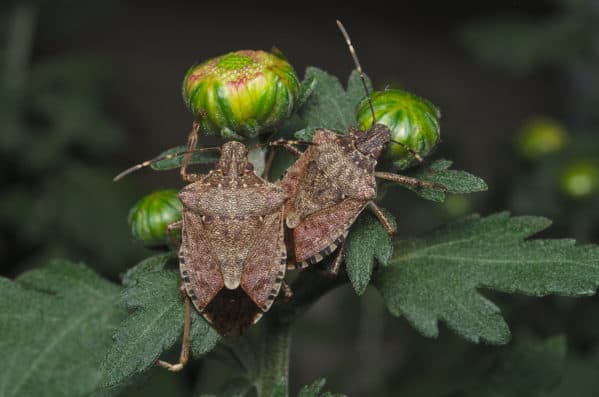
As the weather warms up overwintering pests will begin to wake up and make their way outdoors. One of these is the brown marmorated stinkbug. While these household pests don’t sting, bite, or carry any diseases, they can become a nuisance when they get inside your home. In fact, once you see stinkbugs inside, it’s usually too late to do anything to keep them out.
The brown marmorated stinkbug is native to Asia but was later introduced in the United States. They prefer moist, temperate climates like those of the Eastern US and the Pacific Northwest. Stinkbugs feed on soybeans, corn, fruit, vegetables, and ornamental plants that grow close to homes. Stinkbugs spend the spring and summer seasons outdoors then will seek shelter from the winter elements indoors – often entering your home through cracks, crevices, gaps or holes in your foundation, through chimneys, air conditioning vents, or underneath siding. The prefer homes with lots of trees around and will gravitate to the upper floors of a home.
During the winter months, stinkbugs go into a phase known as diapause, which is similar to hibernation, where the bugs go inactive during the cold weather. When the stinkbugs find a spot to overwinter, they release a pheromone that attracts other stinkbugs to their location. While they typically stay dormant until spring, unusually warm spells during the winter can bring them out full force.
If you encounter stinkbugs in your home, the best way to get rid of them is to vacuum them up and immediately dispose of the bag. When stinkbugs are threatened, disturbed, or squashed, they emit a smell that has been described as anything from cilantro to rotting almonds to spoiled fruit.
The best way to control stinkbugs is to prevent them from getting into your home in the first place. Here are 9 prevention tips for keeping stinkbugs out.
- Seal Them Out. Carefully inspect the exterior of your home to identify potential entry points for stinkbugs. Check around siding and utility pipes, behind chimneys, and under fascia. Seal any problem spots with silicone or silicone-latex caulk. Close chimney flues when not in use.
- Repair. Check doors and windows for any damage. Repair or replace damaged screens. Check weatherstripping and replace if necessary. Check for loose mortar. Install door sweeps if possible.
- Turn Off Lights. Stinkbugs are attracted to light. Try to keep outdoor lighting to a minimum. After dark, turn porch lights off and pull down blinds in your home to reduce the amount of light spilling out from indoors.
- Keep It Dry. Stinkbugs, like other seasonal pests, need water to survive. Check carefully for leaking pipes and faucets and repair them immediately.
- Get Rid of Food. Keep food stored in airtight containers. Dispose of your garbage regularly. Wipe down countertops daily and sweep and mop often.
- Air It Out. Keep areas that stinkbugs can use as a harborage point (garages, crawlspaces, attics, and basements) well ventilated. Consider using a dehumidifier in these areas. Install screens over chimney and attic vents.
- Check It Out. Stinkbugs can hitch a ride into your home in boxes and bags. Carefully inspect any boxes you are bringing in from storage and any grocery bags before you bring them into your home.
- Landscaping. Keep branches and shrubbery well trimmed so they are not in contact with the house. Keep grass mowed and leaves raked. Store firewood at least 20 feet from the house and at least 5 inches off the ground.
- Call A Pro. If you suspect you have a problem with stinkbugs, contact a professional pest control company who can help identify any entry points the bugs may be using and help to eliminate them. They can also use a preventative spray in the late summer/early fall to help keep them out before overwintering season sets in.
You May Also Be Interested In:
10 Common Myths About Pest Control
Is Orange Oil Effective As A Treatment For Termites?
How Do You Get Your Lawn Ready For Spring?
What Pests Are Active In Your Area?
Keeping Wildlife Out This Spring

Feb 21, 2020 | Pest Control
A myth is defined as a widely held but false belief or idea. While myths are often based on some semblance of the truth, more often than not they are exaggerations or misunderstanding or even outright falsehoods. There are tons of myths regarding pests and pest control, some completely outrageous and others almost believable. Here are 10 of our favorite pest control myths.
1. Bees Can Only Sting Once
You’ve heard this one before. Once a bee stings you it can’t sting you again. This is one of those myths that is partly based in the truth. Honeybees, and ONLY honeybees, can only sting once. Other varieties of bees, wasps, hornets, etc. can sting as many times as they want. So be prepared – just because you’ve been stung once doesn’t mean there aren’t more stings coming along right behind that one.
2. Bees Will Only Attack When Provoked
This is another common myth you’ve probably heard – if you don’t mess with a bee it won’t mess with you. Once again, this is not the case. Bees, wasps, hornets, yellow jackets, and other stinging insects will sting you if they feel they or their colony are being threatened. This could be something as simple as walking too close to their nest. If a nest is spotted on or near your home, remove it safely or call a professional to remove it for you.
3. Bugs Won’t Come In A Clean House
This is a big misconception in pest control. Just because your house is clean doesn’t mean you are immune to bugs and other pests. While a dirty house can make a pest stay longer, a clean house doesn’t keep them out. Bugs come into a home in search of three things: food, water, and shelter. While an unkempt house can provide more opportunity for these 3 things, a clean house can provide them, as well. What is more important is sealing any entry points that pests can use to access your home.
4. Seeing A Cockroach Means Your House Is Dirty
This myth is similar to #3. Once again, cockroaches will come into your home for 2 main reasons: food and shelter. While they may find these in more abundance in a dirty home, they can also find them in a clean home too. Once a cockroach infestation is established it can be extremely difficult to get rid of. Cockroaches can enter through an opening the size of a quarter so sealing any possible entry points is critical in preventing them.
5. Mosquitoes Only Come Out At Dawn And Dusk
This is another myth that is based in part on the truth. Some species of mosquitoes are more active at dawn and dusk but mosquitoes can be active at all hours as long as there is food available. Best practice is to utilize mosquito prevention techniques anytime you will be outdoors.
6. Bug Zappers Can Eliminate Mosquitoes
This one is blatantly false. Bug zappers use ultraviolet (UV) light to attract insects into its cage. Mosquitoes aren’t attracted to UV light at all so they won’t be anywhere near the bug zapper. Bug zappers also don’t usually have enough power to actually kill the insects it attracts so it can have a reverse effect on insect populations around your home.
7. Mice Love Cheese
We’ve all seen or heard this one, either in a story or on TV. While mice will snack on the crumbs of just about any food, cheese actually isn’t their first choice. They would prefer to snack on foods that are high in sugar like peanut butter, candy, honey, or dried fruit. In fact, chocolate or peanut butter are the best choices to use in a mouse trap.
8. Bed Bugs Can Be Eliminated With DIY Techniques
Bed bugs are one of the most difficult pests to eliminate once they establish an infestation in your home. They are extremely small and only come out to feed at night, making them very hard to locate and identify. They can also multiply rapidly and can infest a structure very quickly. Because of this, they are extremely difficult to get rid of on your own and most cases require professional treatments to eradicate.
9. Termites Can’t Damage Brick Or Concrete Slab Homes
This is one of the biggest myths of pest control. While termites don’t actually eat brick or concrete, they have no trouble crawling over them to get to the wood beam structures that were used to build your home. For this reason, termites can, in fact, cause significant damage to brick and concrete slab homes.
10. If You Don’t See Any Bugs They Aren’t There
Just because you don’t see any bugs or any damage from them doesn’t mean they aren’t there. Termites and carpenter ants can cause damage for months before any signs of their damage become visible. Most infestations are well established before any damage is detected. Bed bugs are also hard to spot and often go unseen but leave devastating signs of their presence behind.
While all of these myths about pest control aren’t true, one thing that is true is prevention is the most effective way to avoid a pest infestation. If you suspect you have a pest control issue, contact a professional pest control company whose technicians are trained in the latest technologies and methods to help identify and eliminate your pest problem.
You May Also Be Interested In:
Is Orange Oil Effective As A Treatment For Termites?
How Much Does It Cost To Remove Animals From Your Attic?
Mosquitoes In The South
Don’t Bring Bed Bugs Home!
The Dangers of Flea and Tick Bites
Jan 24, 2020 | Pest Control
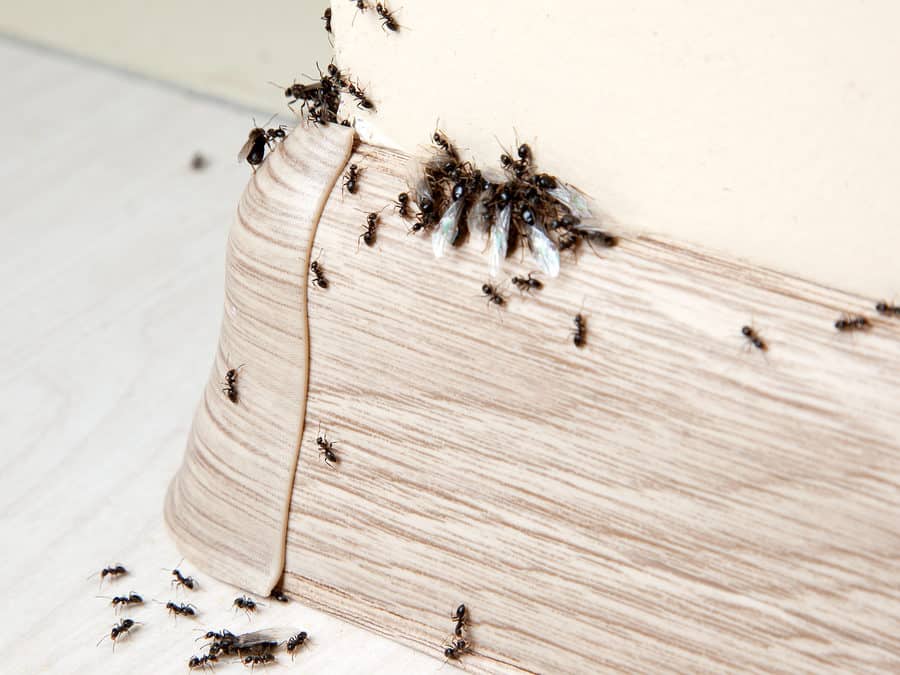
Ants are the #1 nuisance pest in America. They are one of the most challenging pests to control, along with bed bugs, because their colonies can number in the 1000s. Ants are considered commercial pests because they like to live close to people and eat the same things that we do. Ants can be seasonal pests or a year-round problem depending on the species. They will often enter our homes in the warmer months of the year in search of water and food. Most species, including fire ants and odorous house ants, will build their nests outdoors and come inside in search of food that they will collect and take back to their colonies. Other species like carpenter ants will actually make their way into your home and build their nests indoors. Ants are often found near food sources, moisture, and in hidden areas where they have protection and concealment such as wall voids, under floors, behind window frames, and under appliances. Ants in the bathroom and ants in the kitchen are the two most common scenarios when these pests make their way into your home, although they can be found in other rooms, as well.
Regardless of the species, when ants become a problem in your home it is often necessary to use a professional pest control company to help get them under control. Here are some important aspects to any successful ant control program:
1. Proper Identification
One of the most important components to any ant control program is to properly identify the species of ant you are dealing with. Different species have different behaviors, prefer different environments, and have different diets so treatment will vary greatly between them. It is important to know where to find them and how to treat them to ensure success in eliminating and controlling them.
2. Eliminate Food Sources
One of the main reasons ants come into your home is in search of food to take back to their colony. Eliminating things that attract them can help keep them from taking over your home. Clean up any food crumbs from kitchen floors and countertops and wipe them down frequently. Clean your appliances regularly. Empty your trash routinely and wipe the cans down. Clean outdoor grills and remove crumbs from tables, decks, and patios after each use. Keep foods, including pet food, in sealed containers. Place a bay leaf in canisters of dry food (such as flour) as the scent repels ants and other pantry pests. Rinse any empty containers before placing them in recycling bins. Get rid of any overripe fruit as this will attract ants, as well.
3. Eliminate Moisture
Ants need moisture to survive. Eliminating or reducing the moisture in your home can help prevent ants from coming inside. Repair any leaks around pipes and in your roof. Check gutters to make sure they are not clogged and ensure downspouts are directing rainwater away from foundations. Consider installing gutter guards to help prevent clogs. Thoroughly clean bathrooms with disinfectant cleaners and make sure shampoo, conditioner, and soap bottles are closed tightly and don’t have any leaks.
4. Eliminate Points of Entry
In order to get into your home, ants have to have a way inside. It is important to identify where they are gaining entry into your home to successfully control and eliminate them. Carefully inspect the exterior of your home and seal any holes, gaps, and cracks especially around areas where pipes and wires enter your home. Trim back shrubs and tree branches so they are not touching the sides or roof of your home. Keep mulch and timber at least 2 feet from your foundation. Move debris such as firewood, rock piles, boards, etc away from your home. Remove any tree stumps, fallen tree branches and logs from your yard. Repair any holes in window and door screens and replace weatherstripping.
As always, if you suspect you have an ant problem, contact a professional ant control company who can help you properly identify the species of ant you have and set you up with a thorough and comprehensive treatment and control plan.
Jan 15, 2020 | Pest Control
We know pests try to make their way into our homes, but when we see one outside of the comfort of our home we often feel a loss of control or panic. We hold businesses, hospitals, and food establishments to a higher standard due to the nature of their industries.
Because of the work they do for their customers and their communities, it is even more important for these industries to have a good, ongoing relationship with a local pest control company to ensure guests and customers feel comfortable and pest-free.
Food Service
With the ever-changing food regulations designed to keep patrons safe, it is important to have a tight-knit partnership with a licensed pest control professional. Pest infestations can lead to hefty fines from health departments, increased food costs due to contaminated food, and in worse cases, the closure of the business. Pest prevention procedures and proper sanitation education for staff is essential in keeping your establishment free from pests and your reputation intact.
Healthcare
Hospitals, rehabilitation centers, and long-term care facilities have high standards of sanitation due to the sensitive environment for patients. Pest infestations can pose serious health threats by spreading bacteria through contamination of hospital rooms and equipment. A well-detailed pest prevention plan is crucial in keeping patients and staff healthy and safe.
Lodging/Hospitality
Reputation drives the hospitality industry and with review sites increasing in visibility and reach, one negative review can cause a bigger impact than 10 positive ones. Nothing can be more damaging to a business than a negative review detailing a pest encounter. A relationship with a local pest control company will not only protect customers from pest infestations but also protect the reputation of your business.
Commercial pest control is a science that requires a strong partnership between the business and their local pest control company. An individualized plan is critical in protecting your important investment. If you do not already have a long-standing relationship with a pest professional, give your local company a call to set up an inspection.
Dec 30, 2019 | Pest Control
It’s the end of the year and as you put together your list of New Year’s resolutions, some simple home repairs might need to make the cut. What you may not realize is that pests could have been quietly chipping away at your home’s value throughout the year. Here are some things to look for and steps to take to preserve the integrity of your home.
- Decks/Foundations/Roof: Decks can attract wood-boring and wood-destroying insects like beetles, carpenter bees, and termites. Lumber should be pre-treated to prevent pests from compromising the safety of your deck. Inspecting the exterior of your home is essential to keeping your home safe from pest damage. Seal all cracks found and talk to your pest professional about a preventative treatment plan. Branches close to your home’s roof can present an opportunity for pests such as termites and carpenter ants to enter your home. Trimming the branches back will not only help cut off access but also help prevent future damage.
- Wires & Vents: Rodents pose the biggest risk to the integrity of the electrical wiring in your home. According to investigative reports, rodents may be responsible for up to 25% of house fires that end up labeled as an “unknown origin”. Work with your pest professional to locate entry points and seal them. Insects and wildlife will look to make use of ducts that lead to exterior vents. In the case of dryer vents, a damper opens for exiting air and then promptly closes, cutting off access. For an added precaution, caulk around vents to further prevent invasions.
- Chimneys & Gutters: Delaying the cleaning of your home’s gutters could lead to pest harborage sites. Investing in gutter guards to prevent clogs and standing water will help to cut down on breeding sites and eliminate access points into your home. All chimneys need an exit for smoke; while this is good for the health of your home, this exit presents an opportunity for pests and wildlife to make their way inside. Installing a chimney cap allows for smoke to escape and keeps any unwanted visitors from coming in.
Making these adjustments can help you enjoy your home without the pests and the critters. Reach out to your local pest control company to schedule an inspection and to work out a preventative treatment plan to help keep your home safe.
Dec 24, 2019 | Georgia Blogs, Pest Control
By Anna V., Editorial Lead — Pest Education · Last updated: May 2026
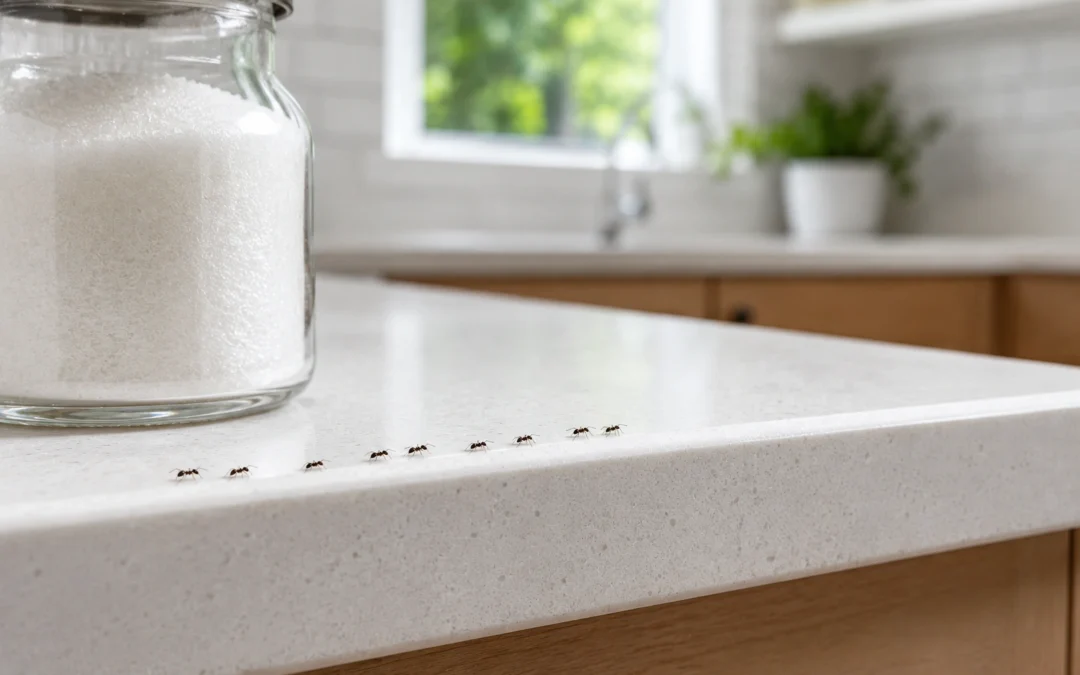
If you’ve come downstairs to find a column of ants trailing across your counter at 6 AM, you’re in the most common pest situation in the Southeast. At Northwest, ants are the #1 pest call we run year-round across Georgia, Alabama, Tennessee, and South Carolina. The good news: kitchen ant problems are usually solvable, often without professional help if you catch them early. The catch: the wrong DIY approach makes them worse.
Here’s the full playbook on how to get rid of ants in your kitchen, including which species you’re probably dealing with, the DIY methods that actually work (and the ones that just spread the problem), and when it’s time to call in backup.
Common Ant Species Found in Southeast Kitchens
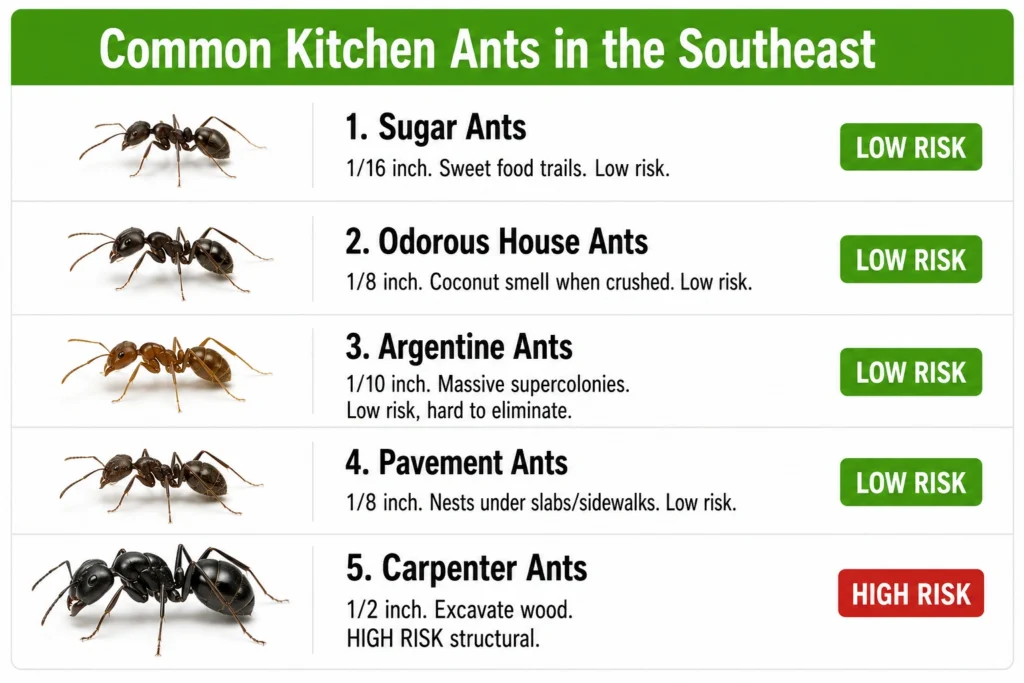
Five species cover almost every kitchen ant call in Georgia and Alabama. Identification matters because two of these (carpenter ants and argentine ants) need different treatment than the others.
Five species cover almost every kitchen ant call in Southeast homes. Carpenter ants are the only ones that damage wood.
Sugar Ants (Tapinoma sessile and similar)
- Size: Very small (1/16 inch), dark brown to black.
- Behavior: Follow trails to sweet foods, especially syrup, honey, fruit, and sugary spills. Active year-round in heated homes.
- Damage potential: Nuisance only. No structural damage.
Odorous House Ants (Tapinoma sessile)
- Size: Small (1/8 inch), uniformly dark brown.
- Behavior: Release a strong rotten-coconut smell when crushed (the most reliable identification marker). Form large trails between nests and food sources. Will eat both sweet and protein-based foods.
- Damage potential: Nuisance only.
Argentine Ants (Linepithema humile)
- Size: Small (1/10 inch), light brown to medium brown.
- Behavior: Form enormous interconnected supercolonies that can span entire neighborhoods. They’re the hardest kitchen ant to fully eliminate because killing one trail doesn’t affect the broader colony. Major presence in coastal and urban Georgia.
- Damage potential: Nuisance only, but persistent.
Pavement Ants (Tetramorium immigrans)
- Size: Small (1/8 inch), dark brown to black.
- Behavior: Nest under sidewalks, driveways, slab foundations, and patios. Forage indoors for grease, sweets, and pet food. Often enter through gaps where slab meets wall.
- Damage potential: Nuisance only.
Carpenter Ants (Camponotus species)
- Size: Large (1/4 to 1/2 inch), usually black, sometimes black-and-red.
- Behavior: Excavate galleries in wood for nesting. Don’t eat wood, but their nesting activity causes structural damage similar to (and often confused with) termites. Most active at night.
- Damage potential: HIGH. Carpenter ants in or near the kitchen warrant immediate professional inspection. They often indicate moisture damage in wall framing, sub-floor, or window frames. For prevention overlap with termite issues, see our termite prevention guide.
Why Ants Invade Kitchens
The kitchen is the most attractive room in your house to ants for three simple reasons:
- Food. Crumbs, spills, open containers, fruit, pet food bowls, and trash. Even microscopic residues are enough to recruit a colony.
- Water. Sinks, leaky pipes under cabinets, condensation around dishwashers, and pet water bowls all attract foraging ants.
- Entry points. Plumbing gaps under sinks, gaps between cabinets and walls, window sills, and door thresholds all provide easy access from outdoor nesting areas.
Once a scout ant finds food, it lays down a pheromone trail back to the colony. Within hours, you can have a hundred workers on the same trail. This is why “I just saw one ant” often becomes “the counter is covered in ants” by the next morning.
Southeast Seasonal Patterns
- Spring (March-May): Colonies wake up and send out scouts. Peak kitchen ant activity begins.
- Summer (June-August): Peak foraging across all species. Argentine ants and odorous house ants are at their most aggressive.
- Fall (September-November): Colonies stockpile food before winter. Trails often shift to protein and grease sources.
- Winter (December-February): Most species dormant outdoors but heated homes can support indoor populations year-round, especially in the deep South.
Signs of an Ant Infestation
Look for:
- Visible trails along counters, baseboards, or wall edges.
- Repeated sightings near the same food or water source (sink, pet bowl, sugar jar).
- Small piles of dirt or debris near baseboards or window sills (nest excavation).
- Discarded wings near windows or doors after a rain (winged reproductive ants leaving the nest).
- For carpenter ants specifically: small piles of sawdust-like debris (“frass”) near wood structures.
How to Get Rid of Ants in Your Kitchen: DIY Methods That Work
Three categories of work, in order of priority. Skipping straight to spray-and-pray almost always backfires.
Step 1: Cut Off the Food Source
Until you starve the trail, no amount of treatment will hold:
- Wipe down counters with a vinegar-water solution (50/50) immediately after spotting a trail. This breaks the pheromone trail.
- Move all open food to sealed containers or the refrigerator.
- Empty trash daily and rinse the can.
- Clean spills under the toaster, behind the coffee maker, and under the refrigerator.
- Pick up pet food bowls between feedings (a major argentine ant attractant).
- Fix any leaking pipes under the sink.
Step 2: Use Bait, Not Spray
This is the most important rule in kitchen ant control: do not spray visible ants with repellent insecticides. It kills the visible workers but warns the colony, which then splits and spreads. Bait works because the worker carries the active ingredient back to the colony and the queen.
- Borax-and-sugar bait. Mix 1 tablespoon of borax with 3 tablespoons of sugar and enough water to make a syrup. Place small drops on cardboard or in bottle caps near the trail. Workers carry it back to the colony. Effective within 3 to 7 days.
- Commercial gel baits. Terro Liquid Ant Baits and Advion gel are well-reviewed for kitchen ants. Place per package directions near trails and entry points.
- Patience. You’ll see MORE ants on the bait initially, which is the desired outcome. Resist the urge to spray. Trail activity drops sharply once the colony is poisoned.
Step 3: Natural Repellents and Trail Disruption
Use these alongside bait, not instead of it:
- Vinegar spray. 50/50 white vinegar and water breaks pheromone trails and discourages re-entry.
- Peppermint or tea tree oil spray. 10 drops per cup of water sprayed at entry points (window sills, door thresholds, under-sink areas).
- Diatomaceous earth (food-grade). Light dusting along baseboards and under sinks. Damages the ants’ exoskeletons. Reapply after vacuuming.
- Cinnamon or coffee grounds. Both are mild repellents that work for short-term trail disruption.
Preventing Future Ant Problems
Long-term ant prevention is mostly about removing the conditions that attract them in the first place.
Prevention is straightforward and covers most species:
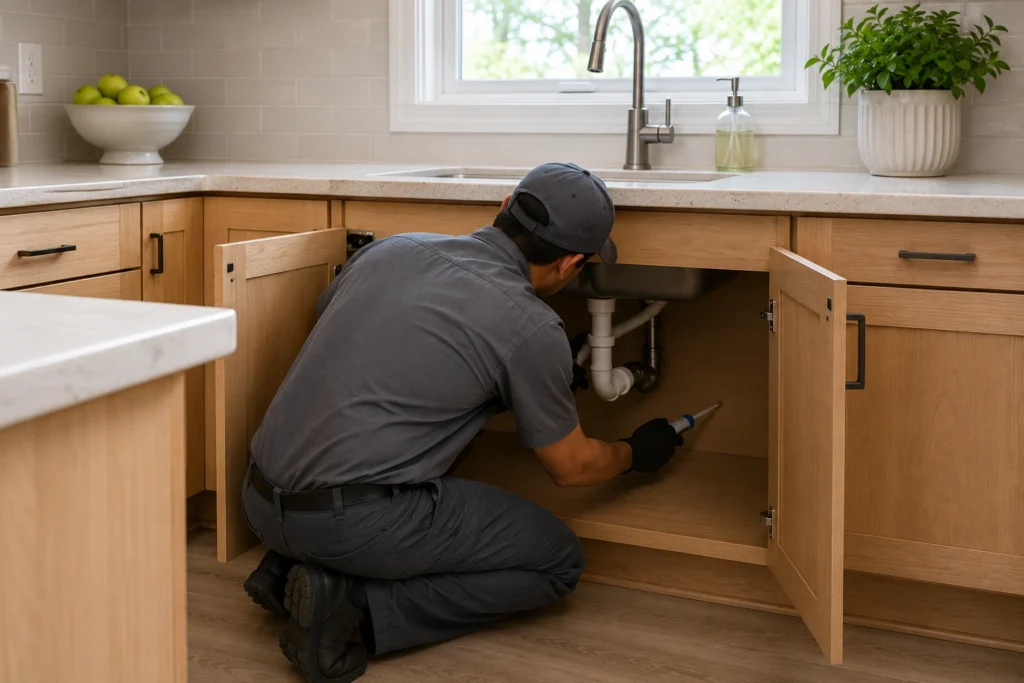
- Seal entry points. Caulk gaps around plumbing under the sink, around window frames, and where cabinets meet walls.
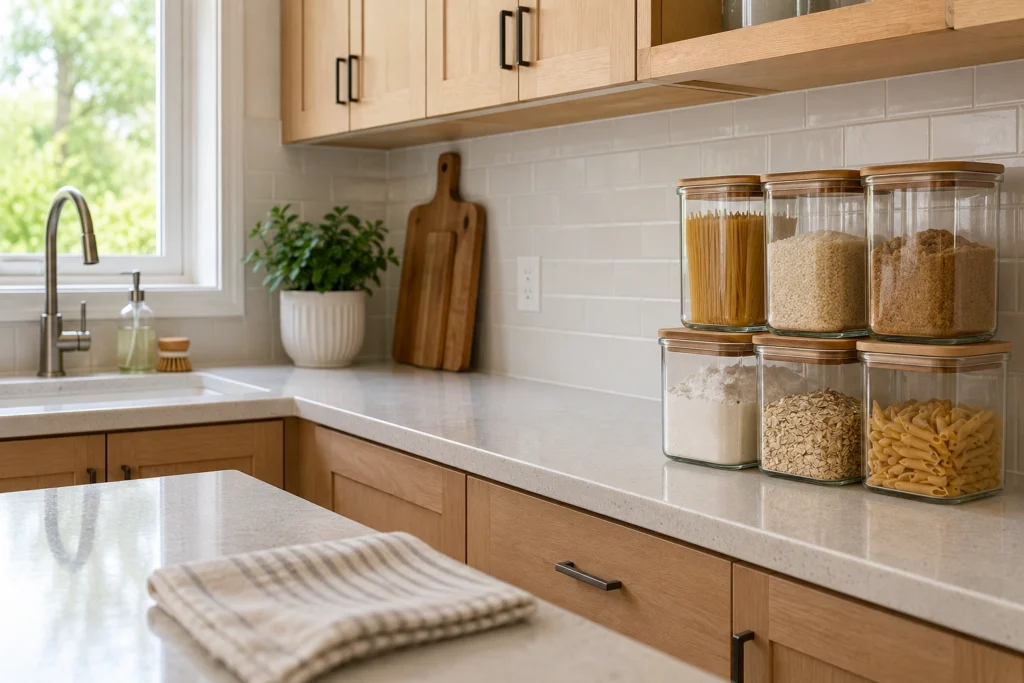
- Food storage discipline. Airtight containers for pantry items, sealed bags for snacks, fruit in the refrigerator if ants are active.
- Moisture control. Fix leaks fast. Wipe down sinks at night. Don’t leave standing water in the dish drainer.
- Outdoor maintenance. Trim shrubs and tree branches back from the house (ants use them as bridges). Keep mulch and firewood 20+ feet from the foundation. Repair damaged caulking around exterior windows and doors.
- Year-round vigilance. Most Southeast homes need ongoing prevention rather than one-time treatment. A monthly check of high-risk areas (under sinks, behind appliances) catches new activity early.
When to Call Professional Ant Control
Call Northwest if:
- You’ve spotted carpenter ants (large black ants, especially with sawdust-like frass nearby).
- DIY methods haven’t reduced activity within 2 to 3 weeks.
- You’re dealing with argentine ant supercolonies that keep returning despite consistent bait use.
- Trails are coming from multiple entry points (suggests a large or complex nest network).
- You’re seeing other pest activity simultaneously, which often indicates broader exclusion gaps.
Professional ant control combines species identification, targeted baits matched to the species’ food preferences, perimeter treatment to address outdoor nests, and structural exclusion. UGA Extension’s household pest management guide is the best free reference for the region.
(Ants coming back no matter what you do? Schedule a free Northwest inspection and we’ll identify the species, find the nest, and treat at the source.)
Frequently Asked Questions About Kitchen Ants
How do I identify the type of ant in my kitchen?
Look at size, color, smell when crushed, and what they’re going after. Tiny dark ants on sweets are usually sugar ants. Slightly larger ants that smell like rotten coconut when crushed are odorous house ants. Light brown ants in massive trails are argentine ants. Larger black ants (1/4 inch or more), especially near wood damage or with sawdust nearby, are carpenter ants and warrant professional inspection.
Can ants cause damage to my home?
Most kitchen ants (sugar, odorous house, argentine, pavement) are nuisance pests only. They don’t damage structures or spread serious disease. Carpenter ants are the exception. They excavate wood for nesting and can cause significant structural damage over time, especially in moisture-compromised framing or window frames. Carpenter ants always warrant professional evaluation.
How long does it take to eliminate an ant infestation?
Small bait-based eliminations: typically 7 to 14 days for visible trail activity to drop. Argentine ant supercolonies and well-established carpenter ant nests: 4 to 8 weeks of consistent treatment, often with professional help. The biggest mistake homeowners make is spraying repellents that scatter the colony, which can extend the timeline significantly.
Are natural remedies effective?
Vinegar spray, peppermint oil, and diatomaceous earth are effective for trail disruption and prevention. They’re less effective for eliminating an established colony. The most effective DIY approach combines borax-and-sugar bait (or commercial gel baits) for elimination plus natural repellents for ongoing prevention. Bait without prevention usually means the ants come back.
Why won’t the ants stop coming back?
Three usual reasons: (1) the colony nest is outdoors and continues sending new scouts, (2) you sprayed repellents that caused the colony to split into multiple smaller nests, or (3) you’re dealing with argentine ants, which form supercolonies that span entire neighborhoods. Persistent return cases typically need professional perimeter treatment plus structural exclusion.
Professional ant control combines species ID, source treatment, and exclusion so the colony doesn’t reroute.
Ready for a Professional Kitchen Ant Inspection?
If kitchen ants are a recurring problem, you’ve spotted carpenter ants, or DIY methods haven’t worked, Northwest’s team can handle species identification, source treatment, and exclusion in one visit. Most kitchen ant issues clear up faster than homeowners expect once the nest is properly targeted.
About the Author
Anna V., Editorial Lead — Pest Education leads pest education content for Northwest Exterminating, working with senior technicians and service center managers across our Georgia, Alabama, Tennessee, and South Carolina service areas to translate field expertise into homeowner-friendly guides. The focus: accurate, regionally-specific answers to the pest questions Southeast homeowners are actually searching for.
Dec 11, 2019 | Pest Control
As the holidays near, the time you spend in your kitchen increases. However, while you stock up on your holiday baking essentials, you could be providing stored product pests, or “pantry pests”, with their own holiday feast. Here are a few tips to keep your kitchen free of these unwelcome guests:
- Pantry pests, like Indian Meal Moths, are attracted to items such as flour, oats, spices, and dry cereal. When completing your holiday shopping for these types of items, be sure to inspect packages and confirm that they are sealed properly. Once you have opened these items, look to store them in plastic or glass containers with secure lids, cutting off access for pantry pests.
- Rodents can cause major issues for the health of you and your family. They can spread bacteria and viruses and, if their droppings build up within your cabinets, it can cause the air you breathe to become contaminated. To avoid a rodent infestation, keep your cabinets, pantries, and counters clean and free of crumbs and dispose of expired foods.
- Check any existing open items in your pantry for signs of pantry pests before adding new items to avoid spreading an infestation.
No one invited these pests to your holiday party in the first place, so taking these precautions can help you enjoy the holiday baking and time with your loved ones. If you think you are having an issue with stored product pests, call your local licensed pest control company to schedule an inspection so you can get back to the sweet smells of the holidays.
Dec 6, 2019 | Pest Control
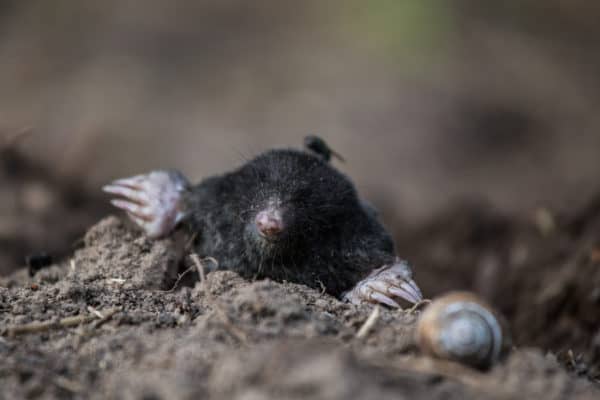
A very common misconception is that moles hibernate during the winter. This is, in fact, not true. Moles do not hibernate and are quite active during the winter months. They actually remain active all winter long, continuing to dig and eat voraciously. Moles are omnivores that prefer to feast on grubs, earthworms, and other bugs. As the soil freezes, moles move from tunneling near the surface to digging deeper in the ground. When the weather starts to warm, the moles will tunnel closer and closer to the surface as the soil thaws and becomes easier to navigate.
Moles can wreak havoc on your lawn and garden. Moles cause dead grass patches because their tunneling disrupts the root system of grass. This creates patches that often start out yellow and eventually turn a light tan color. They also push soil and grass up as they dig, creating random mole hills across your yard. While these are easy to spot in the summertime, they can often go undetected in the winter months, giving you less opportunity to identify and eliminate them early. Because of this, it is important to take precautionary measures early before the winter season sets in. Here are some steps you can take for mole prevention this winter.
Keep It Dry
Overuse of sprinklers and irrigation systems can lead to saturated, loose soil – an ideal environment for moles. This loose soil is much easier to tunnel through and is often rich with earthworms and grubs, making it a literal feast for moles. Heavy rainfall can also create these conditions so it is important to be vigilant after storms. Limit watering unless necessary.
Lay Mulch Later
Mulch is a very effective insulator for plants during cold weather. While we are usually inclined to go ahead and mulch before the cold weather sets in, this creates an insulated environment for moles, as well as your plants. Instead of installing mulch in early fall, try to wait until after the first frost. Hopefully by that point, moles and other pests have established themselves in a more hospitable environment than in your yard.
Install Barriers
Physical barriers can be very effective at preventing more damage to flowerbeds and trees. These barriers can be in the form of hardware cloth liners in the bottom and sides of flowerbeds or across the top of the bed to prevent digging or wrapped around the base of trees. By preventing them from digging you can limit the damage inflicted and hopefully encourage them to move on to another yard.
Utilize Natural Predators
Cats, snakes, and birds of prey are the most common natural predators of moles. Cats are especially notorious for pest prevention and rodent control around properties. If you don’t already have a cat, you may consider adopting one to roam your property and provide you with free pest control. Although it may be difficult, reconsider killing that snake you find on your property as they are also excellent at controlling rodent and other pest populations.
Eliminate Food Sources
As mentioned above, moles prefer to feed on earthworms, grubs, and other insects. In fact, mole problems often arise because of underlying grub problems. Be proactive in eliminating grubs and other pests from your yard to help control mole populations, as well.
Call A Professional
The cliche of “making a mountain out of a mole hill” isn’t far from the truth. Mole problems can manifest quickly into mole infestations and they can be extremely difficult to control and eliminate. Consider contacting a professional pest control company and setting up ongoing pest control services as these scheduled visits can help identify mole problems early and help resolve your mole issue quickly.
You May Also Be Interested In:
Late Fall Pests
5 Reasons To Be Thankful for Pest Control
Deck The Halls Without Pests
Things That Go Bump in Your Crawlspace
Unusual Winter Wildlife
Dec 2, 2019 | Pest Control
You’ve managed to fight all the early holiday decorating urges and now it’s time! Before you rush off to start decking the tree and hanging the mistletoe, follow these tips to make sure pests aren’t spending the holidays indoors with you and yours.
Check Your Tree Before Bringing It Home
- Pests like spiders, mites, moths, squirrels, and many others have been known to make trees and wreaths their temporary home. Before bringing these items in your home, inspect for overwintering pests and thoroughly shake them to free any pests residing inside.
Even Your Old Decorations Aren’t Safe
- Although your decorations have been stored away throughout the year, pests flock to attics, basements, and garages. They will crawl into the storage boxes you have put away. When unpacking these boxes, inspect them before bringing them into the main living areas.
Keep Warm Without Pests
- The sudden cold weather may signal the need to utilize your fireplace and snuggle up with a cup of hot cocoa. Use caution when bringing firewood indoors, as pests such as spiders, termites, and ants can tag along. Inspect all firewood thoroughly before bringing it indoors and store firewood on a raised platform at least 20 feet from your home.
The holidays really are best enjoyed pest-free. If you find yourself dealing with uninvited holiday guests, call your licensed pest control company to schedule an inspection.