Nov 28, 2019 | Pest Control
Thanksgiving is a time to reflect on the things we are thankful for. Many people are thankful for life, health, family, and friends. Whatever you are thankful for this season, pest control probably isn’t very high on the list. What you may not realize is that there are several very important reasons to be thankful for this service. Here are five reasons to be thankful for pest control this holiday season.
Cost Savings
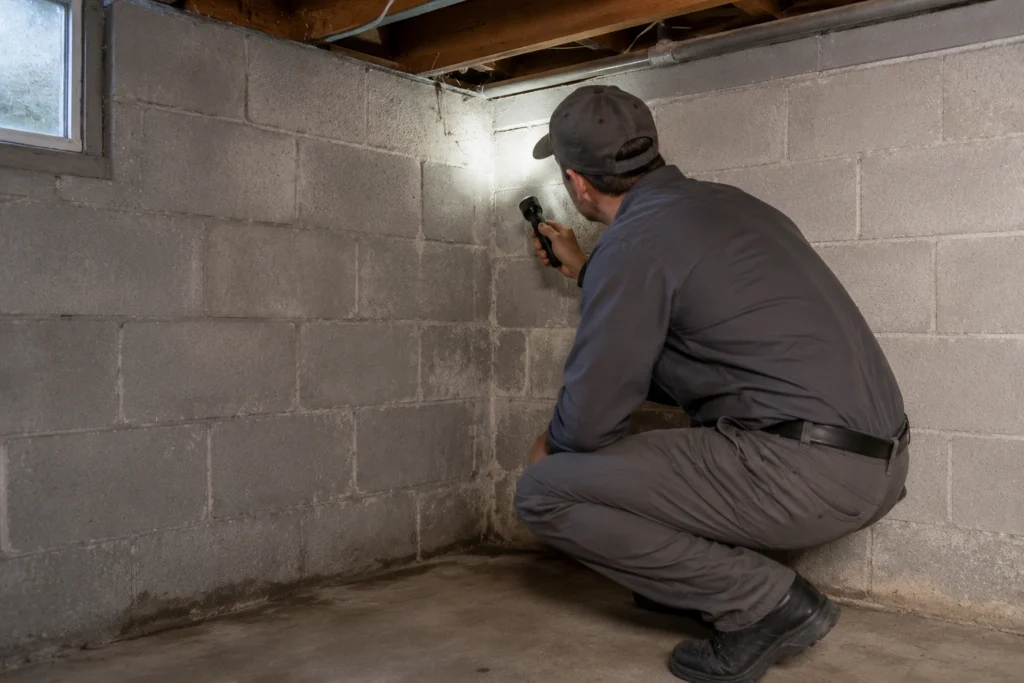
Routine pest control provides scheduled service throughout the year. This allows your service technician the opportunity to provide ongoing treatment for existing issues and regular inspections to help catch new problems early, before they manifest to serious infestations. This helps shift the focus of your pest control service from treatment to prevention, helping to save you from costly treatments and repairs in the future.
Improved Health
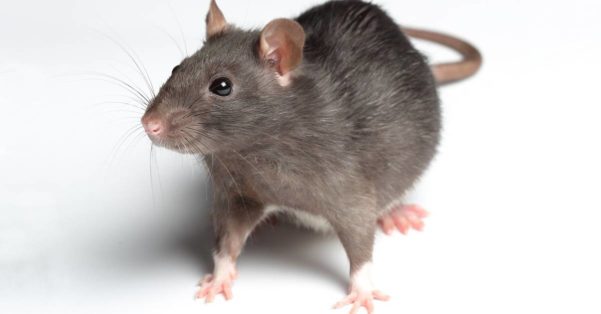
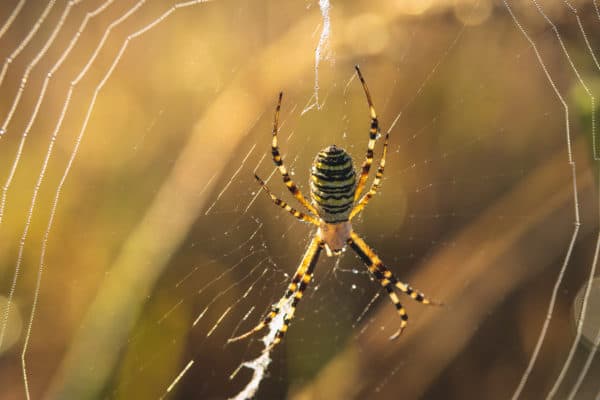
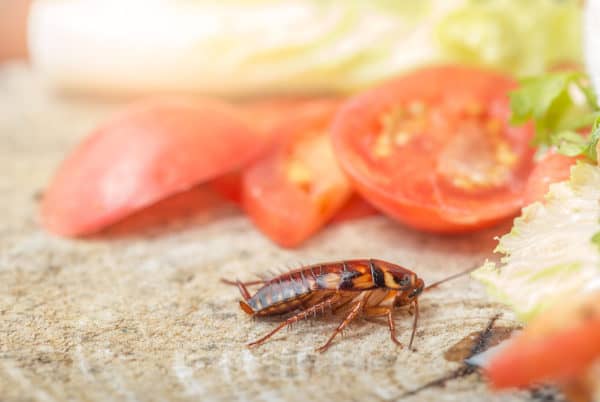
Routine pest control provides many opportunities to improve the health of both your family and your home. Pests offer a wide range of hazards to your family’s health and safety. Venomous spiders and ants can cause painful bites; rodents and other wildlife can leave droppings that can contaminate your food and household surfaces; cockroaches can exacerbate allergies and asthma. Routine pest control can help eliminate all of these threats, as well as provide you with stress and anxiety relief knowing that your home is protected.
Protecting the Value/Integrity of Your Home
Pests can cause serious damage to the structure of your home, decreasing its value and costing significant amounts of money in repairs and treatments. Rodents and other wildlife can chew through walls, wires, drywall, and even roofs, damaging them and increasing the risk of fires. Termites can eat through wood undetected for years before their damage is realized. Rodents and roaches can contaminate food, costing you money by having to throw it out and replace it. A routine pest control program can help catch these pest issues early and keep them from getting out of control.
Eco-Friendly Options
Pest control used to mean harsh chemicals that were dangerous for your small children or pets. Nowadays there are green pest control options that are eco-friendly and safe for use anywhere in and around your home while still remaining effective against pests. The active ingredients in a green pest control service are derived from flowers, plants, and other natural elements from the earth and are safe for both children and pets.
Service Guarantee
Most pest control programs offer a service guarantee. Routine pest control visits are scheduled so that problems can be identified and remedied at that time. The service guarantee allows the technician to come back in between scheduled visits for any issues that arise at no additional cost to you.
As you can see, there are many reasons to be thankful for pest control. If you suspect you have a pest problem or you want to stay ahead of the pests before they take over, contact a professional pest control company who can thoroughly evaluate your home and provide you with the treatment and prevention options needed to make you thankful this season.
You May Also Be Interested In:
Bed Bug Holiday Surprise
Cold Weather Sends Roaches Indoors: 5 Tips to Prevent Them This Winter
Late Fall Pests
Why Are There So Many Millipedes in My House?
Are Termites Active In Fall and Winter?

Nov 26, 2019 | Pest Control
Cooler weather is finally here! Time for sweaters, boots, and cozy nights inside. While you and your family are spending more time inside, pests are looking to wait out the cold in your home as well. Here are a few tips you can use now before you end up with overwintering pests that overstay their welcome.
- Before unboxing decorations from the garage or attic, inspect the boxes thoroughly. Pests may have taken up residence inside and look to use these storage materials as an entry point into your home.
- Be sure to store any firewood at least 20 feet away from the exterior of your home. The firewood can act as a hiding place for pests. By moving the wood away from your home, it will reduce incident of invasions.
- Kitchens are huge entry points for pests. Keep counters free of crumbs and spills, utilize airtight containers to store open food, and use lids on garbage cans.
- Look to screen vents and chimneys, seal cracks and crevices, install door sweeps, and replace weather-stripping to cut down on pests looking to make your home their winter hideout.
With these tips you will hopefully be able to enjoy your holidays pest free. If you have an issue with pest invasions, reach out to your local pest control company to schedule an inspection.
Nov 22, 2019 | Pest Control
Winter can be a difficult time for cockroaches. While they are adapted to thrive in warm temperatures, these cold-blooded pests cannot survive environments that are too hot or too cold. In fact, some species stop growing and reproducing when exposed to colder temperatures, usually consistently below 45 degrees, for extended periods of time. As temperatures drop, roaches will seek out shelter in warm places, most often in our homes and offices. These buildings provide them with everything they need to survive the winter – warmth, access to water, and an abundant supply of food.
Prevention is key when it comes to roaches. Here are 5 tips to prevent cockroaches from taking over your home this winter.
1. Clean Thoroughly.
Roaches are attracted to dirt and crumbs as a source of food Make sure to always wash dishes after a meal and put them away. Clean up any crumbs and spills immediately. Take out the garbage before going to bed. Clean any grease from your stovetop. Keep food sealed in airtight containers. Sweep, mop, and vacuum on a regular basis. Don’t leave pet food, treats, and water out overnight.
2. Declutter
Clearing out clutter gets rid of places roaches can use to hide. Keep rooms clutter free and dusted often. Use plastic storage bins with lockable lids versus cardboard boxes. Eliminate newspapers and cardboard altogether as roaches love to breed in these materials.
3. Seal It Up
Roaches get into homes under doors and through cracks. Identifying these and sealing them up helps eliminate points of entry for cockroaches and other pests. Thoroughly inspect around windows and doors, along foundations and the roof, in attics and crawlspace vents, and around holes used for utility and plumbing lines. For small holes and cracks, use caulk to seal them. For larger holes, especially around pipes, use steel wool and foam to seal. Fine mesh wire can be used to seal around attic vents and chimneys.
4. Fix Leaks
Roaches, like most pests, need water and moisture to survive. Therefore, standing water or excessive moisture can attract roaches to your home. Regularly inspect your plumbing for leaks and repair them immediately. Make sure to check faucets, sinks, refrigerators, and appliances for leaks and excessive moisture. Crawlspaces are also a common source of excess moisture in homes. Consider crawlspace enclosure to help minimize moisture under your home.
5. Call A Pro
A cockroach infestation can be extremely difficult to control. Prevention can only go so far in the battle against roaches. If you suspect you have a problem with cockroaches, contact a professional pest control company who can help identify the type of roach you have, thoroughly inspect your home to identify points of entry or food sources, and help set you up with a comprehensive roach control treatment and prevention plan.
You May Also Be Interested In:
Is That Bird’s Nest Dangerous?
The Myth of the Granddaddy Long Legs
Bed Bug Holiday Surprise
Venomous vs Poisonous Spiders – What’s the Difference?
Mice, Rats, and Other Problem Rodents
Nov 15, 2019 | Pest Control
By Anna V., Editorial Lead — Pest Education · Last updated: April 2026
If you’ve ever walked into the garage, looked up at a ceiling corner, and spotted a tiny body with eight ridiculously long, thread-thin legs, you’ve almost certainly met a granddaddy long legs. At Northwest, we get asked about these spiders constantly, usually paired with the same two questions: Are they dangerous? and Why are there so many of them in my house? The answers are reassuring. Granddaddy long legs are among the most misunderstood pests in Georgia and the Southeast. They’re almost entirely harmless to people and pets, and they quietly eat a surprising number of the pests you actually do want gone.
Here’s what a granddaddy long legs actually is, why the name causes so much confusion, whether any version of the creature is dangerous, and how to handle them around the house.
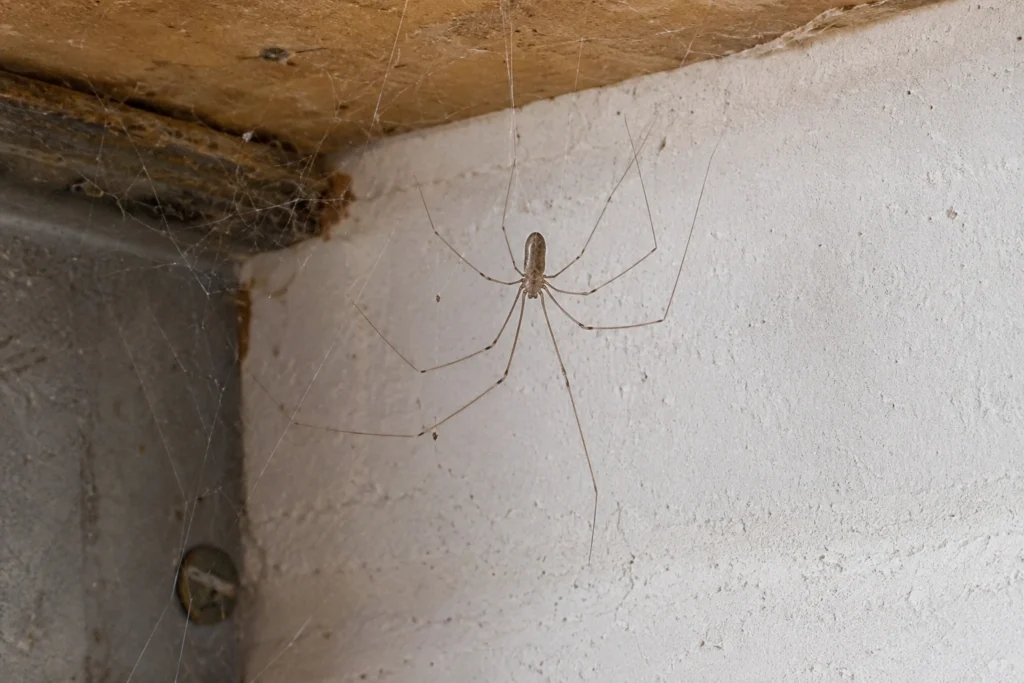
The cellar spider is the most common “granddaddy long legs” you’ll see indoors in the Southeast.
What Is a Granddaddy Long Legs?
Here’s the part that surprises most people: “granddaddy long legs” isn’t one creature. It’s a regional nickname that gets applied to three very different animals. Knowing which one you’re looking at clears up most of the confusion.
1. Cellar Spiders (Family Pholcidae)
This is the one you almost certainly have in your home. Small slender body, eight legs that can span two or three inches, builds messy tangled webs in corners of basements, garages, attics, and crawl spaces. True spider, produces silk, produces a mild venom for hunting prey (not a threat to humans). In the Southeast, when someone says “granddaddy long legs,” this is the one they mean about 90% of the time.
2. Harvestmen (Order Opiliones)
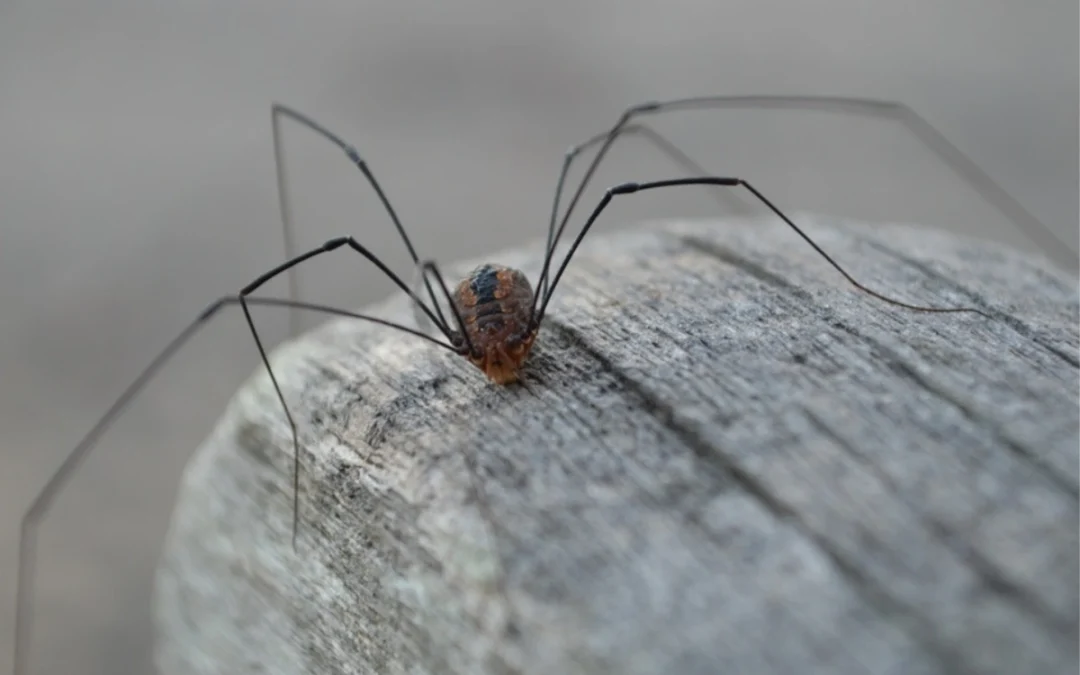
Arachnid, but not a true spider. Fused body (no visible waist between head and abdomen), eight legs, no silk, no venom. You’ll usually see them outdoors in leaf litter, on stone walls, or under logs rather than indoors. Completely harmless.
3. Crane Flies (Order Diptera)
This one isn’t a spider at all. Crane flies are insects with six legs, two wings, and a mosquito-like body. They show up around porch lights on warm evenings and look like giant mosquitoes. They don’t bite. They don’t sting. They don’t carry disease. In some regions people call them “daddy long legs” or “mosquito hawks” (though they don’t eat mosquitoes either, despite the nickname).
Why the Name “Granddaddy Long Legs” Causes Confusion
The same name for three different creatures is how a lot of the venom myths got started. Someone will say harvestmen are “the most venomous spider in the world but can’t bite you,” a claim that’s wrong on three counts: harvestmen aren’t spiders, they don’t produce venom at all, and they can’t bite anything human-sized even if they tried. The claim probably got attached to cellar spiders at some point, mixed up with harvestmen, and turned into a schoolyard urban legend that won’t die. Cellar spiders do have venom. It’s adequate for a mosquito. A human isn’t on the menu.
Granddaddy Long Legs vs Other Long-Legged Creatures
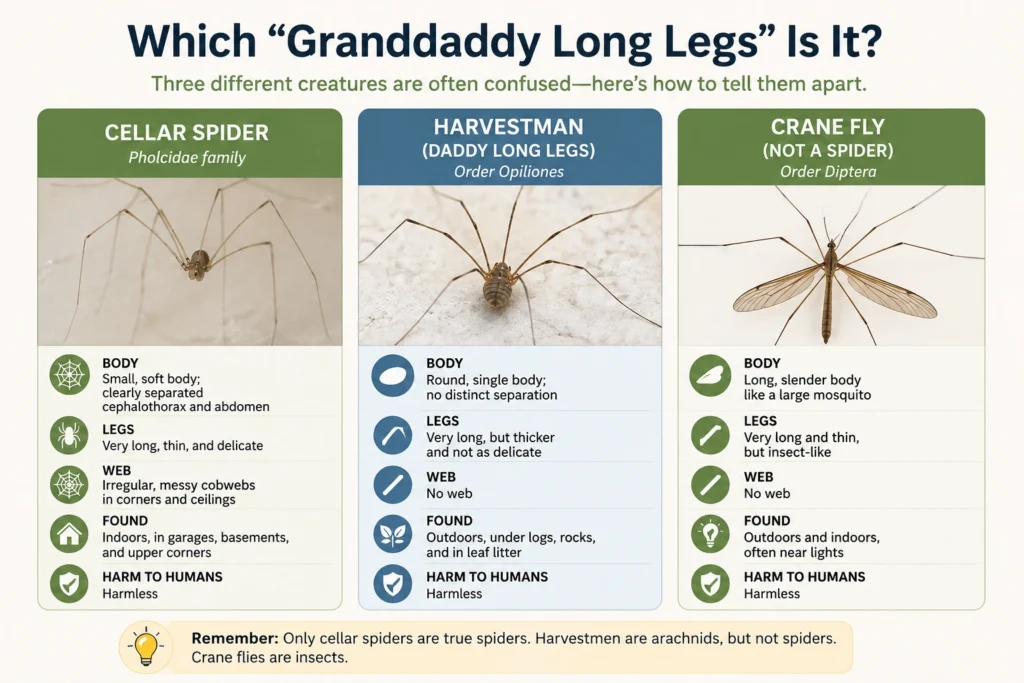
Quick visual reference for telling the three apart:
Three different creatures all called “granddaddy long legs,” and only one is actually a spider.
| Feature |
Cellar Spider (Pholcidae) |
Harvestman (Opiliones) |
Crane Fly (Diptera) |
| Classification |
True spider (arachnid) |
Arachnid (not spider) |
Insect |
| Body shape |
Small, slender, distinct segments |
Single fused body segment |
Elongated insect body with wings |
| Legs |
8, very long and thin |
8, long |
6, fragile |
| Silk / Web |
Yes, tangled corner webs |
None |
None |
| Venom |
Mild, not a threat to humans |
None |
None |
| Where you’ll see it |
Indoor corners, basements, garages |
Outdoor leaf litter, stone walls |
Around porch lights at night |
Are Granddaddy Long Legs Venomous or Dangerous?
The short answer: no. The single most persistent myth is that granddaddy long legs are the most venomous spider in the world but physically can’t bite a human. Every piece of that claim is wrong.
- Cellar spiders do produce venom for hunting prey. Studies have measured its potency, and it’s nothing special. It’s on par with a mosquito’s saliva. A human bite, which is extraordinarily rare, causes at worst a mild, brief sting.
- Harvestmen don’t produce venom at all. They have no venom glands.
- Crane flies are insects with no venom, no stinger, and no biting mouthparts capable of breaking human skin.
None of the three is a medically significant pest. If you want an authoritative second opinion, the UGA Extension guide to common household spiders has a plain-language breakdown of the cellar spider and several other species you’re likely to see in a Georgia home.
Behavior & Habitat in Southeast Homes
Cellar spiders are the version you’ll encounter inside, so the rest of this post focuses on them.
Where They Live
Ceiling corners, basement joists, attic rafters, garage doorframes, crawl-space wall cavities, sheds, behind stored boxes. Anywhere dark, undisturbed, and with a steady supply of small insects passing through.
Webs
Messy, irregular, and loosely strung. Nothing like an orb weaver’s symmetrical web. The web isn’t sticky the way other spider webs are; cellar spiders rely on shaking the web to tangle prey further once something wanders in.
When You’ll See Them
In the Southeast, indoor cellar spider sightings peak in late summer and early fall. Two things are happening: the spiders are finishing a season of breeding, and they’re following their food (flies, gnats, mosquitoes) as those insects push deeper into homes ahead of cooler nights.
What Attracts Daddy Long Legs to Your Home?
If you suddenly have a lot of cellar spiders in the garage, it’s almost always one of three things:
- Other pests are thriving. Cellar spiders eat small flies, gnats, mosquitoes, moths, and other spiders. A heavy cellar-spider population usually means you also have a heavy small-insect population somewhere nearby, often in a basement drain, a damp crawl space, or an overwatered plant tray.
- Moisture. Cellar spiders like humid environments. Damp basements, leaky plumbing, unsealed crawl spaces, and humid attics are their favorite spots.
- Undisturbed clutter. Stacked boxes, stored furniture, piled lumber, and rarely-used corners let webs go untouched for weeks. Stability is more attractive to a cellar spider than food location.
Handle those three things and the spider population drops on its own, often faster than any treatment plan can drop it.
Are Granddaddy Long Legs Useful or a Nuisance?
Useful. It’s one of the few pests we tell customers to leave alone when they find one or two. Cellar spiders actively eat other cellar spiders, which self-limits their populations. More importantly, they eat mosquitoes, fungus gnats, and the occasional pantry moth. A small cellar-spider presence in the garage is pest control doing free work.
They cross the line into nuisance when you see large numbers indoors (20 or 30 in a single room), or when the webbing becomes impossible to keep ahead of. At that point it’s less about the spiders and more about whatever they’re eating.
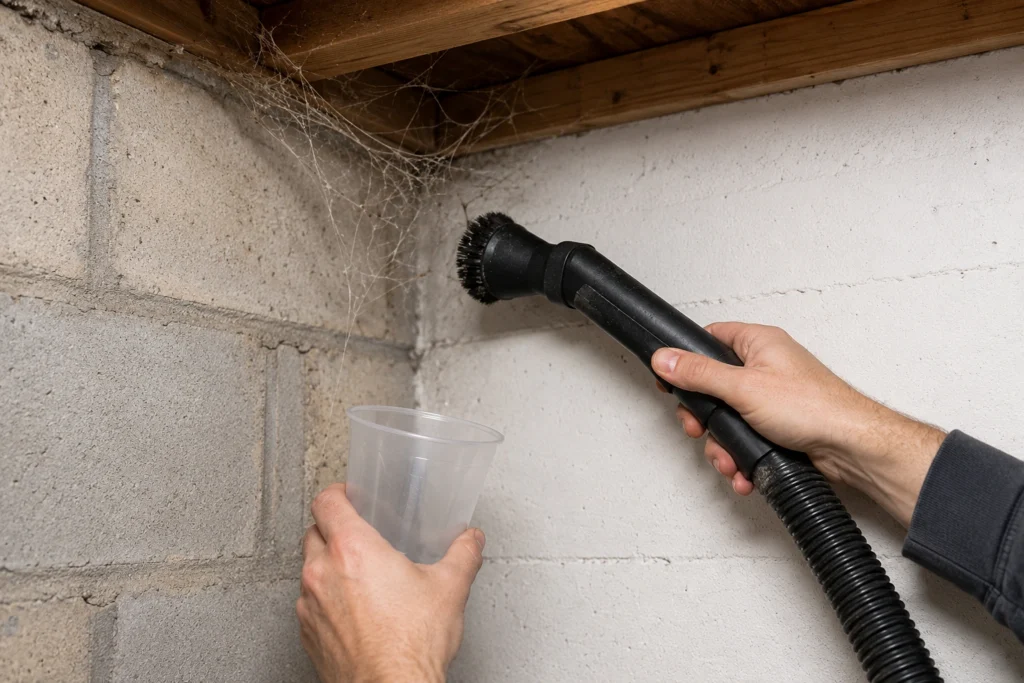
A vacuum and a cup beats a chemical spray for cellar spiders 99% of the time.
How to Handle Granddaddy Long Legs in Your Home
Humane Removal
A cup and piece of paper is the classic method. Slide it over the spider, slide the paper underneath, and walk it outside. If there are webs you want cleared, a vacuum hose with a brush attachment handles them fast without hurting anything. Skip the pesticide spray for one or two spiders.
Prevention Tips
- Seal foundation cracks and gaps around doors, windows, utility penetrations, and garage side doors.
- Cut clutter in basements, attics, garages, and sheds. Less stable surface area means fewer web-building sites.
- Move outdoor lights away from entry points. Bright doorway lights pull in the insects cellar spiders eat, which then pulls in more cellar spiders.
- Fix leaks, run a dehumidifier in damp rooms, and address crawl-space moisture. Dry is unattractive.
- Trim shrubs back from the foundation. A three-foot clear zone around the house reduces harborage for both spiders and their prey.
When to Call a Professional
Most cellar-spider sightings don’t need a professional. Call Northwest if:
- You’re seeing 20+ spiders in a single room, or cobwebs reappear within days of clearing.
- You’re also seeing other small insects indoors, which means there’s a food-source issue we need to find.
- The spiders are appearing in the living area (kitchens, bedrooms, bathrooms) rather than just basements or garages, which often signals a moisture or entry-point issue.
- You’re uncomfortable with spider identification and want someone to confirm what you’re seeing isn’t a brown recluse or a widow.
(Not sure whether you’ve got a harmless cellar spider or something that needs attention? Request a free inspection and we’ll walk the home with you and ID what’s actually there.)
Frequently Asked Questions About Granddaddy Long Legs
Do granddaddy long legs eat mosquitoes?
Yes. Cellar spiders prey on small flying insects, including mosquitoes, gnats, moths, and even other spiders. A small cellar-spider population in a garage or basement is effectively free pest control for the kinds of insects you don’t want.
Can granddaddy long legs bite humans?
Bites are extraordinarily rare. Cellar spiders will only bite if trapped against skin, and the bite itself is mild (often compared to a mosquito sting). There’s no medical significance. Harvestmen and crane flies can’t bite humans at all.
Is a granddaddy long legs actually a spider?
It depends which one you’re looking at. Cellar spiders are true spiders. Harvestmen are arachnids but not spiders. Crane flies are insects. In the Southeast, if you see one indoors, it’s almost certainly a cellar spider.
How do you get rid of granddaddy long legs?
Humane relocation (cup and paper), vacuuming webs, sealing entry points, fixing moisture issues, and cutting clutter in storage spaces. Most homes don’t need chemical treatment for cellar spiders specifically. If populations stay high after those steps, the root cause is usually another pest issue feeding them.
Are granddaddy long legs poisonous to dogs?
No. Cellar spider venom isn’t harmful to dogs or cats. Harvestmen and crane flies don’t produce venom at all. If your dog eats one, there’s no cause for concern.
If cellar spiders keep coming back, the real issue is usually whatever else they’re eating.
Schedule a Spider Inspection Today
If cellar spiders are showing up faster than you can clear them, the problem usually isn’t the spiders. It’s whatever they’re eating. Northwest’s team handles the full workflow: identification, targeted treatment, and addressing the moisture or insect issues that draw spiders in. Most customers are surprised how much of the work happens outside the house.
About the Author
[Anna V.], Editorial Lead — Pest Education leads pest education content for Northwest Exterminating, working with senior technicians and service center managers across our Georgia, Alabama, Tennessee, and South Carolina service areas to translate field expertise into homeowner-friendly guides. The focus: accurate, regionally-specific answers to the pest questions Southeast homeowners are actually searching for.
Oct 12, 2019 | Pest Control
Business owners have a laundry list of priorities when it comes to running their companies effectively – competitive pricing, keeping both customers and employees happy, maintaining their bottom line while generating profit. One of the most important aspects of running a business is making sure the customers, employees, and the building itself are safe and healthy. For this reason, commercial pest control should be included on the top priorities list. Pests are not only a serious health hazard to both employees and customers, they can also cause significant structural damage to buildings and property. Their presence alone is enough to taint the reputation of a business, often causing irreparable damage and loss of business.
Commercial pest control offers many benefits to business owners:
Year Round Protection
Pests are active year-round. Whether it’s termites swarming in the spring or spiders in the fall, customers don’t want to see pests in your business during any season. Partnering with a commercial pest control company offers the benefit of year-round pest protection regardless of the type of seasonal pest you have.
Multi-Faceted Approach
Different pests can plague a business at different times throughout the year. Commercial pest problems can range from roaches in the kitchen of a restaurant to bed bugs in the guest room of a hotel and any variety of problems in between. A professional pest control company can provide service for any type of pest you encounter, providing the latest and most innovative techniques and treatment options for a variety of pests.
Service Satisfaction
Most pest control companies offer a service guarantee meaning if you encounter a pest problem between scheduled visits or if you continue to have a recurrent problem after they have treated, they will come back and retreat at no additional cost to you.
Customization
A commercial pest control company can thoroughly evaluate your company to assess any pest issues you may have, as well as any areas of concern that may lead to future pest problems and provide you with a customized program tailored specifically to your company’s needs.
Commercial pest control provides many benefits to business owners and services including schools and daycares, hospitals, restaurants, offices, apartments, and more. Pest problems can be detrimental not only to a company’s reputation but also to the health and safety of their employees and customers and even the structure of the property itself. Consider implementing a commercial pest control program for your business today.
You May Also Be Interested In:
for Your New Home
Is Sentricon Termite Protection Right for Your Home?
Things That Go Bump in Your Crawlspace
How Do You Know If You Have A Rat or A Mouse?
Avoiding Bed Bugs While Traveling
Sep 27, 2019 | Pest Control, Wildlife
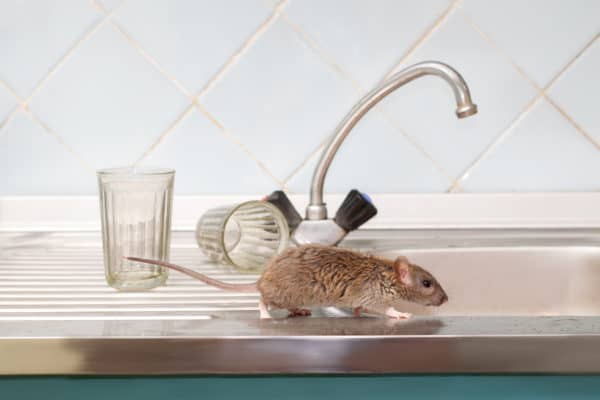
Signs of a rodent infestation are pretty easy to spot – droppings in the house, chew marks, gnawed wood, and scratching and squealing sounds at night are all pretty good indicators of a rodent problem. Before deciding on a course of treatment, however, the first step is determining which type of rodent you have. So how do you know if you have a rat or a mouse?
Mice:
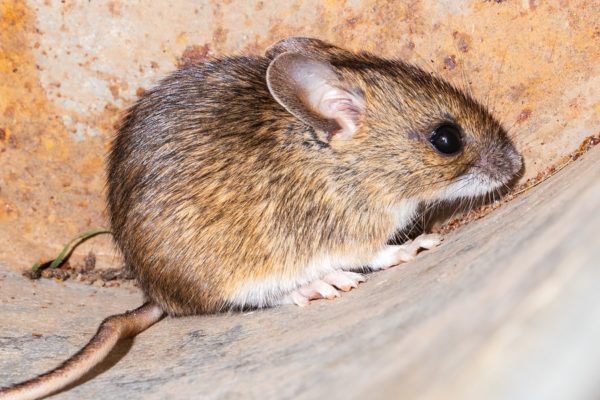
Mice are small rodents, usually about 2 to 4″ in length, with thin, long, slightly hairy tails. They have triangular shaped noses with long whiskers and large floppy ears. Mice can be brown, gray, or white in color. Mice droppings are small and smooth with pointed ends, usually about 1/8 to 1/4″ in length. They leave anywhere from 40 to 100 droppings per day. Mice prefer cereal grains or plants but will eat almost anything. They are nocturnal and tend to be bolder than rats. They are curious and will explore new things, making them easier to trap. They are skillful climbers and their small size allows them to access more areas of your home.
Norway Rats:
Norway rats are larger rodents, usually weighing about 11 ounces and measuring 7 to 9 inches in length. They have heavy, thick bodies that are brown in color with black shading and shaggy coats. Norway rats have blunt, rounded noses and short ears. Their tails are thick, hairless, and scaly and are dark colored on top and pale underneath. Norway rat droppings are brown and blunt on both ends and they leave anywhere from 20 to 50 droppings per day. They prefer fresh grains and meat but will eat just about anything. These rats typically live in burrows and prefer lower levels of homes and buildings. Norway rats are nocturnal and are more fearful and cautious than mice, making them more difficult to trap. They can climb but prefer to stay closer to the ground.
Roof Rats:
Roof rats are smaller than Norway rats, weighing about 7 ounces. They have light, slender bodies that are gray in color with smooth coats. They have thick, hairless, scaly tails that are dark in color. Roof rats have pointed snouts with large ears. Roof rat droppings are dark with both ends pointed. They will also eat just about anything but prefer fresh grains and meat. They are nocturnal and timid in nature. Because of this, they can be difficult to trap. They are excellent climbers and are more often found nesting in walls, attics, and trees.
Rodent Control:
Regardless of whether you have mice, Norway rats, or roof rats, all of these rodent species can cause damage to your home and property by chewing through wires, pipes, insulation, and drywall. They can also cause damage to furniture and carpets. All rodents can contaminate food and countertops. Serious diseases caused by rat droppings and mouse droppings include Hantavirus, salmonellosis, and more. They all reproduce quickly and a minor problem can become a major infestation in no time.
Keeping these pests out of your home is critical to helping protect the safety of both your family and your property. Here are some rodent control tips you can implement in and around your home:
- Put A Lid On Your Trash: If possible, use trashcans made of metal with snug fitting lids. If you must use plastic, make sure there are no holes in it.
- Don’t Leave Pet Food Out: Store pet food and birdseed in glass or metal containers with tight lids. Make sure to remove them at night and store them away until morning. Make sure to pick up any fallen fruit or nuts off the ground outside your home, as well. Remove standing water from bird feeders.
- Elevate Your Compost: Raise your compost container at least 1 foot off the ground.
- Keep Your Garage Clean: Rodents like to eat lawn seed, tulip bulbs, bone meal, and other items frequently used in gardening. Make sure they are stored in glass or metal containers with tight lids. Keep firewood a good distance from the house. Organize and store boxes in the garage off the ground to eliminate nesting places.
- Clean The Kitchen: Keep food stored in tightly sealed containers. Clean up spilled food and crumbs nightly.
- Keep Your Home Maintained: Make sure openings around your home are properly sealed. Keep your gutters clear of debris and water. Screen your attic vents. Keep screens on windows and doors in good repair and replace when needed.
- Call A Pro: If you suspect you have a rodent problem, call a professional pest control company or a professional wildlife removal company who can evaluate your home and provide you with a comprehensive treatment and exclusion plan.
Sep 23, 2019 | Pest Control
As temperatures start to cool off, panic can overtake pests who need to seek out shelter from the impending cold weather. They will often, unfortunately, set their sights on your warm, cozy home. Here are a few of the most common overwintering pests and what you can do to prevent them.
STINK BUGS
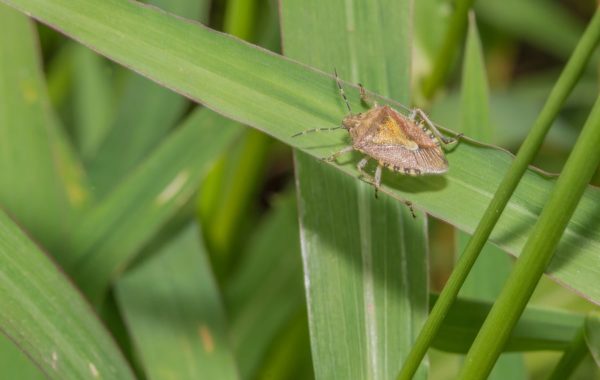
Stink bugs flock to homes in large numbers during the fall. They position themselves on the side of your home that receives the most sunlight in an attempt to keep warm. A thorough inspection for possible entry points is key in prevention of an invasion.
BOXELDER BUGS
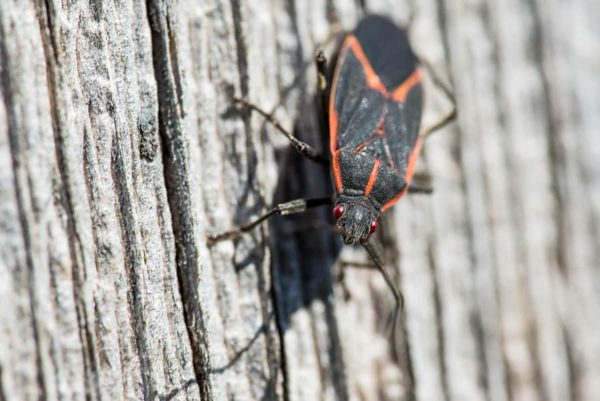
Boxelder bugs are one of the more aggressive species of overwintering pests. Like the stink bug, they will make use of the sunny side of your home and cars. They will utilize openings they find and gather by the hundreds. Crushing these pests is not recommended as their remains can attract carpet beetles. Vacuuming should be used to remove them from the home.
LADY BUGS
As universally adored as they are, lady bugs are an overwintering pest that can take over your home in a matter of days. They utilize windows and door openings to enter; therefore, checking and replacing weather-stripping and sealing with silicone-based caulk can help keep them out before fall starts.
If you have an issue with overwintering pests, reach out to your local pest control company to schedule an inspection.
Sep 18, 2019 | Pest Control
As you break out your fall decorations, you may have noticed an abundance of spider webs or had a spider run across your hand; now the house must burn! WAIT – before you jump to meme-worthy conclusions, spiders do act as nature’s form of pest control; however, having them in your home is not ideal. Follow these tips to prevent spider encounters in your home so that you can enjoy hanging up fake cobwebs without stumbling upon a real one.
CLUTTER-FREE AND CAUTIOUS
- Store all belongings that are in the attic and basement in plastic containers with a lid.
- Shake clothing when removing from a clothes bin and shake shoes that have been sitting out.
SEAL THEM OUT
- Replace any damaged window screens and weather-stripping.
- Seal any existing cracks found with silicone-based caulk.
PLAY IT SAFE
- When bringing in packages that have been on the ground outside of your home, use caution as spiders may have crawled on the package, allowing transportation inside.
- Call a professional pest control company. If you think you have a spider infestation, an inspection will help with spider identification and a proper course of treatment.
Sep 6, 2019 | Pest Control
There are thousands of species of cockroaches in the world but only a handful are found in the United States. The most common species found in the US include the German cockroach, the American cockroach, the brown-banded cockroach, and the Oriental cockroach. While there are significant differences between these four species, there are some common features that are shared between ALL species of cockroaches. All roaches have flattened, oval-shaped bodies with antennae on their heads. They all move surprisingly fast and they all present a health risk for households. Roaches are known to spread more than 30 types of bacteria and even parasitic worms. One can find all of these species of cockroaches in the house. However, each species has its own characteristics and can be found in different parts of the home – making treatment methods vary from type to type. Let’s take a look at the different types of cockroaches and some ways to prevent them.
German Cockroach
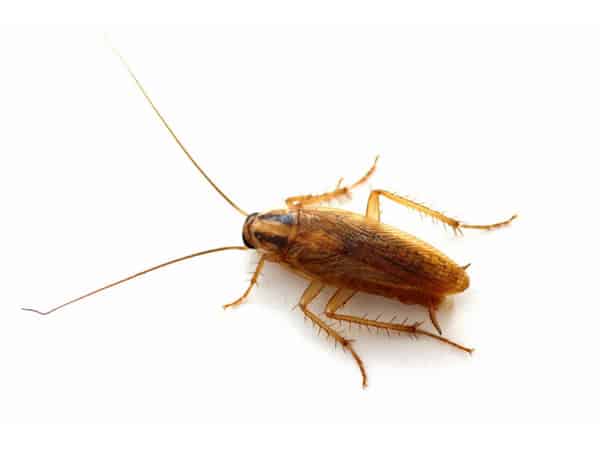
The German cockroach, also known as Blattella germanica, is a smaller species of cockroach, usually only growing to about 5/8″ in length. They are usually pale brown or caramel colored with two dark brown stripes behind their heads. They have wings but do not fly. German cockroaches are found across the United States and prefer warm, moisture-rich habitats. They are often found near dishwashers, sinks, and stoves and are mostly found in kitchens and bathrooms. German cockroaches can live up to 12 months and produce more eggs than any other cockroach species. They eat a wide variety of things but prefer meat, grease, and starchy foods. They are notoriously responsible for outbreaks of illness and triggering allergic reactions in humans. Their small size allows them better hiding capabilities making them harder to get rid of.
American Cockroach
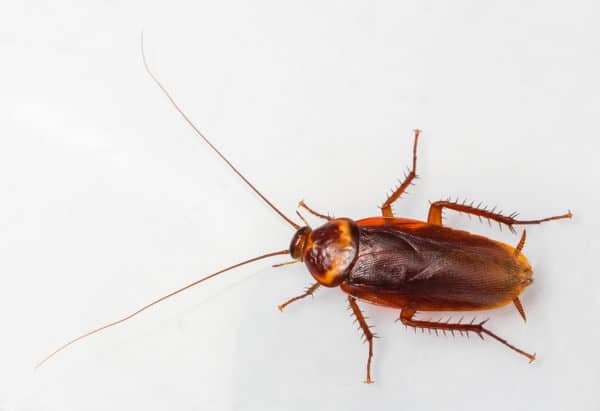
The American cockroach, also known as Periplaneta americana, is one of the largest cockroaches found in homes. American cockroaches grow up to 1-1/2″ in length. They are reddish-brown or brown in color and have light yellow bands around the shield behind their heads. American cockroaches have wings and can fly short distances. They are found throughout the United States and are often found in warm, dark areas like basements, crawlspaces, bathtubs, drains, and sewers. They are also common in households where food is stored. They will eat everything from plant material to garbage and contaminate any surfaces they walk across. American cockroaches can live up to 2 years. They are active when the temperature is 70 degrees or higher but have also adapted to survive at much lower temperatures with the right conditions.
Brown-Banded Cockroach
The brown-banded cockroach, also known as Supella longipalpa, is a smaller species of cockroach found throughout the United States. Brown-banded cockroaches are distinguished by 2 light yellow to brown bands across their bodies. Males have larger, dark brown wings that lighten in color as they extend to the tips. Females have smaller, reddish-brown to dark brown wings. Even though they both have wings, only males can fly. Brown-banded cockroaches like warm, dry environments that are higher than other species. They are often found in upper cabinets, behind pictures hanging on the walls, or in the hollow parts of furniture. In fact, they will often hide their egg casings in or under furniture. They will also gather near larger appliances like refrigerators and TVs because of the heat they give off. These cockroaches are often found in offices, apartments, kitchens, and hospitals. Brown-banded cockroaches prefer starchy foods like glue from envelopes and stamps and also paper products. They can live from 3 months up to 1 year and will jump when they have been disturbed.
Oriental Cockroach
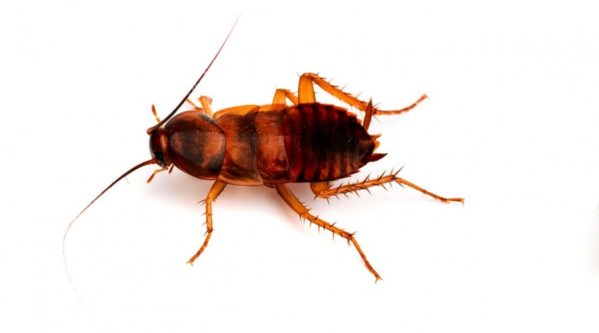
The Oriental cockroach, also known as Blatta orientalis, “water bugs,” and “black beetles,” has a glossy appearance that is dark brown or black in color. Oriental cockroaches can grow up to 1-1/4″ in length. These cockroaches cannot fly and are not as fast as other species. They prefer cool, dark, damp environments and are often found in basements, sewers, drains, and near woodpiles. They commonly enter homes through drains in search of food. Unfortunately they cannot climb smooth vertical surfaces and are often found stuck inside sinks and tubs. They primarily feed on decaying organic matter. Oriental cockroaches have a 6 month life span and give off a strong smell. They are considered one of the dirtiest species of cockroaches.
Prevention and Treatment
Seeing one or two cockroaches in the house usually means there are several more hidden out of sight. They are much more difficult to get rid of once a roach infestation is established. There are some steps you can take to help prevent roaches from taking over:
- Keep pet food stored in sealed containers and don’t leave it out overnight.
- Keep food sealed and stored properly, as well.
- Keep kitchen surfaces free from food debris and crumbs.
- Wipe down countertops often.
- Sweep often.
- Take out the trash frequently.
- Clean in, around, and under appliances.
- Check under sinks for leaks and drops.
- Vacuum carpets and mop floors on a regular basis.
- Keep basements and crawlspaces dry. Consider crawlspace enclosure to help prevent moisture buildup.
- Seal any cracks and crevices in your home’s exterior.
If you suspect you have a roach problem, contact a licensed pest control company. Professional pest control technicians can provide expert advice and thoroughly assess your home to help identify not only the type of cockroaches you have but also the most up-to-date treatment options and prevention techniques.
You May Also Be Interested In:
Mosquito Season: When Will It End?
How Much Damage Can Termites Really Cause?
Helpful Tips to Keep Wildlife our of Your Home
4 Diseases Caused by Rodent Droppings
How to Choose a Pest Control Company