Aug 4, 2022 | Pest Control
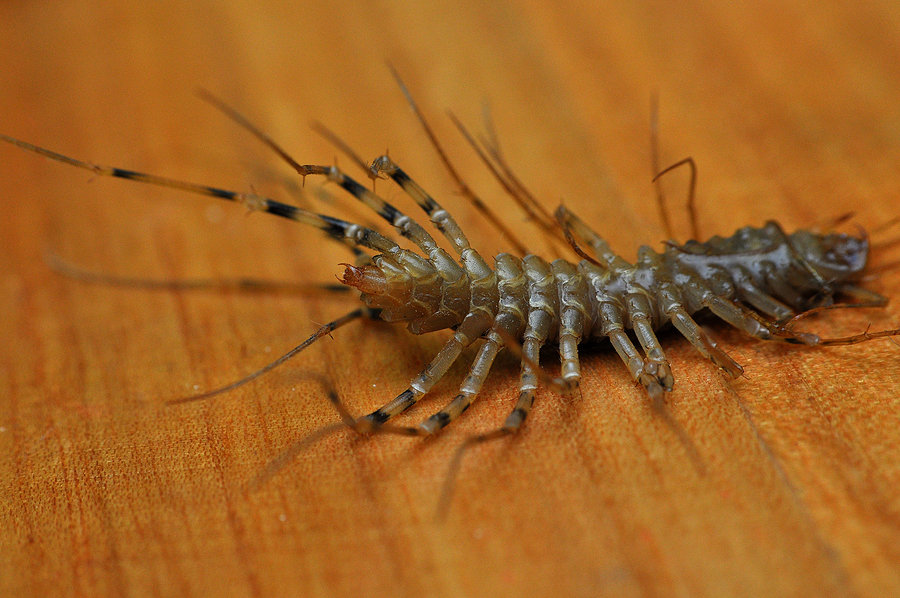
Centipedes are a type of arthropod often mistaken for their cousins, millipedes. These pests thrive in a diverse array of environments, from the driest deserts to wet, humid forests. Determining whether you have a millipede vs centipede can be tricky. Both creatures have linked segments forming their bodies. Centipedes only have 1 set of legs per body segment and these legs are situated on the sides of their bodies. Millipedes, on the other hand, have 2 sets of legs per body segment and their legs are situated underneath their bodies. Centipedes have flatter bodies while millipedes have rounded bodies. Now that you know how to spot a centipede in your home, what attracts them in the first place?
There are 3 main things that attract centipedes to your home: food, environment, and protection.
Food
Centipedes are nocturnal predators with voracious appetites. They can often be found wandering around at night in search of their next meal. Centipedes consume mostly other insects, including beetles, spiders, roaches, crickets, earthworms, bed bugs, silverfish, moths, flies, pill bugs, and even other centipedes.
To prevent centipedes from coming into your home, keep these other pests away. Routine pest control is a good place to start in keeping their food sources limited.
Environment
Different species of centipedes prefer different environments. While many centipedes prefer to live outdoors, others will make their way indoors. Inside your home, they are attracted to cool, dark, damp places that are rarely disturbed. They are attracted to moisture and can often be found near food sources. They like to hide out in cement block walls, boxes, clutter on the floor, floor drains, on or near plants, leaky faucets, leaking hoses, and broken gutters. They can get into your home through drains, holes, cracks, gaps, and poorly sealed doors and windows.
To keep centipedes from making your home theirs, you can eliminate standing water in your yard, fix drips and leaks including faucets and hoses, clean and repair gutters, clean up loose brush and other yard debris, and keep your home cleaned and decluttered, especially in areas that are not disturbed often.
Protection
Centipedes are overwintering pests, meaning they cannot survive in cold weather. Instead, they will make their way indoors in search of a warm, heated place to survive the winter months and to reproduce. Because they are attracted to moisture and need it to survive, they will also come indoors during periods of extreme drought in the summer, as well.
Keep centipedes out of your home during any season by sealing any gaps and cracks with caulk, using rubber stoppers on drains, and installing weatherstripping around doors and windows.
If you have a problem with centipedes or any other pests, contact your local pest control company for a thorough evaluation and treatment plan.
You May Also Be Interested In:
You Brought Bed Bugs Home, Now What?
Orb Weavers: What You Need to Know
Rat vs Mouse: What’s the Difference?
Energy Savings from the Bottom Up
When Does Snake Season End?
Aug 2, 2022 | Florida Pest Control, Pest Control
Fort Myers Pest Control: Frequently Asked Questions
The hot, humid weather of South Florida, specifically Fort Myers, is a major attraction for unwanted pests in your home. Discovering pests isn’t uncommon, but no one wants them in their house for very long. The first step in removal is to contact your local pest control company to perform an inspection and initial service; but how long does it take to see results that lead to a pest-free home?
How Long is the Pest Control Service?
The time it takes to complete your service is on a case-by-case basis. The pest control service chosen and the level of severity will determine how long the initial or future services will take. The sizes of the house and yard will also determine the time frame in which the service will take.
How Long Does It Take to See Pest Control Results?
In most cases, you will see results in one to two days time. The exact timeframe depends on the type of pest being dealt with and the choice of materials that were used for the removal process. You might even see an increase in pest activity right after the initial service, but this is a good sign! Seeing pests means the pesticides are working and we have disrupted their normal breeding and feeding habits. Give it about a week to see the activity die down. If you still see active pests after this timeframe, it might mean another round is needed.
If you have tried everything to remove pests on your own but can’t seem to rid your home of them, give your local Fort Myers pest control company a call! These professionals will provide a free inspection and recommend the right plan for you and your Fort Myers property.
Jul 29, 2022 | Pest Control
Orb weaver spiders, or orb weavers, are a group of spiders named for their ability to produce round, orb-like webs. They make up the family Araneidae, one of the most diverse groups of arachnids in terms of both size and appearance. Despite their differences, they all have one thing in common: their ability to create large, majestic webs. These webs are circular in shape with grids similar to the spokes of a wheel. Some webs can even measure up to 3 feet in diameter. Let’s take an in depth look to learn all you need to know about orb weavers.
Appearance
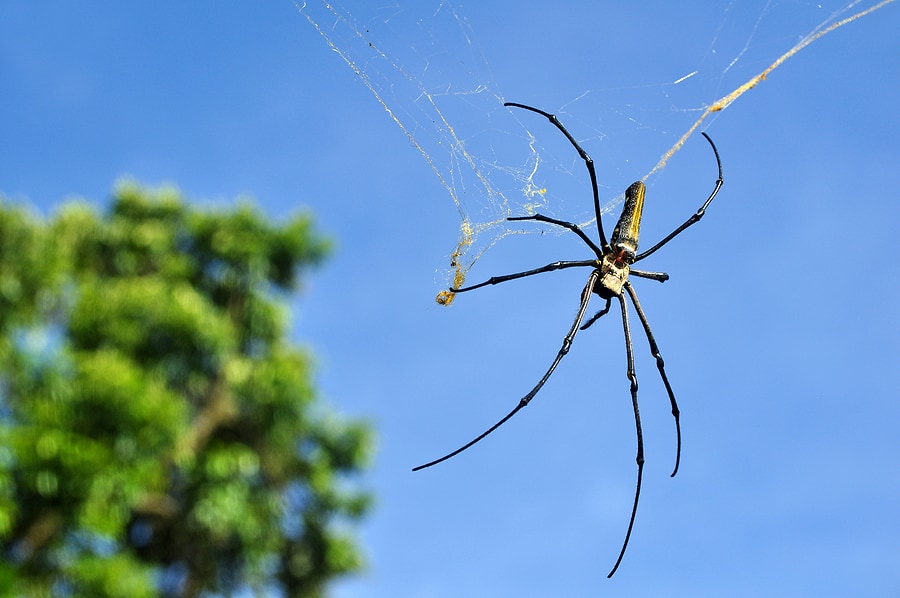
Orb weavers have body types similar to other spiders with 8 legs; 2 body parts (a cephalothorax and abdomen), and chelicera (mouthparts that look like fangs). They range in size from 1.5 to 3 cm. Some are brightly colored, while others are brown or gray. They have large abdomens and hairy legs.
Behavior
Orb weavers are typically nocturnal and will often build or repair their webs at night. They do not hunt or wander for their food. Instead, they utilize their expansive web making skills to catch their prey. They will usually sit in their webs after they are built waiting for prey to become ensnared. Sometimes they will hide nearby and leave a trigger line of silk connected to the web. The vibrations from the prey run down the line and alert them. They will then bite and paralyze their prey and wrap it in silk to save for dinner later. Orb weavers are most commonly seen in late summer and early fall.
Diet
An orb weaver’s diet usually consists of small insects like moths, wasps, beetles, flies, and mosquitoes. Larger spiders will also eat small frogs and hummingbirds.
Habitat
Orb weavers will take up residence where there is an abundance of prey for them to eat. They can often be found around outdoor lights, tall grass, weeds, fences, bushes, and walls. They can be found in any environment including gardens, grasslands, and cities. Orb weavers are found on every continent except Antarctica and in the Arctic. There are 2800 species worldwide and 180 species in North America.
Prevention is not necessary with orb weavers unless their web is constructed in an inconvenient area or an area with high human traffic. In fact, they can be beneficial to have around as they help keep other pests under control around your home. They don’t cause structural damage and they rarely bite (only if threatened and they cannot escape). Their bite has been compared to a bee sting. You can reduce the chances of having orb weavers around by:
- Eliminating their food sources by keeping other pest populations under control around your home
- Sealing any cracks, gaps, and crevices in the exterior of your home
- Removing ground litter
- Keeping grass and bushes trimmed
If you have a problem with orb weavers or any other pests, contact your local pest control company for an evaluation and treatment plan.
You May Also Be Interested In:
3 Ways You’re Letting Ants Inside Your Home
How to Get Rid of Ants Outside of Your Home
7 Natural Ways to Keep Snakes Away
How Do Cockroaches Get Into the House?
: Maintaining Through Fall
Jul 21, 2022 | Pest Control
Having an ant infestation is a nuisance to any homeowner, as it can be difficult to control them once they’ve found their way inside. These pests tend to infest areas such as the bathroom and kitchen, searching for a place to nest and a food source. Ants are sneaky pests, often finding their way inside our homes without us even knowing. Check out the top 3 ways you attract ants inside and how you can prevent them in the future.
Gaps & Holes
Ants are very small, making it easy for these pests to get through the smallest hole or gap. Your home’s doors, foundation, windows, and even utility lines can have holes or gaps, creating a way inside for ants. Foundation gaps that aren’t solid concrete blocks can lead to spaces for ants to enter. Likewise, ants will enter through doors or windows that aren’t sealed properly. Take some time and inspect the home’s interior and exterior for these openings.
Inside the Floor
Did you know ants can travel inside your floors? These pests often establish routes underneath carpets, tiles, and hardwood, making it difficult to spot them entering! Ants will often utilize subfloors, which are made up of pieces of plywood that provide enough space for ants to get inside. Often, these pests will enter through the floors when they’ve spotted a food source, such as leftover crumbs on the floor.
Toys & Houseplants
Many times we can bring these pests inside our homes by mistake! Ants can gain access inside by homeowners bringing in a toy or yard item that was left outside long enough for an ant colony to establish inside it. Plants can also carry ants inside when we bring them into our homes for the winter. Other items ants have hitchhiked on include used furniture or appliances, storage boxes, hoses, and even groceries!
There are many opportunities for ants to get inside the home, but with some DIY preventative measures in place, you can help prevent a major infestation. Here are some easy tips on preventing ants:
- Trim your tree branches and shrubs away from your house
- If you have holes or gaps, utilize weatherstripping or caulk to seal them
- Thoroughly clean countertops, pantries, cabinets, and other kitchen surfaces
- After a meal, wipe up any crumbs or spills immediately
If you notice an ant problem bigger than you can handle, contact your local pest control company, where they can identify entry points and recommend a treatment and prevention plan.
Jul 21, 2022 | Pest Control
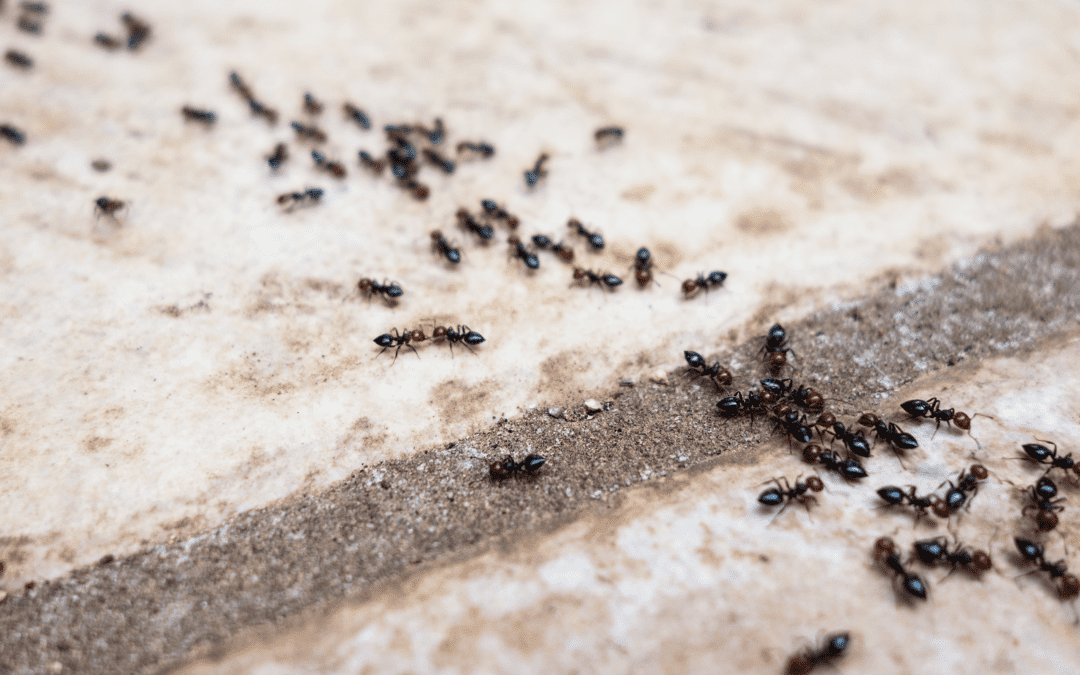
Ants are known for being annoying and persistent, especially when taking over your yard. It’s important to know what type of ant you’re dealing with to determine how to get rid of them outside your home. Removing them from your yard will lessen the chances of seeing them inside your home. We have broken down the most common ants found in the South and how to remove them from your yard.
Fire Ants
These bright or dark red ants love the warm climates of the South. They’re one of the smallest ants around but can be found in very large groups. Since they love the warmth so much, you’ll see fire ants building large underground nests in the sunniest parts of your yard.
They typically don’t become household pests, but because of their sting and the large groups they are found in, they deter families from enjoying time outside. They are known to attack in groups and their sting can become very uncomfortable.
Get Rid of Fire Ants:
- Douse the fire ant mound with boiling water. This old-school approach works about 60% of the time, but it won’t hurt to try.
- Bait worker ants in order to kill the fire ant queen. Ideally, the worker ants will pick up bait that is placed around the mound and bring it to the queen.
- Hire professional help. If you have tried everything and it didn’t work, be sure to reach out to a local pest control company to provide the best fire ant control and prevention method.
Pavement Ants
These types of ants can be red or black and can often be mistaken for carpenter ants, although they are much smaller. They only have two parts to their body instead of the usual three. Often found in driveways, along sidewalks, or in other concrete structures, pavement ants can eventually become house pests.
They become house pests due to their continuous search for food and shelter. If they end up inside your home, that usually means there is a nest nearby. They aren’t as aggressive as the fire ant, but they can bite.
Get Rid of Pavement Ants:
- Keep tree branches and shrubs cut away from the home. This allows them to access your home.
- A store-bought pesticide should be enough. Spray the perimeter of your yard and home to get rid of these types of ants.
If the problem of ants has become more than you can handle, be sure to reach out to your local pest control company and they’ll be able to come up with the best plan of action to rid your yard of ants.
Jul 21, 2022 | Pest Control, Wildlife
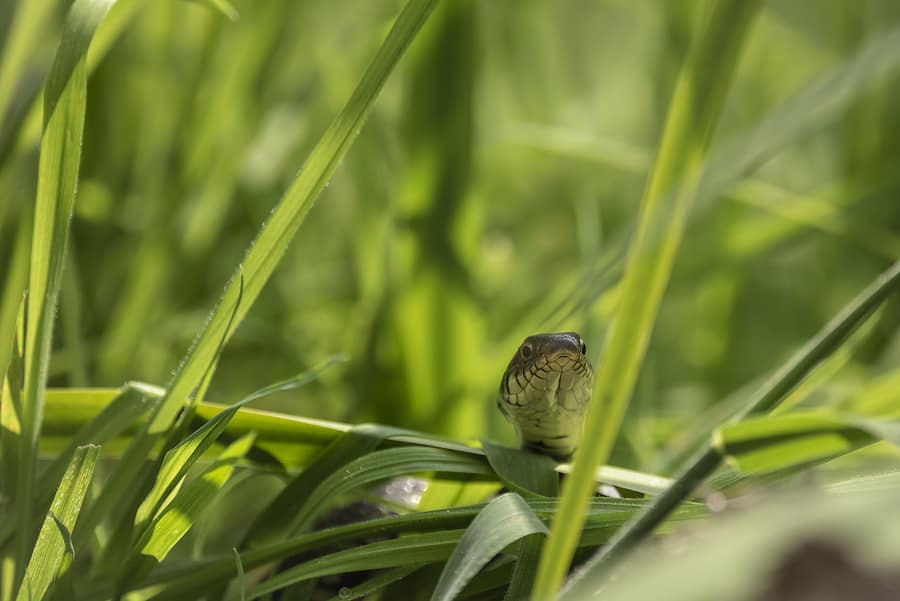
While most snakes you encounter are harmless, many of us still don’t want to come across one in our yard or home. While our first instinct may be to run, most snakes are actually beneficial to have around – they help keep other pest populations under control (rodents, frogs, etc.).
Video Transcript
Snakes are usually after just two things. Food and a safe place to hide. If your yard offers either, they may stick around longer than you’d like. The good news, a few simple steps can make a big difference. First, reduce food and moisture. Keeping rodents and insects under control helps, and fixing leaks or standing water is key. Snakes are drawn to damp areas. Second, remove hiding spots. Trim grass, clear brush, and leaf piles. Elevate firewood and fill in old holes around your yard. Third, use natural deterrence. Plants like maragolds and lemongrass or scents like clove and cinnamon oil can help make your space less inviting. When you’re ready to call a professional for a peaceful home, feel free to reach out to our team at Northwest Exterminating.
Snakes will come into your yard in search of 2 things: shelter and food. Snakes will seek out shelter to have a place to rest, breed, and hunt. Common places snakes are found include overgrown grass, dense brush or shrubs, leaf piles, rock piles, compost, or areas with moisture like underneath bird baths, around leaky faucets and hoses, or near ponds or swimming pools. Snakes will also come looking for food. Snakes love to eat rodents, moles, frogs, fish, snails/slugs, and other small insects.
If you prefer not to encounter snakes around your home, here are 7 natural ways you can keep snakes away.
Get Rid of Food Sources
Snakes will come around looking for food so if your home provides them with that, you’ll be more likely to encounter them. Getting rid of these food sources will encourage snakes to move along in search of something to eat. Make sure common pests that snakes like to eat are kept under control. Scheduling routine pest control can help with this.
Get Rid of Water
Snakes are also attracted to areas with a lot of moisture. Eliminate standing water in your yard where possible. Repair leaky faucets and replace leaky hoses. Keep pools, ponds, and other water features maintained. If using sprinklers, make sure they are running in the morning so the water has time to soak in or evaporate before it gets dark. This helps keep soil in your yard from being too wet.
Get Rid of Hiding Spots
Snakes will look for places around your home to hide so they can breed and rest. Get rid of coiled hoses or use hose boxes. Avoid using rock piles in your landscaping, if possible. Store firewood in boxes or elevate it when possible. Keep your grass mowed and dense brush cleared out. Seal off or add fencing to any open areas under sheds or other buildings. If you are using snake-proof fencing, make sure it is made of steel mesh or plastic sheeting, it is at least 3 feet high and 4 feet deep, it is flush with the ground, and it is angled outward.
Use Snake-Repelling Plants
Some plants are known to repel snakes. Try to incorporate these plants into your landscape design where possible. Common snake-repelling plants include marigolds, lemongrass, Mother-in-Law’s tongue, wormwood, onion, and garlic.
Fill In Burrows
Gophers, moles, and voles dig burrows across your yard. Once they’ve been eliminated, these old gopher holes and burrows can remain on your property. Snakes will commonly use them for shelter as they provide a great place for them to hide, rest, and breed. Fill in any of these holes and burrows with dirt or gravel. This will help deter snakes from using them.
Use Natural Predators
Snakes have a few natural predators that can help keep them away. Common snake predators include cats, raccoons, pigs, turkeys, guinea hens, and foxes. Keeping any of these animals around your home will help deter snakes from coming near. You can also buy fox urine and sprinkle it around your property to help deter snakes, as well.
Use Natural Repellents
There are several natural products that are known to repel snakes. These natural snake repellents can be used around the perimeter of your property, around pools, along the edges of ponds, and anywhere else you have noticed snake activity.
- Ammonia. Ammonia is especially effective around pools and ponds. Soak rags in ammonia and put them in unsealed plastic bags. Place the bags around pools and ponds to help keep snakes out. For best results, change them out daily.
- Naphthalene. Naphthalene is commonly found in many commercial snake repellent products. It can also be bought in pure form and used around your property.
- Sulfur. Sulfur offers twofold irritation to snakes. It puts off an odor that snakes dislike; it also irritates their skin. You can use sulfur around the perimeter of your property or anywhere snakes have been spotted. It’s best to use gloves as it can also irritate human skin, as well.
- Clove and cinnamon oil. These two natural ingredients work best when combined together to repel snakes. Mix them together in a spray bottle and spray anywhere snakes have been seen.
- Garlic and onions. Garlic and onions not only work when planted in your yard, but they also work as a natural snake repellent product as they both contain sulfonic acid which is known to repel snakes. Chop up both garlic and onions and mix them with rock salt. Sprinkle the mixture around your yard to repel snakes.
- Vinegar. Standard vinegar is an effective snake repellent around water sources. No dilution is necessary. Pour standard white vinegar around the edges of ponds and pools for snake deterrence.
- Lime. Lime is effective when mixed with hot pepper or peppermint oil. Mix these together in a glass bottle and apply around the perimeter of your yard.
Despite our best efforts, snakes can still make their way into our yards and homes. If you have a problem with snakes, contact your local pest control company who specializes in snake removal who can help you properly identify the type of snake you have (venomous vs nonvenomous) and help safely and humanely remove it from your property.
You May Also Be Interested In:
How Do Cockroaches Get Into the House?
Identify and Prevent Brown Recluse in Your Tennessee Home
6 Signs of Subterranean Termites
Venomous Summer Snakes
The Importance of Mosquito Treatments
Jul 13, 2022 | Pest Control
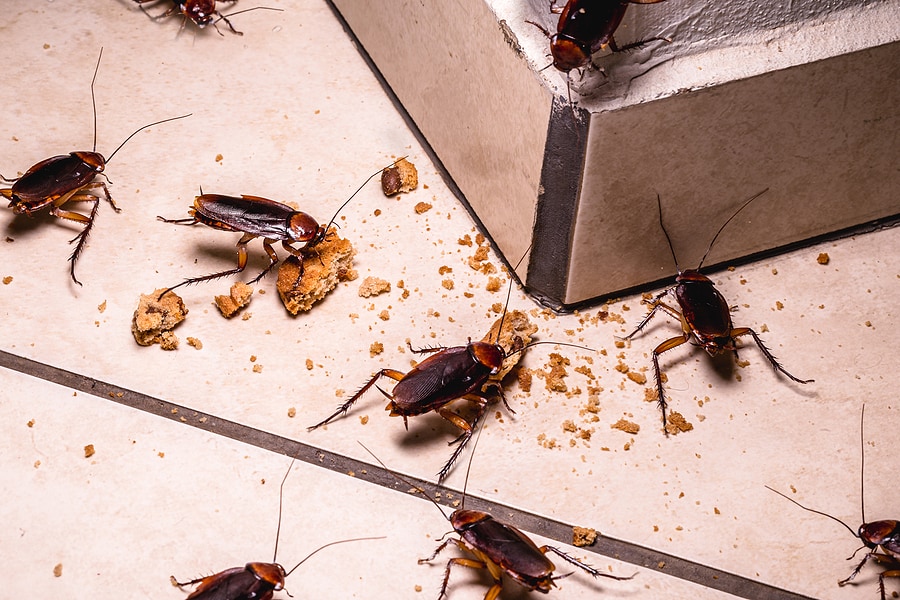
Cockroaches are common household pests that are found worldwide. While they don’t bite or cause structural damage to homes, they can be harmful to your health by contaminating food and other surfaces and triggering allergies and asthma in those affected. Roaches can get into the cleanest of homes in their quest for food, water, and shelter which they need to survive. Once inside, roaches will seek out warmth, moisture, and darkness, often being found in kitchens and bathrooms.
How do they get inside? Roaches have become very resourceful when it comes to getting into places. They can crawl through small holes or cracks in the exterior of buildings, flattening themselves into the smallest spaces. They will also squeeze through openings around doors and windows or sneak through when they’ve been left open too long. They will hitch a ride (or even lay their eggs) on bags, luggage, backpacks, used furniture, used appliances, packages, and even groceries that you bring unknowingly into your home. They can also come in through pipes or other holes in walls (especially shared walls like those in apartments).
If you have the makings of a cockroach infestation, try some of these cockroach prevention tips to help get them under control.
- Find the entry points. The first step is to identify where and how they are getting in. If you’re only noticing them in one room (e.g. the kitchen), it’s likely that’s where they’re making their way inside. You can put out sticky roach traps; the traps with the heaviest traffic are most likely closer to the nest and closer to where they are getting in. Seal any cracks or crevices you find with flexible caulk. Use weatherstripping on doors and windows. Carefully inspect any items before bringing them into your home.
- Clean up food sources. Roaches will use clutter (especially areas that aren’t disturbed often) to hide out during the day before they forage for food at night. They also especially like to feed on items that contain glue (magazines, books, cardboard, etc.). Clean out piles of old newspapers and magazines, cardboard boxes, paper bags, and any other areas of clutter in your home. Take bread, fruit, and veggies off your countertops and store them in airtight containers. Make sure any open boxes or bags are secured. Clean your stove thoroughly, including the eyes and inside the range top and oven. Clean your microwave and other appliances. Sweep and vacuum behind larger appliances and get rid of any food stuck in the bottom of the dishwasher. Don’t leave dirty dishes in the sink overnight. Sweep after cooking and take the trash out regularly.
- Check for water sources. Roaches need water to survive. Check your home for water sources and keep them dry, such as plants, the drip plate under your refrigerator, and condensation around pipes. Check for leaky faucets and repair them immediately. Place stoppers over your drains at night. Cover faucet spouts with screens.
- Call the professionals. Cockroaches are extremely resilient and an infestation can grow seemingly overnight. If you have a problem with cockroaches or any other pests, contact your local pest control company for an evaluation and appropriate treatment plan.
You May Also Be Interested In:
Identify and Prevent Brown Recluse in Your Tennessee Home
6 Signs of Subterranean Termites
Fruit Flies, Drain Flies, and Gnats, Oh My…
How to Keep Pantry Pests Away
Controlling Birds During the Summer Months
Jul 13, 2022 | Pest Control
Encountering spiders isn’t on everyone’s list of daily things to do. The good news is that the chance of encountering a spider that is harmful to you is slim, but it’s still possible. A common one that you want to avoid is the brown recluse spider. How can you identify the brown recluse compared to other, less harmful varieties of brown spiders? Read below to learn more about these feared spiders and how you can prevent them!
Identifying a Brown Recluse
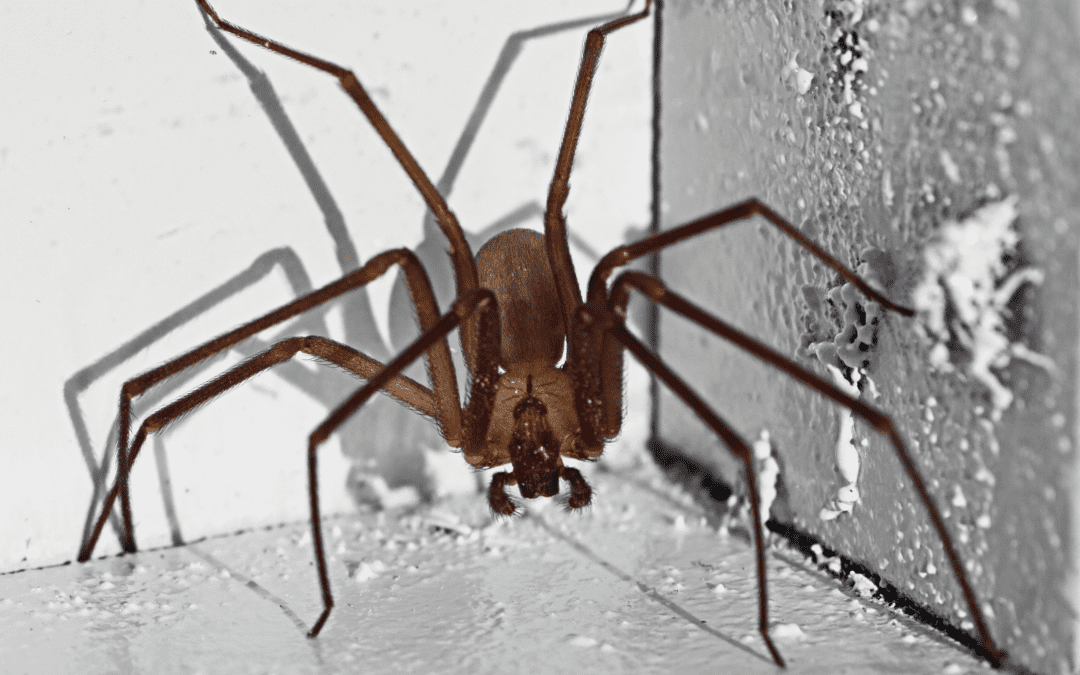
The brown recluse is ¼” to ¾” in size and some can grow larger in size. They are typically light to medium brown and have markings on their backs, with a black violin-like shape pointing to the rear of the spider.
Where Can a Brown Recluse be Found?
The brown recluse is known as a recluse for a reason; they don’t tend to make it known they are nearby. These spiders will typically seek out environments that are warm, dark, and dry.
This can include an array of places, such as:
- Cellars
- Attics
- Basements
- Inside inner tubes
- Under or around rocks
- Under tree bark
- Utility boxes
- Underneath or behind furniture
Why are They Feared?
Although not aggressive, they will bite when they feel trapped. Most people are bitten by a recluse when they unknowingly reach inside a shoe, piece of clothing, or a box. They will bite if they feel provoked, but their bite is the biggest reason why brown recluse spiders are so feared.
If you are bitten, it can take a few hours to notice its effects. When a brown recluse bites, it injects its venom, causing necrosis and an ulcerating sore. Once the venom takes effect, you may experience restlessness, insomnia, and fever. The sore can leave an open ulcer, even exposing the muscles or bone. If you think you have been bitten by a brown recluse, you should seek medical attention immediately.
If you encounter a brown recluse on your property, call your local pest control company to seek professional assistance. If you see one, it could mean an infestation is occurring.
Jul 5, 2022 | Pest Control
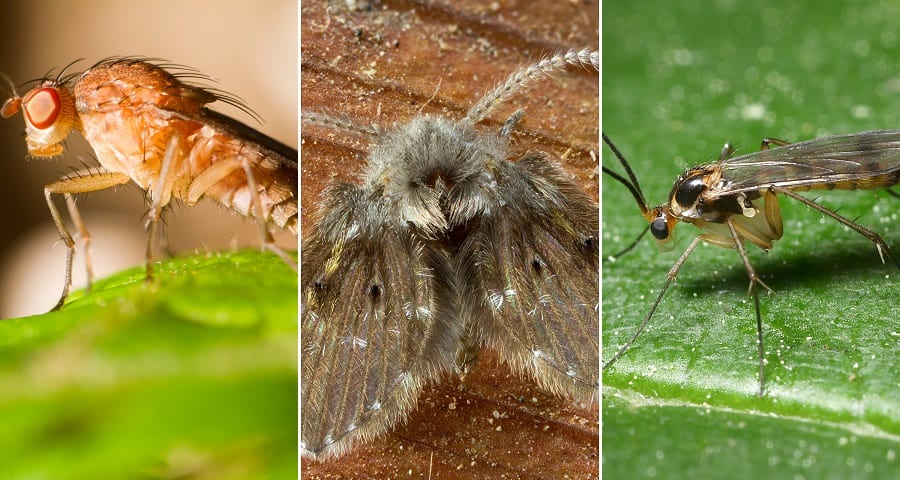
Do you see tiny, flying pests invading your kitchen and the rest of your home? There is a chance that they could be either fruit flies, drain flies, or even gnats. It can be difficult to identify between the three of these, but there are unique characteristics to tell them apart. Identifying them can also be beneficial when trying to prevent them. Let’s break them down.
Fruit Flies
Fruit flies are the most common flying insects that will pester you in the kitchen. They are attracted to fresh and decomposing fruit, sugary juices, and alcohol. The two most common fruit flies, the red eyed fruit fly and the dark-eyed fruit fly, have striped abdomens. Their eye colors are what give them away.
Some ways to keep fruit flies away are to keep your kitchen and garbage cans clean of any accumulated debris that may attract them. Thoroughly rinse beverage containers, use produce quickly or keep it in the refrigerator, seal garbage cans, and remove trash regularly from the area.
Drain Flies
These moth-like, fuzzy pests are commonly found in the kitchen. They thrive in dark, damp conditions and often find an ideal home inside a drain, which can include a floor or sink drain. They don’t bite, but their presence can aggravate asthma in some people. Drain flies appear light gray or tan with a dark border around their wings.
Eliminating drain flies requires a few steps. Once you recognize that you have a drain fly problem, look to tape over the drains and where you suspect they are emerging from and leave it overnight. The next day, check to see if any flies have been collected. If this is the case, your next step is to clean the drain and flush the system.
Fungus Gnats
If you spot a swarm of bugs flitting above a houseplant, you probably have fungus gnats instead of fruit flies. Fungus gnat larva and pupa prefer moist soil to protect them as they develop. Before they progress to adult form, they can severely damage the root system of your potted plants. They have a mosquito-like appearance and are brown or black with light-colored legs.
Preventing fungus gnats should begin with the first houseplant purchase. Look for signs of these pests after purchasing potted plants, and any plant that has gnats already flying around it should be left at the store. It’s also good to be sure your plants aren’t overwatered.
If you have tried all these prevention tips and still think you suspect fruit flies, drain flies, or gnats, then reach out to your local pest control company for more assistance. The professional pest technicians will be able to find the prevention methods that work best for you.