Jul 19, 2019 | Pest Control
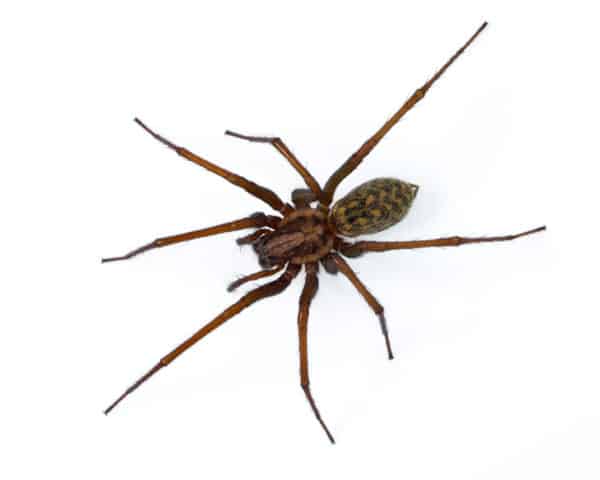
One of the most common questions that arises when a spider is found in a home is “is that spider poisonous?” That’s a trick question. Most spiders are poisonous, yet only a handful are venomous. Poisonous spiders release their toxins when they are inhaled, ingested or absorbed through the tissue or skin; in other words, they’re only harmful if you eat them. Venomous spiders, on the other hand, inject their toxin with a fang-like apparatus known as a chelicerae. These are the spiders you should be worried about and avoid contact with.
While there are more than 20 species of spiders in Georgia, there are only 2 that are known to be dangerous to humans: the black widow and the brown recluse. Like most common spiders, biting humans is a last line of defense. They are more likely to flee, hide, or even play dead rather than bite a human. It takes a long time for a spider to replenish his supply of venom after he injects it. Most will only use this defense mechanism if they have no other choice. Wasting venom on a human can even cause the spider to starve to death before his supply is replenished as he will have no means to kill any prey he catches.
Let’s take a closer look at each of the venomous spider species in Georgia, as well as some general tips to prevent spiders from getting into your home.
Black Widow

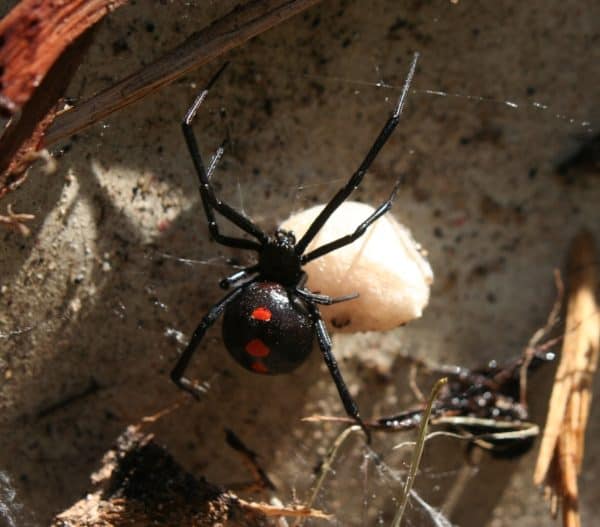
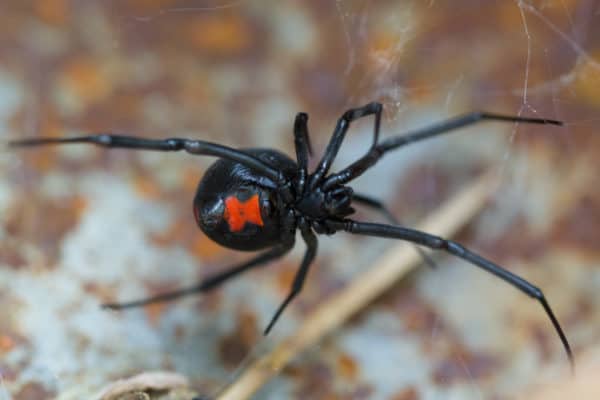
The black widow spider is considered to be the most venomous spider in North America. It is only the female black widow, however, that is dangerous to humans. Black widows are a red and black spider that is usually about 1.5 inches long with a shiny, globular abdomen and a reddish hourglass shape on its underside. While they are mostly black in color, they can sometimes be brown. The venom of a black widow spider is reportedly 15 times stronger than that of a rattlesnake. While black widow bites can be fatal to the young, the elderly, and those with compromised immune systems, most victims suffer no serious or long term damage from the bite. Black widows are not aggressive and bites commonly occur as a result of accidental contact. Common symptoms from a black widow bite include redness, swelling and tenderness at the site of the bite, muscle aches, nausea, and sometimes paralysis of the diaphragm which can cause difficulty breathing.
Brown Recluse
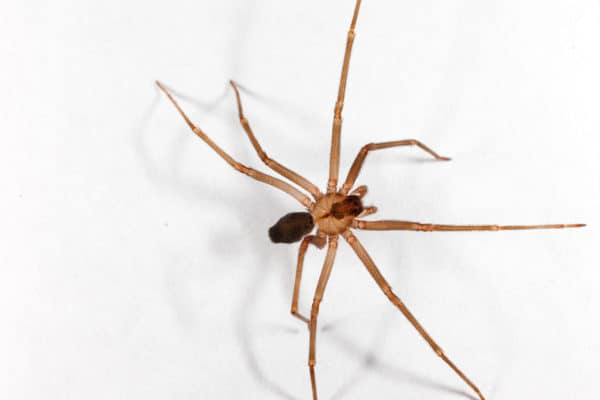
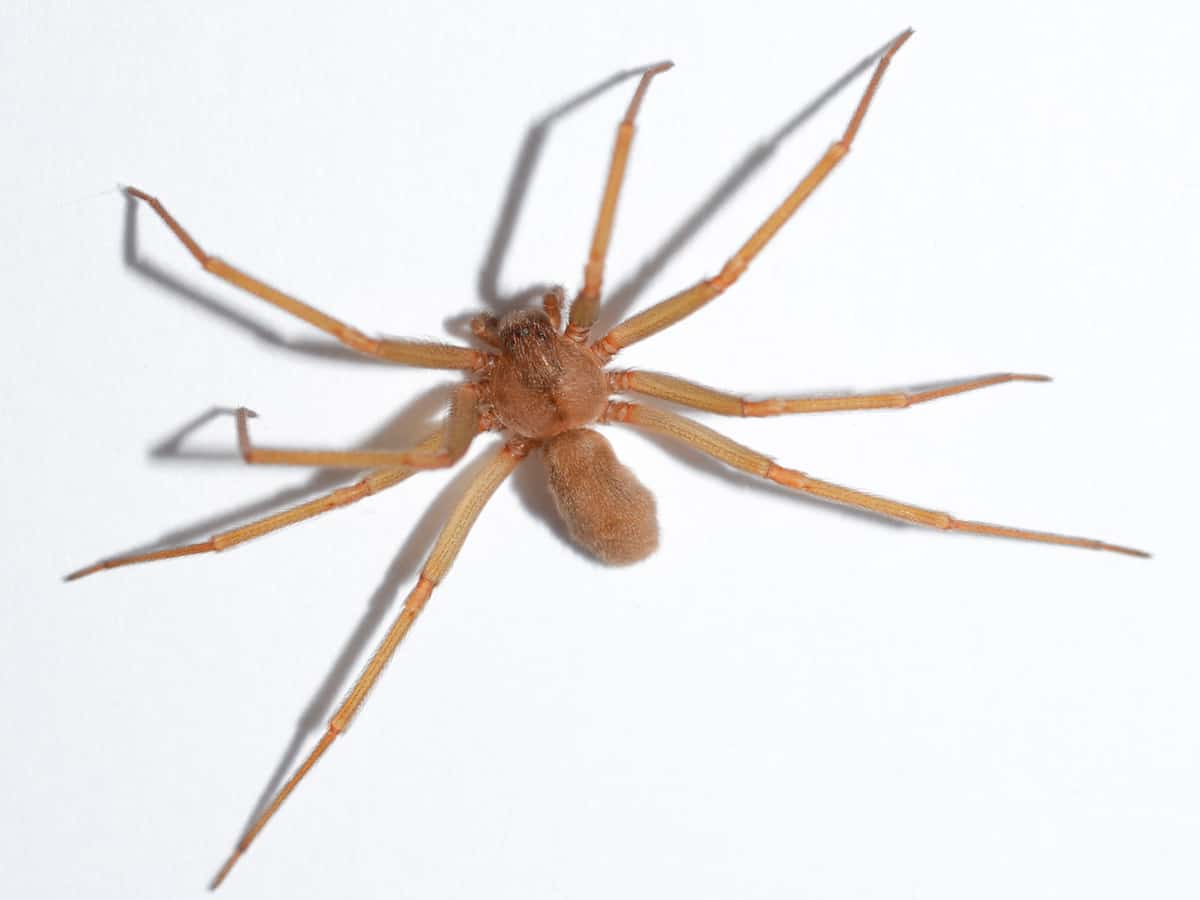
The brown recluse spider is also known as the violin spider or the fiddleback spider. The brown recluse is a light brown spider with a dark, violin-shaped marking on its back with the neck of the violin pointing toward the rear of the spider. They also have a very distinctive eye pattern with a semi-circular arrangement of 6 eyes (3 sets of 2) while most spider species have 8 eyes. Adult brown recluses are about the size of a quarter. They usually live outdoors under rocks, woodpiles, logs, etc. but are also well adapted to living indoors with humans. Once inside they are commonly found in attics, garages, basements, and are even known to wander into shoes, clothing, and bedding. They hunt at night and retreat to dark, secluded places in the daytime. The brown recluse is typically not aggressive and usually only bite when they are inadvertently trapped against human skin (rolling over on them in the bed or slipping your foot into a shoe they have crawled into for hiding). While bites are rare they can cause serious wounds and infections. The majority of bites remain localized, becoming red, swollen and tender at the site of the bite. If left untreated, a necrotic lesion may develop, usually accompanied by a central blister.
Prevention
Keep your garages, attics, sheds, basements, and other areas that aren’t utilized often clean and clear of clutter. Try to avoid leaving clothing and shoes on the floor and store them in plastic bins if possible. Shake out any clothing that has been left on the floor or in a hamper before wearing or washing.
Seal any cracks and crevices around your home. Spiders can get in through damaged window screens or cracks in your siding. Inspect the outside of your home seasonally and make any repairs necessary.
Inspect any items that are brought from outdoors into your home. This includes any packages delivered to your porch or steps, groceries that may be placed on the driveway or porch as you are unloading, boxes of decorations being brought in from storage, or used appliances that are bought secondhand.
Contact a licensed pest control company if you suspect you have a spider problem. A professional pest control technician can inspect the exterior and interior of your home to help identify any possible entry points, identify the type of spiders and other pests you may be having issues with, and properly, safely, and effectively treat any pest problems they may encounter.
Request a Free Estimate to Get Started.
You May Also Be Interested In:
Avoid Bites and Stings This Summer
Is Pest Control Worth It?
The Summer Big Three: Roaches, Mosquitoes, & Termites
Granddaddy Longlegs Aren’t Spiders
5 Ways to Prevent A Millipede Invasion
Mar 8, 2019 | Pest Control
The climate of Georgia (and the southern United States in general) provide the ideal environment for several species of spiders. The humidity and subtropical conditions provide just the right setting for these pests to thrive. Almost all species of spiders found in the United States pose no threat to humans. In fact, of the 38 known species of spiders in Georgia, only 2 are harmful to humans. Here are 10 of the most common spiders found in Georgia and the threat they may pose to you and your family.
Video Transcript
If you live in Georgia, you’ve probably spotted a spider or two and wondered, “Should I be worried?” The good news is, most of the time, the answer is no. Here are three things every homeowner should know. First, most spiders are actually helpful. Out of dozens of spider species in Georgia, the vast majority are harmless to people. Common house spiders, wolf spiders, and garden spiders quietly help by eating flies, roaches, and mosquitoes. They’re shy.
They avoid people and they’re doing more good than harm. Second, there are only two spiders to watch for.
Black widows and brown recluses are the only species in Georgia that can pose a real risk.
Black widows are shiny black with a red hourglass. And brown recluses have a dark violin shape on their back. They prefer dark, undisturbed areas like attics, storage boxes, and wood piles.
Bites are rare, but it’s best to give them space. Third, prevention makes all the difference. As temperatures cool, spiders look for warmth indoors.
Reducing clutter, sealing cracks around doors and windows, and keeping floors and corners clean help stop them before they settle in. When you’re ready to call a professional for a peaceful home, feel free to reach out to our team at Northwest Exterminating.
Black Widow
Black widow spiders are black and shiny in color with a prominent red hourglass shape on their back. They are most often found around woodpiles and can easily access your home by hitching a ride inside on your firewood. They are also found in common places around your home where they can be undisturbed like eaves, empty boxes, and even shoes that are stored away and never worn. Black widows can be harmful to humans if bitten. While males rarely bite, females have been known to be aggressive especially when they are guarding their eggs. Black widow bite symptoms include fever, elevated blood pressure, nausea, and sweats. Death is uncommon after a black widow bite, especially if treatment is received quickly. In fact, there has not been a black widow related death in the United States in over 10 years.
Brown Recluse
Brown recluse spiders are light to dark brown in color (hence their name) with a signature dark brown violin shape on their backs. They are commonly found outdoors in debris and woodpiles. If they are found indoors, they are usually found underneath furniture, inside storage bins, and in dark recesses like baseboards. They are often found hiding out in closets, attics, and crawlspaces. Brown recluse spiders will bite when on the defensive. These bites are very painful and often leave an open, ulcerating sore that must be treated by a medical professional. Other symptoms include fever, restlessness, and difficulty sleeping.
Common House Spider
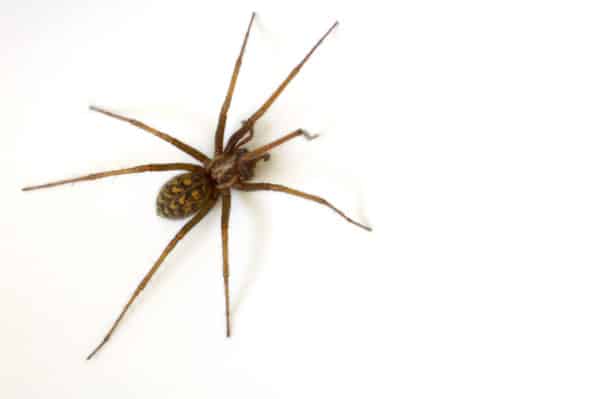
House spiders vary in color but most are yellow to brown in color with elongated abdomens. They are most often found inside homes (hence their name) usually in ceiling corners, under furniture, and inside closets, basements, garages, and crawlspaces. When outdoors, they are often found around windows, under eaves, and near light sources. While they can be a nuisance to have in your home, they don’t pose any threat to humans. Because of the low humidity and fewer insects in modern homes, house spiders are becoming less common in houses and more likely to be found in garages, sheds, barns, and warehouses.
Wolf Spider
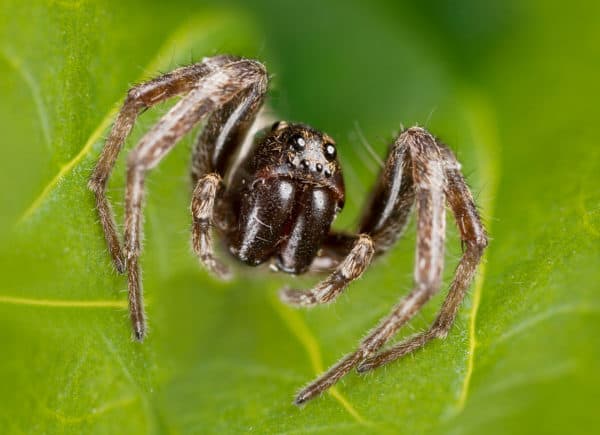
Wolf spiders are typically dark brown in color with pale markings or stripes. Their legs are long and spiny and most have hair on their bodies. When indoors, wolf spiders typically stay on or near the floor, especially along walls and under furniture. They often come inside on firewood. When found outside they are usually found under firewood piles, leaves, yard debris, and stones and will often hide in these places during the day. While wolf spiders can bite, these incidents are rare and they don’t pose a significant threat to humans. Wolf spiders are unique in that they don’t capture their prey in webs but rather by chasing them down using their speed.
Crevice Spider
Crevice spiders have similar shapes and coloring as brown recluse spiders and are, in fact, often mistaken for them. While they do have the same light to dark brown coloring and similar body shape, they do not have the signature violin-shaped markings that the brown recluse has. They are often found in corners and crevices which is where their name comes from, typically located in ceiling corners, along baseboards, and in window frames. They can be beneficial to homeowners as they eat common household pests like flies, roaches, beetles, and wasps. While they can bite if threatened, this is very rare and they do not pose a significant threat to humans.
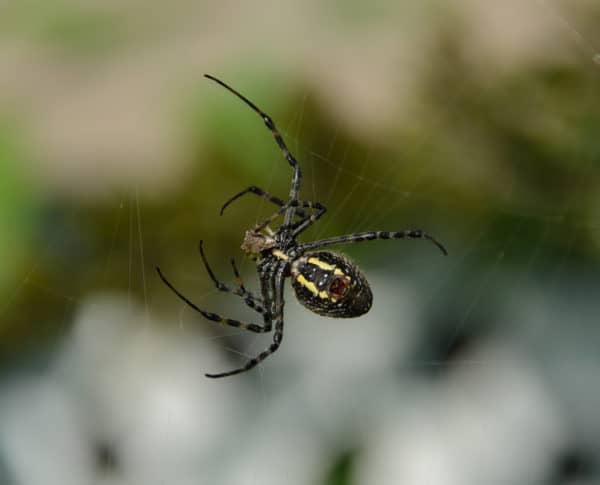
Yellow Garden Spider
The yellow garden spider is a large, black and yellow spider that is known for spinning large circular webs. Females are black with bright yellow patches on their abdomens. Males are smaller with less yellow coloring on their abdomens. They are typically found outdoors in sunny areas with plants on which they can anchor their webs (hence their name). Garden spiders don’t pose a threat to humans (other than the chance of walking through their sometimes significantly large webs) but they do produce venom that is harmless to humans, but helps to immobilize prey like flies, bees, and other flying insects that are caught in the web.
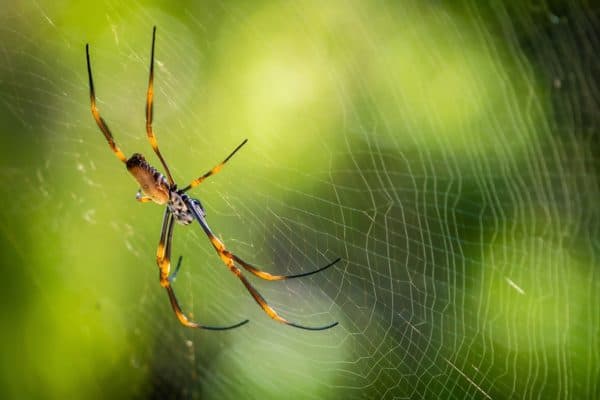
Orb Weaver Spider
Orb weaver spiders can vary in size and coloring but are often mistaken for brown recluse spiders. They are known for creating distinctive sheet webs with an escape tunnel at the rear. These webs can be up to 3 feet in diameter. Many orb weavers are brightly colored, have hairy or spiny legs and a relatively large abdomen. Orb weavers are typically nocturnal spiders and many species will build or do repair work on their webs at night. Orb weavers do not pose a threat to humans. They will bite if cornered but the bite is comparable to a bee sting.
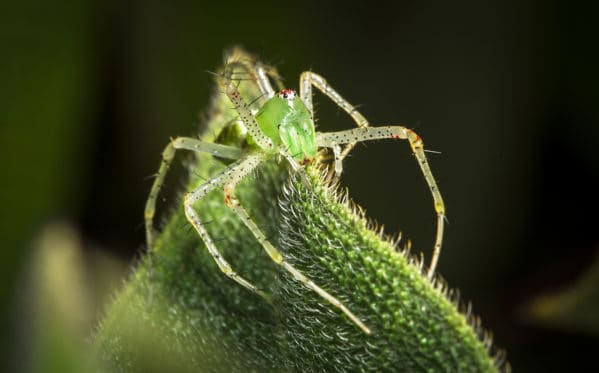
Lynx Spider
The lynx spider is bright green in color, resembling the color of a plant leaf. They will also sometimes have orange on their legs and black dots, as well. Their legs are covered in long black spines. They are very quick in movement and are able to jump large distances to capture their prey. They are often found in open fields, especially those with tall grass surroundings. The lynx spider can be quite useful in agricultural management. They will bite if on the defensive but they do not pose a significant threat to humans.
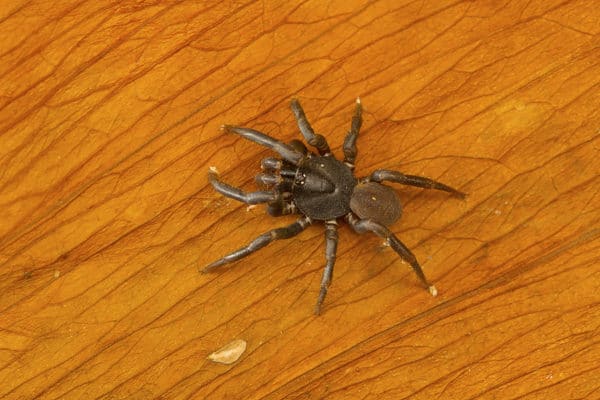
Trapdoor Spider
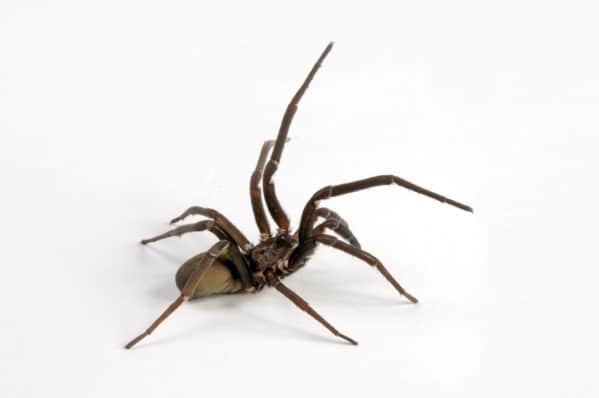
The trapdoor spider is a large, hairy spider that can range in color from yellowish brown to reddish brown to black. They have powerful jaws and sharp fangs. Trapdoor spiders get their name from the burrows they construct with a cork-like trapdoor made of soil, vegetation and silk. They spend most of their lives underground and usually hunt at night. Trapdoor spiders are not aggressive and, in fact, are often timid when confronted. They can bite but this is rare. They do not pose a significant threat to humans.
Hobo Spider
The hobo spider is light to medium brown in color with a down the center with an oblong abdomen. Hobo spiders build funnel webs that open at both ends with one end expanding outward into a broad, slightly curved sheet. Mating season is from June to October and the wandering of males in search of a mate brings them in to much more contact with humans than females. Therefore, male hobo spiders are responsible for more bites than females because of this increased contact with humans. Their bites, however, do not pose a significant threat to humans. Hobo spiders can be found in almost any habitat. They are commonly found in places with holes, cracks, or crevices. They are terrible climbers and are rarely found above ground level. They prefer dark, moist environments like basements, crawlspaces, and window wells.
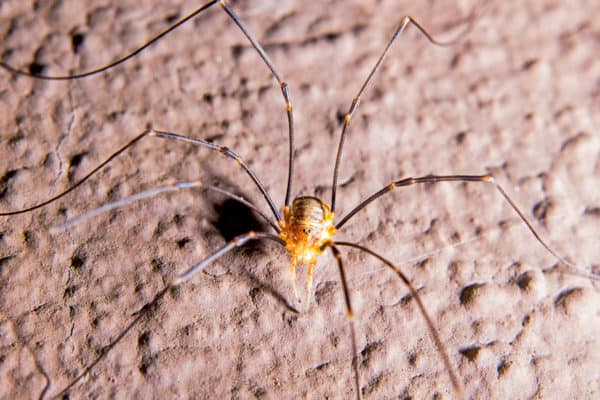
Granddaddy Longlegs
Contrary to popular belief, Granddaddy Longlegs are not, in fact, spiders; they actually belong to a group of arachnids known as harvesters or harvestmen. The predominant feature of harvesters including the granddaddy longlegs is legs that are exceptionally long in relation to their body size. Harvesters are usually seen around harvest time – hence their name. Just in North America alone there are about 150 species of granddaddy longlegs. They use their extremely long legs to catch their prey rather than building webs. Granddaddy longlegs are not poisonous or venomous and do not pose any threat to humans.
Whether they are dangerous to humans or not, most people would prefer to keep spiders out of their homes as much as possible. The best way to prevent spiders from taking up residence in your house is to get rid of any areas where they can hide. Spiders are more common in the fall and winter as they make their way indoors in search of food and warmth. Keep your garage, attic, and basement clear and decluttered. Try not to leave shoes and clothing on the floor. Seal any cracks and crevices around your home. Consider enclosing your crawlspace and sweep down any cobwebs that appear. As always, if you suspect you have a spider problem, contact a professional pest control company who can help identify the type of spiders you have and provide you with a thorough evaluation and treatment and prevention plan.
You May Also Be Interested In:
How Much Damage Can Termites Really Cause?
Is That Spider Poisonous?
Caring For Your Lawn After Heavy Rains
The 411 On Bed Bugs
Where Are All Of These Roaches Coming From?
Dec 19, 2018 | Pest Control
The holiday season is upon us with decorations, food, and traveling to see family and friends. While most of us are focused on our holiday preparations, we often lose focus on another important aspect of this time of year – pest prevention. Just because it’s cold outside doesn’t mean pests aren’t a problem. The holidays provide many opportunities for spiders, ticks, ants, mice, bed bugs, and other pests to make their way indoors and take over your home.
One of the most common ways pests can get into your home during the holidays is on live Christmas trees, wreaths, and firewood. Ants, spiders, ticks, and other pests can hide deep in the branches of trees and in the crevices of wood. They can even lay their eggs in trees or garland which can hatch once you put them out in your home, potentially causing a major infestation.
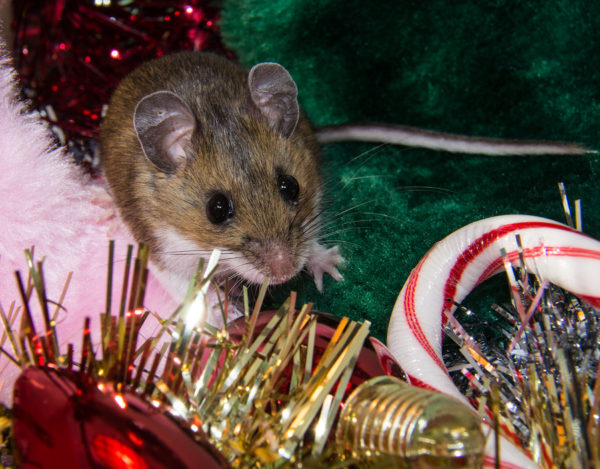
Pests can also access your home in those boxes of decorations you drag out from the attic, basement, garage, or crawlspace. Mice and other pests love to get into those cardboard boxes during the off season. You may be in for a surprise when you open your decorations by finding a live pest, droppings, or even damage to your lights and ornaments. It is especially important to check the wiring of your lights to make sure pests haven’t chewed through them.
The holidays are also one of the busiest travel times of the year. Most of us will either travel to visit loved ones or have loved ones travel to visit us. While we’re usually excited to see everyone, we’re not so excited to deal with bed bugs which often hitch rides on the luggage of these travelers. We often see a spike in bed bug cases during the holiday season.
So what can you do to pest proof your home and make sure you don’t get any unwanted guests for the holidays?
- Carefully inspect all items before bringing them into your home including trees wreaths, garland, and other decorations. Make sure to check for insects, eggs, and nests and shake them to rouse any pests that might be hidden deep within.
- Unpack your decorations outside instead of in your living room. Inspect them thoroughly for any signs of pests, droppings, gnaw marks, or any other damage before bringing them inside.
- Store your holiday decorations in plastic containers with lids that seal tightly instead of cardboard containers or bags.
- Don’t put discarded trees or cut firewood near your home. Firewood should be stored at least 20 feet away from your home and elevate it if possible.
- Thoroughly check your luggage before you enter the place you are staying and ask your guests to do the same before they enter your home.
- Put your clothing in the dryer, if possible, for at least 20 minutes.
- Keep your bags closed when not in use and store them off the floor.
- If you suspect you have a pest problem this holiday season, contact a pest control professional who can provide you with an evaluation and treatment plan.
Dec 13, 2018 | Pest Control
While most of us look forward to the holidays that come with the onset of winter, many of us don’t look forward to the snow, ice, and freezing temperatures that also come along with it. Pests feel the same way we do about cold weather and have developed several different methods to survive these frigid temperatures. So where do pests go in the winter? As much as we’d like to believe they just disappear until spring, unfortunately this isn’t the case. Pests have developed 3 major ways to survive winter:
MIGRATION
Migration is the seasonal movement from one region to another. Just like humans, pests want to go where it’s warmer when the weather gets cold. Some pests will move to southern regions to escape the cold and return to the northern areas when the weather starts to warm. One of the most well known examples of migration is the monarch butterfly.
HIBERNATION
Hibernation is a period of time spent in a dormant state in order to survive the unfavorable conditions of winter. Bears aren’t the only animals that hibernate during the winter! Ladybugs hibernate at high elevations. Wasps seek shelter in eaves and attics of houses or barns to hibernate. Many other pests hibernate in trees, leaf debris, under logs, and under rocks. Honeybees stay in hives during the winter and form clusters when the temperatures start to fall.
OVERWINTERING
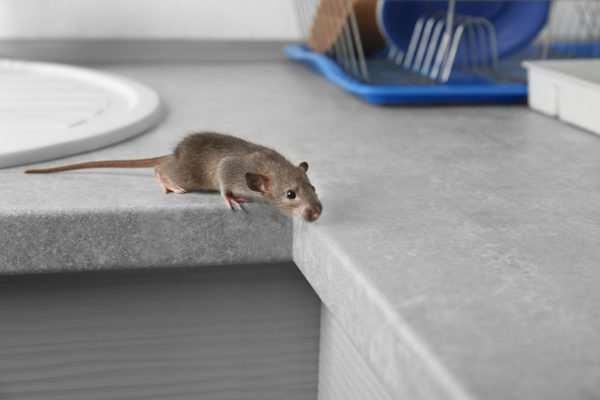
Overwintering is the process in which pests pass through or wait out the winter season in sites that provide protection from the cold winter temperatures. Ladybugs, box elders, and stinkbugs overwinter in secluded, sheltered places like your home. These pests tend to congregate in large numbers so if they overwinter in your home they could infest in large numbers. Pests like rodents, cockroaches, spiders and flies remain active during the winter in our homes. They move indoors in search of warmth and food. Spiders are relatively harmless but flies can contaminate food and surfaces. Rodents can not only contaminate your food and insulation but can also chew through wood causing structural damage and chew through wires putting your home at risk of fire and other issues.
Now that you know where pests go in the winter you can help get your home ready to prevent these overwintering pests from invading your space. If you suspect you have a winter pest problem contact a professional who can help identify the pests and help you develop a treatment and prevention plan.
Nov 30, 2018 | Pest Control
As the warm weather winds down and winter settles in, most of us will breathe a sigh of relief that we survived another season of creepy crawlers. Don’t relax just yet! Just because the weather has turned colder doesn’t mean pests have hibernated for the winter. Many pests will make their way into your home in search of shelter, food, and warmth. Mice, cockroaches, and spiders can be found crawling underfoot in the wintertime. These overwintering pests aren’t just a nuisance to have in your home; they can cause significant damage to both your property and your health. Rodents are known to carry Salmonella and Hantavirus and can chew through cables and electrical wires, increasing the risk of fires. Some spiders like the brown recluse and the black widow have bites that can be a serious threat to humans. Cockroaches are known to trigger allergies and asthma. Winter brings ice, snow, and wind, causing enough stress on your home without the threat of pest infestations. So what can you do to reduce this stress and get rid of the last of these creepy crawlers? Check out these winter pest prevention tips to help you have a stress free winter.
- Inspect the exterior of your home for cracks and holes. Seal them to keep pests from easily accessing your home.
- Replace any loose mortar around foundations and weatherstripping around windows and doors. Repair or replace any damaged screens.
- Eliminate moisture by repairing leaky faucets and clearing clogged drains.
- Keep gutters clear of debris before the weather gets too cold. Consider installing gutter guards to eliminate the need to clean gutters.
- Keep attics, basements, and crawlspaces dry and well ventilated. Consider enclosing your crawlspace.
- Keep storage areas like basements, attics, and garages well organized. Use plastic storage containers rather than cardboard and store them off the floor.
- Screen your chimney vents.
- Store firewood at least 20 feet from your home and elevate it off the ground.
- Keep food, including pet food, in airtight containers and clean up crumbs and spills immediately.
- Call a professional pest control company to provide you with a thorough home inspection and set you up with a comprehensive treatment and prevention plan.