Jan 14, 2021 | Termite Control
Termites are one of the most feared and difficult pests to get rid of. Every homeowner is weary of having termites as they can destroy your home from the ground up; but as the colder weather continues, many wonder if termites are even active right now?
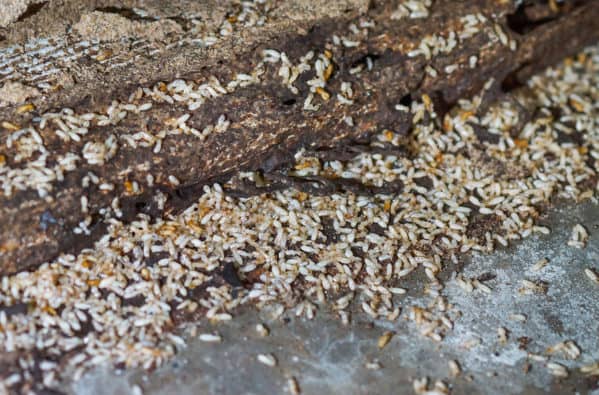
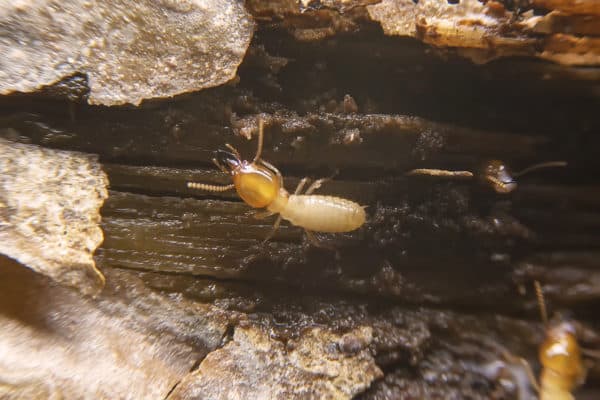
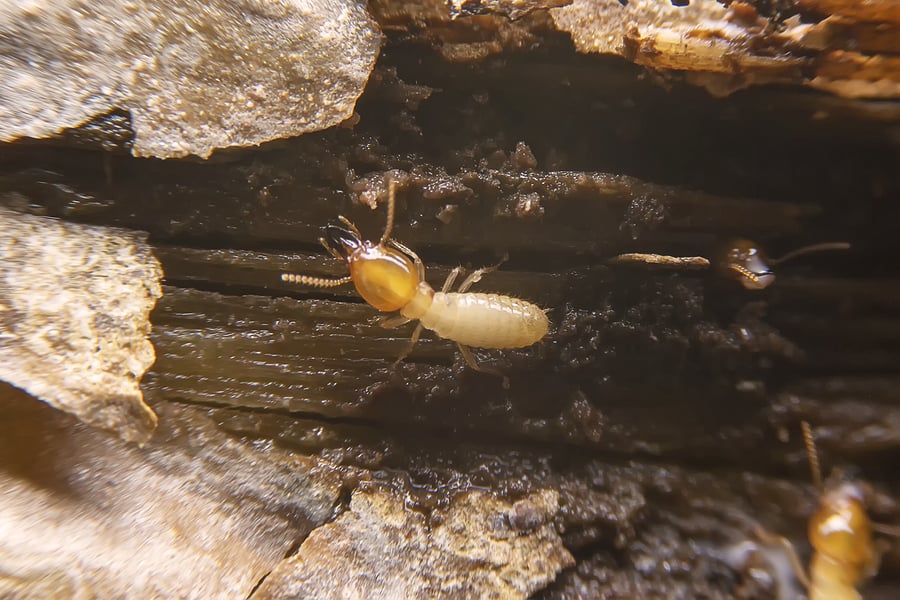
Unfortunately for many homeowners, termites are out right now, with some termite species active year-round! This means that even on the coldest day termites are active. Fortunately, during colder weather termites do tend to go deeper into the ground to find warmth. If they’ve already infested your home, however, they will continue their activity. Termites will search for food throughout your house with the potential of significant damage, costing thousands of dollars in repairs. It’s extremely important to understand and recognize the signs of termites to catch them early.
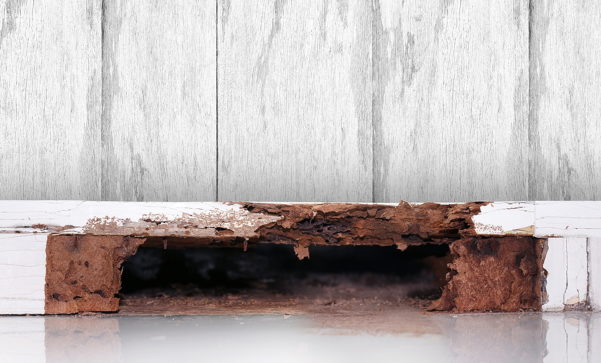
One sign of termite activity is crumbling wood. Crumbling wood is a major indicator that these pests are infesting your property. Termites will eat wood from the inside out, so if the wood in your house sounds hollow when tapped on, you could have termites. Likewise, seeing uneven or bubbling paint is a sign of moisture build-up. This means the potential for two scenarios: water damage, which can attract termites; or existing termites inside your home. An obvious sign that termites are roaming is the presence of discarded wings inside your house. You can often find these near windowsills and doors.
Termite-proofing your house or property now can help prevent termites in the future. Take precautions with these tips:
- Ensure that all water and gas lines are sealed.
- Fix any leaky faucets or appliances and get rid of any standing water.
- Try to eliminate any cellulose material as this is a termite’s primary food source.
If you suspect you have termites or are just ready to get prepared this year, reach out to your local pest control company who can set you up with a prevention and termite treatment plan.

Jul 8, 2020 | Termite Control
Termites are known to cause significant and expensive home and property damage each year. These pests can easily go undetected for a long period of time and, in return, cause substantial damage to your property. Dealing with termites can be a huge undertaking and while you should always reach out to a professional if you have been infested with them, you can take steps to help prevent an invasion.
Keep Dry!
Subterranean termites need an abundant amount of water to survive. These pests will seek out moist and wet areas in or around your home for a new colony site. It’s extremely important to check for any leaky faucets, pipes, and appliances inside your home. Additionally, storm drains should be directed away from your house and draining at least a few feet from your home’s foundation. Making sure there is no available moisture is an easy way to prevent a termite infestation and subsequent damage.
Beware the Mulch!
Mulch can be a great tool to landscape your yard, but not many know that it can attract termites right into your home! Mulch, which is comprised of wood chips, can retain moisture, making it a perfect food source for termites. If you do decide to use mulch, try to keep at least a 4-inch barrier between the mulch and the side of your home. Along with mulch, try to keep shrubbery, lumber, and wood away from the foundation of the house.
Inspect It!
Inspecting your own home is probably the easiest way to prevent termites. Since termites like to consume wood, check for wood damage throughout your home. When wood is damaged it will make a hollow or papery sound when tapped on. Periodically check the exterior of the home. Maintaining your home’s wood siding and window frames help prevent termites from sneaking in. Some signs you have termites are blistering sheetrock, mud tunnels, cracks in the foundation, and discarded termite wings.
If you’ve determined that termites have infested your home, it’s best to call a professional. A local pest control company can provide you with an inspection and the best plan of action for termite control.
Jun 12, 2020 | Termite Control
Swarming termites are also known as alates. Swarming termites are usually a seasonal nuisance as they cannot bite, sting, or even chew wood. While they don’t usually cause damage themselves, they do, however, indicate that there is an established colony nearby. These seasoned termites are capable of causing extensive damage to your home.
When dealing with swarming termites there are three important questions to ask: When do they swarm? Where do they swarm? Why do they swarm?
When Do They Swarm?
Termite swarming season varies by species. Subterranean termites swarm during daylight hours in the spring. Drywood termites swarm in late summer to early fall. Dampwood termites swarm in the summer. Most species of termites have specific conditions they wait for in order to start swarming. They usually wait for the day after a rainstorm, overcast weather, and wind speeds less than 6 mph.
Where Do They Swarm?
Swarming termites are found anywhere termites colonize. Termites can swarm indoors or outdoors, although they cannot survive indoors as there is no soil for them to create their colonies in. Swarming termites are attracted to light and are often found near windows and light fixtures. As termites get ready to swarm, they prepare a swarm tube which they use to launch. When the conditions are right, they use the tube to swarm. After a brief flight which lasts for only a few seconds, they land and break their wings away from their bodies. They then pair with a mate. Those pairs that survive then create a chamber underground that they use to breed and the new colony is formed. Swarm launches are usually spread out over a few days with a large release on the first day and smaller launches on subsequent days.
Why Do They Swarm?
The sole purpose of termite swarms is reproduction and expansion of the colony. The original termite colony reaches capacity and needs to expand. This is usually done once per year, hence termite swarming season. Both males and females swarm at this time. The number of termites that swarms each season varies depending on the size of the colony and the species of the termite.
Because a termite swarm indicates a nearby colony, homeowners should take precaution when one is spotted nearby. A thorough inspection of your home and property should be performed looking for signs of termites. This is also a good time to set up your annual termite inspection if you haven’t already. If you suspect you have a termite infestation, contact a professional pest control company who can inspect your property and set up a termite control plan.
You May Also Be Interested In:
Venomous Summer Snakes
7 Things You Didn’t Know About Cockroaches
How Much Does A Mosquito Treatment Cost?
Common Spiders: Poisonous or Painful?
5 Ways to Prevent a Millipede Invasion
Mar 6, 2020 | Termite Control
Termite infestations can cause significant (and expensive) structural damage to your home and property. What makes termites even worse is they usually cause significant damage for a long period of time without being detected.
Spring is an especially critical time for identifying and dealing with termites because that is the time of year when termites swarm to establish new colonies. These swarmers are winged adult termites that mature and fly away from their colonies to continue reproducing. Termite swarming season begins at different times for different species but all of them typically begin when the weather warms up following a significant rain event. For most species like subterranean termites, this falls in early spring. Age is also a factor in determining when termite colonies will swarm. While there is no specific age for a colony to swarm, most colonies aren’t mature enough until they are at least 3 years old.
Swarming termites often gather in areas with low-wind and diffuse light. Swarms can occur over a period of several days. Termite swarms are often confused with flying ant swarms. There are 3 major differences between termites and flying ants: antenna, wings, and body segments. Termites have straight antennae with a slight drooping look while flying ants have antenna that are bent at a 90 degree angle as they come out the side of their heads. Termite wings are basically equal in length while flying ants have front wings that are noticeably longer than their hind wings. Finally, termites have 2 body segments with straight abdomen while flying ants have 3 distinct body segments that narrow at the waist.
Odds are if you notice a termite swarm in or around your property the initial nesting site is not too far away. Termite swarms are a good indication that a termite infestation is imminent. Swarming termites also discard their wings after their new colony is established. Finding piles of discarded wings is also another sign that a new active termite colony is close by.
It is important to periodically check for signs of termites in your home to try and catch an infestation before the damage is significant (and costly).
- Check the exterior of your home and look for mud tubes and small white insects going up the outside of your foundation.
- Tap or probe any exposed wood for hollow sounds.
- Learn to identify termite swarms and keep an eye out for them in the spring.
- Look for other signs of termites in your home such as buckling wood, damaged wood, etc.
- Keep the ground around foundations dry with proper drainage techniques.
- Seal off any points of entry by filling in cracks in concrete foundations and any holes or openings where utility lines and pipes enter the home.
- Consider investing in an annual termite inspection where a professional termite control technician can thoroughly check your home for all of these signs and more.
If you notice a termite swarm this spring or any of these other signs of termites, it’s not too late to act but action should be taken sooner rather than later. With the help of a professional pest control company, you can take quick action for termite treatment while avoiding the costly headache of structural damage to your home. Whether you’ve dealt with termites in the past or just want to avoid dealing with them in the future, investing in termite protection now is always a good idea.
You May Also Be Interested In:
Where Are These Stinkbugs Coming From?
10 Common Myths About Pest Control
Keeping Wildlife Out This Spring
How to Prep Your Yard for a Mosquito Bite-Free Summer
Where Are All of These Roaches Coming From?
Feb 11, 2020 | Termite Control
Termites cost homeowners billions of dollars each year in damages, treatments, and repairs. While traditional termite treatments are extremely effective at eliminating and controlling termite populations, environmentally sensitive homeowners often go in search of more green pest control options. One popular trend on the market today is orange oil treatments. Orange oil is an extract from orange rinds and is commonly used in cleaning solutions and food additives. The active ingredient in orange oil treatment is D-limonene which kills termites on contact by breaking down their exoskeleton and destroying their eggs. Orange oil treatments are the most common no-tent, no move out, organic termite control solutions.
Let’s look at some of the pros and cons of orange oil termite treatments:
Pros
- Low toxicity and more environmentally friendly than other termite control options
- Effective against drywood termites, carpenter ants, and wood-boring beetles
- No need to move out at night during treatment
- No need to remove plants or board pets during treatment
- No need to bag up food or medicinal supplies during treatment
- No potential damage from treatment to roof tiles
Cons
- Not effective against subterranean termites
- Although low toxicity, should not be ingested. Prolonged exposure to oil or fumes can cause skin and eye irritation, nausea and vomiting, lung irritation, and other symptoms
- Product is flammable and combustible once wicked into wood
- Only kills termites on contact and will not kill any undetected infestations
- Treatment requires drilling holes into your walls and other wood components of your home
- Multiple treatments are required as the entire colony is usually not exterminated during a single treatment
- Treatment of larger infestations can be more expensive than fumigation methods
- Treatment can only be applied to existing infestations; there is no residual protection against future infestations
Orange oil treatments are only effective against drywood termites because these pests live and colonize the wood they are infesting. They are not effective against subterranean termites as these pests live in the soil and only come up to feed on wood. Orange oil treatments will begin with a termite inspection to determine the type of termite and the extent of the infestation. Once the areas of termite damage and activity are identified, the technician will drill a hole into the wood and treat the infested areas. Orange oil is then injected into these drilled holes where it spreads throughout the wood beams via capillary action, passing through porous cells in all directions. This kills any termites and eggs on contact. This does not, however, kill any termites that don’t come in contact with the oil treatment. After treatment, the holes are then patched and painted.
In summary, orange oil does, in fact, kill termites but it is limited in its effectiveness. It is considered a secondary spot treatment as it is only effective when it is applied to areas with active infestations. Any termites that remain undetected and untreated will continue to eat, continuing the damage to your home. Because of this, multiple treatments are usually required. These treatments don’t eliminate the entire termite colony, leaving your home vulnerable. Whole structure treatment (fumigation) is a guaranteed method of completely exterminating termites from a structure. During fumigation, the whole house is treated at once. Fumigant gas is used to penetrate the walls, floor, lumber, and other surfaces where termites reside. If you suspect you have a termite issue, contact a professional pest control company who can help identify the type of termite you have, the scope of the infestation, and the best treatment options for your home.
You May Also Be Interested In:
How Much Does It Cost To Remove Animals From Your Attic?
Is Mosquito Control Needed in Winter?
Cold Weather Sends Roaches Indoors: 5 Tips to Prevent Them This Winter
Is Green Pest Control Worth The Investment?
Winterize Your Home With TAP Insulation